
Key Fob Not Detected After a Jump Start: What’s Really Going On and How to Fix It

A jump start can get the engine cranking again, but it can also expose a weak spot in the car’s keyless system. If your dash suddenly says the key fob is not detected after jump start, don’t assume the fob is dead right away. The problem may be the fob battery, the vehicle battery, a temporary low-voltage glitch, or the way the car is reading the smart key signal.
A weak key fob battery and a vehicle-side detection problem can look almost identical at first, but they are not the same issue: if the fob battery is weak, the signal may be too faint to read; if the vehicle side is at fault, the car may not be detecting a perfectly good fob because of low voltage, a receiver issue, or an immobilizer-related fault.
I’ve seen this kind of issue turn up right after a dead battery event because modern cars depend on stable voltage to keep the immobilizer, receiver, and push-button start system talking to each other. When that communication breaks down, the car may act like the fob disappeared even though it’s still in your pocket.
What “Key Fob Not Detected” Means After a Jump Start
In plain language, the car is saying, “I can’t confirm that the correct key is inside or near the vehicle.”
That message can come from three places:
- The fob side: weak fob battery, damaged fob, or poor signal
- The car side: low vehicle battery, unstable power, or a receiver issue
- The communication path: the fob is present, but the car isn’t reading it correctly
That distinction matters because replacing the fob battery won’t help if the car battery is still unstable, and a jump start won’t help if the fob itself can’t transmit a strong enough signal.
For a broader look at this symptom on a car that still won’t start, see our guide on key fob not detected and the car won’t start.
Most Likely Causes, Ranked
The fastest way to troubleshoot is to work from the most common and easiest fixes first.
1. Weak or dead key fob battery
This is the first thing I check. A weak fob battery may still unlock the doors sometimes, but not reliably enough for the car to detect it during startup.
2. Low or unstable car battery after the jump
A jump start can get the engine going, but the vehicle battery may still be weak enough to cause detection problems. If the voltage drops again when accessories, modules, or the starter load the system, the car may stop recognizing the fob.
3. The fob is not in the correct detection area
Some push-button start systems need the fob very close to the start button or a designated backup spot. A fob buried in a bag, blocked by metal objects, or sitting in the wrong part of the cabin may not be read.
4. Temporary vehicle reset glitch
After a dead battery or jump start, the car’s electronics may need a short reset before the smart key system behaves normally again.
5. Receiver, antenna, or immobilizer fault
If the problem persists after the easy checks, the issue may be vehicle-side rather than fob-side.
Immediate Fixes to Try First
Here’s the order I’d use in the driveway.
1) Try the spare key fob
If you have a second fob, test it right away. If the spare works and the original does not, you’ve narrowed it down fast. That usually points to a weak fob battery, a damaged fob, or a pairing issue with the original.
2) Use the emergency start or backup detection location
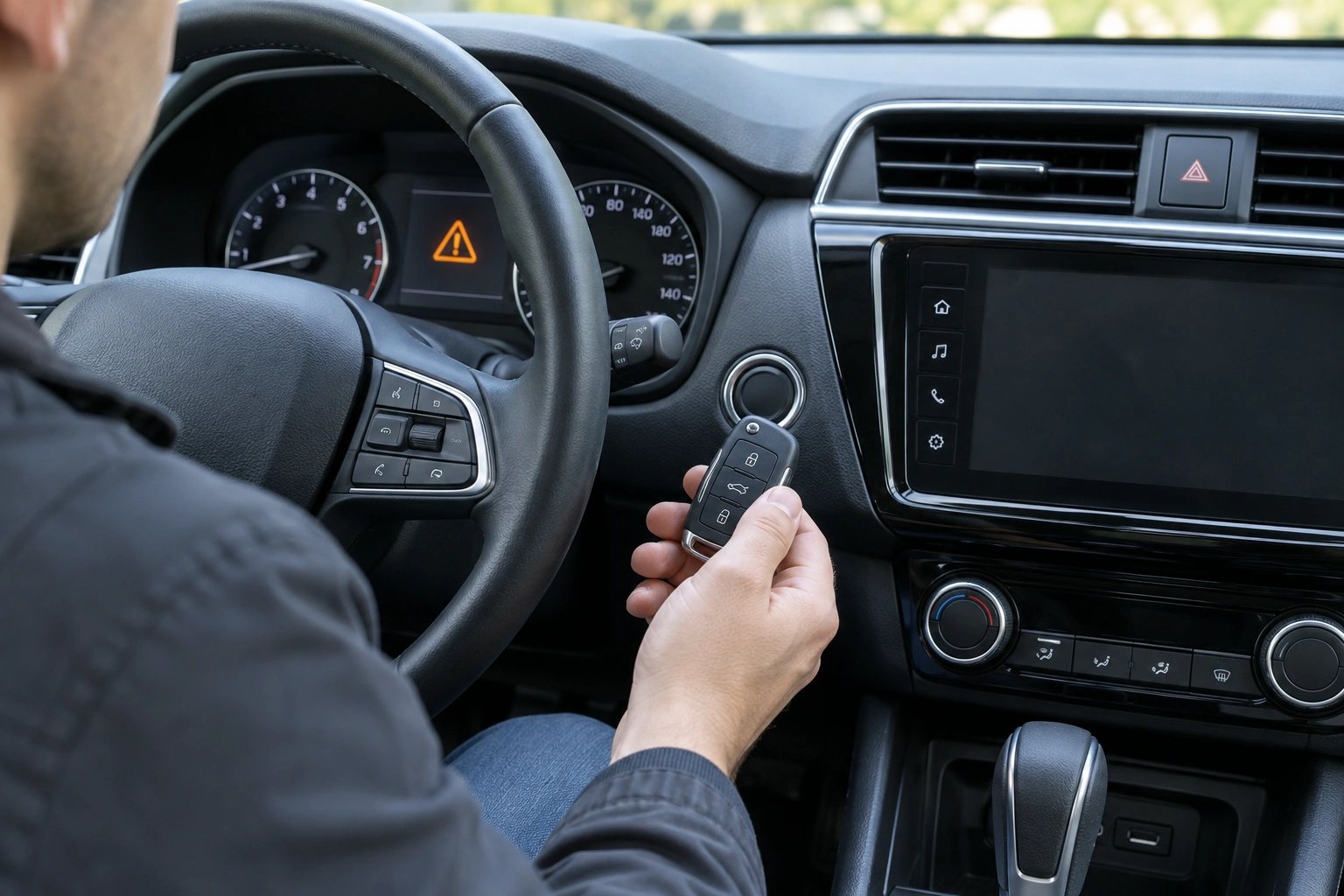
For many push-button start vehicles, the fob needs to be held right against the start button or placed in the manufacturer’s backup location. If your car has a backup start procedure, use it exactly as listed in the owner’s manual. That’s more reliable than guessing.
3) Replace the fob battery if it’s old or unknown
If the fob battery is due, replace it. This is a cheap, quick test and often worth doing before you spend time chasing bigger problems. If the battery cover is loose, the contacts are dirty, or the battery is installed upside down, fix that too.
4) Verify the vehicle battery is stable
After a jump start, make sure the car is not still showing signs of low voltage. If the vehicle starts once, then loses key detection again, or other electrical symptoms show up, the problem may be on the car side rather than the fob side.
Check the Car Battery and Electrical Stability
A jump start can be a clue that the vehicle battery is part of the problem. If the battery was deeply discharged, old, or not fully recovered, the car may still have unstable voltage even after it starts.
Look for signs like:
- slow cranking
- dim interior lights
- warning lights that appear and disappear
- accessories acting strangely
- the car starting once, then losing key detection again
That last one is especially useful. If the car recognizes the fob long enough to start, then loses detection later, I’d suspect a weak vehicle battery or unstable electrical supply before blaming the fob.
For general battery safety and jump-start guidance, the National Highway Traffic Safety Administration is a solid place to review vehicle safety information before you keep experimenting with a weak battery.
Try a Vehicle Reset or Relearn After the Battery Event
After a dead battery, some cars need a brief reset before the smart key system settles down. I’m careful here: reset behavior is model-specific, so follow the owner’s manual for your exact vehicle.
A basic post-jump reset often means:
- Turn the car fully off.
- Remove the fob from the cabin.
- Lock the doors if the manual instructs you to.
- Wait a short period so modules can power down.
- Re-enter with the fob in the proper location and try again.
If your owner’s manual lists a relearn or emergency start sequence, use that first. Don’t rely on random internet steps unless they match your make and model.
The reason this matters is simple: a temporary low-voltage event can confuse the body control module, smart key receiver, or immobilizer logic. A reset may clear the glitch without any parts replacement, and in some cases the car simply needs to relearn normal operation after the battery event rather than having the fob reprogrammed.
How to Tell Whether the Problem Is the Fob or the Car
This is the decision point that saves the most time.
| Symptom | Most likely cause | Best next step |
|---|---|---|
| Spare fob works, original does not | Weak fob battery, damaged fob, or lost pairing | Replace the original fob battery first, then test again |
| Neither fob is detected | Vehicle-side issue, low voltage, receiver, or immobilizer fault | Check car battery health and try the backup start method |
| Fob works only when held near the start button | Weak fob battery or backup detection mode | Replace the fob battery and confirm the battery contacts are clean |
| Car starts once, then loses detection again | Weak or unstable car battery | Test the vehicle battery and charging system |
| Problem began right after the jump start | Temporary reset glitch or voltage-related issue | Try a vehicle reset before assuming the fob is bad |
A spare fob is the cleanest test. If the spare behaves the same way, the car is probably the problem, not the fob.
When the Key Fob May Need Reprogramming or Replacement
Reprogramming becomes more likely when the fob is physically intact, the battery is fresh, and the vehicle still won’t detect it after a reset and backup start attempt.
Signs that point in that direction include:
- the fob battery is new, but detection still fails
- the spare fob also fails
- the car used to recognize the fob normally before the battery event
- the fob works inconsistently after the jump start
- the vehicle starts only with a backup procedure, not normal detection
If the fob was damaged during the battery event or the internal electronics were already weak, replacement may make more sense than repeated troubleshooting. If the issue is pairing-related, a locksmith or dealer may need to reprogram it.
For a related troubleshooting path, our article on key fob not detected with a new battery covers the next layer of checks.
Warning Signs of a Deeper Immobilizer, Antenna, or Receiver Issue
At this point, I stop treating it like a simple battery problem if I see any of these:
- both fobs fail the same way
- the backup start method does not work
- the message returns every time after a reset
- the car battery tests weak even after charging
- there are other electrical symptoms beyond the key warning
That pattern suggests the car may not be reading the key signal at all. The issue could be in the receiver, antenna, immobilizer, or another vehicle-side module.
When to Consult a Locksmith, Dealer, or Mechanic
Call a locksmith, dealer, or mechanic when the problem is no longer behaving like a simple battery issue.
That usually means:
- the spare fob also is not detected
- the backup start procedure fails
- the warning keeps returning after a reset
- the vehicle battery is old, weak, or unstable
- you see signs of battery damage, swelling, leaking, smoke, or a burning smell
If the battery looks damaged, stop there and get help. Don’t keep jump-starting a battery that may be unsafe.
A locksmith can often tell you quickly whether the fob needs replacement, reprogramming, or whether the car itself needs diagnosis. A mechanic is the better choice if the vehicle battery, charging system, or body electronics are suspect. A dealer is often the safest route for model-specific smart key programming.
Preventing the Problem After the Car Starts Again
Once the car is running, take a few minutes to reduce the odds of a repeat failure.
- Replace an aging fob battery before it leaves you stranded.
- Have the vehicle battery tested if the jump start was needed because of a dead battery.
- Keep the spare fob working, not just stored away.
- Avoid repeated jump starts without confirming the battery is actually recovering.
- Follow the owner’s manual for shutdown and restart procedures after a battery event.
One practical habit I recommend: if the car needed a jump and the key warning appeared afterward, treat the vehicle battery as part of the diagnosis, not just the fob. That keeps you from spending money on the wrong part.
If you want a focused walkthrough for push-button cars, our guide on key fob not detected on push-button start explains the backup start method and the most useful checks in more detail.
FAQ
Can a jump start cause a key fob to stop working?
The jump start usually does not “break” the fob by itself, but the dead battery event can reveal a weak fob battery, unstable vehicle battery, or a detection problem in the car.
Why does my car say key fob not detected after a jump start?
The most common reasons are a weak fob battery, low vehicle voltage, or the fob not being in the correct detection area. A temporary reset issue can also happen after power loss.
Do I replace the fob battery or the car battery first?
If the fob battery is old or unknown, replace that first. If the car still shows low-voltage symptoms, test the vehicle battery next. If both fobs fail, focus on the car side.
Can I still start the car if the key fob is not detected?
Often yes, if your vehicle has a backup start procedure. Check the owner’s manual for the exact method and location.
Does the key fob need to be reprogrammed after a jump start?
Usually not, but it can happen if the system lost pairing or if the fob or vehicle module has a deeper fault. Try the basic reset and backup start steps first.
What if both key fobs are not detected?
That points more toward the vehicle than the fobs. Check battery stability, reset the system, and then have the receiver or immobilizer diagnosed if the problem continues.
Should I call a dealer or a locksmith?
Use a locksmith or dealer for reprogramming and fob issues. Use a mechanic if the car battery, charging system, or vehicle-side electronics seem unstable.
How do I know if the problem is unrelated to the jump start?
If the warning has been happening for a while, or if the fob works inconsistently even before the battery died, the jump start may have only exposed an existing issue.
