
Car Key Fob Turns On but Won’t Start Engine: What to Check First

If your key fob unlocks the doors, lights up the dash, or wakes the car, but the engine still refuses to start, the problem is usually in the authorization chain—not necessarily the starter itself. That distinction matters. On a push-button start vehicle, the car has to recognize the fob, confirm the immobilizer signal, and then allow the engine to crank or go into READY mode. If any one of those steps fails, you can end up with a car that seems partly “on” but still won’t start.
The good news is that this problem often comes down to a few common causes: a weak key fob battery, a weak vehicle battery, interference, or a fob that needs a backup start method. In some cases, the fob is damaged or the immobilizer system needs diagnosis. I’m Jason Carter, and after years around automotive electrical problems, I can tell you this: the fastest fix is usually the one that matches the symptom pattern, not the one that sounds most obvious.
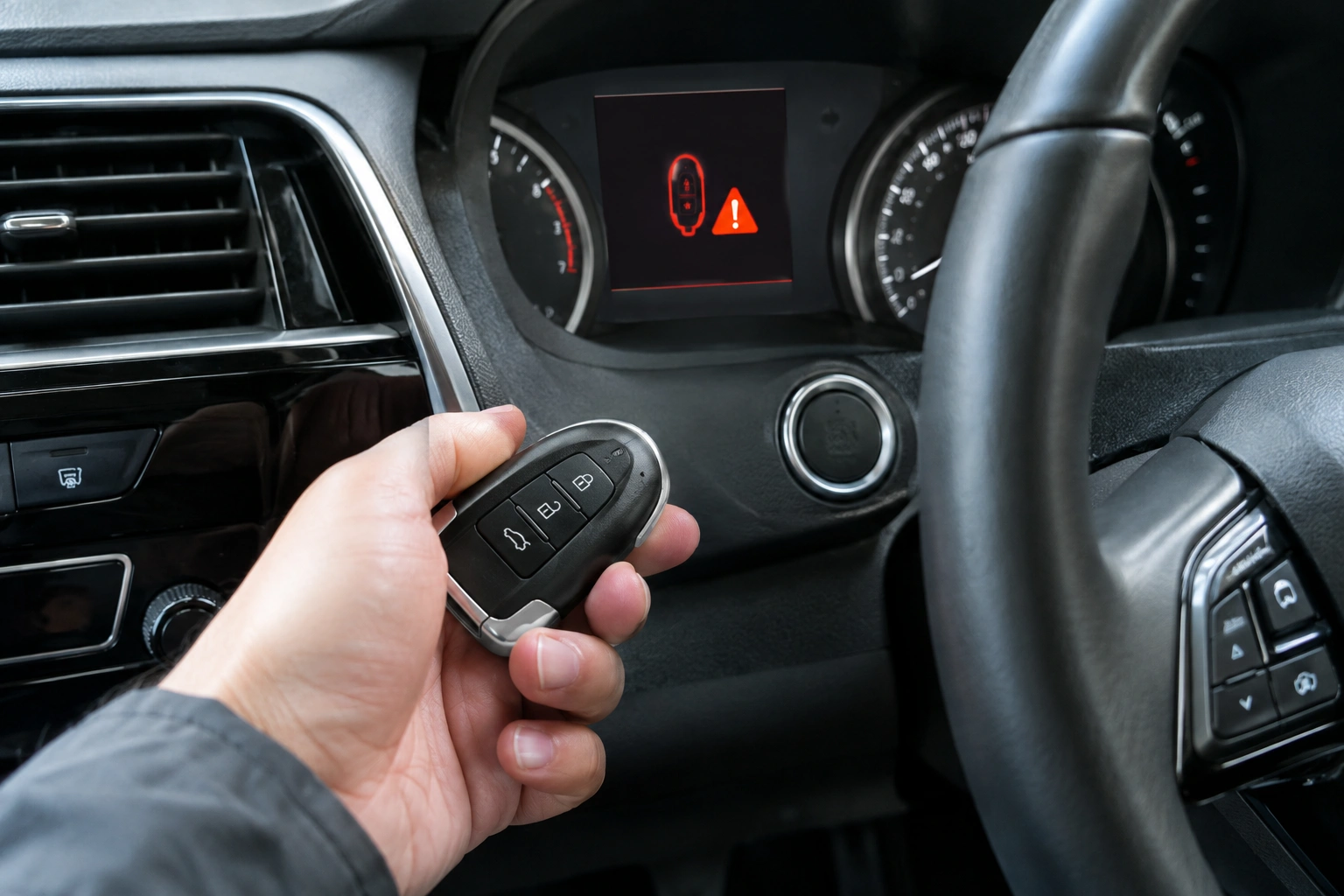
Why a key fob can wake the car but still not start it
A modern smart key does more than unlock doors. It also sends a security signal that tells the car the correct key is present. That signal is separate from the simple remote functions like lock, unlock, and panic. So a fob can still operate some features even if it cannot complete the engine-start authentication.
That’s why a car may respond to the fob but still refuse to start. The vehicle may be seeing enough of the fob to unlock the doors, but not enough to satisfy the immobilizer or start system. In plain terms: “the car knows the fob exists” is not the same as “the car accepts the fob for starting.”
For background on how keyless systems and backup methods work, the NHTSA’s vehicle safety resources are a solid place to start, especially if you want to understand the security side of modern ignition systems.
Quick symptom check: what the car is doing
Before you replace anything, look at the exact symptom. That narrows the problem fast.
If you see “Key Not Detected” or “No Key Present”
This usually points to a communication problem between the car and the fob. The vehicle may not be reading the fob’s transponder signal reliably. A weak fob battery is one common reason, but it is not the only one.
If the dash lights are dim or the starter just clicks
That leans toward a weak vehicle battery. A fob problem can stop the engine from starting, but it usually does not make the whole car behave electrically weak. Dim lights, slow cranking, and repeated clicking are classic battery clues.
If the doors unlock normally but the car will not start
That often means the remote functions still work, but the start authorization side is failing. A weak fob battery is a strong suspect here, especially if the problem is intermittent.
If the car starts only with a backup method
That’s a big clue that the fob battery is too weak for normal detection, even if the fob is not completely dead.
If nothing changes after replacing the fob battery
Now you’re looking at a damaged fob, a synchronization issue, an antenna problem, or an immobilizer fault.
Most likely causes, ranked from common to less common
Here’s the order I’d check them in.
-
Weak or dead key fob battery
This is the easiest and cheapest fix to rule out. A weak battery can still allow some remote functions while failing during start authentication. -
Weak vehicle battery
If the car battery is low, the car may not power the start system properly even when it recognizes the fob. -
Interference or temporary communication issue
Nearby electronics, a crowded parking structure, or a fob stored near another device can sometimes interfere with detection. -
Damaged fob or failed internal transponder
Water damage, cracked casing, or worn internal components can cause partial operation. -
Immobilizer or start-system fault
If the vehicle still won’t recognize a known-good fob, the issue may be in the car’s security or antenna system.
For a broader overview of smart-key behavior and common warning signs, this RAC guide to key fob problems is a useful reference.
Key fob battery vs. vehicle battery: how to tell which one is failing
This is the comparison that saves the most time.
| Symptom | More likely cause | What to try first |
|---|---|---|
| Doors unlock, but engine won’t start | Key fob battery or fob detection issue | Replace the fob battery, then try the backup start method |
| Dash lights are dim or go out | Vehicle battery | Check battery voltage or jump-start the car |
| Starter clicks once or repeatedly | Vehicle battery | Jump-start or charge the battery |
| “Key not detected” message appears | Fob battery, fob damage, or interference | Try the spare fob or emergency start method |
| Backup start works | Weak fob battery or another detection issue | Replace the fob battery soon |
| New fob battery does not help | Damaged fob, sync issue, or immobilizer fault | Try the spare fob and then professional diagnosis |
A weak fob battery can still unlock the car from close range, especially if passive entry is still barely working. But starting often takes a cleaner, stronger signal. That’s why the fob can seem “fine” right up until the moment you press Start.
A weak vehicle battery behaves differently. The car may recognize the fob, but the dash goes dim, accessories act sluggish, or you hear a click instead of a crank. If the car has been sitting for days or weeks, the vehicle battery moves up the list quickly.
Step-by-step fixes to try first
1) Try the spare key fob
If you have a second fob, use it before doing anything else. This is the fastest way to separate a fob problem from a vehicle problem. If the spare starts the car normally, the original fob is likely the issue.
2) Replace the key fob battery
If the fob is old, the battery is the easiest first repair. Use the battery type listed in the owner’s manual or on the existing battery, and make sure it’s installed in the correct orientation. A fresh battery is not a guaranteed fix, but it is the right low-cost test when the car unlocks yet won’t start.
If you want to compare your symptoms with a similar no-detection case, our guide on what to do when a key fob is not detected and the car won’t start walks through the same decision path from a slightly different angle.
3) Check the vehicle battery
Turn on the headlights or interior lights. If they’re weak, the car battery may be the real problem. If you have access to a charger or jump pack, a jump-start can tell you a lot quickly. If the car starts after a jump, the vehicle battery deserves attention even if the fob also seems suspicious.
4) Move the fob away from interference
Take the fob out of a bag or pocket with other electronics. Don’t leave it next to a phone, another key fob, or a large metal object while testing. If you’re in a garage or parking structure with lots of electronics nearby, try a different location.
5) Inspect the fob for damage
Look for cracked plastic, moisture, loose buttons, or signs the battery contacts are corroded. If the fob has been dropped in water or run through the wash, a battery swap may not be enough.
Emergency start methods for a dead or weak fob
Many push-button start vehicles have a backup way to start when the fob battery is weak or dead. The exact procedure varies by make and model, so check the owner’s manual first. In many cars, the emergency method works by placing the fob in a specific spot near the start button, steering column, center console, or a marked slot. The car then uses a passive induction area to read the fob’s immobilizer chip.
That backup method is not magic; it simply gives the car a better chance to detect the fob when the battery is too weak for normal range. If the car starts this way, the fob battery is likely the first thing to replace, though interference or a marginal fob issue can also be part of the problem.
For model-specific backup-start details, check the owner’s manual or the official manufacturer support page for your vehicle. Those sources are usually the quickest way to confirm the correct emergency start procedure.
If your car has an emergency start slot, use it exactly as described by the manufacturer. Don’t force the fob into a place that doesn’t belong there.
What dashboard messages mean
The message on the dash can tell you a lot.
- “Key Not Detected” / “No Key Present”: The car is not reading the fob properly. That can mean a weak fob battery, interference, a damaged fob, or a detection-system issue.
- Security or immobilizer warning: The car may be rejecting the fob’s authorization signal. This can happen even if the remote buttons still work.
- No warning, but no crank: That shifts attention toward the vehicle battery, starter circuit, or a system fault that is not displaying a clear key message.
If the car gives a key-related warning, don’t keep pressing the start button over and over. Try the correct backup procedure once or twice, then move to the next diagnosis step.
When the fob itself is damaged or out of sync
A new battery does not fix every fob. If the case is cracked, water-damaged, or the internal transponder has failed, the fob may still unlock the car but fail to start it. That can also happen if the fob has lost synchronization or if the vehicle’s keyless system is no longer recognizing it reliably.
This is where the spare fob becomes valuable again. If the spare works and the original does not, the original fob is likely damaged or out of sync. If both fail the same way, the issue is more likely in the car than in the fob.
In some vehicles, a fob can sometimes be resynchronized or reprogrammed, but procedures vary widely and often require dealer or locksmith tools. In others, replacement is the more practical route. Don’t guess here—smart keys are vehicle-specific, and the wrong procedure can waste time without fixing anything.
When to consult a locksmith
Call a locksmith, dealer, or mechanic if:
- the spare fob does the same thing as the original
- the battery is new but the car still says “key not detected”
- the backup start method fails
- the fob has visible water damage or broken internals
- the vehicle battery is healthy, but the car still won’t authorize starting
A locksmith is often the best first call when the issue looks like a key or programming problem. A dealer may be necessary for certain smart-key systems or replacement fobs that need vehicle-specific setup. A mechanic makes more sense if the vehicle battery, starter, or immobilizer system needs deeper diagnosis.
How to prevent this from happening again
Replace the fob battery before it fails completely, not after you’re stranded in a parking lot. If your fob starts acting flaky at close range or the car only detects it intermittently, treat that as an early warning. Testing the spare fob periodically is also a smart habit, since it confirms the backup will actually work when you need it.
Keep the spare fob somewhere you can actually reach it. A backup fob locked in a drawer at home is not much help if you’re stuck at work or at the store.
If your vehicle uses a hidden emergency start spot, learn where it is now. The time to find that location is not when the dash says “key not detected” and you’re late for work.
FAQ
Why does my car recognize the key fob but still not start?
Because unlocking the car and authorizing the engine are different jobs. The fob may still work for remote entry while failing the security check needed for starting.
Can a weak key fob battery still unlock the car?
Yes, sometimes. A weak battery may still handle limited remote functions but fail when the car needs a stronger detection signal for start authorization.
How do I start the car if the fob battery is dead?
Use the manufacturer’s emergency start procedure. That usually means placing the fob near a designated spot or in a backup slot so the car can read the transponder chip.
Is it the key fob battery or the car battery?
If the dash is dim or the starter clicks, suspect the car battery first. If the doors unlock but the car says “key not detected,” the fob battery is more likely.
Do I need to reprogram or replace the fob?
Not always. Try a fresh battery and the spare fob first. If both fail and the vehicle still won’t recognize the key, reprogramming or replacement may be needed.
When should I call for help?
If battery checks and the backup start method don’t work, or if the car shows repeated security warnings, it’s time for a locksmith, dealer, or mechanic to diagnose the system.
