
Why a Car Remote Works Sometimes: How to Diagnose an Intermittent Key Fob

If your car remote works sometimes, you’re usually dealing with a weak link somewhere in the chain: the fob battery, the fob itself, the vehicle’s receiver, or plain old interference. The good news is that intermittent behavior is often easier to diagnose than a complete failure, because the pattern gives you clues.
Think of it this way: if the remote unlocks the car only when you stand close to it, or only after you press the button twice, that’s not random. It points to a specific kind of problem. In this guide, I’ll walk you through the checks in the same order I’d use in the shop: easiest first, then the tests that tell you whether the issue is in the remote or in the car.
Quick diagnosis: what the symptom usually means
A key fob is a small electronic transmitter that controls functions like locking and unlocking doors, opening the trunk, and sometimes starting the engine. Some fobs can also flash the lights so you can find the car in a lot.
When a remote works only part of the time, the pattern matters:
- Works after repeated presses: often points to weak battery power, dirty contacts, or worn buttons.
- Works only at close range: suggests a weak fob battery or signal interference.
- Both the main fob and spare act the same: more likely a vehicle-side issue.
- One button works, another doesn’t: usually a fob hardware problem.
- Works in one location but not another: interference is a strong possibility.
Most likely causes, in order
Based on common troubleshooting patterns, the most likely causes are usually:
- Weak key fob battery
- Worn buttons, dirty contacts, or internal damage
- Signal interference or poor range
- Vehicle battery or power issues
- Lost synchronization or programming problem
- Receiver, central locking, or door lock actuator fault
A source focused on random remote failure says the usual culprits are a weak battery, worn internal connections, or interference, and it recommends battery or fob replacement if the problem keeps happening. That fits what I’ve seen in practice: intermittent problems usually mean a part is degrading, not that the whole system has died. KeylessEntryRemoteFob.com
Start with the easiest fix: replace the key fob battery
If the remote still works sometimes, the battery is the first thing I’d check. A dying fob battery can still send enough signal to work occasionally, especially when you’re standing close to the car or pressing the button more than once.
Signs the battery is the likely culprit:
- The remote works better at short range
- Buttons feel normal, but response is inconsistent
- The fob has gotten worse over days or weeks
- The low-battery warning appears on the dash, if your vehicle has one
Replace the battery before you buy a whole new fob. That’s cheap, fast, and often enough to restore normal operation. Just make sure you use the correct battery type and install it with the right polarity. If the fob case is difficult to open, don’t force it; cracked clips can turn a simple battery swap into a damaged shell.
If you’re already dealing with a “key not detected” warning as well as an unreliable remote, this related guide on what to check after a key battery change may help narrow things down.
Test the spare key fob to separate fob problems from car problems
This is the fastest decision test you can do.
Use the spare fob in the same place, at the same time, with the same car. Then compare results:
- Spare works normally, original does not: the original fob is the problem.
- Both fobs act up the same way: the issue is probably in the car, the environment, or both.
- Spare works better but still not perfectly: look at interference, vehicle battery, or receiver issues.
That one test can save you from guessing. If both fobs fail in the same way, replacing the battery in one remote won’t solve the real problem.
Check for signal interference and range issues
If the remote works in your driveway but not in a parking garage, near a radio tower, or beside a building full of electronics, that points toward interference rather than a bad fob.
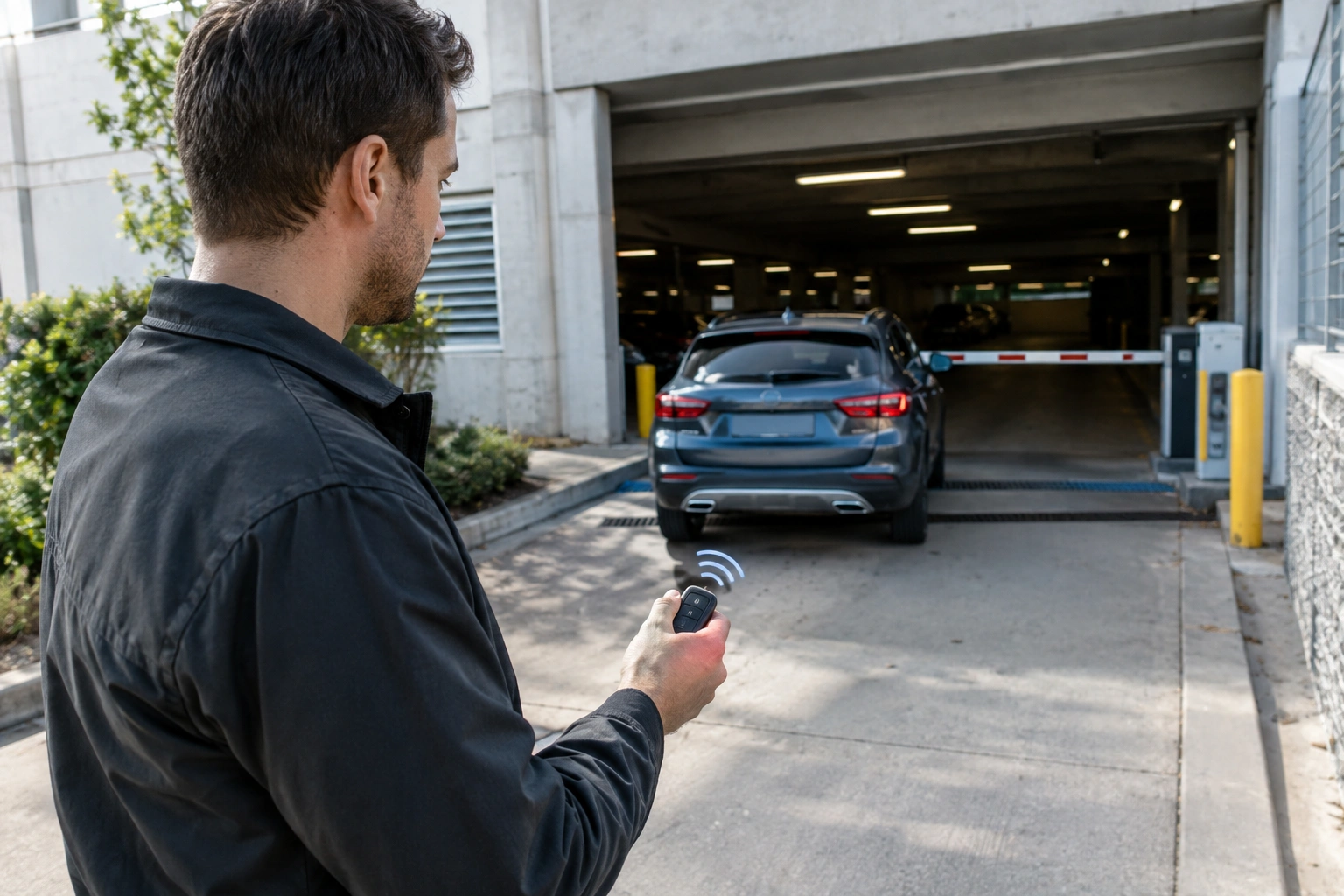
Common interference clues:
- Remote works only when you’re very close to the car
- It fails in certain parking lots but not at home
- It starts working again after you move a few feet
- Other electronics nearby seem to affect it
I’ve seen owners assume their fob is dying when the real issue was the environment. Metal structures, dense urban areas, and nearby transmitters can all reduce the effective range of a weak signal. If the problem is location-specific, don’t rush to replace the remote.
Inspect the key fob for worn buttons, dirty contacts, moisture, or corrosion
If the battery is fine and the spare doesn’t behave the same way, open the fob carefully and inspect the inside.
Look for:
- Cracked plastic shell
- Loose battery contacts
- Dirt or grime on the circuit board
- Green or white corrosion
- Signs of moisture intrusion
- Buttons that feel mushy, sticky, or uneven
A fob can work intermittently when a button only makes contact if pressed a certain way. That’s why one button may fail while another still works. If the remote was dropped in water, or even exposed to repeated damp conditions, corrosion can create random failures that come and go.
If you see moisture or corrosion, stop using the fob until it’s dried and inspected. Continued use can make the damage worse.
Compare the likely cause: fob battery, car battery, interference, or receiver fault
Here’s a simple way to sort the problem:
| Symptom | More likely cause | What to try first |
|---|---|---|
| Works only at close range | Weak fob battery or interference | Replace fob battery, then test elsewhere |
| Works after pressing several times | Worn button or dirty contact | Inspect fob interior and button pads |
| Both fobs fail the same way | Vehicle-side issue | Check car battery and receiver-related faults |
| Works in one location but not another | Signal interference | Test in a different parking area |
| Remote acts strange after a weak car battery | Vehicle power issue | Test vehicle battery and charging system |
| One button works, another doesn’t | Internal fob damage | Open fob and inspect contacts/buttons |
A weak vehicle battery can sometimes affect remote locking and unlocking, especially if the car is struggling with overall electrical power. That’s a diagnostic clue, not a guarantee, but it becomes more relevant if the car is also slow to crank or showing other electrical symptoms.
If the car battery is old, slow to crank, or showing other electrical symptoms, don’t ignore it just because the engine still starts. Low voltage can create odd behavior in the central locking system and related electronics.
Rule out vehicle power and receiver problems
If both fobs are unreliable, I’d shift attention to the car. The receiver, central locking system, or a door lock actuator may be at fault.
Vehicle-side signs include:
- Both remotes behave the same
- Door locks work inconsistently even from the switch inside the car
- One door fails while others work
- The problem comes and goes without any change in the fob
- The car battery is weak or recently disconnected
Try these quick vehicle-side checks:
- Use the interior lock switch: if the switch also acts up, that points more toward a vehicle-side locking or power issue than a fob problem.
- Test engine off vs. engine running: if the remote works normally with the engine running but not with the car off, or vice versa, that can be a clue about power, receiver behavior, or interference.
A receiver fault is a possible clue when the fob seems fine but the car simply doesn’t respond. A door lock actuator issue is another clue when the remote appears to send a signal but one door or lock mechanism doesn’t move correctly.
This is where many owners waste time replacing remotes that were never the real problem. If the spare fob doesn’t solve it, the car deserves a closer look.
Try reprogramming or resynchronizing only when it makes sense
Reprogramming can help if the fob lost synchronization with the vehicle, but it won’t fix damaged buttons, corrosion, or a dead receiver. So use this step only after the battery and basic physical checks.
Reprogramming is worth trying when:
- The battery is new
- The fob looks physically intact
- The spare fob works differently
- The car recently had a battery disconnect or electrical service
Reprogramming is less likely to help when:
- The fob was dropped or wet
- Buttons are visibly worn
- Both remotes fail the same way
- The car has obvious locking-system trouble
If you’re also dealing with a no-detection issue, this related guide on what to do when the key fob is not detected may be useful.
DIY troubleshooting sequence: what to do in the right order
Here’s the order I recommend:
- Test the spare fob
- Replace the fob battery
- Try the remote in a different location
- Inspect the fob case, buttons, and contacts
- Check the vehicle battery condition
- Try reprogramming only if the fob still seems healthy
- Look for vehicle-side issues if both fobs fail
That order matters because it separates the most common, low-cost fixes from the deeper problems. If you skip straight to programming or replacement, you may miss a simple battery or contact issue.
When to replace the fob instead of repairing it
Replacement makes more sense when the fob case is cracked, the circuit board is damaged, or corrosion has spread enough that cleaning won’t restore reliable use. It’s also the practical choice when the repair would cost more time and effort than a new remote.
I’d lean toward replacement if:
- The shell won’t stay closed
- Buttons are physically worn out
- Water damage is visible
- The circuit board is corroded
- The fob still fails after a fresh battery and inspection
If the problem is only the battery, replace the battery. If the problem is the shell or internal electronics, replacement is usually the cleaner fix.
When to call a locksmith, dealer, or mechanic
Call a dealer, locksmith, or mechanic when:
- Both fobs behave the same way
- The car battery is good, but the remote still fails intermittently
- The door locks or central locking system are inconsistent
- You suspect the receiver or actuator, not the remote
- Reprogramming steps don’t help
- You need a replacement fob cut and programmed correctly
A locksmith or dealer is usually the right contact for programming help or getting a replacement fob matched to the vehicle. If the issue seems vehicle-side — especially if you suspect the receiver, wiring, central locking, or an actuator problem — a mechanic may be the better fit for electrical diagnosis and repair.
How to keep the problem from coming back
A few habits help prevent repeat failures:
- Replace the fob battery before it gets completely weak
- Keep the spare fob tested and accessible
- Avoid storing the fob where it can get wet or crushed
- Clean the battery contacts if you see corrosion
- Keep the mechanical key available for backup entry
That last point matters more than people think. If the remote starts acting up again, you’ll still be able to get into the car and keep moving.
FAQ
Why does my car remote work sometimes and not others?
The most common reasons are a weak fob battery, worn internal contacts, interference, or a vehicle-side issue. The pattern of failure usually tells you which one is most likely.
Can a weak car battery affect the key fob?
Yes, on some vehicles. A weak vehicle battery can cause odd electrical behavior, including locking or unlocking problems, even if the engine still starts.
How do I know if it’s the fob or the car?
Use the spare fob. If both remotes fail the same way, the problem is more likely in the car. If only one remote is unreliable, the fob is the better suspect.
Will reprogramming fix an intermittent remote?
Sometimes, if the fob lost synchronization. It will not fix worn buttons, corrosion, or broken electronics.
Should I replace the battery before buying a new fob?
Yes. That’s the simplest and least expensive first step, and it solves a lot of intermittent remote problems.
What if my remote only works near the car?
That usually points to a weak fob battery or signal interference. Try a fresh battery first, then test in a different location.
The best decision rule is simple: if a spare fob works normally and the interior lock switch also behaves normally, focus on the original fob; if both fobs act up and the vehicle’s own lock switch is inconsistent, focus on the car side. That keeps you from replacing parts you don’t need and gets you to the real fix faster.
