
Key Fob Immobilizer Problem Symptoms: How to Tell What’s Really Failing

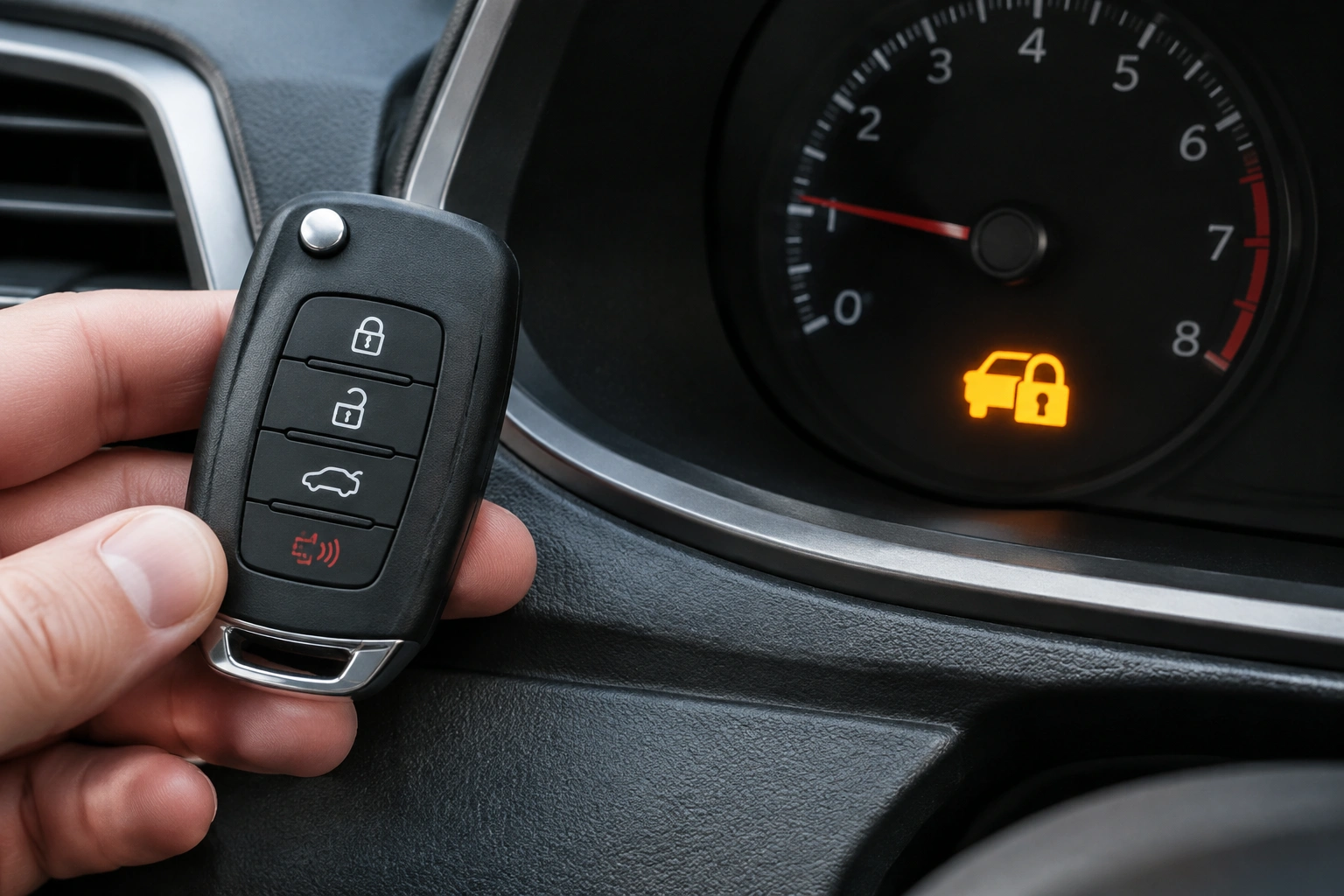
A car that won’t recognize your key can be frustrating fast, especially when the dash throws a security warning and the engine refuses to start. The good news is that key fob immobilizer problem symptoms usually leave a trail. If you know what to look for, you can often tell whether the issue is the fob battery, the vehicle battery, the key itself, or the immobilizer system on the car.
I’m Jason Carter, and after years of working around starting and security problems in the shop, I can tell you this: the fastest fix usually comes from matching the symptom to the right system before you replace anything.
What an Immobilizer Does and Why It Can Stop the Car From Starting
An immobilizer is an anti-theft system that lets the engine start only when it detects the right key or fob. On older vehicles, that usually means a transponder chip inside the key head. On newer push-to-start vehicles, the car has to recognize the smart key before it will allow the engine to run.
That matters because the immobilizer does not just affect convenience features like remote lock and unlock. It can block start authorization completely. So a key fob problem may show up as a no-start, a “key not detected” message, or a flashing security light even when the battery is still charged enough to power the dash.
For a broader look at recognition problems, our guide on key fob not detected walks through the most common causes and backup-start methods.
Common Symptoms of a Key Fob Immobilizer Problem
The clearest clue is a start problem that looks electrical but does not behave like a dead starter or dead battery.
Here are the symptoms that most often point toward the immobilizer side of the system:
- The engine cranks but will not start. This is one of the classic signs of an immobilizer-related fault.
- The dash shows a key, lock, or security light. If that light stays on or flashes when you try to start, the car may not be seeing a valid key.
- The message says “key not detected” or similar. That usually means the vehicle is not getting the signal it expects from the fob.
- The remote unlock works sometimes, but not reliably. A weak fob battery or signal issue can show up here first.
- The car starts only when the fob is held very close to the start button or steering column. That often points to a weak fob battery or a marginal recognition issue.
- The problem comes and goes. Intermittent recognition usually means the system is on the edge, not completely dead.
A useful comparison from NHTSA is that anti-theft systems are meant to stop unauthorized starts, so if the security light is active during a no-start, the vehicle may be doing exactly what it was designed to do — just with the wrong key signal being detected.
Quick Symptom Check: Is It the Key Fob, the Vehicle Battery, or the Immobilizer?
Before you buy parts, compare the symptoms to the likely cause.
| Symptom pattern | Most likely cause | What to try first |
|---|---|---|
| Remote buttons fail, but the car still starts normally | Key fob battery or remote circuit | Replace the fob battery first |
| Car says key not detected, but a spare key works | Main fob problem | Use the spare and inspect the original fob |
| Car cranks but won’t start, security light flashes | Immobilizer recognition issue | Try the spare key and check for low voltage |
| Dash is dim, electronics act weak, multiple systems glitch | Weak vehicle battery | Test or charge the vehicle battery |
| Fob works only very close to the car | Weak fob battery or interference | Replace the fob battery and move away from interference sources |
| Both keys fail after a battery disconnect | Synchronization or relearn issue | Check whether the vehicle needs a reset or relearn |
The big decision rule is simple: if the remote works but the engine will not start, think immobilizer or start authorization; if the remote does not work but the car starts, think fob battery or remote circuit.
Transponder Keys vs. Smart Keys: What’s Different?
Older transponder keys and modern smart keys can fail in different ways, even though both can trigger the same no-start symptom.
- Transponder keys usually need to be inserted into an ignition cylinder. If the immobilizer does not read the chip, the engine may crank and then shut off, or it may not start at all.
- Smart keys are used with push-to-start systems. If the car cannot detect the fob, you may see a “key not detected” message, a security light, or a start button that seems to do nothing.
When immobilizer recognition is the issue, the failure pattern is often different too:
- with a transponder key, the problem is more likely around chip recognition at the ignition or antenna ring
- with a smart key, the issue may be the fob battery, close-range detection, the receiver, or the vehicle’s start authorization logic
That distinction matters because a smart key can still unlock doors remotely and yet fail to be recognized for starting, while a transponder key may have no obvious warning until you try to crank the engine.
Likely Causes Ordered by Probability
When I’m narrowing this down, I work from the most common causes first.
1. Weak or dead key fob battery
This is the easiest and most common fix. A weak battery often affects remote lock and unlock first, and on some vehicles it can also cause recognition trouble during starting.
If your car starts when the fob is held near the start button, that is a strong clue the fob battery is getting weak.
2. Weak vehicle battery
A low vehicle battery can create all kinds of weird behavior. The dash may light up, the security system may misread the key, and the car may show a “key not detected” message even though the fob is fine.
This is especially common after the car has sat for a while, after cold weather, or after repeated failed start attempts.
3. Signal interference
Electronic interference can temporarily block the car from reading the fob. If the problem happens in one parking spot but not another, or near certain buildings or devices, interference is worth considering.
If you want a deeper look at that side of the diagnosis, see key fob interference causes.
4. Synchronization or relearn issue
After a battery disconnect, jump-start, or low-voltage event, some vehicles lose their key synchronization. In that case, the key may still be fine, but the car and fob are no longer speaking the same language.
5. Damaged or worn key
Keys take abuse. A transponder chip can be damaged, a smart key can be cracked, or the internal electronics can fail after a drop or water exposure. Wear around the key head or case can also be enough to disrupt recognition.
6. Immobilizer antenna, receiver, or module failure
If the key and batteries check out, the problem may be on the vehicle side. That can include the antenna ring around the ignition, the receiver in a push-to-start system, loose wiring, or the immobilizer control module itself.
A practical clue: if one key fails but a spare works, the key is more likely at fault. If both keys fail the same way, the car-side antenna, receiver, wiring, or module becomes more likely.
That is the point where basic troubleshooting often ends and diagnosis begins.
Step-by-Step Troubleshooting You Can Do at Home
These checks are safe, simple, and useful even if you are not sure what kind of key system your car uses.
1. Check the vehicle battery first if the dash is weak
If the dash is dim, electronics are acting strange, or the car has been sitting for a while, start with the vehicle battery. Low voltage can create false immobilizer symptoms.
If the battery is weak, fix that first before chasing the key.
2. Try the spare key
This is one of the fastest tests you can do. If the spare starts the car normally, you have narrowed the problem to the original key or fob.
If both keys fail, the odds shift toward the vehicle battery, immobilizer antenna, receiver, or module.
3. Replace the key fob battery if the remote is weak or the car needs the fob held close
If the battery is cheap and easy to access, this is usually the next move. It is especially worth doing if the remote range has dropped, the buttons feel inconsistent, or the car only recognizes the fob close to the cabin.
4. Watch the warning lights and messages
Pay attention to whether the security light flashes, stays solid, or disappears after a few seconds. Also note whether the dash says “key not detected,” “immobilizer active,” or something similar. That message pattern is often more useful than the no-start itself.
5. Try the recognized backup start method
Many push-to-start cars have a backup recognition spot where the fob can be held near the button or a marked area. If the car starts that way, the fob is usually still transmitting enough signal for close-range detection, which points toward a weak battery or a recognition issue rather than a completely dead key.
What to Do If the Car Starts Intermittently
Intermittent behavior is annoying because it tempts you to call the system “fine” one minute and “dead” the next. In reality, intermittent recognition is often the clue that matters most.
Use this simple decision path:
- Try the spare key first.
- If the spare works every time, the original key or fob is the likely problem.
-
If the spare also fails, move on.
-
Check the vehicle battery and dash behavior.
- If the dash is weak, slow, or glitchy, low vehicle voltage may be confusing the immobilizer.
-
If voltage looks normal, keep going.
-
Look at when the failure happens.
- Only in one location: interference becomes more likely.
- Only after a battery disconnect or jump-start: relearn or resync becomes more likely.
-
Only when the fob is far from the car: fob battery or recognition issue becomes more likely.
-
Stop testing once the pattern is clear.
- If the spare key works, stop cranking and focus on the original key.
- If both keys fail and the security light stays active, stop repeated start attempts and move to diagnosis or professional help.
A car that starts on warm afternoons but not cold mornings, for example, may be telling you the battery is marginal. A car that starts only in one location may be reacting to interference. A car that needs the fob pressed against the button every time may be losing signal strength or having a recognition issue.
This is also where repeated testing can waste battery power fast. If the car is already struggling to recognize the key, keep attempts limited and deliberate.
When the Problem Points to Reprogramming or Resynchronization
Reprogramming is not the first answer for every no-start, but it becomes more plausible after certain events.
Think about re-synchronization if:
- the vehicle battery was disconnected
- the battery was completely dead
- the car was jump-started recently
- both keys stopped working at the same time
- the system acts normal except for start authorization
If that sounds like your situation, the next step is usually to check whether your vehicle has a specific relearn or sync procedure in the owner’s manual or service information. Some vehicles handle this automatically; others need a proper relearn or programming procedure.
If you suspect a relearn issue, do not keep swapping parts blindly. First confirm that the vehicle battery is healthy, then try the spare key, and then look for the model-specific reset or programming step. If the procedure is not straightforward, that is usually the point to call a locksmith, dealer, or qualified mechanic rather than guessing.
That is one reason I do not recommend replacing parts too quickly. A key that seems “bad” may just be out of sync after a voltage event.
When the Immobilizer System Itself May Be Faulty
If the spare key does not help, the batteries are good, and the problem keeps returning, the vehicle-side system moves higher on the list.
Signs that point more toward the immobilizer hardware or module include:
- both keys fail the same way
- the security light stays on or flashes every time
- the car cranks but never gets past start authorization
- the problem persists after battery replacement and basic checks
- the issue follows a battery disconnect or low-voltage event and never clears
At that stage, the likely suspects include the antenna ring, the receiver, wiring, or the immobilizer module. Those are not usually guess-and-replace parts. They need proper diagnosis because the symptom is similar across several different failures.
When to Consult a Locksmith
Call a locksmith, dealer, or qualified mechanic when:
- both keys fail
- the car will not start after a fresh fob battery and good vehicle battery
- the security light stays active
- the car needs programming or relearn work
- you are stranded and cannot safely leave the vehicle where it is
A locksmith is often the best fit for key-related diagnosis and programming. A dealer may be better for model-specific immobilizer programming or module-level faults. A mechanic is a good choice when you are also dealing with battery, charging, or wiring concerns.
If the vehicle is stuck in a place where it cannot safely stay, roadside help or towing is smarter than repeated attempts.
How to Avoid Making the Problem Worse
The biggest mistake I see is repeated start attempts without checking the basics. That can drain the vehicle battery, make the symptom noisier, and sometimes turn a manageable problem into a dead-battery problem too.
Keep these habits in mind:
- do not keep cranking endlessly
- do not replace the fob battery before checking the vehicle battery if the dash is already weak
- do not assume one failed key means the whole immobilizer system is bad
- do not ignore a spare key test
- do not keep trying to start the car if the security light is clearly active and nothing is changing
A calm, step-by-step diagnosis usually saves more time than random parts swapping.
FAQ
Can a bad key fob battery cause immobilizer symptoms?
Yes, it can. A weak fob battery often affects remote lock and unlock first, but on some vehicles it can also cause recognition problems during starting.
If my car cranks but won’t start, is the immobilizer the cause?
It might be. That is one of the classic immobilizer-related symptoms, but a weak vehicle battery, fuel issue, or other fault can also cause a crank-no-start.
Will a spare key prove the problem is the fob?
Often, yes. If the spare starts the car normally, the original key or fob is the likely problem.
Why does my car say key not detected?
That usually means the vehicle is not receiving a valid signal from the key. The cause could be a weak fob battery, a weak vehicle battery, interference, synchronization trouble, or a fault in the car’s recognition system.
Can I reset the key fob myself?
Sometimes, but only if the issue is a simple sync problem and your vehicle supports a straightforward relearn. If the problem is hardware-related, a reset will not fix it.
When should I stop trying to start the car?
Stop when repeated attempts are not changing anything and the battery is getting weaker. At that point, more cranking usually creates more problems, not fewer. If the security light is active and the symptom is not changing, it is usually better to pause and diagnose instead of continuing to try.
The quickest path is usually the simplest one: check the batteries, try the spare key, watch the warning lights, and use the result to narrow the fault before you spend money on parts.
