
Key Fob Locks but Won’t Unlock? Here’s How to Track Down the Cause

If your key fob will lock the car but won’t unlock it, that usually tells you something useful: the remote is still sending at least part of a signal, but something in the fob, the car, or the lock system is failing on the unlock side.
That symptom can be frustrating because it feels “half broken.” In practice, though, it narrows the problem faster than a total failure. You’re not guessing from scratch. You’re checking a short list of likely causes in the right order.
Quick diagnosis: what the symptom usually means
When a fob locks the doors but won’t unlock them, the first question is whether the problem follows the fob or stays with the car.
- If the same fob locks but won’t unlock, the issue may be a weak battery, a worn unlock button, or internal contact damage.
- If a spare fob behaves the same way, the problem is more likely on the vehicle side.
- If the manual key blade opens the door but the remote does not, that points away from the mechanical lock cylinder and toward the remote system or central locking system.
That last test matters. A keyless-entry troubleshooting guide notes that if the key works in the ignition but not the doors, the issue is likely a mechanical door-lock problem or a problem with the remote transmitter. In other words, the symptom itself helps separate the fob from the car. Keyless Entry Remote
Most likely causes, in the order I’d check them
From a technician’s point of view, the most common causes are usually the simplest ones:
- Weak key fob battery or poor battery contact
- Worn, sticky, or damaged unlock button
- Signal range or interference issues
- Lost synchronization or programming problem
- Weak car battery or vehicle electrical issue
- Door lock actuator or central locking fault
A locksmith troubleshooting article lists battery issues, button wear, deprogramming, blockage, disconnects, and wiring among the common reasons a fob won’t unlock doors. That lines up with what I’d expect in the shop: the unlock side often fails before the whole remote dies. Delaware County Locksmith
Check the key fob first: battery, button, and contacts
This is the cheapest place to start, and it solves a lot of cases.
Replace the battery before you overthink it
A weak battery can still leave enough power for one function while the other becomes unreliable. That’s especially true if the fob is older, has never had a battery change, or has reduced range.
A customer report on a Toyota forum described a fob that would lock the car doors but not unlock them, and the extra key inside the fob was also not working. The first advice given was to try the cheapest fix first: the battery in the fob. That’s sensible troubleshooting, not magic. JustAnswer example
When you replace the battery, make sure it sits firmly in the holder. A battery that is technically new but slightly loose can act like a failing fob.
Inspect the unlock button closely
A lock button and unlock button can wear differently. If the unlock button feels:
- mushy
- sticky
- sunken
- harder to press than the lock button
- responsive only at an angle
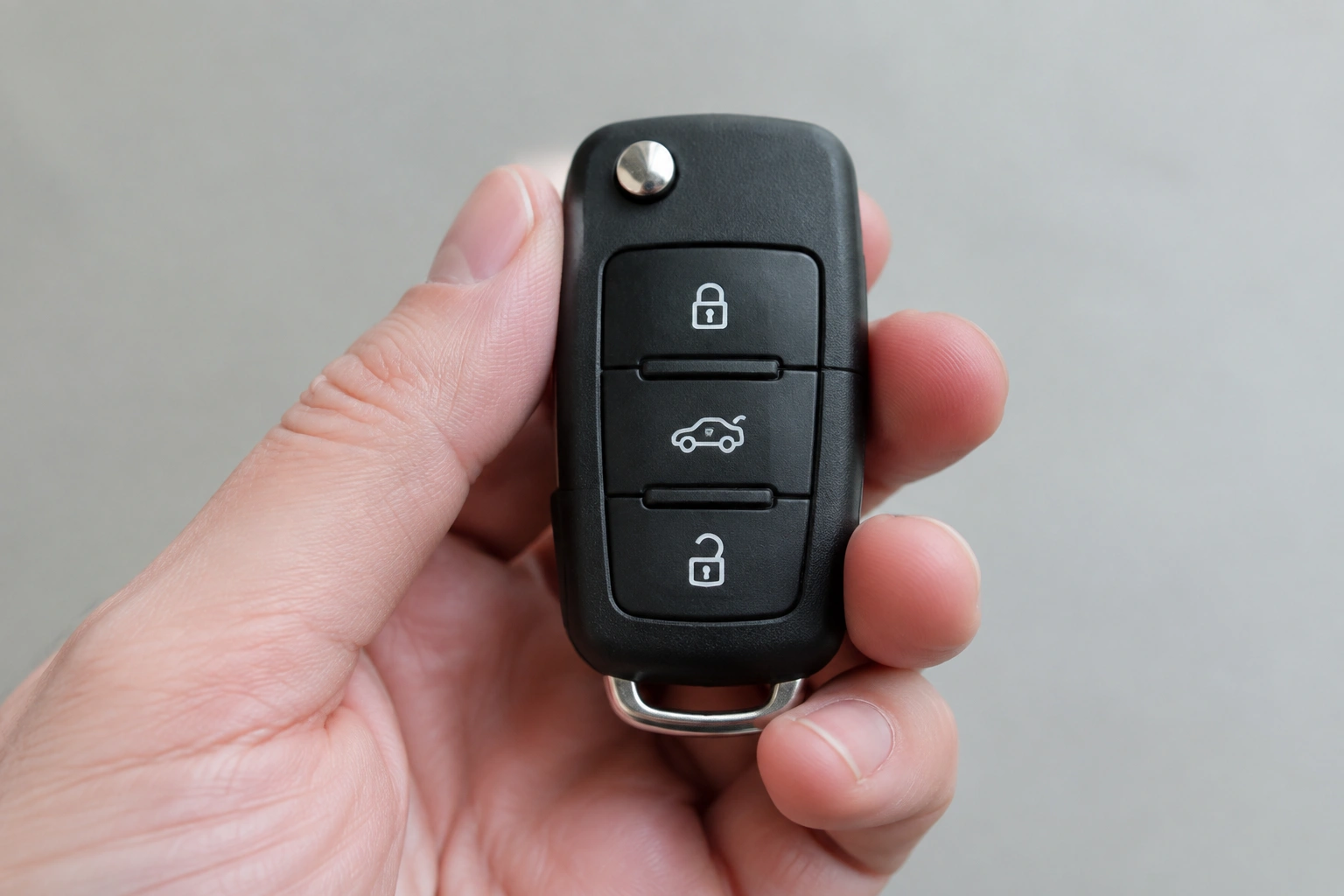
then the switch under that button may be worn or contaminated.
A practical example: if the lock button works every time, but the unlock button only works when you press twice or press hard on one edge, that points more toward a button/contact issue than a vehicle-side failure.
Clean the battery contacts and button area
If you open the fob, look for:
- corrosion on the battery terminals
- dirt or sticky residue around the button membrane
- a cracked rubber button pad
- a shifted battery that no longer presses tightly against the contacts
Be gentle here. You’re not rebuilding a circuit board. You’re checking for obvious contamination or contact loss. If the fob was dropped recently, that can also crack the internal contact path even when the case looks fine from the outside.
Test for signal and range problems
If the unlock button works only when you stand very close to the car, or only in certain places, think signal strength before anything else.
What interference looks like
A weak or noisy signal can show up like this:
- the fob works near the car but not from normal distance
- lock works from farther away than unlock
- the problem is worse in parking garages, near buildings, or near other electronics
Try the fob in a different location with less interference. Stand beside the driver’s door and test again. Then test from your normal distance. If the unlock function improves only when you’re close, that supports a weak battery or transmission issue.
Don’t ignore intermittent behavior
Intermittent unlock function is often more telling than a complete failure. If it works sometimes, the problem may be a worn button, weak battery, or poor internal contact rather than a dead fob.
That’s one reason I’d replace the battery before reprogramming anything. A battery problem can masquerade as a programming problem.
Use a spare fob and manual key to isolate the problem
This is the best decision point in the whole process.
If the spare fob works normally
If the spare unlocks the car every time, your original fob is the likely problem. That usually means battery, button, contact, or internal damage.
If both fobs fail the same way
Now you’re looking at the car, not the remote.
If both fobs lock but won’t unlock, and the manual key still opens the door, the issue may be in the central locking system, receiver, wiring, or a door lock actuator.
If the manual key also feels wrong
If the physical key is hard to turn, sticks, or won’t operate the lock smoothly, the issue may be mechanical in the door lock cylinder itself. That’s a different problem from the remote.
When reprogramming is worth trying
Reprogramming can help if the fob seems physically fine but has lost sync with the vehicle.
Signs that make reprogramming more plausible:
- the fob worked before and suddenly stopped after a battery change, dead battery, or long storage
- the buttons feel normal
- the spare fob still works, but the problem fob does not
- the fob sometimes responds but not consistently
Reprogramming is not a fix for a broken button or cracked circuit board. If the unlock switch is physically failing, syncing the fob again won’t repair the hardware.
So I’d treat reprogramming as a second-line step, not the first.
Check the car battery, receiver, and central locking system
A weak car battery can create confusing symptoms. A dead or weak vehicle battery may prevent the car’s receiver from recognizing the fob signal at all on some vehicles. That can affect remote unlock behavior even when the fob itself is fine. Keyless Entry Remote
How to think about car-side problems
If the fob and spare both fail, but the manual key still opens the door, the car-side system becomes more likely.
Possible vehicle-side causes include:
- weak car battery
- receiver issue
- wiring problem
- central locking fault
- one or more door lock actuators failing
A weak vehicle battery can also cause odd partial behavior, where one function seems to work and another does not. If the car has been slow to crank, dim on startup, or acting electrically strange, don’t overlook it.
Door lock actuator problems: signs the car is the real issue
A bad actuator can make the remote seem guilty when it isn’t.
Look for these clues:
- one door unlocks differently from the others
- you hear a weak click, but the lock doesn’t move fully
- the doors lock but hesitate or fail on unlock
- the problem happens with both the fob and the inside lock switch
If only one door is acting up, that leans toward a door-specific actuator or mechanical binding. If all doors fail together, the issue is more likely in the central locking control or vehicle electrical system.
A simple comparison helps: if the fob can lock the car but the unlock command does nothing across multiple doors, that’s more than a single stuck latch.
A practical troubleshooting flow you can follow
Here’s the sequence I’d use in a driveway:
- Try the unlock button from close range.
-
If it works only up close, suspect battery or signal strength.
-
Replace the fob battery.
-
Cheap, fast, and the most common first fix.
-
Check the unlock button feel.
-
Sticky or soft button? Suspect wear or internal damage.
-
Test the spare fob.
-
This is the clearest way to separate fob-side from car-side problems.
-
Use the manual key blade.
-
If the key opens the door, the lock cylinder is probably okay.
-
Try reprogramming only if the fob seems physically intact.
-
Don’t waste time syncing a damaged remote.
-
Check the car battery and observe other electrical symptoms.
-
Weak battery behavior can affect remote recognition.
-
If both fobs fail, have the central locking system inspected.
- That’s when actuator or receiver diagnosis starts to make sense.
When to repair, replace, or call a locksmith
If the problem is a battery or dirty contact, repair is usually straightforward. If the unlock button is worn but the rest of the fob is fine, a repair or replacement shell may make more sense than buying a whole new remote.
Replace the entire fob when:
- the casing is cracked
- the unlock button is physically damaged
- the circuit board has visible damage
- the fob still fails after a battery change and basic cleaning
Call a locksmith or dealer when:
- both the spare and original fobs fail
- the car battery is healthy but the vehicle still won’t respond
- the doors behave inconsistently across the vehicle
- the manual key works, but the remote unlock doesn’t and reprogramming didn’t help
If you’re locked out or the car’s locking system is acting unpredictably, a locksmith is often the better first call than guessing at more parts. For broader vehicle lockout and battery-related troubleshooting, the NHTSA also has consumer safety resources worth reviewing. NHTSA vehicle safety guidance
Common mistakes to avoid
The biggest mistake is replacing the whole fob too early. A battery or button problem is much cheaper than a full remote replacement.
Other common missteps:
- assuming the lock button proves the unlock side is fine
- skipping the spare fob test
- reprogramming before checking the battery and contacts
- blaming the fob when the car battery is weak
- forcing a sticky door lock instead of diagnosing the actuator
A little structure saves money here. Check the simple stuff first, then move outward from the fob to the car.
Bottom line
When a key fob locks but won’t unlock, the most likely causes are still the ones you can test fastest: battery weakness, worn unlock-button contacts, and signal issues. If a spare fob behaves the same way, shift your attention to the car’s battery, receiver, central locking system, or door lock actuator.
That’s the cleanest way to avoid buying parts you don’t need.
