
Why Your Key Fob Range Suddenly Dropped — and What to Check First

If your key fob used to work from across the driveway and now you have to stand right next to the door, something changed. The good news is that a sudden drop in range often points to a small, fixable issue rather than a total failure.
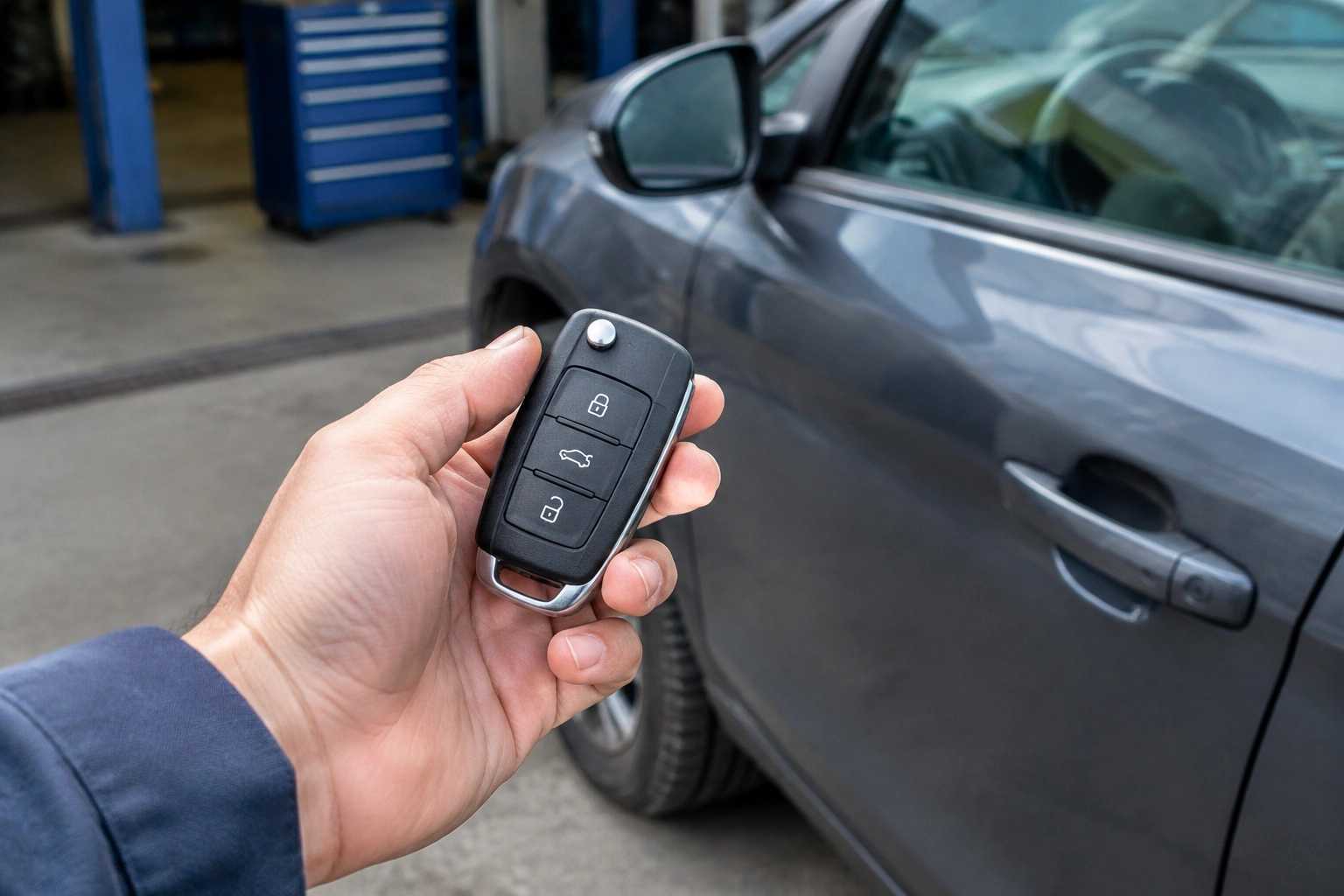
In the shop, I’d treat this as a troubleshooting job, not a guessing game. The fastest way to solve it is to work from the simplest causes to the more expensive ones: fob battery, vehicle battery, interference, physical damage, and then the car’s receiver or antenna system.
What a sudden range drop usually means
A key fob that slowly gets weaker over months can suggest a battery wearing down. A sudden change is a little different. It may mean the fob battery is nearing the end, but it can also point to a new source of radio frequency interference, a damaged fob, or a vehicle-side issue.
One useful clue is whether the problem is constant or location-based. If the fob works normally in your driveway but poorly in a parking garage or near a busy building, interference is more likely. If it is weak everywhere, the fob battery or the vehicle’s receiver becomes more suspicious.
Some owners report a sudden drop where the fob still works, just only at very short distance. That pattern is important: it tells you the transmitter is probably still alive, but its signal is not getting through as well as before.
Quick checks you can do in 5 minutes
Before buying parts, do these fast checks:
-
Try the fob in a different location.
Walk away from buildings, overhead power equipment, and dense parking structures. If range improves, the issue may be environmental. -
Test your spare key fob.
If the spare works normally, the problem is likely with the original fob, not the car. -
Check whether the failure is range-related or button-related.
If the buttons only work when you press them multiple times, or only one button fails, that leans toward worn contacts or a damaged internal switch. If all buttons work but only at close range, think signal strength. -
Look for a pattern with both fobs.
If both fobs suddenly lost range at the same time, the car-side receiver or antenna deserves attention. -
Stand close and test lock/unlock several times.
A fob that works at close range but not farther away is different from one that is completely dead.
These checks help you avoid replacing the wrong part first.
The most likely cause: a weak or failing key fob battery
A weak fob battery is still the first thing I’d check. It’s the most common, cheapest fix, and it often causes exactly this symptom: the fob still works, but only when you are much closer than before.
Typical signs include:
- shorter lock/unlock range
- needing to press the button more than once
- a fob that works better when held in a certain position
- a range that seems worse in cold weather
Replace the battery carefully and make sure the battery type matches the original. A fresh battery usually restores normal operation if the old one was the problem. If the range improves only briefly and then stays weak, that points beyond the battery.
A practical tip from the bench: when you open the fob, inspect the battery contacts. If they look dull, bent, or corroded, the new battery may not make solid contact even if it’s brand new.
If you want a related walkthrough for a fob that won’t register at all, this guide on how to start a car when the key fob is not detected can help you separate range problems from starting issues.
Check the vehicle battery next
A weak 12V vehicle battery can also affect remote performance. That’s especially worth checking if you notice other electrical symptoms, such as slow cranking, dim lights, or odd behavior from the dash or accessories.
A quick at-home check can help here. If you have a multimeter, a healthy resting 12V battery is often around 12.6 volts, give or take a bit depending on the vehicle and conditions. Lower than that does not automatically mean the battery is bad, but it can point you in the right direction. If you do not have a multimeter, look for voltage-related symptoms such as slow starts, flickering lights, or electronics acting inconsistent after the car has sat.
This is where the comparison matters:
- Key fob battery problem: the remote itself acts weak, but the car may otherwise seem normal.
- Vehicle battery problem: the car often shows other electrical symptoms at the same time.
If your car battery is old or has been struggling, don’t ignore it. Some vehicles become picky about remote functions when system voltage drops, especially after a weak battery, jump start, or recent electrical reset.
If you recently had a jump start or battery issue, it’s also worth reading what to check after a jump start when the key fob is not detected. Range problems and detection problems can overlap.
Rule out RF interference and environment-related signal loss
Radio frequency interference can make a healthy fob seem broken. This is one of the easiest things to miss because it looks like a hardware failure, but only in certain places.
Common real-world examples include:
- parking garages with heavy concrete and metal
- crowded apartment lots
- areas near large electrical equipment
- places with a lot of wireless traffic
- spots where your body, the vehicle, and nearby structures line up poorly
If the fob works fine at home but poorly at work, or only in one section of a parking lot, that strongly suggests interference rather than a failed transmitter.
The key question is whether the problem follows the location. If yes, test somewhere else before replacing parts. If no, keep moving down the list.
Inspect the key fob for physical damage or worn components
A fob can look fine from the outside and still have an internal problem. Dropping it, getting it wet, or wearing out the buttons can all reduce range or make the signal inconsistent.
Check for:
- cracked housing
- loose battery door
- water exposure
- dirt or corrosion around the battery contacts
- buttons that feel mushy, sticky, or uneven
If the fob was dropped hard, a broken internal component on the circuit board can reduce transmit efficiency. You won’t always see that from the outside, but the symptoms can be clear: weak range, intermittent response, or a fob that works only when pressed hard or held a certain way.
Clean battery contacts gently if they look dirty. If there’s visible corrosion or water damage, replacement may be more realistic than repair, especially on sealed or compact fobs.
Compare the likely causes side by side
Here’s a simple way to sort the problem:
| Symptom | More likely cause | Best next step |
|---|---|---|
| Range suddenly got shorter everywhere | Weak fob battery, damaged fob, or vehicle battery issue | Replace fob battery first, then check car battery |
| Works in one area but not another | RF interference | Test in a different location |
| Both fobs lost range at the same time | Vehicle receiver or antenna issue | Have the car-side system checked |
| Buttons work only intermittently | Worn contacts, damaged case, or internal fob wear | Inspect the fob closely |
| New battery did not help | Fob damage, sync issue, or receiver fault | Try spare fob and consider professional diagnosis |
This comparison saves time because it tells you what not to chase next.
Determine whether the car’s receiver or antenna is at fault
If the fob battery is fresh, the fob looks healthy, and both remotes suddenly have poor range, the car-side receiver or antenna becomes more likely.
That matters because the receiver is the part listening for the signal. If it is weak, damaged, or blocked, even a good fob can seem useless.
Signs that point this way include:
- both fobs acting the same way
- range reduced across all locations, not just one
- other central locking oddities
- the car responding only when the fob is very close
A receiver or antenna issue can sometimes show up on one fob first, especially if that fob is already a little weaker than the spare. So if one fob seems worse than the other, that does not rule out the car-side system.
At that point, you’re past simple battery replacement and into diagnosis. The issue may involve the central locking system, receiver wiring, or antenna placement.
What to do if the range is still bad after replacing the battery
If a new battery didn’t restore normal range, don’t jump straight to buying a replacement fob. Work through this order:
-
Retest with the spare fob.
If the spare works normally, the original fob is the likely problem. -
Clean the battery contacts.
A fresh battery can still fail if the contacts are oxidized or bent. -
Test in a different location.
Make sure you’re not chasing interference. -
Check whether the fob actually needs reprogramming.
Many fobs do not need reprogramming after a simple battery swap. Reprogramming is usually only worth considering if the fob lost sync, the vehicle had a power loss, or the owner’s manual says the vehicle requires it. -
Decide whether the problem is transmitter-side or car-side.
One bad fob points one way. Both bad fobs point another.
If the range is only slightly reduced, the fob may still be usable while you sort it out. If it’s getting worse quickly, that’s a sign to act sooner.
When to reprogram, repair, replace, or call a professional
A professional visit makes sense when the problem survives basic troubleshooting. That usually means the fob battery is new, the vehicle battery looks healthy, interference has been ruled out, and the spare fob behaves the same way.
Choose a dealer, locksmith, or independent mechanic based on the job:
- Locksmith: often a strong choice for fob testing, replacement, and many programming jobs
- Dealer: useful when the vehicle has proprietary programming or receiver-related issues
- Independent mechanic: a good option when the problem may involve the car’s electrical system or battery
If the fob has water damage, cracked internals, or repeated button failure, replacement may make more sense than repair. Compare OEM key fob and aftermarket key fob options carefully. OEM parts usually match the original behavior more closely, while aftermarket options can be cheaper but may vary in quality or compatibility.
For broader car-owner buying advice and repair context, Edmunds and Car and Driver are both useful references for vehicle ownership topics and maintenance decisions.
How to prevent the problem from coming back
A few habits can keep key fob trouble from returning too soon:
- replace the battery at the first sign of weakening range
- keep the fob dry and away from heat
- avoid storing it where buttons can be pressed accidentally
- check the spare fob once in a while so it’s not a surprise when you need it
- pay attention to early warning signs like needing to stand closer than usual
The earlier you catch a range drop, the easier it is to tell whether you’re dealing with a battery, a damaged fob, or a vehicle-side issue.
FAQs
Why did my key fob range suddenly drop?
A sudden drop usually points to a weak fob battery, interference, damage inside the fob, or a vehicle-side receiver issue. The quickest way to narrow it down is to test the spare fob and try the remote in a different location.
Can a car battery cause reduced key fob range?
Yes, a weak vehicle battery can contribute to remote problems, especially if you also notice slow cranking, dim lights, or other electrical symptoms.
How do I know if it’s interference?
If the fob works normally in one place but poorly in another, especially near garages or dense buildings, interference is a strong possibility.
Should I replace the fob battery first?
Yes. If the range problem is recent and the fob still works somewhat, battery replacement is usually the first practical step.
What if the range is still bad after a new battery?
Try the spare fob, clean the contacts, test in a different area, and then consider reprogramming only if the vehicle requires it or the fob has lost sync.
Do I need a new fob?
Not always. If the issue is battery-related, interference-related, or programming-related, a new fob may not be necessary. If the transmitter is damaged or water-exposed, replacement may be the better route.
When should I consult a locksmith?
If the problem persists after basic checks, if both fobs are affected, or if reprogramming or receiver testing is needed, a locksmith is often the most practical next stop.
