
Key Fob Repair Cost: What It Really Takes to Fix a Broken Remote

If your key fob has stopped working, the first question is usually the practical one: is this a small fix or a wallet-draining repair?
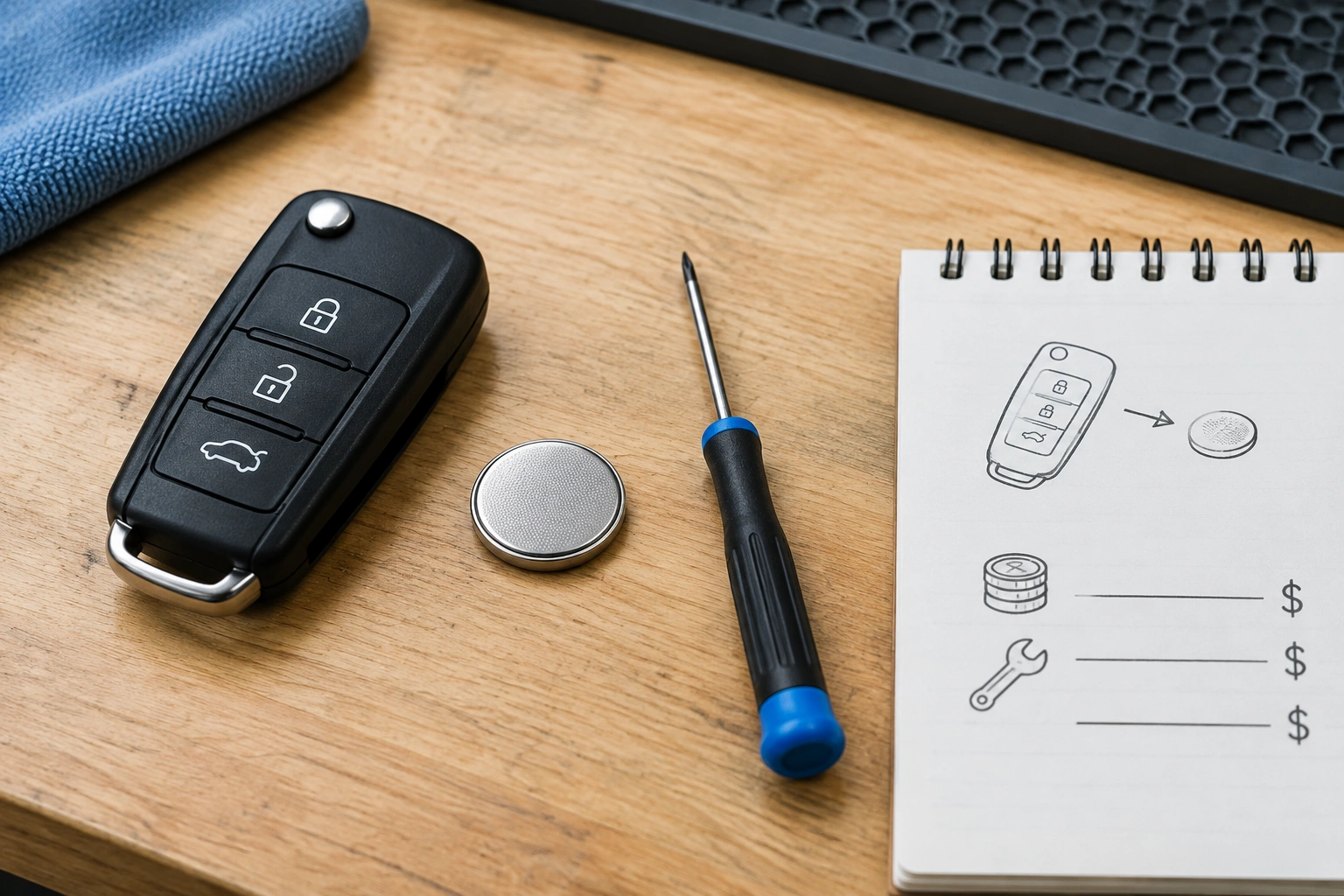
In most cases, key fob repair cost is lower than full replacement if the problem is limited to the battery, shell, or button contacts. A simple battery swap may cost only a few dollars in parts if you do it yourself, while a professional repair or reprogramming visit can run much higher. For a full replacement, published examples show a wide range: one industry guide puts replacement at $50 to $600 depending on the fob and vehicle, and Kelley Blue Book reported dealer quotes ranging from about $150 for a 2017 Honda Accord fob to $200 to $400 for some 2020 Subaru Forester and Toyota Sienna fobs. Keyless Entry Remote’s pricing guide and KBB’s dealer quote roundup are useful reality checks before you authorize service.
The key is figuring out what failed. A dead battery, worn button pad, cracked shell, and lost programming all look like “the fob is broken,” but they do not cost the same to fix.
Quick Answer: Typical Key Fob Repair Costs
If you want the shortest answer: repair is usually cheaper than replacement when the problem is limited to the battery, shell, or buttons; replacement is usually cheaper when the circuit board is damaged, the fob is water-corroded, or programming pushes the repair quote close to the price of a new fob.
Here is a practical cost snapshot in USD:
| Service or fix | Typical cost range | Notes |
|---|---|---|
| Battery replacement | $5 to $25 DIY; about $20 to $60 professionally | Parts are cheap; labor can cost more than the battery |
| Shell replacement | $10 to $40 DIY; about $40 to $100 installed | Best when the electronics still work |
| Button repair | $10 to $50 DIY parts; about $40 to $100 professionally | Often overlaps with shell replacement |
| Reprogramming / resync | $50 to $150 | Can be lower or higher depending on vehicle and labor |
| Circuit board repair | $75 to $200+ | Can rise if board replacement is needed |
| Dealer service | $100 to $400+ | Often includes diagnostics and programming |
| Locksmith service | $75 to $250+ | Mobile fees and programming can add to the total |
| Full replacement | $50 to $600+ | Higher for smart keys, luxury brands, and newer vehicles |
A good rule of thumb: if you can fix it for under about $75 to $100 and the electronics are still healthy, repair is usually the better deal; if the quote climbs near replacement pricing, replacement often makes more sense.
How to Tell What’s Actually Wrong With the Key Fob
Before spending money, match the symptom to the likely cause.
1. The fob works only sometimes
Intermittent operation often points to a weak battery, dirty contacts, or a worn button pad. If you have to press unusually hard or hold the fob at odd angles, the rubber button contacts may be worn out.
2. The buttons click but nothing happens
That usually means the shell and buttons may still feel normal, but the battery, circuit board, or programming is the problem. If the car still recognizes the fob intermittently, the internal electronics may be failing rather than the vehicle itself.
3. The fob was dropped and the case is cracked
A cracked shell is often the best-case scenario. If the electronics are intact, a shell swap can restore normal use without buying a whole new fob.
4. The fob got wet
Water exposure changes the picture. A damp fob may dry out and recover, but corrosion on the circuit board can continue to affect the electronics even after the outside looks fine. If you want a deeper look at that scenario, see our guide on car key fob water damage repair.
5. The fob battery is new, but it still won’t work
That points away from the battery and toward programming, board damage, or a failed transmitter. If the car also has a spare fob that works, the problem is likely isolated to the remote itself.
6. The remote unlock works, but the car won’t start
That can mean the remote portion still works, but the transponder or immobilizer function is not being recognized. In many vehicles, the remote buttons and the transponder chip are separate parts of the same fob, so one can fail while the other still works.
Likely Causes and What Each One Usually Costs to Fix
The table below gives a practical way to compare the usual repair paths.
| Problem | Common symptoms | Typical fix | Typical cost range |
|---|---|---|---|
| Dead battery | Short range, weak response, no response | Replace battery | $5 to $25 DIY; $20 to $60 professionally |
| Worn buttons | Buttons feel mushy, need hard presses | Replace button pad or shell | $10 to $50 DIY; $40 to $100 professionally |
| Cracked shell | Case split, internal parts exposed | Shell replacement | $10 to $40 DIY; $40 to $100 professionally |
| Dirty contacts | Works intermittently | Clean contacts, inspect battery terminals | $0 to $20 DIY; $40 to $80 if serviced |
| Lost programming | Fob battery changed, but car no longer responds | Reprogram or resync | $50 to $150 |
| Water or corrosion damage | Random failures, visible corrosion, no response | Board cleaning or board replacement | $75 to $200+ |
| Failed circuit board | No signal even with fresh battery | Electronics repair or replacement | $100 to $300+ |
| Transponder issue | Car may unlock but not start | Chip diagnosis or programming | $75 to $200+ |
Battery replacement
This is the first thing to check because it is the cheapest and most common fix. If your fob has been in use for years, a battery may solve the problem in minutes.
Shell replacement
A shell swap is worth considering when the electronics still work and the damage is physical. If the buttons are worn through or the case is broken but the board is fine, you may only need a new outer case.
Button repair
If the fob only works when you press one corner or mash the button hard, the problem may be the button contacts under the rubber pad. In some remotes, replacing the button pad or shell fixes the issue without touching the electronics.
Reprogramming
Programming is one of the most overlooked cost factors. A fob can be physically fine and still not work if it lost sync with the vehicle. This is where dealer or locksmith labor can change a cheap-looking repair into a more expensive visit.
Circuit board repair
Once the board is damaged, the bill can jump. Small repairs may be possible if the issue is a broken solder joint or minor corrosion, but once traces are damaged or components fail, replacement often becomes the smarter call.
DIY Troubleshooting Steps Before You Pay for Repair
These are low-risk checks I’d do before booking service.
Check the battery first
Open the fob carefully and inspect the battery type and condition. If it looks old, corroded, or weak, replace it with the correct size and voltage. A fresh battery is the fastest way to rule out the most common failure.
Clean the battery contacts
If the battery terminals look dull or dirty, gently clean them. A poor connection can act like a dead battery even when the battery itself is fine.
Test the spare fob
If a spare works normally, the vehicle is probably fine and the problem is with the original fob. That saves you from chasing a car-side issue that isn’t there.
Try a simple resync
Some vehicles allow a basic resync or pairing procedure after battery replacement. Check the owner’s manual before paying for programming, because some models let you restore function at home.
Inspect the shell and buttons
Look for cracked plastic, loose buttons, and water marks. If the case is broken but the board is dry and clean, a shell repair may be enough.
Stop if you see corrosion
Green or white corrosion around the battery area is a warning sign. At that point, aggressive DIY work can do more harm than good.
For a related troubleshooting path, our guide on can a dead key fob be repaired walks through the same battery-versus-electronics decision from a different angle.
Repair vs Replacement: Which Is Cheaper?
This is the decision that matters most.
Repair usually wins when:
– the battery is dead
– the shell is cracked but the board works
– the buttons are worn but the fob still transmits
– programming is not needed or is inexpensive
Replacement usually wins when:
– the board is corroded or water-damaged
– the fob needs both hardware repair and programming
– the repair quote gets close to the cost of a new fob
– the vehicle uses a more complex smart key system
A useful rule: if the repair quote is approaching the price of a replacement fob plus programming, don’t assume repair is the bargain. Sometimes the “fix” costs nearly the same as a new unit, with less certainty.
OEM and aftermarket choices matter too. OEM fobs generally cost more, but they are built to match the vehicle exactly. Aftermarket options can save money, but compatibility and quality can vary, so they are better for owners who are comfortable verifying fitment and programming requirements.
Dealer vs Locksmith vs Online Repair Service
Where you go has a big effect on the final bill.
Dealership
Dealers are often the best fit for newer vehicles, smart keys, or situations where you want the exact OEM part and factory-style programming. They can also be the most expensive option. In practice, dealer quotes often include a diagnostic charge or programming fee, so a quote that starts at a low parts price may rise once labor is added. Kelley Blue Book’s examples show that dealer pricing can vary a lot by vehicle, from around $150 on one Honda example to $200 to $400 for some Subaru and Toyota fobs. KBB’s key fob replacement report is a good reminder to ask for an itemized quote.
Automotive locksmith
A locksmith can often be the better value if the job is straightforward and the vehicle is supported. They may be able to replace the battery, cut and program a replacement, or diagnose a fob issue on-site. Typical locksmith pricing is often lower than dealer pricing, but mobile service fees, emergency calls, and programming charges can add up. A mobile visit may be worth paying for if it saves you a tow or if the dealer would charge a higher diagnostic fee.
Online repair service
If the fob is repairable and you’re comfortable mailing it in, repair services can be cost-effective for shell replacement, button repair, or board-level work. The trade-off is downtime: you may be without the fob for several days. This option usually makes the most sense when the electronics are salvageable and you do not need same-day service.
How Vehicle Type and Fob Type Affect the Final Price
Not all fobs are created equal. A basic remote is usually simpler and cheaper to repair than a smart key with push-button start, proximity functions, and embedded security features. Those systems often require more programming steps and can need more expensive replacement parts.
A few factors that commonly move the price up or down:
– Smart key vs. basic remote: smart keys usually cost more
– Push-to-start systems: often require more complex programming
– Luxury-brand vehicles: may use pricier parts or more specialized programming
– Newer vehicles: can be harder to pair without the right tools
– Transponder-equipped keys: may need chip programming in addition to remote repair
Luxury brands and newer vehicles often cost more because the fob may contain more electronics and security features. That is a general trend, not a rule, but it helps explain why one replacement quote can be much higher than another.
If you want a general consumer comparison of vehicle key costs and replacement complexity, Edmunds’ car ownership guidance is a helpful place to cross-check ownership expenses, and Car and Driver’s coverage often explains how modern key systems differ from simpler remotes.
When a Key Fob Is Beyond Practical Repair
Sometimes the honest answer is that repair is not worth the effort.
A fob is often beyond practical repair when:
– the circuit board is heavily corroded
– water damage has spread through the electronics
– the case, buttons, and board all need work
– the programming cost is high relative to replacement
– the fob is an older model and parts are hard to source
In those cases, replacing the fob is usually faster and more predictable. You’re paying for a known result instead of gambling on a partial repair.
When DIY Is Reasonable vs. When Professional Service Is Worth Paying For
DIY makes sense when the fix is simple and low-risk:
– battery replacement
– shell swap
– button pad replacement
– cleaning battery contacts
– checking whether the spare fob works
Professional service is usually worth paying for when:
– the fob needs programming
– the vehicle uses a smart key or push-to-start system
– there is corrosion, water damage, or board failure
– you need mobile service or same-day turnaround
– you want to verify whether the transponder, remote, or vehicle system is the real problem
A practical cutoff: if the repair requires specialized tools, coding access, or guesswork beyond a battery or shell, the labor cost is often easier to justify than a failed DIY attempt.
When to Consult a Locksmith
Call a locksmith when the fob still seems salvageable but you want a faster, lower-cost diagnosis than a dealer visit. That is especially sensible if:
– the battery is new and the fob still fails
– you need a replacement plus programming
– the shell is damaged but the electronics may still be usable
– you want someone to confirm whether the issue is the fob or the vehicle
A locksmith is often the best middle ground when you want a price below dealer level but still need programming or a mobile visit. If you have a basic remote or a common make and model, that can be a strong value. If the vehicle is a newer luxury model or the fob is heavily water-damaged, ask whether they support your exact make and model before booking.
Bottom Line
The cheapest key fob fix is usually the simplest one: battery, shell, or button repair. Once you add programming, water damage, transponder issues, or circuit board failure, the cost can climb quickly and replacement may be the smarter buy.
If you’re unsure, compare three numbers before you decide: the cost of a battery or shell, the cost of repair with programming, and the price of a replacement fob. That comparison usually makes the right choice obvious.
FAQ
Is it cheaper to repair a key fob or replace it?
Usually repair is cheaper if the problem is a battery, shell, or button issue. Replacement is often cheaper or more practical if the board is damaged, the fob is water-corroded, or the programming cost is high.
How much does a key fob battery replacement cost?
DIY battery replacement is often just a few dollars in parts, while professional battery service can run about $20 to $60 depending on labor.
Can a key fob be repaired after water damage?
Sometimes, but it depends on the extent of the damage. If corrosion has reached the circuit board, repair may not be worth it.
Do I need a dealer to program a key fob?
Not always. Some vehicles can be programmed by a locksmith, and some models allow basic resync steps at home. Newer smart keys or luxury vehicles may be more limited.
What is the cheapest way to replace a key fob?
The cheapest route is often an aftermarket or refurbished fob plus locksmith programming, but compatibility matters. Always verify that the replacement matches your vehicle before buying.
Does a transponder chip affect key fob repair cost?
Yes. If the transponder or immobilizer function is involved, the repair can cost more because the chip may need programming even if the remote buttons still work.
Should I buy OEM or aftermarket?
OEM usually costs more but is more straightforward for fit and compatibility. Aftermarket can save money, but you should confirm the exact vehicle match and programming requirements first.
How do I know if the fob is beyond repair?
If the board is corroded, the casing and buttons are damaged, and programming is also needed, replacement is usually the better option.
