
Key Fob Warning Light on Dashboard: What It Means and What to Do Next

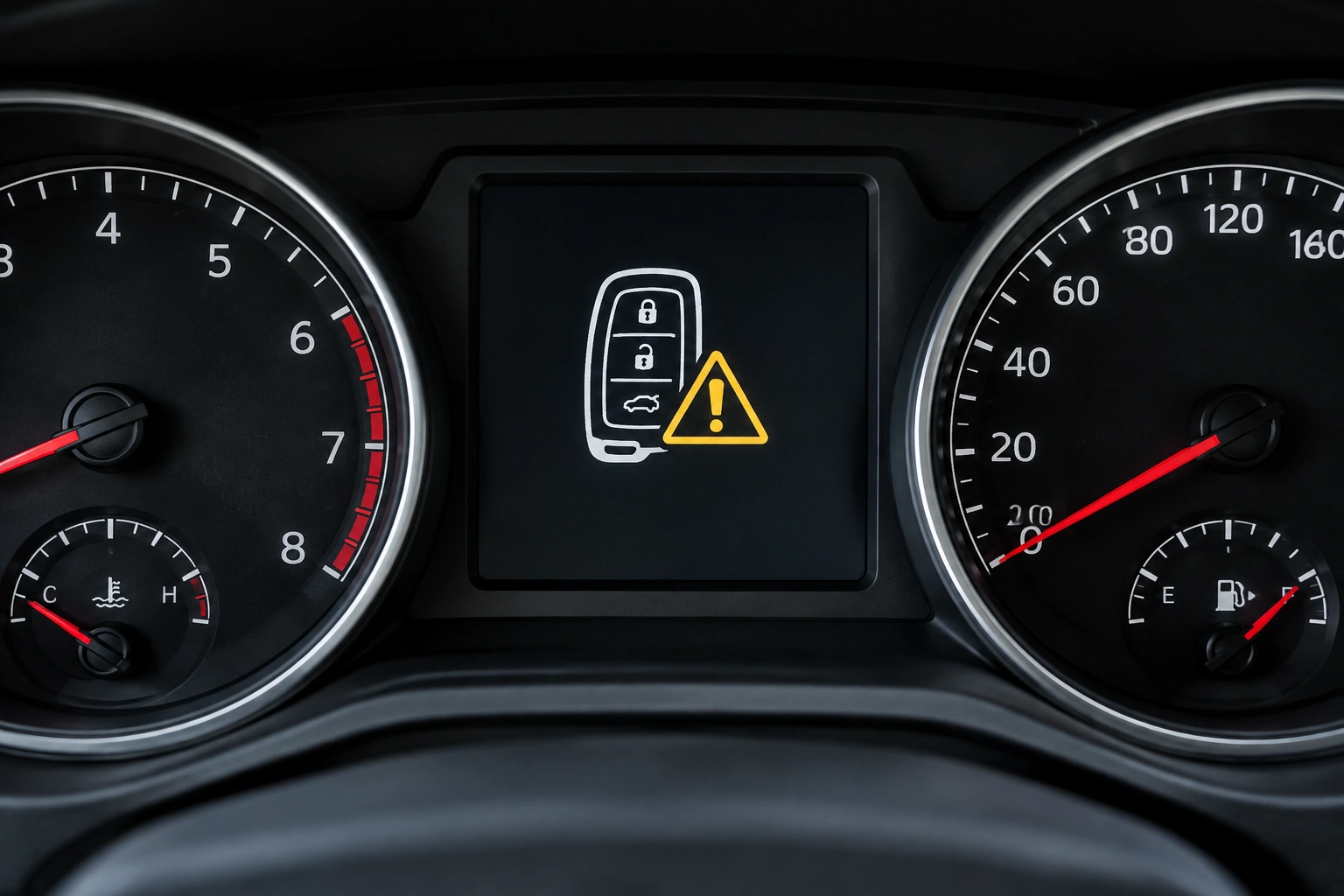
If you’re seeing a key fob warning light on the dashboard, the car is usually telling you one thing: it may not be detecting the fob reliably. That does not always mean the fob is dead. It can point to a weak fob battery, a weak car battery, a problem with the fob itself, or a vehicle-side issue such as the receiver or immobilizer.
The tricky part is that the same warning can mean different things depending on the make and model. That’s why the owner’s manual matters here. Still, there’s a practical order to troubleshooting that saves time and avoids unnecessary parts swapping.
What the key fob warning usually means
Most dashboard key fob warnings fall into one of these buckets:
- the car sees the fob, but the signal is weak
- the car does not see the fob at all
- the fob battery is low
- the vehicle has an electrical or immobilizer issue
A useful quick distinction:
| Warning type | What it usually means | What to check first |
|---|---|---|
| Key battery low | The fob battery is getting weak, but the car may still detect the key | Replace the fob battery |
| Key not detected / no key detected | The car is not reliably reading the fob signal | Try the spare fob, backup start method, and car battery check |
Some cars show a text message such as “key not detected,” “no key detected,” or “key battery low.” Others use a small icon that looks like a key, a fob, or a car with a key symbol. The exact meaning depends on the vehicle, so the owner’s manual is the best place to confirm what your specific warning means.
A useful rule: if the warning appears only when you try to start the car, think detection or battery issue. If it appears while driving but the car keeps running normally, the problem may be intermittent detection or a weak battery in the fob.
What the warning looks like and how it behaves
The dashboard message matters, but the behavior matters just as much.
Common warning patterns
- Intermittent warning: The light comes and goes. That often points to a weak fob battery, a loose battery contact inside the fob, or temporary signal issues.
- No-detection warning: The car says it cannot find the key. That can mean the fob battery is too weak, the fob is damaged, or the vehicle receiver is having trouble.
- Push-button start failure: The car unlocks normally but won’t start with the button. That often means the car is not reading the transponder signal from the fob.
- Warning plus reduced remote range: If you have to stand right next to the car for it to unlock, the fob battery is a prime suspect.
If the fob works at one time of day and fails at another, the issue may be environmental. Parking conditions or nearby electronics can sometimes affect detection.
Most likely causes, from easiest to check to more serious
Here’s the order I’d troubleshoot it in.
| Symptom | Likely cause | Best next step |
|---|---|---|
| Warning appears, but remote range is weak | Weak key fob battery | Replace the fob battery first |
| Car unlocks inconsistently or says “key not detected” | Weak fob battery or poor contact | Try the spare fob and inspect the battery |
| Warning appears after a jump start or during low-voltage symptoms | Car battery issue | Check the car battery and charging system |
| Problem happens in one location only | Interference | Move the car and test again |
| Buttons work poorly or case is cracked | Damaged fob | Inspect for water damage, cracks, or loose parts |
| Neither fob works, even after battery replacement | Vehicle-side fault | Possible receiver, antenna, immobilizer, or programming issue |
That table is the fast version. The key point is not to assume the fob is always the problem. Cars can be very picky about voltage, and a weak car battery can trigger keyless-entry complaints that look like a fob failure.
Quick checks to do first
Before buying parts, do these fast checks:
-
Try the spare key fob.
If the spare works normally, your original fob is likely the issue. -
Check the fob battery orientation and contacts.
If you recently changed the battery, make sure it is the correct type and seated firmly. -
Read the exact dashboard message.
“Key battery low” and “key not detected” are not the same thing, and they do not always have the same fix. -
Look for physical damage.
A cracked shell, loose button, or signs of moisture can cause intermittent detection. -
Check the car battery condition.
If the car cranks slowly, electronics act strange, or the battery is older, low system voltage may be part of the problem. -
Test in a different spot if the warning is intermittent.
If the problem appears only in one location, environmental factors may be involved.
For a broader look at why immobilizer-style warnings can overlap with key fob problems, see our guide on immobilizer light flashing with key fob.
How to tell whether it’s the key fob battery or the car battery
This is where a lot of people get stuck, because both problems can create similar symptoms.
Signs pointing to the key fob battery
- remote range is shorter than normal
- the warning comes and goes
- the car starts if you hold the fob close to the start button
- the spare fob works better than the original
- the warning is limited to key detection or remote locking
That last point is important. A weak fob battery usually affects communication range first. The car may still start if the fob is placed near the backup sensing area.
Signs pointing to the car battery
- the car has slow cranking or dim lights
- multiple electrical systems act up, not just the key fob
- the warning appeared after the car sat for a while
- jump-starting changes the behavior
- both fobs behave the same way
If the car battery is low, the vehicle may not power the keyless entry receiver properly. In that case, replacing the fob battery won’t solve the real problem.
For a quick reminder that dashboard security or keyless warnings can overlap with starting problems, our article on security light flashing and the car won’t start may help you narrow it down.
Step-by-step fixes you can try at home
1. Replace the key fob battery
This is the first DIY fix worth trying if the fob is old or the warning suggests low battery. Open the fob carefully, note the battery type, and install the replacement the same way the old one sat in the holder.
A small detail matters here: some fobs use spring contacts that can bend or lose tension. If the new battery is correct but the warning stays on, the contact points may be the real issue.
Our guide on why a key fob battery low warning can stay on after replacement explains why the warning sometimes lingers even after a fresh battery goes in.
2. Use the spare fob
This is the cleanest test you can do. If the spare works normally, the original fob is the likely problem. That could mean a weak battery, damaged circuit board, or a worn transponder.
3. Try the backup start method
Many push-button start vehicles have an emergency backup method. Often, you hold the fob very close to the start button, or place it in a designated sensing area. The exact method varies by vehicle, so check the manual.
This is useful because it helps you get moving without guessing. If the car starts only when the fob is placed in the backup position, that strongly suggests a fob battery or signal issue rather than a complete vehicle failure.
4. Check for interference
If the warning is intermittent, move the car and try again. Also remove other electronic devices from the key ring or nearby pocket. A second smart key, phone, or accessory can sometimes add confusion to the signal environment.
5. Inspect the fob case
If the shell is cracked or the buttons feel mushy, the internal board may be shifting. Water damage is another red flag. A fob can look fine outside and still have corrosion inside.
What to do if the car won’t detect the fob
If the car refuses to recognize the fob at all, don’t keep pressing the start button over and over. That usually doesn’t help.
Use the backup start method from the owner’s manual first. If the car starts that way, drive home or to a safe place and replace the fob battery as soon as possible.
If the backup method does not work, try the spare fob. If neither fob is detected, the problem is more likely on the vehicle side or with the car battery.
When the problem points to the vehicle, not the fob
There are a few signs the issue is on the car side:
- both key fobs fail the same way
- the warning appears with a healthy new fob battery
- the car battery is weak or recently disconnected
- the dashboard shows multiple electrical glitches
- the car starts only after a jump or charger
- the problem stays even after trying the spare and backup start method
Possible vehicle-side causes include the receiver, antenna, immobilizer, or keyless entry module. These parts are harder to diagnose without scan tools or manufacturer-specific testing.
If the car is still under warranty, this is a good time to let the dealer inspect it. If it’s out of warranty, a qualified locksmith or automotive diagnostician may be able to confirm whether the issue is on the car side or the fob side.
When the warning comes and goes
Intermittent warnings are often the most frustrating because the car seems fine one minute and confused the next.
The most common reasons are:
- weak fob battery
- loose battery contact
- temporary signal issues
- aging fob electronics
- borderline car battery voltage
A warning that comes and goes after the car warms up, after you park in one location, or when the fob is in a certain pocket is usually pointing to a signal or battery issue. A warning that becomes more frequent over time is more concerning and may mean the fob electronics are failing.
Is it safe to keep driving?
Usually, yes, if the car is already running normally and the warning is only about key detection. But safety depends on two things: whether the vehicle is already running, and whether it may fail to restart after you shut it off.
So the practical rule is this:
- Okay to drive short-term: car runs normally, warning is intermittent, and you have a spare or backup start method
- Get it checked soon: warning is frequent, remote range is poor, or the car battery seems weak
- Don’t ignore it: car won’t detect the fob, won’t start reliably, or both fobs fail
For general guidance on vehicle safety warnings and when to take them seriously, the NHTSA is a solid place to start.
When to replace the fob, reprogram it, or see a professional
Replace the fob battery first if the warning suggests low battery or the remote range has dropped.
Replace the entire fob if:
– the case is damaged
– water got inside
– the buttons are worn out
– the battery replacement did not help and the spare works fine
Seek reprogramming or professional diagnosis if:
– the car does not detect either fob
– the warning remains after a fresh battery and a spare test
– the vehicle-side system seems involved
– the fob was lost, replaced, or exposed to damage that may have affected its memory or transponder
A dealer or qualified locksmith can confirm whether the issue is the fob, the immobilizer, or the car’s receiver system. If you want to understand how drivers commonly approach keyless-entry and replacement decisions, Edmunds has useful consumer-oriented vehicle information, and Car and Driver is another reliable general automotive reference.
Final troubleshooting order I’d use
If you want the shortest path to a fix, do it in this order:
- Try the spare fob
- Replace the fob battery
- Test the backup start method
- Check the car battery
- Inspect the fob for damage
- If both fobs still fail, get professional diagnosis
That sequence catches the most common causes without wasting time or money.
FAQ
What does a key fob warning light usually mean?
It usually means the car is having trouble detecting the fob, or the fob battery is low. The exact meaning depends on the vehicle and the message shown on the dash.
Is “key battery low” the same as “key not detected”?
No. “Key battery low” usually points to a weak fob battery. “Key not detected” usually means the car is not reading the fob reliably, which could involve the fob battery, the fob itself, the car battery, or the vehicle receiver.
Can a weak car battery cause a key fob warning?
Yes. A weak car battery can affect the vehicle’s ability to power the keyless entry system and may trigger a warning that looks like a fob problem.
Will the car still start if the fob battery is low?
Often, yes. Many vehicles have a backup start method that lets the car read the fob at very close range, even when the battery is weak.
When should I get the car checked by a professional?
If both fobs fail, the warning stays on after a battery replacement, or the car battery seems weak, it’s time for professional diagnosis.
