
P0118 Repair Cost: What You’ll Pay and What Fixes It

P0118 repair cost usually ranges from $150 to $550 when the problem is a bad engine coolant temperature sensor, connector, wiring issue, or coolant-related fault. A simple sensor replacement costs less. A dealership diagnosis, damaged wiring, coolant refill, thermostat issue, or rare ECM fault can raise the final bill.
You searched this because your check engine light came on, the scan tool shows P0118, and you want one clear number before visiting a shop.
The frustrating part is simple: P0118 sounds like a sensor code, but the sensor is not always the failed part.
This takes about 8 minutes to read. Start with the real cost range, then confirm which repair matches your car.
Most drivers should budget $150–$350 for a simple P0118 repair at an independent shop. Budget $450–$550 when diagnosis, OE parts, coolant service, or harder labor access gets added.
P0118 Repair Cost by Common Fix
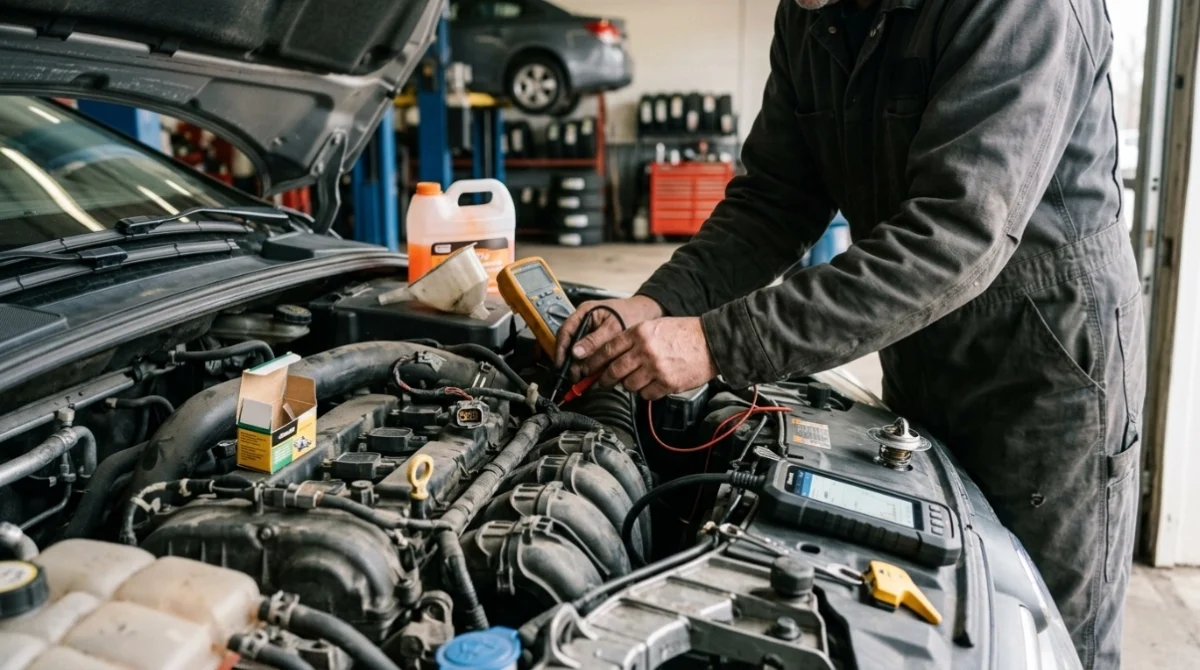
P0118 repair cost changes because the code points to the engine coolant temperature sensor circuit, not one guaranteed failed part.
The engine control module reads the coolant temperature sensor signal. When the signal voltage stays too high, the computer often reads the engine as colder than it is.
That bad reading affects fuel delivery, cooling fan control, cold starts, idle quality, and emissions.
| Repair Needed | Typical Cost | Why It Costs This Much |
|---|---|---|
| Diagnostic scan and testing | $75–$160 | A technician checks live data, voltage, ground, connector condition, and related codes. |
| Coolant temperature sensor replacement | $150–$350 | The sensor is low-cost on many cars, but labor access and coolant loss change the price. |
| Connector or pigtail repair | $80–$250 | Corrosion, loose pins, or broken plastic can interrupt the sensor signal. |
| Wiring repair | $120–$400 | Open circuits take time to trace between the sensor and control module. |
| Coolant refill or air bleed | $50–$180 | Some sensors release coolant during replacement, so the system needs refilling and bleeding. |
| Thermostat or cooling issue | $180–$450 | A related cooling fault can confuse diagnosis or appear with temperature sensor codes. |
The table shows why a cheap part can become a higher repair bill.
RepairPal lists the national average engine coolant temperature sensor replacement estimate at $452–$537, with parts and labor separated in its estimate. See the engine coolant temperature sensor replacement cost estimate for a national benchmark.
What P0118 Means Before You Pay
P0118 means the engine coolant temperature sensor circuit is sending a high-input signal to the vehicle computer.
On many vehicles, that high voltage points to an open circuit, unplugged connector, corroded terminal, broken wire, or failed sensor.
The coolant temperature sensor is a thermistor. Its resistance changes as coolant temperature changes.
- The sensor reports engine coolant temperature.
- The PCM or ECM uses that reading for fuel control.
- The cooling fan strategy can change.
- Cold-start fuel mixture can become incorrect.
- The check engine light turns on.
The California Air Resources Board explains that OBD systems monitor components that affect vehicle emissions and store information so technicians can find and fix faults. That makes the OBD system fault record a starting point, not a final parts diagnosis.
Ask the shop for the live coolant temperature reading before replacing parts. A warm engine showing freezing temperature points toward a sensor circuit fault.
Why P0118 Repair Cost Goes Up
P0118 repair cost goes up when diagnosis takes longer than the replacement.
A visible sensor beside the thermostat housing is quick. A sensor behind intake parts, near hot components, or under tight engine covers takes more labor.
The second cost driver is coolant handling. Some sensor replacements spill coolant, and trapped air can cause overheating after the repair.
- Luxury vehicles cost more due to parts pricing.
- Dealers cost more due to labor rates.
- Corroded connectors add repair time.
- Broken wiring adds diagnostic time.
- Low coolant adds refill and bleed time.
- Related thermostat faults raise the total bill.
You may think the cheapest fix is replacing the sensor first. That works only when testing confirms the sensor has failed.
The expensive mistake is replacing the engine coolant temperature sensor while the connector still has spread pins or corrosion.
DIY vs Mechanic Cost for P0118
DIY P0118 repair can cost $20–$80 in parts when the sensor is easy to reach and testing confirms the sensor is bad.
A mechanic repair costs more because it includes diagnosis, labor, coolant handling, code clearing, and a road test.
| Option | Best For | Risk |
|---|---|---|
| DIY sensor replacement | Easy-access sensor with confirmed failure | Wrong part replacement if wiring is the fault |
| Independent mechanic | Most common P0118 repairs | Quality depends on testing process |
| Dealership | Warranty work, complex diagnosis, brand-specific faults | Higher labor rate and OE part pricing |
The best value is not the lowest quote. The best value is the quote that proves the sensor circuit failed before parts get replaced.
IMAGE SUGGESTION: Close-up photo of a mechanic testing an engine coolant temperature sensor connector with a multimeter.
ALT TEXT: P0118 repair cost diagnostic test on coolant temperature sensor connector.
What Most People Get Wrong About P0118 Repair Cost
Most people think P0118 always means the coolant temperature sensor is bad.
That belief makes sense because the code name includes the sensor. The circuit includes the sensor, connector, wiring, reference voltage, ground, and the vehicle computer input.
Do not approve a sensor replacement unless the shop checked connector condition and live coolant temperature data. P0118 often returns when the circuit fault remains.
Wrong belief 1: The scan tool tells you the failed part
A scan tool gives the diagnostic trouble code, not the final repair.
P0118 tells the technician where to test. It does not prove which part failed.
Wrong belief 2: A low-cost sensor means a low-cost repair
A sensor can cost less than one hour of labor.
The total bill increases when access is tight, coolant must be bled, or electrical testing finds damage.
Wrong belief 3: Clearing the code fixes the problem
Clearing P0118 turns the light off for a short time.
The code returns when the computer sees the same high-input signal again.
When You Should Not Keep Driving With P0118
You should not keep driving for long with P0118 when the temperature gauge acts strangely, the fan runs nonstop, the engine starts poorly, or the car smells hot.
The computer can use substitute temperature data when the sensor signal fails. That fallback protects the engine in some cases, but it can create rough running and poor fuel control.
The bigger risk is missing a real cooling problem. A bad temperature reading can hide overheating until damage becomes expensive.
- Stop driving if the temperature warning light turns on.
- Stop driving if steam appears from the hood.
- Stop driving if coolant leaks under the car.
- Repair soon if fuel economy drops.
- Repair soon if cold starts become rough.
Check for open safety recalls before paying for any related dealer repair. NHTSA lets drivers search by VIN through its official vehicle recall lookup.
Best Decision Based on Your Situation
Your next move depends on symptoms, budget, and how much testing has been done.
If your car runs normally and only has the check engine light, schedule diagnosis first. A proper test prevents parts guessing.
If your car starts hard, runs rich, or the fan stays on, repair the sensor circuit soon. The engine computer is making fuel and cooling decisions with bad data.
- If the connector is loose: repair or replace the connector first.
- If live data is wrong: test the sensor resistance and circuit voltage.
- If the wire is open: repair the harness before replacing the sensor.
- If coolant is low: find the leak before clearing the code.
- If the car is under warranty: ask the dealer to inspect it.
What most people do not think to ask is whether the repair includes a coolant bleed and test drive.
That small step matters because trapped air can create a new overheating complaint after a correct sensor repair.
How to Avoid Overpaying for P0118

You avoid overpaying by asking for proof before approving parts.
A good estimate should name the failed part, explain the test result, and separate diagnosis, parts, labor, coolant, and tax.
- Ask for the live coolant temperature reading.
- Ask whether the connector was inspected.
- Ask whether wiring passed continuity testing.
- Ask whether coolant refill or bleeding is included.
- Ask whether the code was cleared and retested.
A fair shop will answer these questions in plain language.
IMAGE SUGGESTION: Simple repair estimate showing diagnosis, sensor, labor, coolant, and final total as separate line items.
ALT TEXT: P0118 repair cost estimate with sensor labor and coolant charges.
P0118 repair cost is cheapest when testing confirms a failed coolant temperature sensor before parts get replaced.
The smartest 2026 repair approach is circuit-first diagnosis because connectors and wiring often create the same code.
Before approving the repair, ask the shop for the live coolant temperature reading and the final written estimate.
Frequently Asked Questions
How much does it cost to fix code P0118?
Fixing code P0118 usually costs $150–$550. A simple coolant temperature sensor replacement sits near the lower end, while diagnostic labor, connector repair, wiring repair, coolant bleeding, or dealer labor can push the cost higher.
Can I drive with a P0118 code?
You can drive a short distance if the engine temperature is stable and there are no overheating signs. Do not keep driving if the temperature warning light turns on, coolant leaks, steam appears, or the fan runs constantly.
Is P0118 caused by low coolant?
Low coolant can contribute to confusing temperature readings, but P0118 is mainly an electrical high-input circuit code. The shop should still check coolant level because low coolant, leaks, or trapped air can create related engine temperature problems.
Will replacing the coolant temperature sensor clear P0118?
Replacing the coolant temperature sensor clears P0118 only when the sensor itself failed. If the connector, wiring, reference voltage, ground, or ECM input caused the high signal, the code will return after clearing.
Why did P0118 come back after repair?
P0118 usually comes back after repair when the original circuit fault remained. Common reasons include a corroded connector, loose terminal pins, a broken wire near the sensor, trapped air in the cooling system, or a part installed without live-data testing.
