
P0138 Oxygen Sensor Code Symptoms — High O2 Sensor Voltage Explained

P0138 means the downstream oxygen sensor is reporting a high voltage signal, usually indicating a rich exhaust condition or a failing O2 sensor. It often leads to poor fuel economy, rough engine behavior, and check engine light activation. In most cases, the issue comes from a faulty oxygen sensor, wiring damage, or fuel mixture problems.
This guide explains real symptoms, causes, diagnostics, and fixes in simple terms. It is designed for drivers who want a clear answer before going to a mechanic.
Reading time: about 10–12 minutes.
Quick Answer: What P0138 Means
P0138 indicates the downstream oxygen sensor (Bank 1 Sensor 2) is sending a high voltage signal, usually above 0.9V for too long. This suggests the exhaust is running too rich or the sensor is faulty. Common symptoms include poor fuel economy, check engine light, and weak engine performance.
- High O2 sensor voltage detected
- Often sensor or wiring failure
- May affect fuel efficiency
- Can trigger emissions failure
What P0138 Really Means in Simple Terms
P0138 is an OBD-II diagnostic trouble code. It relates to the oxygen sensor located after the catalytic converter on Bank 1. This sensor monitors exhaust efficiency, not direct fuel control.
The sensor normally fluctuates between 0.1V and 0.9V. When it stays too high, the ECU assumes a rich fuel condition or a faulty sensor. That is when the code appears.
Think of it like a smoke detector stuck on “high smoke” even when the kitchen is fine. The signal is no longer trustworthy.
Most Common Symptoms of P0138
P0138 symptoms are often subtle at first. Many drivers only notice the check engine light.
However, deeper issues appear when the condition continues. These symptoms help confirm the diagnosis early.
- Check engine light stays ON
- Reduced fuel economy over time
- Strong fuel smell from exhaust
- Rough or inconsistent idle
- Failed emissions test
Key insight: Most drivers miss fuel economy drop until it becomes severe.
Why P0138 Happens (Main Causes)
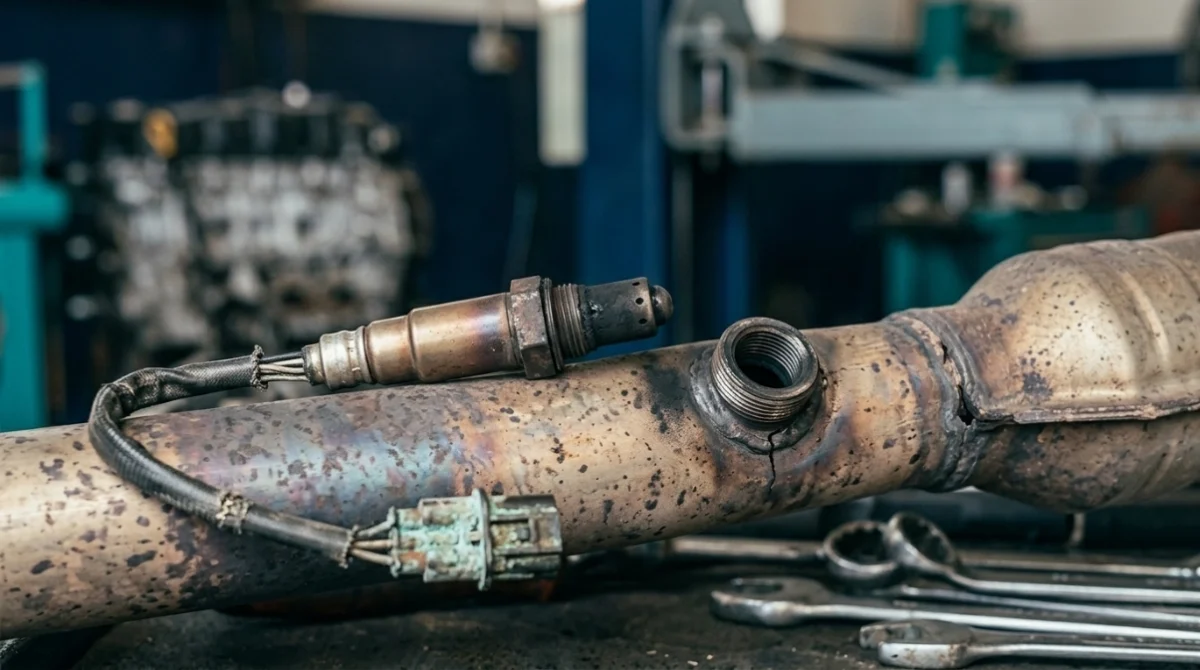
P0138 does not always mean a bad oxygen sensor. Several system issues can trigger it. Understanding the root cause saves money on unnecessary replacement.
In real repair shops, the sensor is not always the first failure point.
| Cause | Explanation |
|---|---|
| Faulty O2 sensor | Sensor stuck reporting high voltage |
| Wiring damage | Short circuit or corrosion in harness |
| Rich fuel mixture | Too much fuel enters combustion chamber |
| Exhaust leak | Distorts sensor readings |
Many mechanics replace the sensor first. But wiring issues are often overlooked.
How the Oxygen Sensor System Works
The oxygen sensor measures leftover oxygen in exhaust gases. This helps the engine control unit adjust fuel delivery.
Bank 1 Sensor 2 is located after the catalytic converter. Its job is to check catalytic converter efficiency, not engine tuning.
When voltage stays high, the ECU believes exhaust gases are still rich after treatment. That signals a problem in the sensor or emissions system.
Important takeaway: P0138 is often a monitoring issue, not a driving problem.
Symptoms Drivers Often Misunderstand
Many drivers confuse P0138 with engine misfire or fuel injector failure. This leads to unnecessary repairs.
What most people do not think to ask is whether the catalytic converter is actually failing or just being misread by the sensor.
Here is what usually causes confusion:
- O2 sensor lag feels like engine hesitation
- Fuel smell seems like injector leak
- Check engine light hides real cause
Correct diagnosis always starts with live sensor data, not assumptions.
Can You Drive With P0138?
Yes, you can usually drive with P0138. The car will not immediately break down.
However, long-term driving with this code increases fuel consumption and may damage emissions components.
If fuel smell is strong or performance drops, inspection becomes urgent.
Warning: Ignoring this code for months can lead to catalytic converter damage.
How Mechanics Diagnose P0138
Professional diagnosis is based on live sensor testing, not just code reading.
Technicians follow a structured process to confirm failure.
- Scan ECU for related codes
- Check live O2 sensor voltage
- Inspect wiring harness condition
- Test fuel mixture behavior
- Verify catalytic converter efficiency
If voltage stays above normal range even when engine conditions change, the sensor is usually replaced.
Repair Solutions for P0138
Fixing P0138 depends on the root cause. Replacing the sensor alone is not always the correct solution.
Each repair option targets a different failure type.
- Replace oxygen sensor (most common fix)
- Repair damaged wiring or connectors
- Fix fuel system imbalance
- Replace catalytic converter (rare cases)
Sensor replacement solves most cases, but proper testing avoids repeat failure.
Cost of Fixing P0138
Repair costs vary based on vehicle type and cause.
| Repair Type | Estimated Cost |
|---|---|
| O2 sensor replacement | $100–$300 |
| Wiring repair | $80–$200 |
| Fuel system repair | $150–$500 |
| Catalytic converter | $500–$1500+ |
Labor cost depends on sensor location and vehicle design.
What Most People Get Wrong About P0138
Many drivers assume P0138 always means a bad oxygen sensor. That is not always true.
Another common mistake is ignoring fuel system issues. Rich fuel conditions can trick the sensor.
Some also reset the code without fixing the cause. This only hides the problem temporarily.
Preventing P0138 in the Future

Prevention focuses on maintaining engine health and electrical integrity.
- Use quality fuel to avoid carbon buildup
- Inspect wiring during routine service
- Replace air and fuel filters on time
- Fix engine misfires early
Small maintenance steps reduce sensor failure risk significantly.
When You Should Take It Seriously
P0138 becomes serious when fuel economy drops noticeably or emissions increase.
If multiple oxygen sensor codes appear together, deeper engine or catalytic issues may exist.
Early diagnosis prevents expensive repairs later.
P0138 is mainly a high oxygen sensor voltage signal that usually points to a sensor or wiring issue. It can also indicate rich fuel conditions affecting emissions accuracy.
Most cases are repairable with simple sensor replacement or wiring repair when diagnosed correctly.
Start by checking sensor data before replacing parts blindly.
Frequently Asked Questions
Is P0138 serious?
P0138 is not immediately dangerous but should not be ignored. It affects fuel efficiency and emissions. Long-term driving may damage the catalytic converter.
Can bad fuel cause P0138?
Yes, low-quality or overly rich fuel mixtures can trigger high voltage readings. The sensor reacts to exhaust composition changes caused by fuel issues.
Will P0138 clear itself?
No, the code usually stays until the root cause is fixed. Sometimes it may temporarily disappear, but it will return if the issue persists.
What sensor is P0138 related to?
P0138 relates to Bank 1 Sensor 2, the downstream oxygen sensor after the catalytic converter. It monitors emissions efficiency.
Can I replace the O2 sensor myself?
Yes, in many vehicles it is a simple replacement. However, proper diagnosis is important to avoid replacing a good sensor unnecessarily.
