
What Does P0507 Mean? Idle Control System RPM Higher Than Expected

Quick Answer
P0507 means the engine is idling faster than the engine computer expects while it is trying to control idle speed. Common causes include an intake or vacuum leak, a dirty throttle body, a faulty idle air control system, a PCV problem, or an issue that appeared after engine service. Because diagnostic details vary by vehicle, check manufacturer communications available through NHTSA when troubleshooting a specific make and model.
What to check first
- Confirm the code: Read P0507 and any related codes with an OBD2 scanner before clearing anything.
- Save freeze-frame data: Note engine speed, temperature, throttle position, and fuel-trim information when available.
- Check for leaks: Inspect intake hoses, vacuum lines, PCV plumbing, and connections disturbed during recent service.
- Inspect the throttle: Look for deposits, sticking, damage, or an incorrect throttle adaptation.
- Avoid guessing: P0507 identifies an idle-control problem, not one guaranteed failed part.
Best next step
- If the idle is unusually high, surges, or makes the vehicle difficult to control, have the cause diagnosed before normal driving.
If your OBD2 scanner just displayed P0507, don’t assume you need a new throttle body. The code tells you what the computer detected, not which component failed.
I use that distinction whenever I’m scanning a vehicle during mobile automotive work. A fault code is the starting clue, and the surrounding data usually matters more than the code by itself.
In This Guide
What Does P0507 Mean?
P0507 means “Idle Control System RPM Higher Than Expected.” The engine computer has detected an idle speed above the target it considers acceptable for the current operating conditions.
P0507 is a generic powertrain diagnostic trouble code used on OBD2-equipped vehicles. The basic meaning is shared, but the exact test conditions and diagnostic procedure can differ by manufacturer.
Idle speed is the engine speed while the engine is running without you pressing the accelerator. The computer continually adjusts airflow, fuel, and ignition to keep that speed near its programmed target.
- Older systems: An idle air control valve may meter air around a closed throttle plate.
- Newer systems: Electronic throttle control can move the throttle plate itself to regulate idle.
- P0507 condition: Actual engine speed stays higher than the computer’s desired idle range.
This is why replacing an idle air control valve based only on P0507 can be a mistake. Many newer vehicles don’t even use a separate traditional idle valve.
A useful way to think about P0507 is simple: the engine is receiving or producing more idle airflow than the control system expects. Your job is to find out why.
What Symptoms Can P0507 Cause?
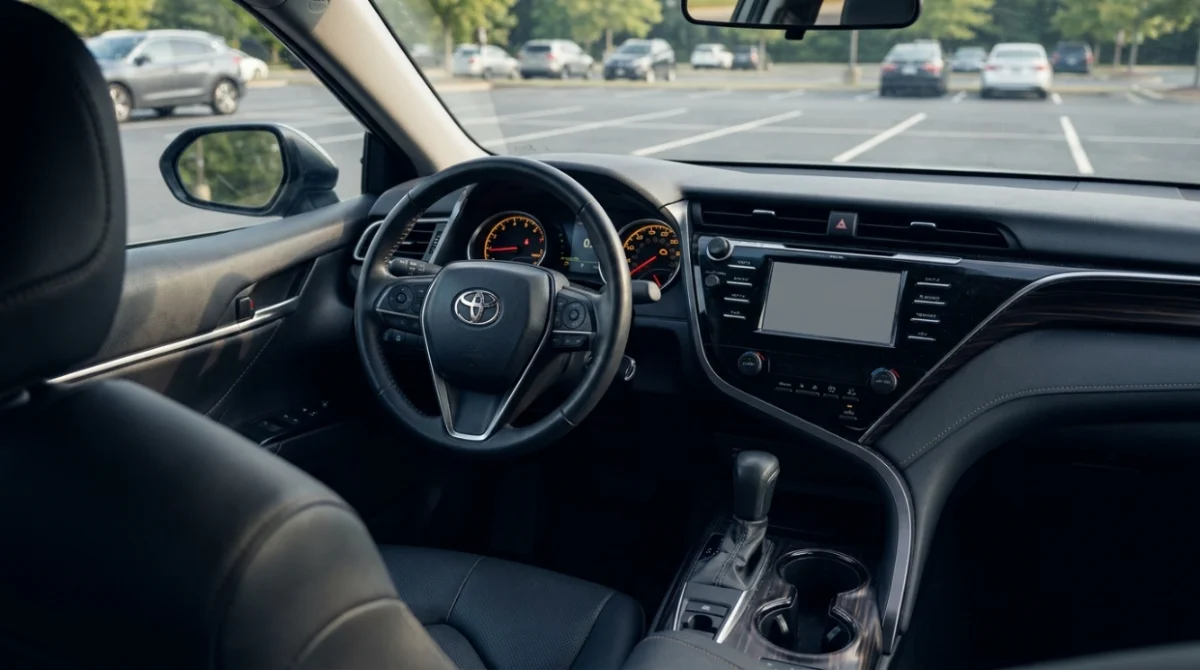
The most obvious P0507 symptom is an idle speed that stays higher than normal after the engine warms up. Some vehicles show few symptoms beyond the check-engine light.
- High idle: Engine speed remains noticeably above its normal warm-idle range.
- Hanging RPM: Revs may fall slowly after you release the accelerator.
- Surging: Idle speed may rise and fall instead of remaining steady.
- Harsh engagement: Selecting Drive or Reverse can feel stronger when engine speed is too high.
- Check-engine light: P0507 may appear alone or with airflow, mixture, throttle, or emissions codes.
- Air-leak noise: A hiss or whistle can point toward an intake or vacuum leak.
Pay attention to when the problem started. A P0507 that appears immediately after intake, throttle-body, PCV, or engine work deserves a close inspection of anything that was disconnected.
That timing can save hours. I’ve seen diagnostic trails become unnecessarily complicated because the simplest question—“What changed just before the code appeared?”—was never asked.
What Causes a P0507 Code?
P0507 has several possible causes, but unwanted airflow is one of the most important categories to investigate. A scan code alone cannot tell you whether the leak, throttle system, valve, or calibration is responsible.
1. Vacuum or intake air leak
A cracked hose, loose connection, intake leak, or incorrectly routed vacuum line can let extra air enter the engine. That uncontrolled airflow can raise idle speed beyond the computer’s target.
2. PCV system problem
The positive crankcase ventilation, or PCV, system routes crankcase vapors back into the intake. A failed valve, diaphragm, hose, or connection can act like an air leak on some engines.
3. Dirty or sticking throttle body
Deposits around the throttle plate can interfere with airflow control. Electronic throttle systems may also need a manufacturer-specified adaptation or relearn after certain repairs or cleaning procedures.
4. Idle air control valve problem
Vehicles with a separate idle air control valve can set P0507 if that valve sticks open or cannot regulate bypass airflow correctly. Wiring and connector problems can create similar symptoms.
5. EVAP purge or related airflow fault
An evaporative-emissions purge path that flows when it shouldn’t can alter intake airflow. This is one reason related codes and live scanner data matter.
6. A problem introduced during service
Manufacturer information shows how easily this can happen. A Volkswagen technical communication hosted by NHTSA documented P0507 after engine service when two vacuum-related hoses were connected incorrectly.
Technician’s note: if P0507 appeared immediately after repair work, inspect disturbed hoses and connectors before buying parts.
| Possible cause | Useful scanner clue | Best confirmation |
|---|---|---|
| Vacuum/intake leak | High idle; fuel trims may be more positive at idle | Visual inspection and appropriate leak testing |
| PCV fault | Idle changes with crankcase airflow conditions | Manufacturer-specific PCV test |
| Throttle-body issue | Actual throttle or idle data does not match expected behavior | Inspection plus service-information checks |
| Idle control valve | Commanded idle control and actual RPM disagree | Circuit and actuator testing |
| Incorrect adaptation | Code follows throttle work or service | Correct manufacturer relearn procedure |
Section Takeaway: Treat P0507 as an airflow-control problem first, not proof that a specific component has failed.
How Do You Diagnose P0507 With an OBD2 Scanner?
Start by confirming the code and preserving the information around it. Clearing P0507 immediately can erase clues that help explain when the fault occurred.
- Scan all available modules. Record P0507 plus any throttle, airflow, mixture, misfire, or emissions codes.
- Save freeze-frame data. Look at RPM, coolant temperature, throttle position, vehicle speed, engine load, and fuel trims when supported.
- Check actual idle speed. Compare what the scanner reports with the vehicle’s expected warm-idle behavior.
- Inspect recent work. Check intake ducts, vacuum hoses, electrical connectors, and anything removed during service.
- Look for unwanted air. Inspect PCV plumbing and other intake paths before condemning the throttle body.
- Review live data. Watch how fuel trims and throttle information change from idle to a slightly higher engine speed.
- Follow service information. Use the manufacturer’s test procedure before performing actuator tests or relearns.
- Verify the repair. Clear the code only after the suspected cause is corrected, then confirm that P0507 does not return.
A basic scanner can read the code and may show freeze-frame information. A more capable scan tool can provide richer live data and, on supported vehicles, bidirectional tests or adaptation functions.
Don’t use a generic relearn sequence found online unless it matches the exact manufacturer procedure. Button sequences, operating conditions, and scan-tool requirements vary by make, model, engine, and year.
Pro tip: write down the freeze-frame values before clearing any code. That small habit can preserve the best clue in the entire diagnosis.
AAA’s guide to automotive diagnosis makes the same broader point: a stored diagnostic trouble code identifies a condition detected by the computer, but diagnosis still requires testing. If you need professional help, the AAA Approved Auto Repair locator is one place to search for diagnostic facilities.
Section Takeaway: Your OBD2 scanner narrows the search, but live data, inspection, and manufacturer procedures identify the actual fault.
How Do You Fix P0507?
The correct P0507 repair depends on what testing finds. There is no single part that should automatically be replaced whenever this code appears.
- Repair intake leaks: Replace damaged hoses, seals, ducts, or connections after confirming the leak.
- Correct PCV faults: Repair the valve, diaphragm, hose, or related assembly when testing proves it defective.
- Service the throttle body: Clean or repair it according to manufacturer guidance when deposits or sticking are confirmed.
- Repair idle-control components: On vehicles with a separate idle valve, test the actuator and circuit before replacement.
- Correct hose routing: Reconnect vacuum or emissions hoses correctly if the problem followed service.
- Perform required relearn: Complete the proper throttle or idle adaptation only when the vehicle’s procedure calls for it.
- Check software information: Some vehicle-specific faults may involve an updated calibration rather than a mechanical failure.
Repair cost can vary dramatically because P0507 has many causes. Fixing a loose hose is a completely different job from diagnosing electronic throttle control or a vehicle-specific software issue.
Technician’s note: ask for the test result that proves a part is faulty before approving an expensive replacement.
Can You Drive With a P0507 Code?

A vehicle with P0507 may still run, but whether it should be driven depends on the symptoms. A slightly elevated idle is different from an engine that races, surges, or makes the vehicle difficult to control.
- Stop and diagnose: The engine races unexpectedly or vehicle speed is difficult to control.
- Use extra caution: Gear engagement is unusually harsh because idle speed is elevated.
- Investigate promptly: The check-engine light remains on even if drivability seems normal.
- Check related warnings: Multiple warning lights or additional fault codes may change the urgency.
P0507 itself does not tell you whether your vehicle has an open safety recall. You can enter the VIN in the NHTSA recall lookup to check for unrepaired safety recalls and manufacturer information.
Safety note: if high idle makes the car surge or behave unpredictably, don’t treat the warning light as the only problem.
P0507 FAQ
Is P0507 a serious code?
P0507 is not automatically an emergency, but it should not be ignored. If the engine races, surges, or causes harsh engagement into gear, the drivability problem can become more important than the warning light itself.
Can a vacuum leak cause P0507?
Yes. An intake or vacuum leak can introduce airflow that the idle-control system is not expecting, allowing engine speed to remain above its target. Inspect hoses, connections, PCV plumbing, and areas disturbed during recent repairs.
Can a dirty throttle body cause P0507?
It can. Deposits or sticking around the throttle plate may affect airflow control, but cleaning should follow manufacturer guidance. Some electronic throttle systems also require an adaptation or relearn under specific conditions.
Will clearing P0507 fix the problem?
No. Clearing the code only removes the stored fault information and turns off the warning light temporarily if conditions allow. If the underlying high-idle problem remains, the computer can detect it again and reset P0507.
Does P0507 always mean the idle air control valve is bad?
No. Vacuum leaks, PCV faults, throttle-body problems, wiring, hose routing, electronic throttle issues, and vehicle-specific calibration problems can all be relevant. Many modern vehicles also control idle without a separate traditional idle air control valve.
Can P0507 appear after throttle-body cleaning?
Yes, it can appear after throttle or intake work on some vehicles. Check for disconnected hoses, air leaks, disturbed connectors, and any manufacturer-required adaptation procedure rather than assuming the cleaned throttle body needs replacement.
Is P0507 related to my key fob or immobilizer?
Normally, no. P0507 is an engine idle-control fault, while a key fob, transponder chip, or immobilizer belongs to the vehicle’s access and starting-security system. If both problems appeared together, scan all modules rather than assuming they share one cause.
The bottom line: P0507 means your engine is idling faster than the computer expects.
Start with the OBD2 scan data, inspect for unwanted airflow, and consider anything recently serviced. Test the cause before replacing parts, then clear the code and verify that normal idle control returns.
For vehicle-specific concerns, also review NHTSA’s vehicle safety resources and the manufacturer’s service information for your exact year, make, model, and engine.
