
P0161 Meaning — Oxygen Sensor Heater Circuit Fault Explained

Quick Answer: P0161 is an OBD-II trouble code that means the oxygen sensor heater circuit is malfunctioning in Bank 2 Sensor 2. This usually indicates a failed O2 sensor heater, damaged wiring, or a blown fuse. The heater helps the sensor reach operating temperature quickly, and when it fails, emissions increase and fuel efficiency drops.
This issue is common in modern vehicles using heated oxygen sensors. It does not always cause immediate drivability problems, but it affects fuel control accuracy. This takes about 6 minutes to understand fully.
You’ll learn what causes it, how to diagnose it, and how to fix it properly.
What P0161 Code Actually Means
P0161 refers specifically to a fault in the heater circuit of the downstream oxygen sensor on Bank 2. This sensor is located after the catalytic converter and monitors exhaust efficiency.
The heater inside the oxygen sensor warms it quickly to around 600°F. Without it, the engine runs in open loop longer. That leads to poor fuel mixture control.
In short, the ECU detects that the heater circuit is not drawing the expected voltage or resistance.
- Bank 2 = side of engine without cylinder 1
- Sensor 2 = downstream O2 sensor after catalytic converter
- Heater circuit = internal warming element in sensor
Key insight: The car can still run, but fuel efficiency and emissions control suffer immediately.
Common Symptoms of P0161
P0161 symptoms are often subtle at first. Many drivers ignore them until fuel economy drops noticeably.
The ECU relies on oxygen sensor feedback. When the heater fails, that feedback is delayed or inaccurate.
- Check engine light stays on
- Reduced fuel economy
- Rough idle in cold starts
- Failed emissions test
- Delayed closed-loop operation
In some cases, there are no visible driving issues. That’s why diagnosis matters more than symptoms alone.
You might think the engine is fine. However, hidden inefficiency is already happening.
Main Causes of P0161 Code
The root cause of P0161 is almost always electrical. Either the heater circuit is open, shorted, or not receiving power.
The oxygen sensor itself is the most common failure point. But wiring and fuses also play a major role.
- Failed oxygen sensor heater element
- Blown O2 sensor fuse
- Damaged wiring harness
- Corroded connector pins
- ECU power supply issue (rare)
Most mechanics find that replacing the sensor fixes the issue 70–80% of the time.
But replacing parts without testing wiring often leads to repeated failure.
How to Diagnose P0161 Step by Step
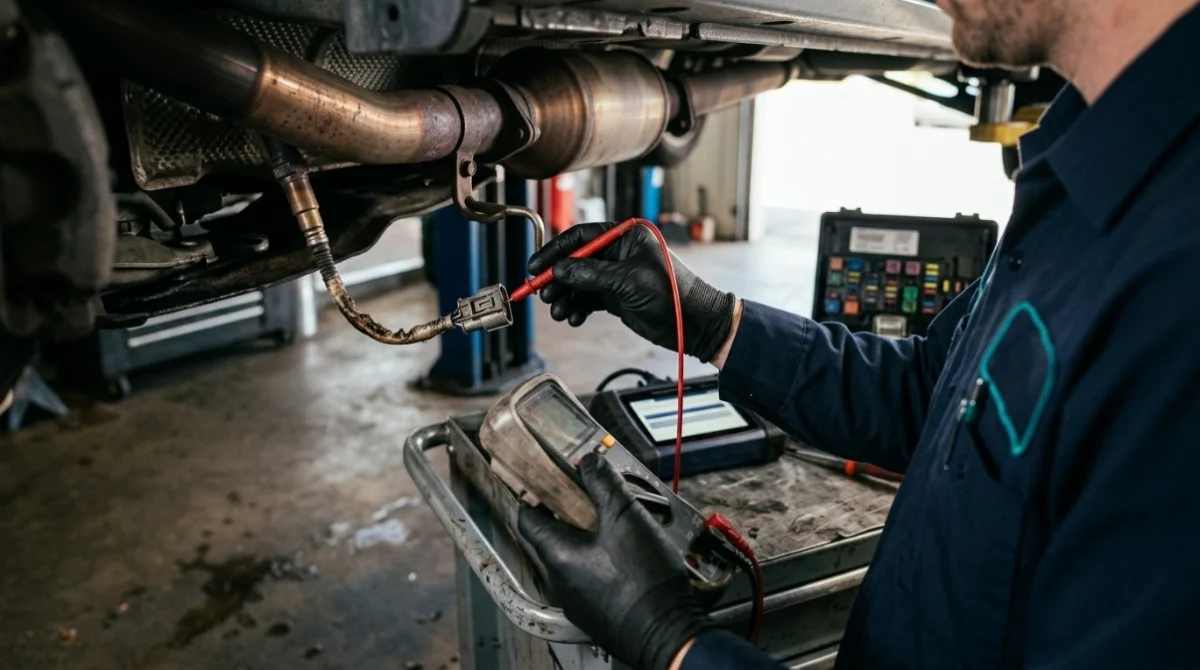
Proper diagnosis avoids unnecessary part replacement. A simple multimeter test can save time and money.
The goal is to confirm whether the heater circuit is getting voltage and grounding properly.
- Step 1: Scan live data for O2 sensor activity
- Step 2: Check fuse related to O2 heater circuit
- Step 3: Inspect wiring near exhaust system
- Step 4: Measure resistance of heater element
- Step 5: Test voltage supply at connector
Warning: Always check wiring before replacing the sensor. Heat damage near exhaust is very common.
If resistance is infinite, the heater is broken. If voltage is missing, the issue is upstream.
Repair Options for P0161
Fixing P0161 depends on the root cause. Most repairs are straightforward and low to moderate in cost.
The most effective repair is usually replacing the oxygen sensor itself.
- Replace oxygen sensor (most common fix)
- Repair or replace damaged wiring
- Replace blown fuse
- Clean corroded connectors
After repair, the ECU must be reset or driven through a full cycle to clear the code.
If the issue returns, wiring damage is usually the hidden cause.
Can You Drive With P0161?
Yes, you can drive with P0161, but it is not ideal long-term.
The engine will default to less accurate fuel control modes. That increases fuel consumption and emissions output.
What most drivers don’t realize is that long-term driving with this fault can stress the catalytic converter.
- Short-term driving is safe
- Long-term driving increases fuel cost
- Emissions test may fail
If fuel economy drops noticeably, repair should not be delayed.
What Most People Get Wrong About P0161
Many assume P0161 always means a bad oxygen sensor. That is not always true.
Electrical faults in the harness are equally common, especially in older vehicles exposed to heat and road salt.
- Wrong belief: Sensor always needs replacement
- Wrong belief: Code clears itself permanently
- Wrong belief: It affects engine performance directly
The truth is that P0161 mainly affects emissions control first, not power output.
That’s why vehicles often feel “normal” even with a failed heater circuit.
Preventing P0161 in the Future
You can reduce the chance of P0161 by protecting wiring and maintaining exhaust system health.
Heat is the biggest enemy of oxygen sensor wiring.
- Avoid driving through deep water frequently
- Inspect exhaust heat shields regularly
- Fix minor exhaust leaks early
- Use OEM-quality sensors
Cheap sensors fail faster because heater elements degrade quickly under heat cycles.
Quick Decision Guide

If you are unsure what to do next, use this simple guide.
- If sensor is original and high mileage → replace sensor
- If wiring looks damaged → repair wiring first
- If fuse is blown → replace fuse and test system
This prevents unnecessary part swapping and reduces repair cost.
P0161 means the oxygen sensor heater circuit in Bank 2 Sensor 2 has failed or lost power. The most common cause is a faulty oxygen sensor, but wiring and fuse issues are also frequent. Fixing it early improves fuel efficiency and prevents long-term emissions system damage.
Understanding whether the fault is electrical or sensor-based saves unnecessary repair costs.
Start by checking the fuse and wiring before replacing parts.
Frequently Asked Questions
What does P0161 code mean in simple terms?
P0161 means the heater inside your oxygen sensor is not working correctly. This heater helps the sensor reach operating temperature faster. When it fails, your engine takes longer to adjust fuel mixtures, leading to higher emissions and lower efficiency.
Can a bad O2 sensor cause P0161?
Yes, a faulty oxygen sensor is the most common cause of P0161. The internal heater element inside the sensor often burns out over time. However, wiring damage or a blown fuse can produce the same code.
Is it safe to drive with P0161?
Driving with P0161 is generally safe in the short term. The engine will still run normally, but fuel efficiency drops. Long-term driving may increase emissions and potentially damage the catalytic converter.
How much does it cost to fix P0161?
Repair costs typically range from $100 to $300 for sensor replacement. Wiring repairs may cost less or more depending on damage. OEM sensors are more expensive but last longer than cheap aftermarket parts.
Will P0161 clear itself?
No, P0161 will not permanently clear itself unless the underlying issue is fixed. The code may temporarily disappear, but it will return if the heater circuit remains faulty. Proper repair is required for a permanent fix.
