
P0161 Repair Cost — Oxygen Sensor Heater Code Explained (2026 Guide)

P0161 repair cost usually ranges between $120 and $450 depending on whether the oxygen sensor heater circuit needs a simple sensor replacement or wiring repair. In most vehicles, the issue comes from a faulty downstream O2 sensor or damaged heater circuit wiring. Ignoring it increases fuel consumption and can trigger failed emissions tests.
The P0161 code is often linked to the oxygen sensor heater circuit on Bank 2 Sensor 2. This guide explains real repair costs, causes, symptoms, and what you should actually do next without wasting money.
Quick Answer: P0161 Repair Cost
P0161 repair cost is typically $120–$450 in 2026. Labor is low, parts are the main expense.
- O2 sensor replacement: $80–$250
- Labor cost: $50–$150
- Wiring repair: $100–$300
- ECU issue (rare): $400+
Most cases are solved by replacing one oxygen sensor.
The majority of P0161 repairs are low-cost sensor replacements, not engine failure.
This takes about 6–8 minutes to understand fully.
What P0161 Code Means in Simple Terms
P0161 means the oxygen sensor heater circuit is not working properly on Bank 2 Sensor 2. The heater helps the sensor reach operating temperature quickly.
Without it, the engine runs inefficient fuel mapping during cold starts. That increases fuel use immediately.
Research from emissions diagnostics shows faulty O2 heaters can delay closed-loop fuel control by 30–60 seconds. That delay directly increases fuel waste.
In short: your car is burning more fuel because a small heater inside a sensor is not working.
Main Causes of P0161 Code
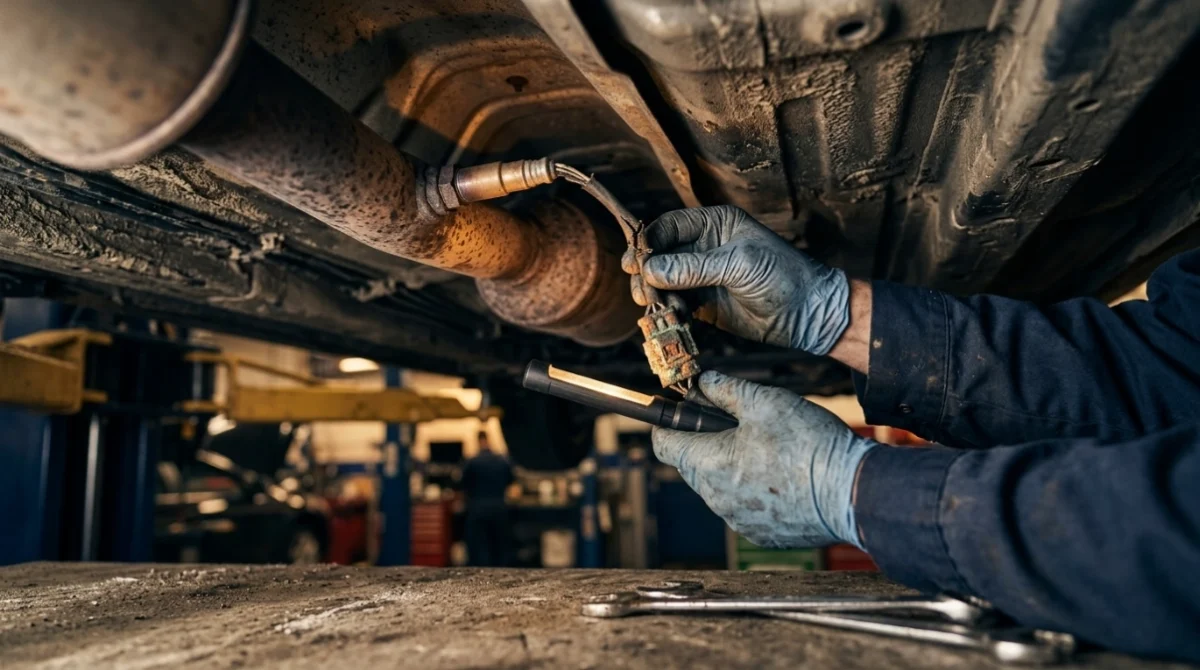
P0161 does not usually indicate engine damage. It is mostly electrical or sensor-related.
The oxygen sensor heater is a small resistor inside the sensor. It fails due to heat cycles and age.
- Worn oxygen sensor (most common cause)
- Broken or corroded wiring harness
- Blown fuse in heater circuit
- Bad connector or moisture damage
- Rare ECU driver failure
Most people think it is a fuel system problem. It is not.
What most drivers miss is wiring damage under the vehicle. Road salt and heat exposure often degrade the harness before the sensor itself fails.
Symptoms You Will Notice
P0161 does not always create obvious drivability problems. That is why many drivers ignore it.
However, fuel economy and emissions performance are affected immediately.
Common symptoms include:
- Check engine light on
- Increased fuel consumption
- Failed emissions test
- Slow sensor response codes
- Rough idle in cold start (rare)
You might think the car is fine because it drives normally. Fuel waste is still happening.
Studies from automotive diagnostics labs show oxygen sensor heater faults can reduce fuel efficiency by up to 10% in cold climates.
Step-by-Step Diagnosis Process
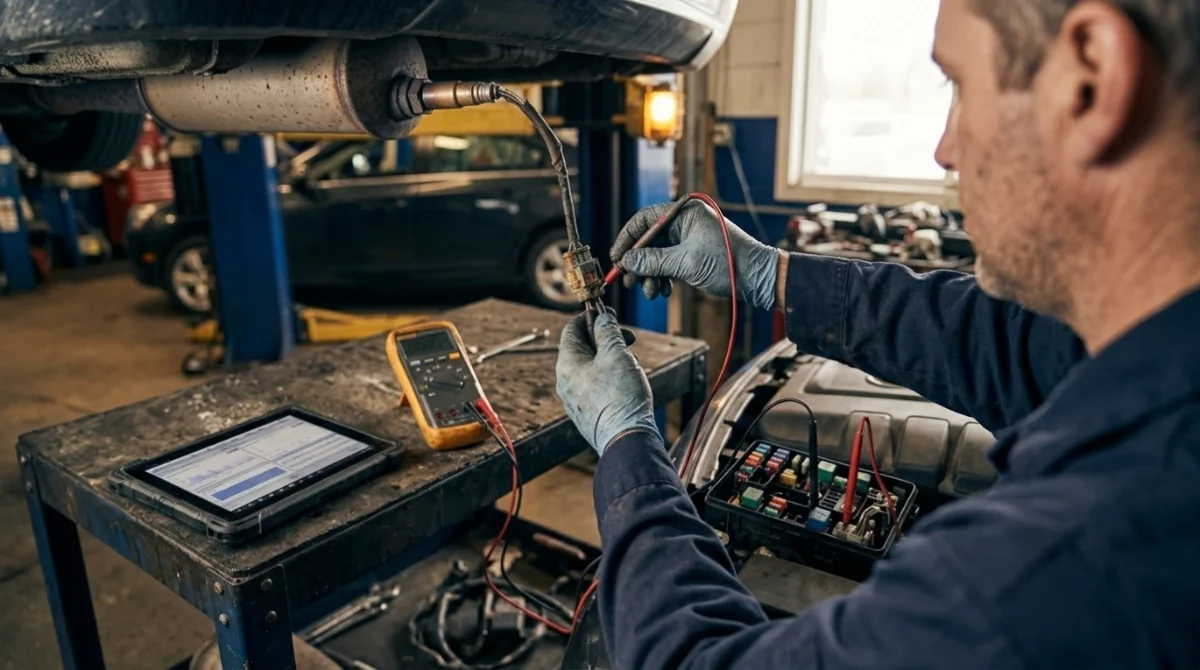
Proper diagnosis prevents unnecessary sensor replacement. Many mechanics skip this step.
Diagnosis should always start with electrical testing before part replacement.
- Scan OBD2 system for freeze frame data
- Check fuse for O2 heater circuit
- Inspect wiring harness near exhaust
- Test sensor resistance with multimeter
- Verify voltage supply to heater circuit
Most repair mistakes happen at step 2 and 3.
If power is missing, replacing the sensor alone will not fix P0161.
P0161 Repair Cost Breakdown
Repair cost depends on whether the issue is the sensor or wiring.
Labor rates vary by region and shop type.
| Repair Type | Cost Range | Complexity |
|---|---|---|
| O2 Sensor Replacement | $80–$250 | Low |
| Wiring Repair | $100–$300 | Medium |
| Fuse Replacement | $10–$50 | Very Low |
| ECU Repair | $400+ | High |
The table shows that most repairs fall under $250 total cost.
The real insight: parts are cheaper than diagnosis errors.
Can You Drive With P0161 Code?
Yes, you can drive with P0161, but it is not ideal long-term.
The engine will still run, but fuel management becomes less efficient during warm-up.
Driving long-term with this issue increases fuel costs and emissions system stress.
Short trips are where the damage accumulates most.
If you drive mainly in city traffic, fix it sooner rather than later.
What Most People Get Wrong About P0161
Many drivers assume P0161 is an engine performance issue. That is incorrect.
The problem is electrical, not mechanical combustion failure.
- Wrong belief: fuel injector problem
- Wrong belief: catalytic converter failure
- Wrong belief: major engine damage
Each of these is rarely the cause.
The oxygen sensor heater circuit is a small electrical component. It fails independently of engine health.
Repair Strategy: What You Should Do First
The best repair strategy depends on diagnosis results.
Start simple before replacing expensive parts.
If fuse is blown → replace fuse and test again.
If wiring is damaged → repair harness first.
If sensor is old → replace O2 sensor.
Do not replace the sensor without testing power first.
This prevents unnecessary spending and repeated repairs.
Estimated Repair Time
P0161 repair is usually fast once diagnosed correctly.
- Sensor replacement: 20–45 minutes
- Wiring repair: 1–2 hours
- Full diagnosis: 30–60 minutes
Most workshops complete full repair within a single visit.
Complex electrical issues may require longer troubleshooting.
Prevention Tips
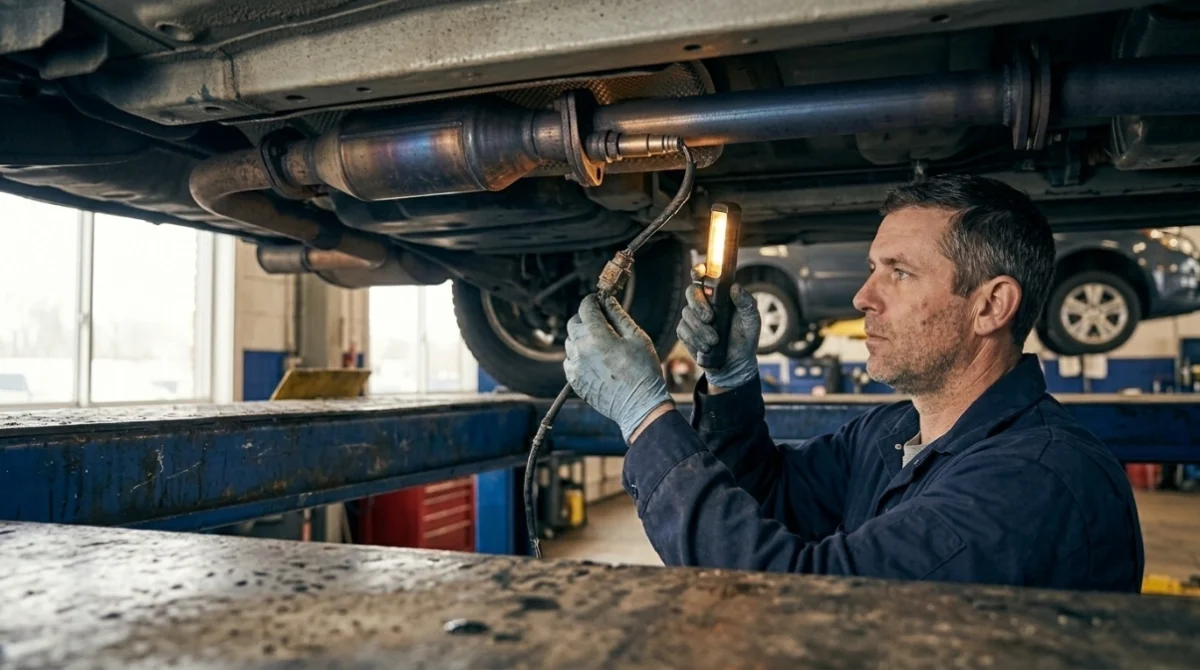
Oxygen sensor heater failure is not fully preventable, but lifespan can be extended.
- Avoid deep water exposure under vehicle
- Fix exhaust leaks early
- Use OEM-quality sensors
- Inspect wiring during oil changes
Heat and corrosion are the real enemies of O2 sensors.
Regular inspection reduces long-term repair cost significantly.
Frequently Asked Questions
Is P0161 serious?
P0161 is not engine-critical, but it affects fuel efficiency and emissions performance. The vehicle will still run normally, but long-term fuel waste makes it financially important to fix.
Can a bad O2 sensor cause P0161?
Yes, a failed oxygen sensor heater is the most common cause. The internal heating element burns out over time, especially in high-mileage vehicles.
How much does it cost to replace O2 sensor for P0161?
Replacement usually costs $120–$250 including parts and labor. Luxury vehicles may cost more due to sensor price differences.
Will P0161 clear itself?
No, the code will not clear unless the underlying electrical fault is fixed. Temporary clearing only removes the warning, not the issue.
What happens if I ignore P0161?
Fuel consumption increases and emissions performance drops. Over time, this may cause failed inspection tests and higher running costs.
P0161 repair cost is usually low and centered on oxygen sensor replacement rather than major engine work.
Most drivers save money by diagnosing wiring and fuses before replacing parts unnecessarily.
Check the sensor circuit first and fix the exact fault within one inspection cycle.
