
P0301 Causes: Why Your Engine Has a Cylinder 1 Misfire

Quick Answer
The P0301 trouble code means your vehicle’s computer has detected a misfire in cylinder 1. The most common P0301 causes include worn spark plugs, faulty ignition coils, fuel delivery problems, vacuum leaks, injector issues, and engine compression problems. Start by checking ignition components before moving to more expensive engine repairs.
Common causes to check first:
- Worn spark plug: A damaged or fouled plug can prevent cylinder 1 from burning fuel correctly.
- Bad ignition coil: A weak coil can create an inconsistent spark and trigger a misfire.
- Fuel problems: A clogged injector or poor fuel delivery can cause cylinder 1 to run incorrectly.
- Air leaks: Vacuum leaks can create a lean mixture and affect combustion.
- Low compression: Internal engine wear can stop cylinder 1 from producing proper power.
When your OBD2 scanner shows the code P0301, it means your engine control module (ECM) has detected a misfire specifically in cylinder number one. This is one of the most common engine fault codes drivers encounter.
I have seen many drivers replace expensive parts too quickly after seeing this code. In most cases, the problem starts with basic ignition or fuel-related issues that can be diagnosed with a careful inspection.
In This Guide
What Does the P0301 Code Mean?
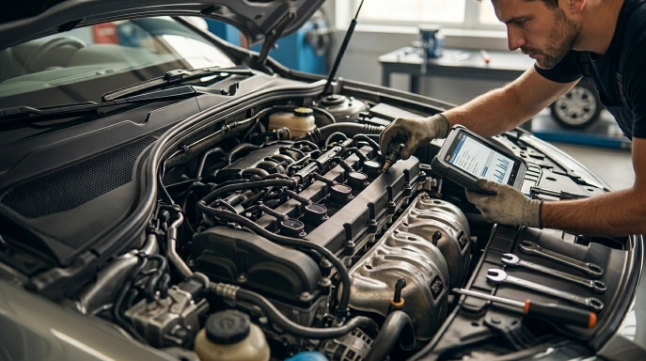
The P0301 code means the engine computer has detected a misfire in cylinder 1. A misfire happens when the air and fuel mixture inside the cylinder does not burn properly.
Cylinder 1 is the first cylinder in the engine’s firing order, but its exact location depends on the engine design. Always check your vehicle service information before replacing parts.
What happens during a cylinder misfire?
A healthy engine needs three basic things to run correctly: fuel, air, and ignition. If cylinder 1 does not receive the correct amount of fuel, air, compression, or spark, the ECM detects uneven engine operation.
- Spark failure: The spark plug or ignition coil cannot create a strong enough spark.
- Fuel issue: The injector cannot deliver the correct amount of fuel.
- Air problem: Extra air enters through a vacuum leak.
- Mechanical failure: The cylinder cannot build enough compression.
A single misfire may seem minor, but ignoring it can damage other engine components, including the catalytic converter.
What Are the Most Common P0301 Causes?
The most common P0301 causes are ignition system failures, fuel problems, air leaks, and engine mechanical issues. Start with the simplest checks before moving toward complex repairs.
1. Worn or Damaged Spark Plug
A worn spark plug is one of the first things to inspect when diagnosing P0301. Over time, spark plugs develop worn electrodes, carbon buildup, or incorrect gaps.
A weak spark can cause incomplete combustion inside cylinder 1. This often creates rough idling, hesitation, and reduced engine performance.
2. Faulty Ignition Coil
Modern vehicles often use individual ignition coils for each cylinder. If the cylinder 1 coil becomes weak or fails, the engine may misfire.
A common diagnostic method is moving the coil to another cylinder and checking whether the misfire code follows the coil. Always follow manufacturer testing procedures for your vehicle.
3. Bad Fuel Injector
The fuel injector controls how much gasoline enters cylinder 1. A clogged, dirty, or failing injector can create a lean or rich fuel condition.
Fuel injector problems may also cause hard starting, poor acceleration, and increased fuel consumption.
4. Vacuum Leak Near Cylinder 1
A vacuum leak allows unmetered air into the engine. This changes the air-fuel mixture and can cause a cylinder-specific misfire.
Common leak areas include intake manifold gaskets, vacuum hoses, and intake system connections.
5. Low Engine Compression
If cylinder 1 cannot compress the air-fuel mixture correctly, even a strong spark and proper fuel delivery may not solve the problem.
Low compression can result from worn piston rings, damaged valves, or head gasket problems.
Section Takeaway: Most P0301 problems begin with spark plugs, ignition coils, fuel injectors, or air leaks. Check simple causes before considering major engine repairs.
What Symptoms Does a P0301 Misfire Cause?
A P0301 misfire can create noticeable driving problems. Some vehicles show mild symptoms, while others experience severe performance issues.
- Rough idle: The engine shakes or vibrates when stopped.
- Poor acceleration: The vehicle feels weak when pressing the gas pedal.
- Engine hesitation: Power delivery becomes inconsistent.
- Check engine light: The dashboard warning appears.
- Reduced fuel economy: The engine burns fuel inefficiently.
- Fuel smell: Unburned fuel may enter the exhaust system.
A flashing check engine light is more serious because it may indicate a severe misfire that can damage the catalytic converter.
How Do You Diagnose a P0301 Code?
Diagnosing P0301 requires a step-by-step approach. Avoid replacing multiple parts without testing because many different problems can create the same code.
Follow these diagnostic steps:
- Use an OBD2 scanner to confirm the P0301 code and check for additional codes.
- Inspect cylinder 1 spark plug condition.
- Test or swap the ignition coil if appropriate.
- Check fuel injector operation.
- Inspect vacuum hoses and intake connections.
- Perform compression testing if ignition and fuel systems appear normal.
| Possible Cause | Difficulty | Common Check |
|---|---|---|
| Spark Plug | Easy | Inspect wear and deposits |
| Ignition Coil | Medium | Test coil operation |
| Injector | Medium | Check fuel delivery |
| Compression | Advanced | Compression test |
How Can You Fix a P0301 Code?

The correct repair depends on the actual cause. Clearing the code with a scanner does not fix the underlying problem.
- Replace worn spark plugs: Install the correct plugs recommended for your vehicle.
- Repair ignition issues: Replace a failing ignition coil when testing confirms failure.
- Clean or replace injectors: Address fuel delivery problems.
- Fix vacuum leaks: Replace damaged hoses or leaking gaskets.
- Repair engine problems: Address compression-related failures with professional diagnosis.
Locksmith and diagnostic note: always confirm vehicle specifications before replacing electronic or engine-related components. Parts and procedures vary by make, model, and year.
P0301 Causes FAQ
Can I drive with a P0301 code?
You may be able to drive a short distance, but continued driving with an active misfire can cause additional damage. A flashing check engine light requires immediate attention.
Can bad spark plugs cause P0301?
Yes. Worn or damaged spark plugs are among the most common causes of cylinder 1 misfires.
How much does it cost to fix P0301?
Repair costs vary depending on the cause, vehicle type, and labor rates. A spark plug repair is usually less expensive than diagnosing internal engine damage.
Can a fuel injector cause P0301?
Yes. A clogged or failing injector can prevent cylinder 1 from receiving the correct fuel amount and trigger a misfire.
Will clearing P0301 fix the problem?
No. Clearing the code only removes the warning temporarily. The issue will usually return until the cause is repaired.
Final Thoughts
The P0301 code points to a cylinder 1 misfire, but the cause can range from a simple spark plug issue to a deeper engine problem.
Start with basic inspections, test components carefully, and avoid replacing parts without confirmation. A proper diagnosis saves time, money, and prevents unnecessary repairs.
