
How to Fix P0301: Cylinder 1 Misfire Causes, Diagnosis, and Repair Guide

P0301 means the engine computer has detected repeated misfires in cylinder 1. The usual causes are a worn spark plug, a failing ignition coil, a clogged or faulty injector, a vacuum leak near that cylinder, or low compression. Swap the cylinder 1 coil with a neighbouring one and see if the code moves before you buy parts, and stop driving if the check engine light flashes.
A P0301 trouble code means your vehicle’s engine computer has detected a misfire in cylinder 1. This happens when cylinder 1 fails to burn the air-fuel mixture properly, causing rough running, power loss, shaking, or reduced fuel efficiency.
What Does the P0301 Code Mean?
A P0301 code is an OBD2 engine fault code that specifically identifies a misfire in cylinder 1. Modern vehicles use sensors and the engine control module (ECM) to monitor crankshaft speed and combustion performance.
When the ECM notices that cylinder 1 is not contributing enough power compared with the other cylinders, it stores the P0301 code and may activate the check engine light.
In my experience troubleshooting vehicles, many drivers assume a P0301 always means they need a new engine. That is rarely the first conclusion. Most cylinder 1 misfires come from smaller issues such as ignition problems, air leaks, or fuel delivery faults.
A cylinder misfire happens when the combustion process inside the cylinder is incomplete. The engine needs three basic things to run correctly:
- Correct air and fuel mixture
- Strong ignition spark
- Proper compression
If one of these areas fails, cylinder 1 may stop firing correctly.
What Are the Common Symptoms of P0301?
The symptoms of P0301 can vary depending on the vehicle and the severity of the misfire. Some drivers notice immediate performance problems, while others only see a warning light.
Common signs include:
- Rough engine idle
- Engine shaking or vibration
- Reduced acceleration
- Poor fuel economy
- Difficulty starting
- Flashing check engine light
- Exhaust smell caused by unburned fuel
- Loss of engine power
A flashing check engine light deserves attention. It can indicate an active misfire that may allow unburned fuel to enter the exhaust system and potentially damage the catalytic converter.
If your vehicle runs roughly but still drives, avoid ignoring the problem. A small ignition issue can sometimes become a more expensive repair if left unresolved.
Section Takeaway: P0301 means cylinder 1 is misfiring, but the cause can range from a simple spark plug issue to a more complex mechanical failure.
What Causes a P0301 Cylinder 1 Misfire?

Several problems can trigger a P0301 code. The key is identifying whether the issue is related to spark, fuel, air, or engine compression.
1. Worn or Damaged Spark Plug
Spark plugs are one of the most common causes of cylinder misfires. Over time, the plug electrode wears down, making it harder to create a strong spark.
A damaged spark plug may have:
- Excessive wear
- Carbon buildup
- Oil contamination
- Incorrect gap
- Cracks in the ceramic insulator
If cylinder 1 has an old spark plug while the others are newer, replacing the complete set may restore proper combustion.
2. Faulty Ignition Coil
Many modern engines use individual ignition coils for each cylinder. If the cylinder 1 coil becomes weak or fails, the spark may not reach the combustion chamber properly.
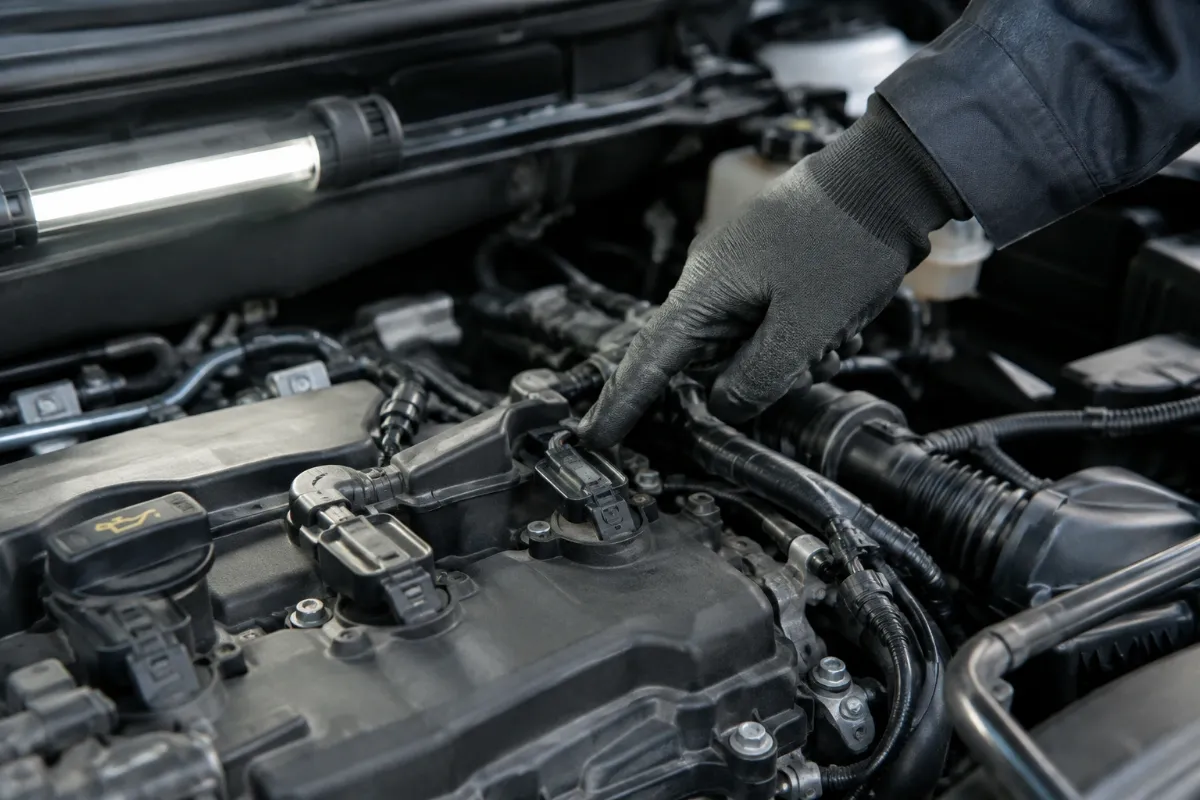
A common diagnostic method is moving the cylinder 1 coil to another cylinder and checking whether the misfire code changes location.
For example:
- If P0301 becomes P0302 after swapping coils, the coil is likely faulty.
- If the code stays on cylinder 1, continue checking other causes.
3. Fuel Injector Problems
The fuel injector delivers fuel into the cylinder. A clogged, stuck, or electrically faulty injector can prevent cylinder 1 from receiving the correct amount of fuel.
Possible injector problems include:
- Restricted fuel flow
- Injector wiring damage
- Electrical connection problems
- Internal injector failure
A fuel injector should be tested before replacement because injector problems can sometimes be confused with ignition issues.
4. Vacuum Leaks Near Cylinder 1
A vacuum leak allows extra air into the engine, creating an incorrect air-fuel mixture.
If the leak affects cylinder 1 more than the others, it can trigger a specific cylinder misfire code.
Common leak sources include:
- Cracked vacuum hoses
- Intake manifold gasket problems
- Damaged intake components
5. Low Engine Compression
Compression problems are less common but more serious. Cylinder 1 may misfire if it cannot build enough pressure during the compression stroke.
Possible causes include:
- Burned valves
- Worn piston rings
- Damaged head gasket
- Valve timing issues
A compression test or leak-down test can help confirm mechanical problems.
How Do You Diagnose and Fix P0301?
The best repair approach is a step-by-step diagnosis. Replacing random parts can waste money and may not solve the actual problem.
Step 1: Scan the Vehicle and Check Related Codes
Start with an OBD2 scanner to confirm P0301 and look for additional codes.
Related codes may provide extra clues, such as:
- Fuel system problems
- Oxygen sensor issues
- Air intake problems
- Multiple cylinder misfires
Do not focus only on the P0301 code if other codes are present.
Step 2: Inspect Cylinder 1 Ignition Components
Begin with the simplest checks:
- Remove and inspect the cylinder 1 spark plug.
- Check the ignition coil condition.
- Inspect coil connectors and wiring.
- Look for corrosion or damaged wires.
Many misfires can be found during this visual inspection.
Step 3: Swap Components for Testing
Swapping parts can help identify failures without immediately buying replacements.
Common tests include:
- Swap ignition coil with another cylinder.
- Move spark plugs between cylinders.
- Compare injector operation.
If the misfire follows the component, you have likely found the problem.
Step 4: Check Fuel Delivery
If ignition components appear normal, test the injector and fuel system.
A technician may check:
- Injector resistance
- Injector pulse signal
- Fuel pressure
- Injector flow performance
Step 5: Perform Compression Testing
If ignition and fuel systems check out, test engine compression.
Low compression usually indicates an internal engine problem that requires deeper repair.
Locksmith and diagnostic note: always confirm the actual failure before replacing expensive components. Proper testing prevents unnecessary repairs.
Section Takeaway: Diagnose P0301 from the simplest possibilities first, starting with spark and moving toward fuel and mechanical checks.
Can You Drive With a P0301 Code?
You may be able to drive a short distance with a P0301 code, but it depends on how severe the misfire is.
A mild misfire may allow normal driving, but continued operation can create additional problems.
Avoid driving if:
- The check engine light is flashing.
- The engine is shaking heavily.
- The vehicle has major power loss.
- You smell raw fuel from the exhaust.
A continuous misfire can increase stress on the catalytic converter because fuel may burn inside the exhaust system instead of the engine cylinder.
How Much Does It Cost to Fix P0301?

The repair cost for P0301 depends on the failed component, vehicle model, labor rates, and location.
Possible repair ranges can vary:
- Spark plug replacement is usually one of the lower-cost repairs.
- Ignition coil replacement may cost more depending on vehicle design.
- Injector repairs can require additional diagnostic work.
- Internal engine repairs can become significantly more expensive.
The best way to control costs is accurate diagnosis. Replacing multiple parts without testing often increases the final bill.
P0301 Frequently Asked Questions
Is P0301 a serious code?
P0301 can range from a minor ignition problem to a serious engine issue. The severity depends on the cause and how long the vehicle has been running with the misfire.
Can bad spark plugs cause P0301?
Yes. Worn or damaged spark plugs are among the most common reasons cylinder 1 may misfire.
Will replacing the ignition coil fix P0301?
It can if the ignition coil is the cause. Testing or swapping coils before replacement helps confirm the diagnosis.
Can a vacuum leak cause only cylinder 1 to misfire?
Yes. A vacuum leak near cylinder 1 can sometimes create a lean condition that affects that cylinder more than others.
Should I replace all spark plugs after a P0301 code?
If the plugs are old or near their service interval, replacing the full set is often recommended. However, inspect the vehicle requirements first.
Can an OBD2 scanner fix P0301?
An OBD2 scanner cannot repair the problem. It identifies the fault code and helps guide diagnosis.
How to Reduce P0301 Repair Costs

The best way to save money is avoiding unnecessary part replacement. Many drivers replace expensive components before confirming the actual failure.
- Scan first: Use an OBD2 scanner to identify related codes.
- Check maintenance history: Recent spark plug or coil replacements may provide clues.
- Compare symptoms: Pay attention to when the misfire occurs.
- Choose quality parts: Cheap components may create repeat failures.
Locksmith and automotive service note: Electrical problems can sometimes mimic mechanical failures. Always inspect wiring and connectors before replacing expensive components.
Is P0301 Serious, and Can You Keep Driving?
P0301 can become serious because an active misfire may send unburned fuel into the exhaust. That fuel can overheat and damage the catalytic converter.
Driving safety also changes when the engine hesitates or loses power. The vehicle may not accelerate predictably when entering traffic.
Stop driving when these signs appear
- Flashing check engine light
- Strong or continuous engine shaking
- Major loss of acceleration
- Stalling or difficulty keeping the engine running
- Smoke, burning smells, or a strong raw-fuel odor
- Unusual mechanical knocking or tapping
Ford’s official explanation of dashboard warning lights notes that continuous flashing can indicate a misfire and possible power loss. Similar guidance appears in many vehicle owner manuals.
If the light is solid and the engine feels normal, avoid heavy acceleration. Arrange a scan and inspection as soon as practical.
Do not clear the code merely to turn off the warning. Clearing it can erase freeze-frame information that helps diagnose the failure.
Safety note: If you cannot maintain a safe speed or the light flashes, pull over safely and arrange a tow.
How Do You Confirm P0301 With an OBD2 Scanner?

An OBD2 scanner confirms the stored code and provides context. It cannot confirm the failed component by itself.
- Read every code. Record stored, pending, and permanent codes before clearing anything.
- Save freeze-frame data. Note engine speed, coolant temperature, load, speed, and fuel-trim readings.
- Check current symptoms. Observe whether the engine misfires cold, hot, at idle, or under load.
- Inspect cylinder 1. Check the plug, coil connection, wiring, injector connector, and nearby hoses.
- Compare cylinders. A qualified person may move a suitable coil to another cylinder and see whether the code follows it.
- Test fuel and compression. Continue only with the correct tools and vehicle service information.
- Repair and verify. Clear codes after the repair, then complete an appropriate road test and rescan.
A coil-swap test can be useful on compatible coil-on-plug systems. However, it should not be used with damaged parts or where removal risks breaking connectors.
If P0301 changes to the code for the cylinder receiving that coil, the coil becomes a strong suspect. If P0301 remains, continue testing instead of replacing more coils.
Look at live misfire counters when the scanner supports them. Basic readers may only display the code and generic freeze-frame data.
I also compare the cylinder 1 plug with the other plugs. An unusually wet, oily, overheated, or carbon-coated plug can guide the next test.
A clean plug does not rule out a problem. Intermittent electrical faults may leave little visible evidence.
Seek professional diagnosis when:
- The check engine light flashes
- P0301 returns after basic ignition checks
- Compression is low or uneven
- Fuel, coolant, or oil contamination is suspected
- Several electrical or communication codes appear together
- The repair requires high-pressure fuel system work
Diagnostic note: Labor rates and total repair costs vary by vehicle, engine design, region, and the confirmed cause. Request test results before approving parts.
Section Takeaway: Record the data first, identify cylinder 1 correctly, and test one system at a time. A scanner points you toward the fault but does not replace diagnosis.
How Do Mechanics Diagnose a P0301 Code?
Proper diagnosis prevents unnecessary repairs. A professional technician usually follows a process to identify whether the issue comes from spark, fuel, air, or mechanical failure.
- Scan the vehicle: Confirm P0301 and check for related trouble codes.
- Inspect ignition parts: Check spark plugs, coils, and wiring.
- Test fuel delivery: Verify injector operation and fuel pressure.
- Check air leaks: Inspect intake components and vacuum lines.
- Test compression: Measure cylinder pressure if needed.
An OBD2 scanner provides useful information, but it does not replace physical testing. The code is a starting point, not a complete diagnosis.
Final Thoughts: Fixing P0301 the Right Way
A P0301 code does not automatically mean your engine needs major repairs. In many cases, the solution is a failed spark plug, ignition coil, wiring issue, or fuel delivery problem.
The smartest approach is to diagnose the cause before replacing parts. Start with basic inspections, test components, and move toward advanced checks only when necessary.
If you address the misfire early, you can protect engine performance, fuel economy, and expensive exhaust components.