
P0303 Repair Cost: What You’ll Pay to Fix a Cylinder 3 Misfire

Quick Answer
P0303 repair cost commonly falls around $150 to $1,200 when the cause is a spark plug, ignition coil, intake leak, or fuel-system problem. A professional diagnosis often adds about $100 to $200, while internal engine damage can push the total above $1,500. If the check engine light is flashing, treat the misfire as urgent and follow AAA’s check engine light guidance rather than continuing to drive normally.
Typical P0303 Costs
- Diagnostic testing: Often about $100–$200 before repairs begin.
- Spark plug repair: Commonly around $150–$450, depending on engine access.
- Ignition coil: Roughly $200–$500 for one confirmed failed coil.
- Air or vacuum leak: Often around $150–$600 for common repairs.
- Fuel injector: Replacement can reach roughly $300–$1,500 or more.
- Engine damage: Compression, valve, or cylinder problems may exceed $1,500–$5,000.
What Should You Do?
- Pay for diagnosis before approving parts because P0303 identifies the affected cylinder, not the failed component.
- Stop driving if the engine shakes badly, loses significant power, or the check engine light flashes.
P0303 means your vehicle’s computer has detected repeated misfires from cylinder 3. An OBD2 scanner can identify that cylinder, but it can’t tell you whether the spark plug, coil, injector, wiring, air supply, or engine itself caused the problem.
I never price a P0303 repair from the code alone. The safest approach is to test the cylinder first, then price the part or system that actually failed.
In This Guide
What Does P0303 Mean, and How Serious Is It?
P0303 means the engine computer has detected a misfire associated with cylinder 3. A misfire happens when combustion in that cylinder is missing, weak, late, or otherwise inconsistent.
Definition: P0303 is a generic OBD-II diagnostic trouble code indicating a detected misfire on cylinder 3. It identifies where the misfire is occurring, but not the component responsible for it.
You may notice a rough idle, shaking, hesitation, weak acceleration, increased fuel consumption, or a check engine light. Some vehicles show only the warning light at first.
A steady check engine light still deserves attention. A flashing light usually means the misfire is severe enough that continued driving could overheat and damage the catalytic converter.
Why P0303 is more specific than P0300
P0300 indicates random or multiple-cylinder misfires. P0303 narrows the fault to cylinder 3, which gives the technician a better starting point.
That doesn’t make the repair automatic. Cylinder 3 still depends on ignition, fuel delivery, airflow, compression, wiring, sensors, and correct engine timing.
- P0300: Random or multiple-cylinder misfire detected.
- P0301: Cylinder 1 misfire detected.
- P0302: Cylinder 2 misfire detected.
- P0303: Cylinder 3 misfire detected.
- P0304: Cylinder 4 misfire detected.
The actual physical location of cylinder 3 varies by engine design. Don’t assume it’s the third cylinder you see from the front of the vehicle.
Technician’s note: confirm the cylinder numbering diagram for your exact engine before moving coils, plugs, or injectors.
How Much Does It Cost to Fix P0303?

A typical P0303 repair may cost roughly $150 to $1,200, but there is no single price for the code. The bill depends on the failed component, engine design, labor rate, and how much testing is required.
Simple ignition problems sit near the lower end. Fuel-system or internal engine problems can cost substantially more.
| Possible Repair | Estimated 2026 Cost | When It May Be Needed |
|---|---|---|
| Professional diagnosis | $100–$200 | Scan data, visual checks, ignition, fuel, or compression testing |
| Spark plug replacement | $150–$450 | Worn, fouled, cracked, or incorrectly gapped plug |
| One ignition coil | $200–$500 | Weak or failed coil confirmed by testing |
| Coil connector or wiring repair | $150–$500+ | Damaged terminal, broken wire, corrosion, or poor connection |
| Vacuum or intake leak | $150–$600+ | Air leak affecting the cylinder’s air-fuel mixture |
| Fuel injector repair or replacement | $300–$1,500+ | Restricted, electrically faulty, or failed injector |
| Mechanical engine repair | $1,500–$5,000+ | Valve, piston, head-gasket, timing, or compression problem |
| Catalytic converter damage | $1,000–$3,000+ | Possible secondary damage after prolonged severe misfiring |
These are budgeting ranges, not repair quotes. Prices can change significantly by make, model, engine, region, parts quality, and labor access.
Why the diagnostic fee is worth paying
A $150 diagnosis can be cheaper than buying several guessed parts. P0303 tells you which cylinder is misfiring, but it doesn’t tell you what failed.
I commonly treat the diagnostic fee as the first repair expense. It prevents the familiar pattern of replacing a plug, then a coil, then an injector without proving any of them were bad.
Why labor can change the price so much
Some engines place the ignition coils and spark plugs directly on top. Others require removal of an intake manifold or other components for access.
- Engine layout: Tight access means more labor time.
- Number of cylinders: Some owners choose full plug service instead of replacing one worn plug.
- Parts quality: OEM and aftermarket component prices vary.
- Diagnostic difficulty: Intermittent misfires can require road testing and repeated measurements.
- Labor rate: Independent shops and dealerships may charge different hourly rates.
Cost note: ask for an itemized estimate showing diagnosis, parts, labor, taxes, and any recommended work separately.
Section Takeaway: P0303 commonly costs a few hundred dollars when the problem is ignition-related, but fuel or mechanical failures can move the repair well above $1,000.
What Usually Causes a Cylinder 3 Misfire?
The most common P0303 causes involve spark, fuel, air, compression, or the wiring that controls those systems. You should test those categories instead of assuming the ignition coil is bad.
1. Worn or damaged spark plug
A worn, fouled, cracked, or incorrectly gapped spark plug may struggle to ignite the mixture consistently. This is one of the first components worth inspecting on many gasoline engines.
The plug can also provide clues. Oil deposits, fuel fouling, overheating, or unusual electrode wear may point toward a deeper problem.
2. Weak ignition coil or damaged coil boot
Many modern engines use one coil for each cylinder. A weak cylinder 3 coil can create a P0303 code, especially under acceleration or load.
Heat damage, cracked boots, corrosion, moisture, and poor electrical connections can produce similar symptoms. Test before replacing the coil.
3. Fuel injector problem
Cylinder 3 needs the correct amount of fuel at the correct time. A restricted injector, electrical fault, damaged connector, or failed injector can interrupt that delivery.
Injector diagnosis may require electrical checks or fuel-system testing. Direct-injection systems can also require specialized tools and safety procedures.
4. Intake or vacuum leak
An air leak near one intake runner can make a single cylinder run too lean. That can create a misfire even when the spark plug and coil work correctly.
Smoke testing often helps locate small intake leaks that aren’t obvious during a visual inspection.
5. Low compression
A cylinder cannot burn normally if it can’t seal properly. Burned valves, worn rings, valve-train faults, head-gasket problems, or incorrect timing can reduce compression.
- Compression test: Compares the cylinder’s ability to build pressure.
- Leak-down test: Helps identify where cylinder pressure is escaping.
- Mechanical inspection: May be needed if test results point toward valve-train or internal damage.
6. Wiring, connector, or control problem
A good coil or injector can’t work without a reliable electrical connection. Damaged wiring, loose terminals, corrosion, or a poor ground can create an intermittent P0303.
This becomes especially important when the misfire changes after the engine moves, warms up, or encounters moisture.
Section Takeaway: don’t treat P0303 as an automatic ignition-coil code. Spark, fuel, air, compression, and electrical control all need to be considered.
How Is P0303 Diagnosed Before Parts Are Replaced?
A proper P0303 diagnosis starts by confirming the code and checking whether another trouble code changes the direction of testing. The goal is to prove the failure before buying parts.
- Scan all stored codes. Record P0303 plus any ignition, fuel, airflow, or sensor codes.
- Review freeze-frame data. Note engine speed, load, temperature, and operating conditions when the code set.
- Inspect cylinder 3. Look for loose connectors, damaged wiring, oil contamination, moisture, cracked boots, or obvious intake leaks.
- Check the spark plug. Compare its condition with plugs from healthy cylinders.
- Test the ignition coil. Where appropriate, a technician may compare it with a known-good cylinder using manufacturer-approved methods.
- Check injector operation. Verify the electrical circuit and fuel delivery before condemning the injector.
- Look for air leaks. Inspect the intake system and use smoke testing when needed.
- Test compression. Move to compression or leak-down testing when ignition and fuel tests don’t explain the misfire.
What if the misfire moves to another cylinder?
When a movable component is swapped using an appropriate diagnostic method, a misfire that follows that component provides useful evidence. For example, a misfire moving with a coil can strongly point toward the coil.
Don’t swap components blindly on every vehicle. Coil design, access, calibration, and manufacturer procedures vary.
What if P0303 stays on cylinder 3?
If the code remains on cylinder 3 after ignition checks, the technician should keep testing. Fuel delivery, wiring, vacuum leaks, and compression become more important suspects.
This is where diagnostic discipline saves money. Replacing more ignition parts simply because the code remains usually isn’t a good strategy.
Check recalls and manufacturer information
Before paying for a major repair, check whether your vehicle has an open safety recall through the NHTSA recall lookup. You should also ask a dealer or qualified shop whether manufacturer service information applies to your year, engine, and VIN.
Software updates and known vehicle-specific issues can change the correct diagnostic path. Never assume a repair procedure from another model year applies to yours.
Technician’s note: save the original scan report and freeze-frame data before clearing codes. That information can be valuable when an intermittent misfire disappears temporarily.
Section Takeaway: the best P0303 diagnosis confirms spark, fuel, air, electrical integrity, and compression in a logical order instead of replacing parts by guesswork.
Can You Drive With P0303, and Can You Fix It Yourself?
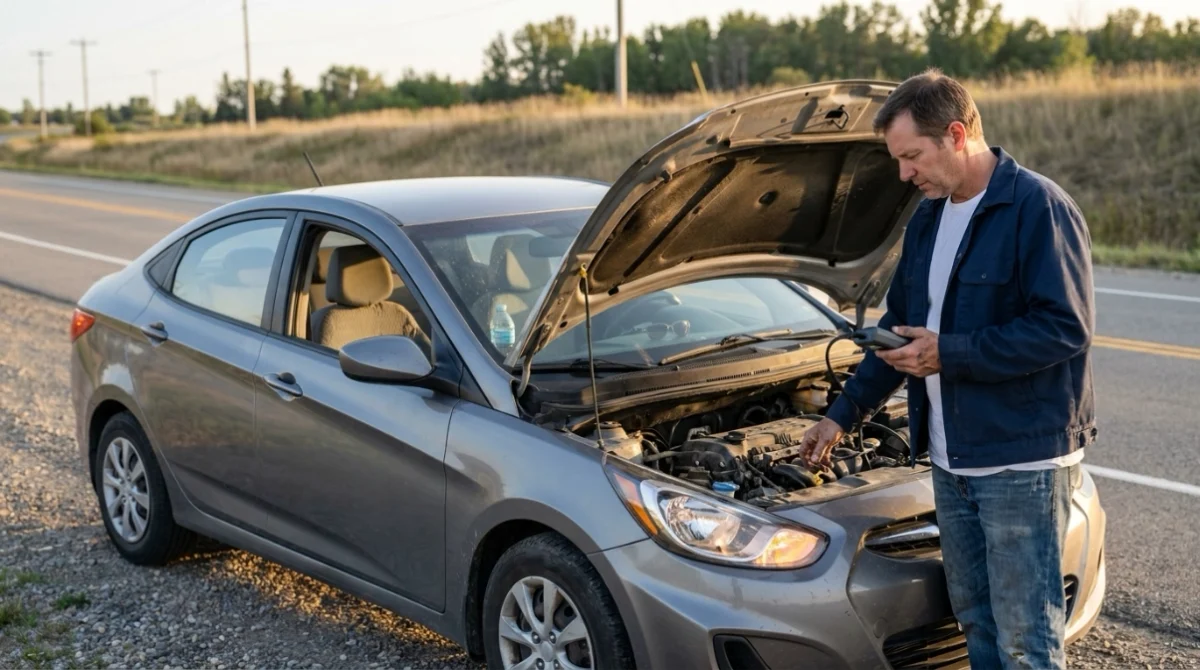
You may be able to move the vehicle a short distance with a mild, steady misfire, but a flashing check engine light or severe shaking calls for stopping as soon as safely possible. Continued severe misfiring can send unburned fuel into the exhaust.
Stop driving when these symptoms appear
- Flashing check engine light: Treat this as an urgent warning.
- Heavy shaking: Severe misfiring can make the vehicle difficult to drive smoothly.
- Major power loss: Avoid entering fast traffic when acceleration is unpredictable.
- Strong fuel smell: Stop and investigate rather than continuing the trip.
- Overheating or abnormal noises: Shut the engine down and arrange professional inspection.
Driving gently doesn’t repair the fault. It only reduces load while you reach a safe location when the vehicle is still operating reasonably well.
Can you fix P0303 yourself?
Basic inspection can be DIY-friendly if you have the correct tools and service information. More advanced fuel, electrical, or compression diagnosis may justify professional help.
| Task | DIY Difficulty | Main Caution |
|---|---|---|
| Read OBD2 codes | Beginner | A code identifies a fault area, not a failed part |
| Visual wiring inspection | Beginner | Avoid pulling or damaging connectors |
| Spark plug inspection | Beginner to intermediate | Correct plug type and torque matter |
| Coil testing | Intermediate | Follow vehicle-specific service procedures |
| Fuel injector diagnosis | Intermediate to advanced | Fuel pressure and direct-injection systems require care |
| Compression or leak-down testing | Intermediate to advanced | Results must be interpreted correctly |
Follow the maintenance schedule and parts specifications in the owner’s manual. AAA’s vehicle tune-up guidance also highlights ignition and fuel-system items commonly inspected during routine service.
Repair note: don’t buy an injector, coil, or expensive engine part solely because an inexpensive scanner displayed P0303.
Section Takeaway: simple inspections may be DIY-friendly, but accurate diagnosis matters more than replacing the easiest part first.
Frequently Asked Questions
Is P0303 expensive to fix?
P0303 may cost around $150 to $500 when a spark plug, ignition coil, connector, or simple air leak causes the misfire. Fuel-system or mechanical problems can raise the repair into the $1,000 to $5,000-plus range. Diagnosis determines the real price.
How much does a P0303 diagnosis cost?
A basic professional diagnosis often costs roughly $100 to $200. Intermittent problems may cost more because the shop may need additional road testing, electrical measurements, smoke testing, fuel-system checks, or compression testing.
Will replacing the spark plugs fix P0303?
It will only fix P0303 if a spark plug problem caused the cylinder 3 misfire. Worn plugs are common, but a coil, injector, intake leak, wiring fault, or low compression can produce the same code.
Can a bad ignition coil cause P0303?
Yes. A weak or failed ignition coil can cause a cylinder 3 misfire on engines with individual coils. Testing should confirm the coil before replacement because damaged wiring, connectors, plugs, injectors, and mechanical faults can mimic coil failure.
Can a bad fuel injector cause P0303?
Yes. A restricted, electrically faulty, or failed cylinder 3 injector can cause P0303. Injector testing should verify both the electrical command and fuel delivery before replacement, especially on direct-injection engines where parts and labor can be expensive.
Will P0303 clear itself?
The check engine light may eventually turn off if the misfire stops and the vehicle completes enough successful self-tests. However, the code may remain stored, and an intermittent problem can return. Clearing the code doesn’t repair the cause.
How long does a P0303 repair take?
A straightforward diagnosis and accessible spark plug or ignition coil repair may be completed within a few hours. Injector, wiring, intake, or internal engine repairs can require substantially more time, especially when components must be removed for access.
Final Takeaway: Budget for Diagnosis First
P0303 repair cost commonly starts in the low hundreds when the problem involves routine ignition components. The total can climb above $1,000 when fuel delivery, difficult access, or internal engine damage is involved.
The code itself isn’t a repair estimate. It only tells you that the computer detected a misfire associated with cylinder 3.
- Scan first: Save P0303 and any related codes.
- Diagnose second: Test ignition, fuel, air, wiring, and compression as needed.
- Price the confirmed repair: Request an itemized parts-and-labor estimate.
- Don’t ignore severe symptoms: A flashing check engine light or heavy shaking deserves urgent attention.
If you’re comparing repair quotes, ask each shop what test confirmed the failed part. A clear diagnosis is the best protection against paying for unnecessary coils, plugs, injectors, or other guessed components.
