
P0304 Repair Cost: How Much Does It Cost to Fix a Cylinder 4 Misfire?

Quick Answer
P0304 repair cost can range from roughly $100 for a simple ignition-related repair to several thousand dollars when low compression or internal engine damage causes the misfire. P0304 means the engine computer detected a misfire in cylinder 4, but the code does not identify which part failed. If the check-engine light is flashing, follow AAA’s check-engine-light guidance and avoid continuing to drive a badly running vehicle.
Typical P0304 Repair Possibilities
- Spark plugs: Often among the least expensive repairs if wear or fouling causes the misfire.
- Ignition coil: A failed coil can create a cylinder-specific misfire and usually costs more than a plug.
- Fuel injector: Injector testing and replacement can raise both parts and labor costs.
- Vacuum leak: The price depends heavily on where the leak is located and how difficult access is.
- Low compression: Valve, piston, head-gasket, or other mechanical problems can make the repair much more expensive.
Best Way to Avoid Overspending
- Confirm the cause with scanner data and targeted testing before buying parts.
P0304 can look like a simple spark-plug problem, but the final repair bill depends entirely on why cylinder 4 is misfiring. That is why I treat the trouble code as the start of the diagnosis rather than a shopping list.
This guide explains realistic 2026 cost ranges, common causes, driving risks, and the tests that can help prevent unnecessary repairs.
In This Guide
What Does P0304 Mean?
P0304 means “Cylinder 4 Misfire Detected.” The powertrain control module has detected that cylinder 4 is not contributing to combustion as expected.
A misfire happens when the air-fuel mixture inside a cylinder does not burn correctly. The problem may involve spark, fuel, airflow, compression, wiring, or another engine condition.
Definition: P0304 is a cylinder-specific OBD-II diagnostic trouble code. It tells you where the computer detected the misfire, but it does not tell you which component caused it.
What symptoms can appear with P0304?
Some vehicles only display a check-engine light. Others develop obvious drivability problems.
- Rough idle: The engine may shake or feel uneven while stopped.
- Hesitation: Acceleration may feel weak or inconsistent.
- Power loss: Cylinder 4 may contribute less power than expected.
- Hard starting: The engine may crank longer or start roughly.
- Poor fuel economy: Incomplete combustion can reduce efficiency.
- Flashing warning light: A severe active misfire can make the check-engine light flash.
Do not assume cylinder 4 is located in the same place on every engine. Inline, V-type, and horizontally opposed engines use different cylinder numbering arrangements.
Check the correct service information for your exact make, model, engine, and model year before touching parts.
Technician’s note: Confirm cylinder numbering before removing a plug, coil, or injector. Testing the wrong cylinder wastes time and can create new problems.
How Much Does P0304 Repair Cost?
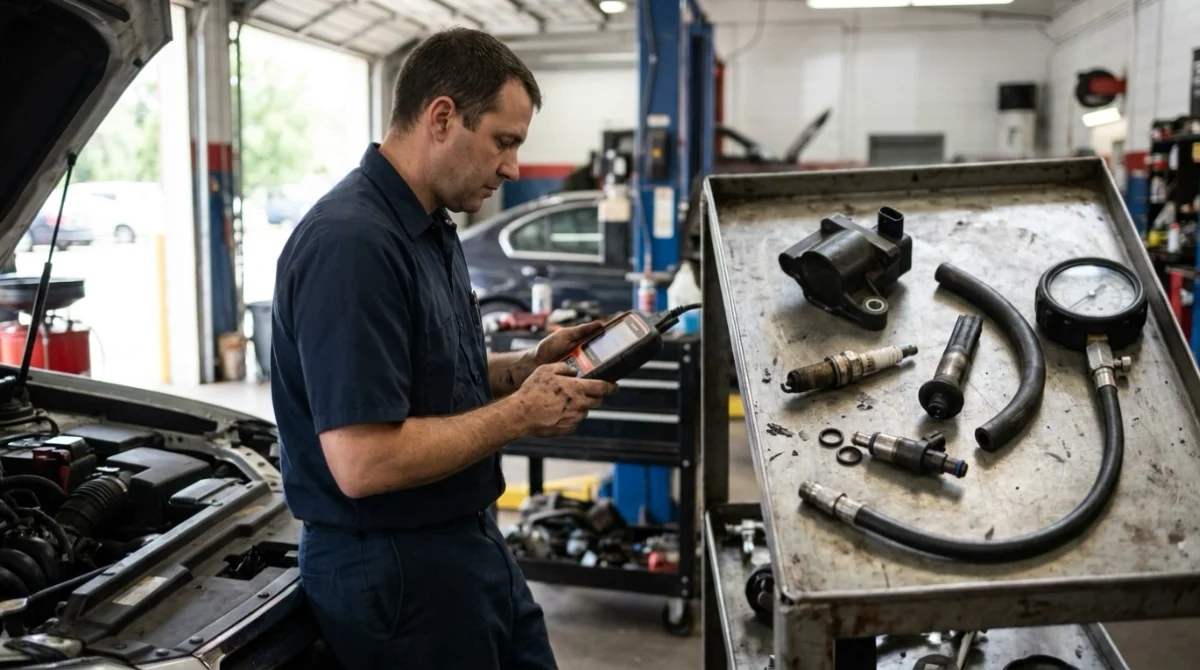
P0304 repair cost varies because there is no single “P0304 part.” You pay for the diagnosis and for whatever component or mechanical problem caused cylinder 4 to misfire.
As of 2026, the ranges below are broad U.S. repair estimates rather than quotes. Labor rates, engine design, parts quality, and regional pricing can change the total substantially.
| Possible Repair | Typical Broad Cost Range | Why Cost Varies |
|---|---|---|
| Diagnostic testing | About $100–$200+ | Shop rate and amount of testing required |
| Spark plug repair | About $100–$300 | Plug access and whether a full set is replaced |
| Ignition coil replacement | About $150–$450 | Coil design, parts choice, and engine access |
| Fuel injector repair or replacement | About $250–$900+ | Injector type, fuel-system design, and labor |
| Vacuum or intake leak repair | About $150–$600+ | Leak location and intake disassembly required |
| Compression or leak-down diagnosis | About $150–$350+ | Engine access and diagnostic labor |
| Internal engine repair | $1,000 to several thousand dollars | Valve, piston, cylinder-head, timing, or engine damage |
The cheapest outcome is often a straightforward ignition repair. A worn plug, damaged boot, loose connector, or failed coil can sometimes be corrected without major engine work.
The expensive outcomes begin when ignition parts test normally. An injector problem, intake leak, wiring fault, or loss of compression can require more labor and testing.
Why shouldn’t you replace the coil immediately?
P0304 does not mean “replace ignition coil number 4.” A code reader identifies the affected cylinder, not the failed component.
A coil may be responsible, but an injector or compression problem can produce nearly identical symptoms. Testing first protects your repair budget.
- Vehicle design: Some plugs and coils are accessible in minutes, while others require substantial disassembly.
- Parts choice: OEM, original-equipment-supplier, and aftermarket components can have different prices.
- Labor rate: Independent shops and dealership service departments may charge different hourly rates.
- Related repairs: Oil leaks into plug wells or damaged connectors may need attention at the same time.
- Diagnostic depth: Intermittent misfires can require more testing than constant misfires.
Cost note: Ask for a diagnosis and written estimate before authorizing expensive parts. Prices can change significantly by vehicle and location.
Section Takeaway: P0304 can be inexpensive when the cause is a plug or simple ignition fault, but mechanical problems can push the repair into the thousands. Diagnose the cause before choosing a repair.
What Usually Causes a P0304 Cylinder 4 Misfire?
P0304 normally comes from a problem affecting spark, fuel, air, or mechanical compression in cylinder 4. Several failures can create the same code.
Worn or fouled spark plug
A damaged, worn, contaminated, or incorrectly gapped spark plug may not ignite the mixture consistently. Misfires can become more noticeable during acceleration when ignition demand rises.
Weak or failed ignition coil
Many modern gasoline engines use one ignition coil for each cylinder. A weak cylinder 4 coil can cause rough idle, hesitation, and P0304.
Damage to a coil boot, connector, or wiring can create similar symptoms. Inspect the complete ignition circuit rather than focusing only on the coil body.
Fuel injector problem
A restricted injector may deliver too little fuel. A leaking or electrically faulty injector can also interfere with normal combustion.
Injector diagnosis may involve electrical checks, scan data, balance testing, or other manufacturer-approved procedures.
Vacuum or intake leak
Unmetered air entering near the affected intake runner can create a mixture that is too lean. Intake-gasket leaks sometimes become more noticeable during cold starts.
Low compression
A cylinder needs adequate compression to burn the mixture effectively. Valve leakage, piston-ring wear, head-gasket trouble, or valvetrain damage may reduce cylinder pressure.
Compression problems become more important when the plug, coil, injector, and wiring test normally.
Wiring or connector damage
Heat, corrosion, vibration, rodents, or previous repair work can damage coil and injector circuits. A loose connector may create an intermittent P0304 without a failed component.
- Inspect the cylinder 4 coil connector.
- Inspect the injector connector.
- Look for stretched or damaged wiring.
- Check for oil or moisture contamination.
- Review any work performed shortly before the code appeared.
Repair note: Do not order an injector, coil, sensor, or other expensive component solely because it appears on a generic causes list.
Is It Safe to Drive With P0304?
A mild P0304 with a steady check-engine light may allow limited driving, but an active severe misfire should not be ignored. Strong shaking, stalling, major power loss, or a flashing light makes the situation more urgent.
A continuing misfire can send unburned fuel into the exhaust. That can raise exhaust temperature and put the catalytic converter at risk.
Stop driving when you notice these warning signs
- Flashing check-engine light: Treat it as an urgent active engine fault.
- Strong shaking: The cylinder may be misfiring heavily.
- Major power loss: Merging or crossing traffic may become unsafe.
- Repeated stalling: The engine may shut off unexpectedly.
- Fuel or burning smell: Stop safely and investigate the cause.
- Overheating: Shut the engine off in a safe location.
AAA advises drivers to react quickly when a flashing check-engine light appears, especially when the vehicle loses power, shakes, or behaves abnormally.
When the engine runs badly, towing can cost less than turning a manageable misfire into a damaged catalytic converter or larger engine repair.
Safety note: An OBD2 scanner tells you which fault was recorded. It cannot decide whether the vehicle is safe to drive.
How Do You Diagnose P0304 Before Paying for Repairs?
Start by confirming P0304 and recording all available diagnostic information. Do not clear the code before saving useful evidence.
AAA’s OBD diagnostic information also emphasizes that trouble codes provide clues rather than automatically identifying the required repair.
1. Scan every stored and pending code
P0304 may appear alone or alongside P0300, fuel-trim codes, injector circuit faults, camshaft codes, or other misfire codes. Related codes can change the diagnostic path.
2. Save freeze-frame information
Freeze-frame data records operating conditions when the fault was detected. Useful information can include engine speed, coolant temperature, load, vehicle speed, and fuel trim.
A cold-start-only misfire needs a different investigation than one occurring during hard acceleration. Save the evidence first.
3. Inspect accessible components
- Check visible ignition wiring and connectors.
- Look for oil or water inside spark-plug wells.
- Inspect intake hoses and obvious vacuum connections.
- Check whether recent work left anything disconnected.
- Review the vehicle’s spark-plug maintenance history.
4. Test ignition components
The spark plug and coil are logical early checks because they directly affect one cylinder. Follow the manufacturer’s testing procedure for your engine.
Component swapping is sometimes useful on coil-on-plug engines, but it should only be done when the components are interchangeable and the service information permits it.
5. Check fuel delivery
If ignition tests normally, cylinder 4’s injector and electrical circuit deserve attention. Professional testing can separate an injector fault from a wiring or control problem.
6. Check compression when necessary
A persistent cylinder-specific misfire with good spark and fuel delivery can indicate a mechanical issue. Compression and cylinder leak-down testing help determine whether cylinder 4 can seal properly.
7. Check recalls before paying for major repairs
Before authorizing an expensive repair, enter your VIN into the NHTSA recall lookup. A recall or manufacturer campaign can affect how a specific vehicle problem should be handled.
Do not assume a recall applies just because another owner has the same code. Coverage depends on the exact vehicle and VIN.
How can you reduce the final repair bill?
- Pay for diagnosis first: Testing may cost less than replacing several good parts.
- Bring scanner information: Saved codes and freeze-frame data can provide useful starting evidence.
- Review maintenance records: Old spark plugs or recent repairs may provide clues.
- Ask for test results: Request the evidence supporting an expensive injector or mechanical repair.
- Compare written estimates: This becomes more valuable when internal engine work is recommended.
The biggest money-saving principle is simple: do not confuse a diagnostic code with a parts recommendation.
Pro tip: Record codes and freeze-frame information before disconnecting the battery or clearing the check-engine light.
Section Takeaway: Good P0304 diagnosis moves from scanner evidence to ignition, fuel, air, wiring, and mechanical testing. Spending a little on accurate diagnosis can prevent much larger parts-swapping costs.
Frequently Asked Questions About P0304 Repair Cost
Can P0304 be fixed with new spark plugs?
Yes, if a worn, fouled, damaged, or incorrectly gapped spark plug is causing cylinder 4 to misfire. However, P0304 alone does not prove the plug is bad. A coil, injector, intake leak, wiring fault, or compression problem can produce the same trouble code.
How much does it cost to replace an ignition coil for P0304?
A single-coil repair may broadly fall around $150 to $450, including parts and labor, but some vehicles cost less or considerably more. Engine access, OEM versus aftermarket parts, shop rates, and whether related plugs or boots need replacement all influence the final estimate.
Does P0304 mean the fuel injector is bad?
No. A faulty cylinder 4 injector is one possible cause, but the code only confirms that the computer detected a misfire on that cylinder. Ignition problems, vacuum leaks, wiring faults, and low compression should also remain in the diagnostic plan until testing eliminates them.
Can I clear P0304 and keep driving?
Clearing the code does not repair the cause. The warning light may return as soon as the computer detects another misfire. Save the diagnostic information before clearing anything, and avoid driving if the light flashes or the engine shakes, stalls, or loses substantial power.
Is P0304 expensive to fix?
Not always. Spark-plug or coil-related repairs can be relatively affordable, while injector, intake, wiring, cylinder-head, valve, or compression repairs cost more. The diagnostic result determines the bill, which is why replacing parts from the code description alone is a poor strategy.
Can P0304 damage the catalytic converter?
A severe continuing misfire can allow unburned fuel into the exhaust and expose the catalytic converter to excessive heat. A flashing check-engine light deserves immediate attention. Reduce engine load, move to a safe location, and arrange professional diagnosis when severe symptoms continue.
What Should You Do Next?
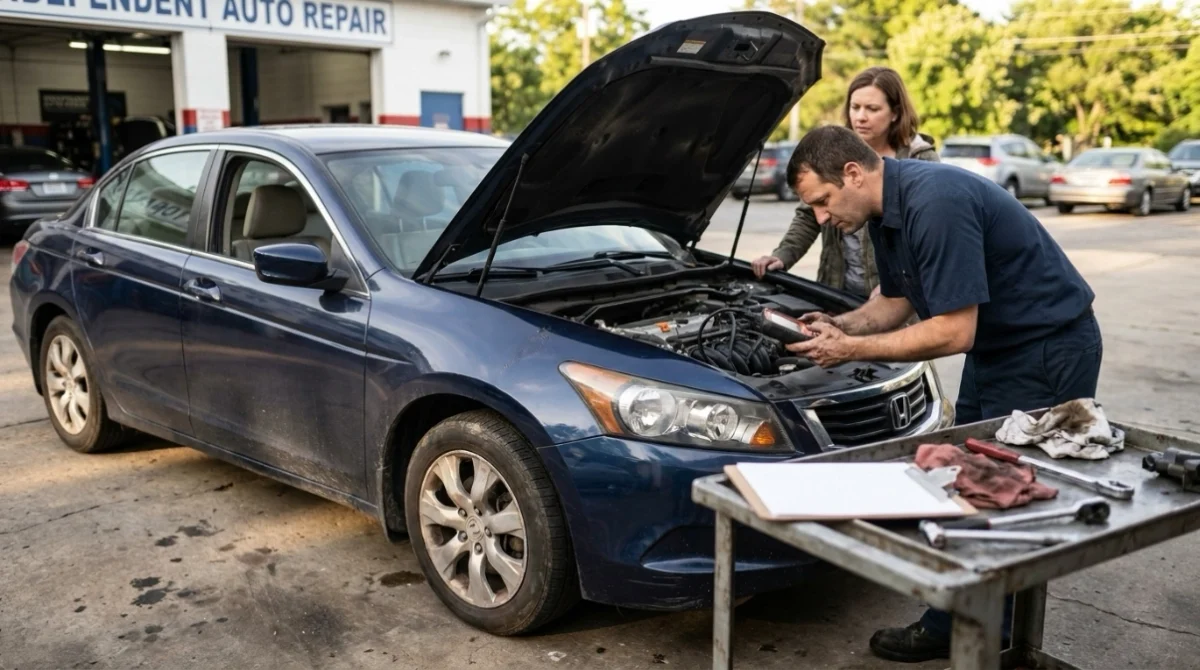
If your scanner shows P0304, first look at how the vehicle is behaving. A flashing warning light, strong shaking, stalling, unusual odor, overheating, or major power loss means you should stop driving as soon as it is safe.
If the light is steady and the engine runs normally, arrange diagnosis soon. Record P0304, related codes, and freeze-frame data before anything is cleared.
- Confirm cylinder 4: Use service information for the exact engine.
- Inspect before buying: Look for obvious connector, wiring, plug-well, or intake problems.
- Test common causes: Check ignition and fuel delivery before assuming internal engine damage.
- Verify mechanical health: Use compression testing when ignition and fuel checks do not explain the misfire.
- Get a written estimate: Compare diagnosis, parts, labor, and warranty coverage before approving an expensive repair.
P0304 repair cost is inexpensive in some cases and substantial in others. The code tells you which cylinder needs attention, not what you need to buy.
Diagnose first, repair the confirmed cause, and avoid replacing good parts simply to make the warning light disappear.
