
What Does P0305 Mean? Cylinder 5 Misfire Explained

Quick Answer
P0305 means your vehicle’s engine computer detected a misfire in cylinder 5. The code identifies the affected cylinder, but it does not tell you whether the problem is a spark plug, ignition coil, fuel injector, air leak, wiring fault, or mechanical problem. If the check engine light flashes or the engine shakes badly, follow AAA’s check engine light guidance and stop somewhere safe.
What P0305 Usually Tells You
- Cylinder-specific fault: The computer has isolated the detected misfire to cylinder number 5.
- Ignition problem possible: A worn spark plug or weak ignition coil may prevent reliable combustion.
- Fuel problem possible: A restricted injector or fuel-delivery problem can make cylinder 5 run incorrectly.
- Mechanical fault possible: Low compression, valve trouble, or another internal engine issue can also trigger P0305.
- Testing still matters: Read related codes and freeze-frame data before replacing parts.
What to Do First
- Save all OBD2 scanner codes and freeze-frame information before clearing the warning light.
An OBD2 scanner showing P0305 can be worrying, especially when the engine shakes or starts poorly. Drivers sometimes suspect a key fob, smart key, or immobilizer problem when the real issue is engine combustion.
I’ve seen that confusion many times while troubleshooting vehicle electronics. This guide explains what P0305 means, how serious it can be, and how to diagnose it without guessing.
In This Guide
What Does P0305 Mean?
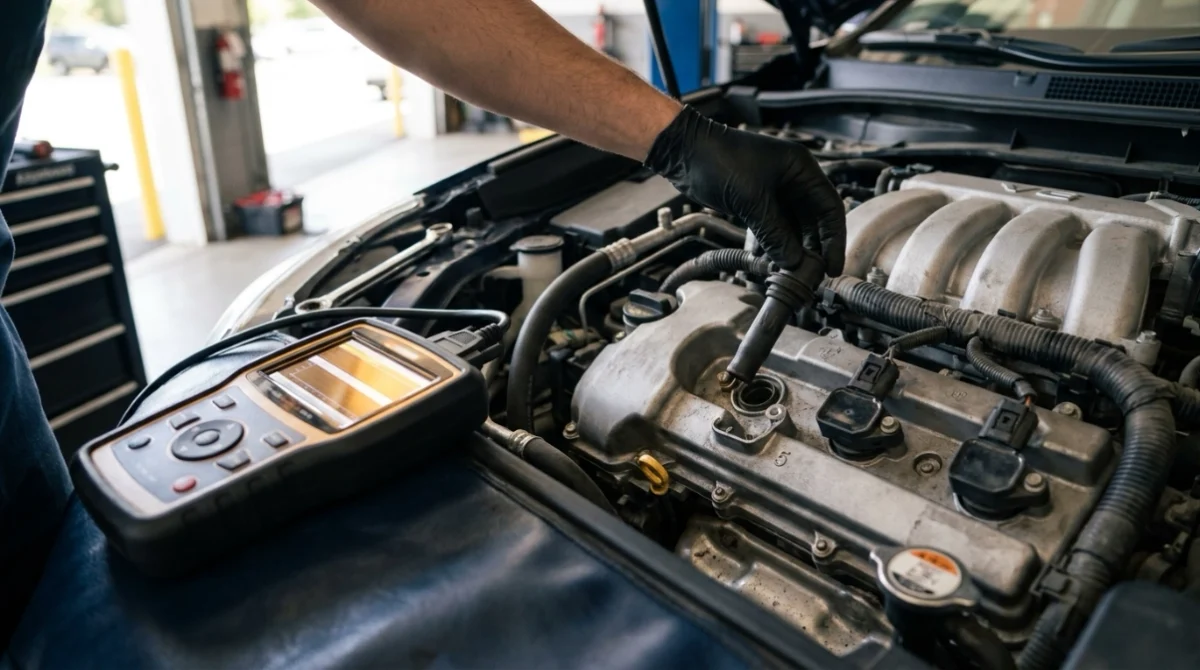
P0305 is an OBD2 powertrain trouble code indicating that the engine control system detected a misfire in cylinder 5. Ford’s published OBD-II code documentation identifies P0305 as cylinder number 5 misfire detected.
Definition: A misfire occurs when a cylinder fails to produce its expected combustion and power contribution during an engine cycle.
The computer can recognize irregular combustion by monitoring engine-speed changes and other operating information. The exact monitoring strategy varies by manufacturer and engine design.
What do the characters in P0305 tell you?
- P: The fault belongs to the powertrain system.
- 0: The code belongs to the generic OBD2 code family.
- 3: This code family includes ignition and misfire faults.
- 05: The detected misfire has been associated with cylinder 5.
P0305 tells you where the misfire was detected. It does not identify the component responsible.
That distinction saves money. Replacing a coil simply because P0305 appeared can leave the original problem untouched.
| OBD2 Code | Basic Meaning | Diagnostic Direction |
|---|---|---|
| P0300 | Random or multiple-cylinder misfire | Look for faults that may affect several cylinders. |
| P0304 | Cylinder 4 misfire detected | Concentrate testing on cylinder 4 and shared systems. |
| P0305 | Cylinder 5 misfire detected | Test cylinder 5 ignition, fuel, wiring, and mechanical condition. |
| P0306 | Cylinder 6 misfire detected | Concentrate testing on cylinder 6 and shared systems. |
Section Takeaway: P0305 identifies cylinder 5 as the detected misfire location, not the failed part.
What Are the Symptoms of P0305?
P0305 symptoms can range from a check engine light with few noticeable changes to severe shaking and power loss. How the vehicle behaves depends on how often cylinder 5 misfires.
Common symptoms include:
- Check engine light: The warning light may remain steady or flash when the misfire becomes severe.
- Rough idle: You may feel vibration through the seat, steering wheel, or vehicle body.
- Engine shaking: The engine may run unevenly because one cylinder isn’t contributing normally.
- Hesitation: Acceleration can feel weak, delayed, or jerky.
- Reduced power: The vehicle may struggle more during hills or heavier acceleration.
- Hard starting: The engine may crank longer or run roughly after starting.
- Stalling: A strong misfire can make the engine unstable at lower speeds.
- Fuel economy changes: Inefficient combustion can increase fuel use.
- Unusual exhaust behavior: You may hear popping or notice an abnormal exhaust smell.
The operating conditions matter as much as the symptoms. A misfire that appears only at idle can lead to a different test path than one occurring under heavy acceleration.
Pay attention to whether the problem happens cold, hot, at idle, or under load. Those details can shorten the diagnostic process considerably.
Is It Safe to Drive With P0305?
A P0305 code should not be ignored. A flashing check engine light, strong shaking, major power loss, smoke, overheating, or an unusual fuel smell means you should stop somewhere safe.
AAA advises drivers to treat a flashing check engine light more seriously than a steady one. Severe abnormal engine behavior is another reason to pull over instead of continuing the trip.
When should you stop driving?
- Flashing warning light: Treat it as an active problem requiring immediate attention.
- Severe shaking: Continued driving may worsen the underlying fault.
- Major power loss: Reduced acceleration can also create a road-safety problem.
- Overheating: Shut down safely if engine temperature rises abnormally.
- Smoke or strong odors: Stop and investigate instead of assuming the code is harmless.
A steady light with an engine that still runs smoothly may allow a short drive to a repair facility. Your owner’s manual and vehicle behavior should guide that decision.
Technician’s note: Clearing P0305 doesn’t make the vehicle safe to drive. It only removes diagnostic information until the computer detects the problem again.
What Causes a P0305 Code?
P0305 can come from ignition, fuel, electrical, airflow, or mechanical problems affecting cylinder 5. Start with evidence instead of assuming one common component has failed.
Ignition-system problems
A weak or missing spark is a common diagnostic direction for a cylinder-specific misfire. The ignition components should still be tested before replacement.
- Worn or fouled spark plug
- Incorrect spark plug gap
- Damaged ignition coil
- Cracked or carbon-tracked coil boot
- Damaged spark plug wire on engines that use them
- Loose or corroded ignition connector
Fuel-delivery problems
Cylinder 5 also needs the correct amount of fuel. An injector fault can produce symptoms that feel almost identical to an ignition problem.
- Restricted fuel injector
- Injector electrical fault
- Loose injector connector
- Damaged injector wiring
- Fuel pressure problems affecting combustion
Air and mixture problems
An intake leak near one cylinder can disturb its air-fuel mixture. Broader air or fuel problems may also trigger P0305 alongside other codes.
- Intake manifold leak
- Vacuum leak
- Incorrect airflow information
- Fuel-mixture problem
Mechanical engine problems
Ignition parts cannot correct a cylinder that cannot build proper pressure. Mechanical testing becomes important when spark and fuel checks do not explain the misfire.
- Low compression
- Leaking or damaged valve
- Valve-train problem
- Piston or cylinder damage
- Head-gasket or sealing problem
- Incorrect valve timing
Vehicle-specific software or electrical issues can matter too. A manufacturer bulletin available through NHTSA warns technicians against replacing several components for one misfiring cylinder without identifying the root cause.
Section Takeaway: P0305 has several possible causes, so a cylinder number should guide testing rather than trigger automatic parts replacement.
How Do You Diagnose P0305 Correctly?

Start by recording everything your OBD2 scanner can show before clearing codes. Good diagnosis uses the code as the first clue, not the final answer.
1. Read all stored and pending codes
Look for P0305 plus any other trouble codes. P0300, fuel-trim, injector, sensor, timing, or electrical codes may change the diagnostic direction.
Write the codes down or save screenshots. Clearing them too early can erase useful clues.
2. Save the freeze-frame data
Freeze-frame information records operating conditions when the computer stored the fault. Useful fields can include engine speed, load, coolant temperature, vehicle speed, and fuel trim.
A cold-start P0305 may need different testing from a misfire appearing during acceleration. Context matters.
3. Inspect cylinder 5 visually
- Check the ignition coil and connector.
- Look for damaged wiring.
- Inspect accessible vacuum and intake hoses.
- Check for moisture or oil around the spark plug well.
- Look for loose connectors after recent engine work.
Do not reach near belts, fans, hot exhaust components, or exposed ignition equipment while the engine runs. Modern ignition systems can generate dangerous voltage.
4. Test the ignition system
The spark plug and ignition coil deserve attention, but inspection should come before replacement. Plug condition can reveal fouling, excessive wear, contamination, or other clues.
Some technicians compare cylinder components during diagnosis when manufacturer procedures allow it. Always follow service information for the specific make, model, year, and engine.
5. Check injector operation
If the ignition system checks out, cylinder 5’s injector and electrical circuit become stronger suspects. A professional may perform electrical, balance, or fuel-delivery tests.
Technician’s note: Injector testing and fuel-pressure work involve fuel and electrical hazards. Use the manufacturer’s repair procedure or have a qualified technician perform the test.
6. Check compression and mechanical condition
A compression test can help identify a cylinder that cannot seal correctly. A cylinder leakage test can provide more detail when low compression appears.
A technician may also use a borescope or additional mechanical tests. The correct procedure depends on the engine and earlier findings.
7. Check manufacturer information
Technical service bulletins can reveal known software, wiring, fuel, or mechanical patterns. NHTSA’s published manufacturer communications include examples where technicians are told to document operating conditions and diagnose the root cause before replacing parts.
Before paying for a repair, use the NHTSA VIN recall lookup to check for open safety recalls affecting your vehicle.
You can also use AAA’s OBD diagnostic code resources to understand how trouble codes fit into the repair process.
Section Takeaway: Save the scan data, identify when the misfire occurs, and test ignition, fuel, wiring, and compression in a logical order.
Can You Fix P0305 Yourself?
Some P0305 causes are within reach of an experienced DIY owner, but the code itself doesn’t tell you which repair is needed. Diagnosis should come before buying parts.
Simple inspection tasks may include checking connectors, looking for obvious hose damage, and examining maintenance history. Spark plug service may also be reasonable when you have the correct tools and manufacturer specifications.
When should you use a professional technician?
- You cannot identify cylinder 5 confidently.
- The check engine light flashes.
- The vehicle shakes or stalls severely.
- The ignition system requires unfamiliar testing.
- Fuel-pressure or injector testing is needed.
- Compression is low or inconsistent.
- You suspect internal engine damage.
- Several related trouble codes appear together.
Repair cost can vary widely because P0305 is a symptom code rather than a parts code. A spark plug problem and an internal engine problem can produce the same P0305 number while requiring completely different repairs.
Locksmith’s note: Ask for the diagnostic findings before approving a repair. A useful explanation should connect the failed test to cylinder 5 instead of simply repeating the trouble code.
I’ve seen owners arrive after replacing several ignition parts because a scanner named one cylinder. The better approach is to make each test eliminate possibilities until the actual fault becomes clear.
Frequently Asked Questions About P0305
Does P0305 mean I need a new ignition coil?
No. P0305 says cylinder 5 misfired, but it does not prove the ignition coil failed. The spark plug, injector, wiring, intake system, compression, or another engine problem could produce the same code.
Can a bad spark plug cause P0305?
Yes. A worn, fouled, damaged, or incorrectly specified spark plug can contribute to a cylinder 5 misfire. Inspect and test the ignition system rather than assuming the plug is the only possible cause.
Can a fuel injector cause P0305?
Yes. A restricted injector, electrical problem, damaged connector, or wiring fault can prevent cylinder 5 from receiving fuel correctly. Injector testing should follow vehicle-specific service procedures.
Can low compression cause P0305?
Yes. A leaking valve, cylinder sealing problem, piston damage, valve-train issue, or another mechanical fault can reduce cylinder pressure enough to cause a misfire.
Can P0305 clear itself?
The check engine light may turn off after the misfire stops and the vehicle completes enough successful monitoring cycles. However, stored or permanent diagnostic information may remain until the system confirms that the fault is resolved.
Is P0305 related to my key fob or immobilizer?
Usually not. A key fob, transponder chip, or immobilizer problem normally affects vehicle authorization or starting, while P0305 identifies a combustion misfire associated with cylinder 5.
What should I check first for P0305?
Start by saving every stored and pending code plus freeze-frame data. Then inspect cylinder 5’s accessible ignition connections, wiring, spark plug area, and nearby hoses before moving to targeted ignition, injector, and compression tests.
Final Takeaway: P0305 means the engine computer detected a misfire in cylinder 5. Don’t treat the code as a command to replace a coil or spark plug without testing first.
If the warning light flashes or the engine runs badly, stop driving safely and arrange professional diagnosis. If the vehicle remains stable, save the OBD2 data and use it to guide a methodical inspection.
