
P0441 Repair Cost: What It Costs to Fix Incorrect EVAP Purge Flow

Quick Answer
The P0441 repair cost depends on what is stopping the EVAP system from producing the expected purge flow. As of 2026, professional check-engine diagnosis commonly averages about $122–$233, while a purge valve replacement averages roughly $207–$248 according to current national estimates. A damaged charcoal canister can cost considerably more. Use an OBD-II code lookup and proper diagnosis before buying parts.
What May Affect Your Final Bill
- Diagnostic testing: P0441 identifies a system problem, so testing usually comes before replacement.
- Purge valve: A sticking or electrically faulty purge valve is one possible cause.
- EVAP hoses: Cracked, blocked, loose, or disconnected vapor lines can affect purge flow.
- Charcoal canister: A damaged or fuel-saturated canister can make the repair substantially more expensive.
- Vehicle design: Parts prices and labor access vary greatly by make, model, engine, and year.
Best First Move
- Scan for every stored code, inspect the fuel cap and visible EVAP lines, then test the purge system before replacing anything.
If your scanner shows P0441, don’t assume that buying a purge valve will automatically fix the car. I see EVAP problems become expensive when parts are replaced before anyone confirms why the expected purge flow is missing.
This guide explains what P0441 means, realistic 2026 repair costs, likely causes, proper diagnosis, DIY checks, and when professional testing makes more financial sense.
In This Guide
What Does the P0441 Code Mean?
P0441 means the vehicle detected incorrect purge flow in its evaporative emission control system. The powertrain control module expected the EVAP system to behave one way during a purge event, but the measured response did not match.
Definition: The EVAP system captures gasoline vapors instead of allowing them to escape into the atmosphere. It stores those vapors in a charcoal canister and later sends them into the engine through the purge system.
The purge valve normally opens under controlled conditions. Engine vacuum can then draw stored vapor from the canister toward the intake manifold.
P0441 appears when the computer determines that this purge process is not happening as expected. Manufacturer diagnostic strategies differ, so the same code does not prove the same failed component on every car.
What parts are involved in P0441?
- EVAP purge valve or solenoid: Controls vapor flow toward the engine.
- Charcoal canister: Stores fuel vapor until the engine can burn it.
- EVAP vapor hoses: Connect the fuel tank, canister, valves, and intake system.
- Vent valve: Helps control fresh-air movement through the EVAP system.
- Fuel tank pressure sensor: Helps some vehicles monitor pressure and vacuum changes.
- Fuel cap: Seals the filler opening on vehicles that use a conventional cap.
- Wiring and connectors: Supply power and control signals to EVAP components.
A P0441 code therefore gives you a diagnostic direction. It does not give you permission to replace the first EVAP component named on a scan-tool screen.
Section Takeaway: P0441 means incorrect EVAP purge flow, not automatically a bad purge valve. Diagnosis should identify why the system failed its purge-flow test.
How Much Does P0441 Cost to Repair?
A P0441 repair can range from a relatively minor correction to a several-hundred-dollar EVAP repair. The most important cost variable is the failed component.
Current national estimates also differ between estimating services. That is one reason I treat online prices as budgeting figures rather than guaranteed quotes.
| Service or Repair | 2026 Cost Reference | When It Applies |
|---|---|---|
| Check-engine diagnosis/testing | About $122–$233 average | When the cause of P0441 has not been confirmed |
| Purge valve replacement | About $207–$248 average in one current estimator; other national estimates are higher | Only after testing confirms the purge valve is faulty |
| Fuel evaporative canister | About $555–$640 average | When the canister itself is damaged, restricted, or otherwise confirmed faulty |
| Gas cap | Varies by vehicle and whether it is DIY or shop-installed | When the cap or sealing surface actually fails inspection |
| EVAP hose or wiring repair | Shop-specific after inspection | For cracked hoses, damaged connectors, corrosion, or wiring faults |
Do not simply add the diagnostic estimate to a replacement estimate and assume that will be your invoice. Labor policies, taxes, fees, parts markup, and diagnostic-charge policies differ between shops.
*Locksmith’s note: ask whether the diagnostic charge is separate from the repair before approving work. Also ask what test confirmed the recommended component failed.*
Why can the same P0441 code cost so much more on one car?
- Part location: Some purge valves are easy to reach, while others require removing surrounding components.
- OEM versus aftermarket parts: Available part choices and pricing differ by vehicle.
- Integrated assemblies: Some manufacturers combine EVAP components that other vehicles service separately.
- Diagnostic time: Intermittent leaks or electrical faults can require more testing.
- Regional labor rates: Shop labor charges vary considerably by location.
- Additional codes: P0441 accompanied by other EVAP codes may change the diagnostic path.
The expensive mistake is guessing. A $200 component that does not fix the code is more costly than paying for diagnosis first.
Section Takeaway: Budget for diagnosis before parts. A confirmed purge-valve problem is usually much cheaper than a confirmed charcoal-canister or complex EVAP-system repair.
What Causes a P0441 Code?
P0441 can be caused by a purge-control problem, restricted vapor flow, an EVAP leak, or a fault in the system used to verify purge operation. The exact list varies with manufacturer design.
1. Purge valve stuck closed or operating incorrectly
The purge valve is an obvious suspect because P0441 specifically concerns purge flow. A valve can stick mechanically or fail electrically.
Testing matters because a code alone cannot tell you whether the valve itself, its wiring, or another EVAP component caused the incorrect response.
2. Damaged, disconnected, or blocked EVAP hose
A cracked line can prevent the expected vacuum change. A blocked or pinched hose can cause the same basic flow problem for a different reason.
Whenever I start with P0441, a visual hose and connector inspection comes before ordering parts. It costs almost nothing and can expose an obvious problem.
3. Faulty vent valve or EVAP monitoring component
Some systems depend on vent-valve operation and tank-pressure information while checking EVAP performance. A problem in those areas may alter the test result.
Manufacturer service information becomes especially important here. Generic code descriptions cannot describe every manufacturer’s diagnostic logic.
4. Charcoal canister problem
The charcoal canister stores vapor from the fuel system. Damage, restriction, or liquid-fuel contamination can interfere with normal EVAP operation.
One preventable habit is repeatedly topping off the fuel tank after the pump shuts off. AAA warns that overfilling can push liquid fuel into vapor-control components, including the canister.
You can read AAA’s guidance on why topping off a fuel tank can damage EVAP components.
5. Fuel-cap or sealing problem
A loose or damaged cap can cause EVAP faults, although P0441 should not automatically be diagnosed as a gas-cap problem. Other EVAP leak codes are also commonly associated with cap sealing issues.
Inspect the cap seal, filler-neck surface, and installation first. Replacing a cap without evidence is still guessing.
6. Electrical connector or wiring fault
Corrosion, damaged terminals, open circuits, or poor connections can stop a purge or vent solenoid from operating correctly. These faults may look like a bad valve until the circuit is tested.
*Technician’s tip: never condemn an electrically controlled EVAP valve until power, ground, command, and connector condition have been checked using the correct service information.*
Section Takeaway: The purge valve is only one possible P0441 cause. Hoses, vent controls, the charcoal canister, sensors, wiring, and sealing problems can create similar results.
How Is P0441 Diagnosed Correctly?
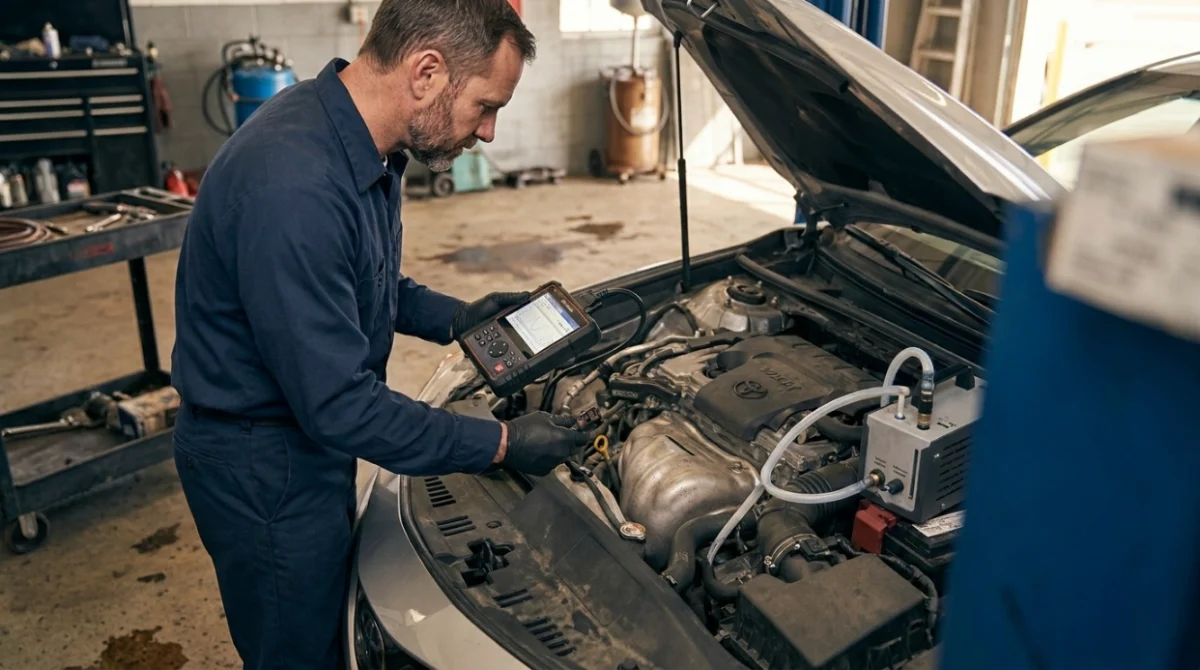
A good P0441 diagnosis starts with scan data and basic inspection, then moves to component and system testing. A technician should prove the fault instead of treating the code description as a parts list.
Step 1: Scan every stored and pending code
Do not look at P0441 in isolation. Other EVAP or electrical codes can provide important clues.
- Record stored codes.
- Check pending codes.
- Review freeze-frame information when available.
- Note fuel level and operating conditions when the code appeared.
- Check whether the code returns after clearing and completing the required drive conditions.
Step 2: Inspect the easiest failure points
Look for damaged vapor lines, disconnected hoses, poor electrical connectors, and an improperly fitted fuel cap. These checks can prevent unnecessary component replacement.
AAA also notes that a check-engine light can come from something as simple as a faulty fuel cap, while other faults can be much more serious. Their check-engine light guide explains why diagnosis matters.
Step 3: Test purge-valve operation
A professional may command the purge valve with a capable scan tool and verify whether the valve responds. The test procedure depends on the vehicle.
Electrical checks may also be required. A valve that never receives the correct command should not be replaced merely because it stayed closed.
Step 4: Test EVAP integrity and flow
Shops may use controlled smoke or pressure testing to locate leaks. They can also evaluate whether the system holds pressure or vacuum as the manufacturer specifies.
Improvised smoke testing is a poor idea around gasoline vapor. Use equipment designed for automotive EVAP diagnosis.
Step 5: Check manufacturer information
Before replacing an expensive component, check for manufacturer communications or known diagnostic procedures for the exact year, make, model, and engine. NHTSA’s vehicle lookup system can surface recalls and manufacturer communications associated with a vehicle.
I particularly recommend this step when P0441 keeps returning after an apparently reasonable repair. Vehicle-specific information can expose a pattern that a generic scanner description cannot.
*Technician’s note: if testing involves fuel vapor, powered solenoids, pressure equipment, or hard-to-access components, professional diagnosis is safer than experimenting with improvised tools.*
Section Takeaway: A proper P0441 diagnosis moves from scan data and inspection to controlled testing. The goal is to confirm the failed component before money changes hands.
Can You Fix P0441 Yourself?
You can perform several useful P0441 checks yourself, but the repair difficulty depends on the confirmed cause. Reading the code is easy; proving why the code appeared can be harder.
Reasonable DIY checks
- Scan the vehicle: Record P0441 and every accompanying code before clearing anything.
- Inspect the fuel cap: Check the seal, filler surface, and proper installation.
- Inspect visible hoses: Look for obvious cracks, disconnections, rubbing, or collapsed sections.
- Inspect connectors: Look for loose plugs, damaged wires, moisture, or corrosion.
- Review service information: Identify the correct purge and vent components for your exact vehicle.
- Recheck after repair: Make sure the code does not return after the vehicle completes its EVAP monitor.
Do not assume that clearing the check-engine light proves the repair worked. Clearing codes also resets readiness information on many vehicles.
The EVAP monitor may need specific temperatures, fuel levels, speeds, or soak periods before it runs again. Those requirements vary by manufacturer.
When should you stop DIY diagnosis?
- You smell raw gasoline.
- The EVAP system needs smoke or pressure testing.
- You need to probe unfamiliar electrical circuits.
- The code returns after basic inspection.
- Several EVAP codes are stored together.
- The charcoal canister or fuel-tank components require major disassembly.
- You cannot confirm the correct test procedure for your vehicle.
The mistake I try to prevent is “parts-cannon” diagnosis. A scanner tells you where the computer detected a problem, not which part you should buy.
*Cost tip: if professional diagnosis costs less than one incorrect component replacement, paying for diagnosis can be the cheaper DIY decision.*
Is It Safe to Drive With P0441?
A vehicle with only P0441, a steady check-engine light, and otherwise normal operation is often still driveable for a short period while you arrange diagnosis. You should not ignore the code indefinitely.
The EVAP system controls fuel vapor emissions. A persistent fault can also prevent the vehicle from passing an emissions inspection where the malfunction indicator or readiness monitors are checked.
Stop driving and get help if you notice:
- A flashing check-engine light.
- Strong raw-fuel odors.
- Visible fuel leakage.
- Stalling or severe rough running.
- Significant loss of power.
- Smoke or another abnormal condition.
A flashing check-engine light can indicate a more urgent engine problem unrelated to P0441. Do not assume every symptom is caused by the EVAP code.
Can P0441 clear itself?
The light may eventually turn off if the fault does not return during enough successful monitoring cycles. The code can remain stored in history even after the light changes state.
That does not make an intermittent fault imaginary. Loose connections, sticking valves, and small hose problems can appear only under certain conditions.
Section Takeaway: P0441 by itself is usually not an immediate breakdown warning, but it deserves diagnosis. Fuel odors, abnormal engine behavior, or a flashing warning light make the situation more urgent.
P0441 Repair Cost FAQs
How much does it usually cost to fix P0441?
The cost depends on the confirmed failure. Current 2026 estimates put check-engine diagnosis around $122–$233 on average, purge-valve replacement around $207–$248 in one national estimator, and fuel evaporative canister replacement around $555–$640 on average.
Is P0441 always caused by a bad purge valve?
No. A faulty purge valve can cause P0441, but damaged EVAP hoses, restrictions, a vent-valve problem, canister damage, electrical faults, or other vehicle-specific monitoring problems can also produce incorrect purge-flow results.
Can a loose gas cap cause P0441?
A loose or defective fuel cap can cause EVAP-related check-engine codes. However, P0441 specifically concerns incorrect purge flow, so a technician should not automatically blame the cap without checking the rest of the system.
Can I drive with code P0441?
If P0441 is the only code, the check-engine light is steady, and the car operates normally, short-term driving is often possible. Arrange diagnosis soon and stop driving if you smell fuel, experience severe running problems, or see a flashing check-engine light.
Can I clear P0441 with an OBD2 scanner?
Yes, most OBD2 scanners can clear a stored P0441 code and turn off the warning light temporarily. Clearing the code does not repair the fault, and the light can return when the EVAP monitor detects the problem again.
How do I know whether my purge valve is bad?
The valve should be tested for proper command, electrical operation, and airflow behavior using the correct procedure for your vehicle. Replacing it solely because P0441 appears on a scanner can waste money if another EVAP component caused the fault.
Will P0441 make my car fail an emissions test?
It can. Inspection requirements vary by location, but an illuminated malfunction indicator or incomplete OBD readiness monitors can prevent a vehicle from passing an OBD-based emissions inspection.
Final Takeaway
P0441 repair cost is impossible to price accurately from the trouble code alone. The code tells you that EVAP purge flow was incorrect, not which component failed.
Start with a complete scan, inspect the easy items, and confirm purge-system operation before replacing parts. That approach gives you the best chance of fixing P0441 once instead of paying for a series of guesses.
Before approving an expensive EVAP repair, ask one simple question: “What test confirmed this part failed?” A clear answer is worth more than a parts list generated from a scanner code.
