
P0507 Symptoms: What High Idle Is Telling You

Quick Answer
The most common P0507 symptom is an engine that idles faster than the vehicle’s computer expects. You may also notice a check engine light, surging or unstable idle, difficult starting, or occasional stalling, depending on the underlying problem. An OBD-II code lookup and scanner can confirm the stored code, but P0507 does not identify one failed part by itself.
Common P0507 Signs
- High idle: Engine speed stays above the computer’s intended idle speed after the engine warms up.
- Check engine light: The PCM or ECM stores P0507 after detecting excessive idle speed under qualifying conditions.
- Surging idle: RPM may rise and fall instead of settling smoothly.
- Hard starting: Extra unmetered air or throttle-control problems can affect startup behavior.
- Occasional stalling: Some underlying faults can make idle control unstable even though P0507 indicates excessive RPM.
Best First Check
- Scan for every stored code and inspect freeze-frame data before replacing an idle valve, throttle body, or sensor.
If your OBD2 scanner shows P0507, don’t assume the idle air control valve has failed. The code tells you the engine is idling too fast, not why.
I’ve seen high-idle complaints turn into simple vacuum-leak repairs, while others required throttle cleaning, circuit testing, or an idle relearn. This guide walks through the symptoms and the checks that separate those problems.
In This Guide
What Does Code P0507 Mean?
P0507 means the engine control computer has detected an idle speed higher than its programmed target. It’s a generic OBD-II powertrain diagnostic trouble code, although diagnostic procedures still vary by vehicle.
Definition: A P0507 code is an OBD-II fault indicating that the idle control system cannot keep engine RPM within the expected upper range under the conditions monitored by the vehicle’s computer.
The PCM, or powertrain control module, continually compares actual engine RPM with the idle speed it wants. That target can change when the engine is cold or accessories place extra load on it.
Many warm engines idle somewhere in the hundreds of RPM, but there is no universal correct number. Your vehicle’s manufacturer specification matters more than a generic RPM chart.
- Older systems may use a separate idle air control valve, often shortened to IAC, to regulate bypass air.
- Newer systems often control idle through an electronic throttle body instead of a stand-alone IAC valve.
- Both systems can set P0507 when unwanted airflow or a control problem pushes RPM above target.
A code reader therefore gives you a starting point. It does not prove the throttle body, IAC valve, or any other single part is defective.
What Are the Most Common P0507 Symptoms?
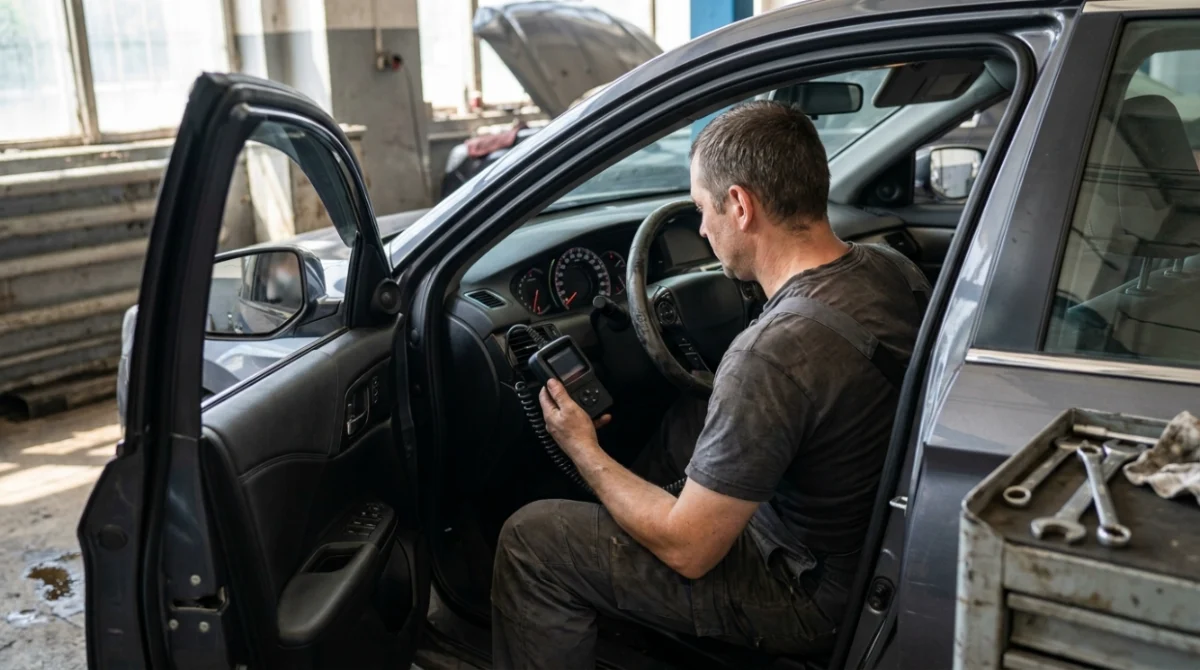
A persistently high idle is the signature P0507 symptom. The engine may sound as though someone is lightly pressing the accelerator even when your foot is off the pedal.
1. Engine RPM Stays Too High at Idle
You may see the tachometer remain noticeably above its normal warm-idle position. The difference is often easiest to spot after the engine reaches normal operating temperature.
A cold engine can intentionally idle faster. Diagnose P0507 based on the vehicle’s operating conditions and scan data rather than judging RPM immediately after startup.
2. Check Engine Light Comes On
The malfunction indicator lamp commonly appears when P0507 stores. Your scanner may also reveal other codes that point toward a vacuum leak, airflow problem, or throttle-control fault.
- P0171 or P0174: Lean-condition codes may strengthen suspicion of unmetered air.
- Throttle-related codes: These can redirect diagnosis toward electronic throttle control.
- EVAP or airflow codes: These may identify another system influencing idle speed.
3. Idle Surges or Feels Unstable
Some vehicles don’t hold one consistently high RPM. Instead, the idle climbs, drops, and climbs again as the computer tries to regain control.
This hunting behavior can occur when airflow changes unpredictably. Vacuum leaks and sticking throttle components are common areas to investigate.
4. Starting or Stalling Problems
Hard starting can accompany P0507 when the air-fuel balance is disrupted. Stalling is also possible if the underlying fault prevents stable idle control.
These symptoms deserve more attention than a slightly elevated but otherwise smooth idle. They suggest the problem is affecting overall engine operation.
5. RPM Changes After Throttle Service or Battery Work
A high idle sometimes appears after throttle-body cleaning, throttle replacement, battery disconnection, or other work that affects learned idle settings. Some vehicles require a manufacturer-specific relearn procedure afterward.
Technician’s note: don’t guess at a relearn button sequence from another model. Use service information that matches the exact year, engine, and vehicle.
What Causes a P0507 Code?
P0507 usually means the engine is receiving more air than the computer can successfully control at idle. Finding where that extra airflow comes from is often the heart of the diagnosis.
Common Causes to Check
- Vacuum leak: Cracked hoses, loose connections, or leaking intake gaskets can let unmetered air enter the engine.
- Dirty throttle body: Deposits around the throttle plate can interfere with normal airflow and throttle movement.
- Sticking throttle plate: A mechanical or electronic problem may prevent the throttle from returning to its intended idle position.
- Faulty IAC valve: Vehicles equipped with a separate idle air control valve can develop sticking or electrical faults.
- PCV system leak: A failed positive crankcase ventilation valve or hose can create unwanted intake airflow.
- EVAP purge problem: A purge valve that does not behave correctly can alter airflow and fuel mixture at idle.
- Wiring or connector fault: Damaged circuits can interfere with throttle or idle-control commands.
- Incorrect idle adaptation: Some vehicles need idle or throttle adaptation after certain repairs or power interruptions.
One mistake I avoid is replacing the IAC valve simply because the code description includes “idle control.” A smoke test or basic airflow inspection can reveal a leak before any expensive parts are ordered.
That matters because many later-model engines don’t even use a conventional stand-alone IAC valve. Idle control may be built into the electronic throttle system.
Pro tip: identify the exact engine and throttle-control system before buying parts. Vehicle year alone may not tell you enough.
How Do You Diagnose P0507 With an OBD2 Scanner?
Start with the scanner, but don’t stop with the code number. The most useful diagnosis combines stored-code data, live information, and a physical inspection.
- Scan every module and record all codes. Related faults can explain why idle speed is high.
- Save the freeze-frame data. Note engine temperature, RPM, vehicle speed, and load when P0507 set.
- Compare commanded and actual idle behavior. A capable scan tool may show throttle position, airflow readings, fuel trims, and idle-related data.
- Inspect the intake system. Look for disconnected hoses, split vacuum lines, loose clamps, and obvious air leaks.
- Check the throttle body. Inspect for deposits or sticking without forcing an electronic throttle plate against manufacturer guidance.
- Test for hidden leaks. A professional smoke test can reveal leaks that are difficult to find visually.
- Verify repairs and adaptations. Follow the correct relearn procedure if the manufacturer requires one.
Fuel-trim data can be helpful when you’re looking for unmetered air. Strongly positive correction at idle that changes as RPM rises can support a vacuum-leak diagnosis, but exact interpretation varies by vehicle.
If you’re working on a Nissan, consult the vehicle-specific Nissan manuals and guides before attempting a relearn or interpreting warning information. Volkswagen owners can likewise use the official Volkswagen owner’s manual resources.
It’s also worth checking whether your VIN has an open campaign or safety recall through the NHTSA recall lookup. A generic diagnostic code does not itself prove that a recall applies.
Locksmith’s note: scan-tool commands that actively move an electronic throttle or idle actuator should be used only when you understand the vehicle’s procedure and safety requirements.
How Is P0507 Different From Similar Idle Codes?
P0507 specifically points toward excessive idle speed. Nearby OBD-II codes describe different types of idle-control problems and should not be treated as interchangeable.
| Code | General Meaning | Typical Clue | Diagnostic Direction |
|---|---|---|---|
| P0505 | Idle control system malfunction | Idle system is not operating as expected | Check idle-control system, circuits, airflow, and related codes |
| P0506 | Idle RPM lower than expected | Engine idles too slowly | Look for restricted airflow, throttle deposits, load, or control issues |
| P0507 | Idle RPM higher than expected | Engine idles above commanded target | Look for excess airflow, vacuum leaks, throttle issues, or adaptation problems |
Don’t diagnose from the code family alone. Two cars displaying P0507 can have completely different root causes.
Can You Drive With a P0507 Code?

A vehicle with a mild, steady high idle may still move normally, but P0507 should not be ignored. The safest decision depends on the warning lights and how the engine is behaving.
- Usually less urgent: The check engine light is steady, idle is only moderately elevated, and the vehicle otherwise runs normally.
- Needs prompt diagnosis: RPM surges strongly, the vehicle creeps more than expected, starting becomes difficult, or stalling occurs.
- Stop when safe: The check engine light flashes, the engine runs severely rough, or another warning indicates an immediate problem.
AAA’s check engine light guidance recommends having an illuminated light evaluated and treating a flashing check-engine light as an issue requiring immediate service. Driving behavior and your owner’s manual should guide the final decision.
A high idle can also make low-speed vehicle control less predictable. Keep extra space when shifting into gear or maneuvering until you know how the engine will respond.
How Much Might P0507 Diagnosis Cost?
The diagnostic charge and final repair bill depend on your vehicle, region, labor rate, and the actual cause. As of 2026, published U.S. estimates for check-engine-light diagnosis commonly fall around $125 to $183 before taxes, fees, and repairs.
The repair itself might be as simple as correcting a hose leak or cleaning an appropriate component. A failed electronic throttle body, intake gasket, or difficult-to-find leak can cost considerably more.
Cost note: ask for the diagnostic findings before authorizing parts. P0507 is a system code, so replacing a component based on the code number alone can waste money.
P0507 FAQ
Will P0507 cause a high idle?
Yes. High idle is the main symptom associated with P0507 because the code indicates that actual engine RPM has exceeded the computer’s expected idle range under monitored conditions.
Can a vacuum leak cause P0507?
Yes. A vacuum leak can allow extra air into the engine after the normal airflow-control point. The computer may try to lower RPM but remain unable to bring idle speed back to its target.
Can a dirty throttle body cause P0507?
It can. Deposits may affect airflow or throttle-plate movement, especially around the nearly closed position used at idle. However, cleaning should follow manufacturer guidance because some electronic throttle systems require special handling or adaptation afterward.
Does P0507 mean the idle air control valve is bad?
No. A faulty IAC valve is only one possible cause on vehicles equipped with one. Vacuum leaks, PCV faults, throttle problems, wiring issues, EVAP problems, and incorrect idle adaptation can produce similar symptoms.
Can I clear P0507 with an OBD2 scanner?
Most scanners that support code clearing can erase P0507, but clearing it does not repair the underlying problem. Record stored codes and freeze-frame data first, then verify whether the code returns after proper diagnosis and repair.
Why did P0507 appear after cleaning the throttle body?
Cleaning can change the amount of airflow at the throttle’s resting position. Some vehicles may then need a manufacturer-specified throttle or idle relearn, while others may have an unrelated leak or fault exposed during the service.
Should I replace parts before doing a smoke test?
Usually not when a vacuum leak is reasonably suspected. A smoke test can reveal intake leaks that aren’t visible, potentially saving you from replacing a throttle body, IAC valve, or sensor that is still working correctly.
Final takeaway: P0507 tells you the engine is idling faster than the computer expects, but the symptom alone doesn’t identify the failed component.
Start with a complete scan, inspect for unwanted airflow, review live data, and use vehicle-specific service information before buying parts. If the idle is severe, the check engine light flashes, or you’re unsure how to test an electronic throttle system safely, have the vehicle professionally diagnosed.
