
Can You Pass Emissions With the Check Engine Light Off?

Quick Answer
Yes, you can pass an emissions test with the check engine light off, provided your vehicle meets your local inspection requirements. However, an unlit warning light does not guarantee a passing result. Your vehicle may still have stored trouble codes, incomplete OBD2 readiness monitors, or an emissions problem that needs repair.
What Determines Whether You Pass?
- Warning light status: The engine computer generally must report the malfunction indicator lamp as off while the engine runs.
- Readiness monitors: Required emissions self-tests must be complete, subject to your state’s rules.
- Trouble codes: Certain stored or pending faults may indicate a problem that affects the inspection result.
- Recent repairs: Clearing codes or disconnecting the battery can reset readiness monitors.
- Local regulations: Vehicle age, fuel type, inspection method, and permitted incomplete monitors can affect eligibility.
What Should You Check First?
- Use an OBD2 scanner to check diagnostic trouble codes, commanded MIL status, and emissions readiness monitors before visiting the inspection station.
- If any required monitor says “Not Ready,” follow the vehicle manufacturer’s drive-cycle guidance and verify your local inspection rules.
If your check engine light has turned off right before an emissions test, you might wonder whether your car is finally ready. The answer depends on what caused the light to come on and whether the onboard diagnostic system has completed its checks.
In this guide, I’ll explain what inspectors typically check, how an OBD2 scanner helps you assess readiness, and what to do if the warning light is off but your vehicle still isn’t ready for testing.
In This Guide
- Can You Pass Emissions With the Check Engine Light Off?
- What Does an Emissions Test Check?
- Why Might Your Car Fail With the Light Off?
- How to Check Emissions Readiness With an OBD2 Scanner
- What Should You Do Before Your Emissions Test?
- How Long Does It Take for Monitors to Reset?
- Frequently Asked Questions
Can You Pass Emissions With the Check Engine Light Off?
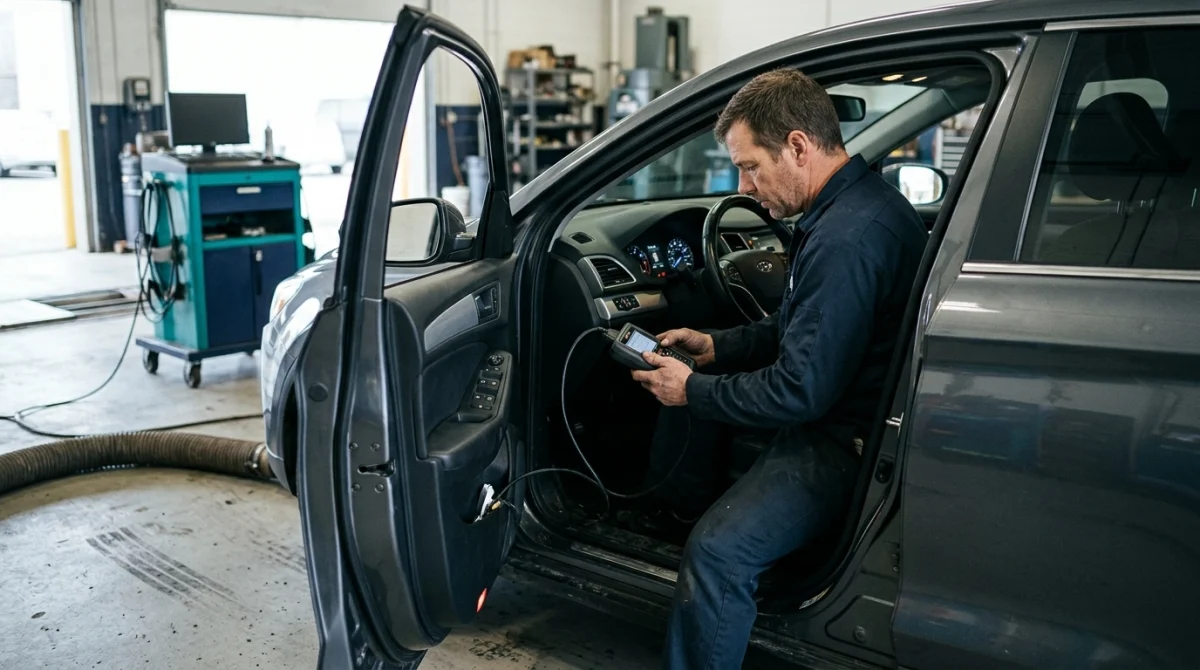
Yes, a vehicle can pass an emissions inspection when its check engine light is off, but the light alone cannot establish whether the vehicle qualifies. In an OBD2 inspection, the inspector may also check diagnostic information and readiness monitor status.
The Texas Department of Public Safety’s emissions testing guidance explains how the warning light, diagnostic trouble codes, and readiness monitors contribute to an OBD2 inspection.
What does the check engine light actually tell you?
The check engine light is also called the malfunction indicator lamp (MIL). It alerts you when the engine computer detects certain faults involving the engine, emissions controls, or related systems.
When the light is off with the engine running, the computer generally isn’t commanding the lamp to illuminate at that moment. That is encouraging, but it doesn’t prove every emissions component is working correctly.
A light may turn off automatically after the computer stops detecting the original fault under the conditions required by its diagnostic logic. A proper repair can also resolve the fault and allow the light to switch off.
Does the light need to work when you start the car?
In many OBD2 inspection programs, the warning lamp must illuminate briefly when you switch the ignition on before starting the engine. This verifies that the lamp and its warning circuit can function.
If the light never illuminates during the initial bulb check, a failed lamp or another instrument-panel problem could affect the inspection. Don’t assume that a permanently dark dashboard warning light means your car has no emissions faults.
Why the inspection rules matter
Emissions requirements differ by state and inspection program. Some programs perform an OBD2 check, while others may use additional testing methods or apply different rules to particular vehicle categories.
For that reason, confirm your local requirements before deciding whether your car is ready. A vehicle that qualifies under one state’s readiness rules might not qualify under another state’s rules.
Section Takeaway: An off check engine light is a positive sign, not a guarantee of passing. The inspection result depends on the vehicle’s diagnostic status and the rules where you register it.
What Does an Emissions Test Check?
An OBD2 emissions inspection evaluates information from your vehicle’s onboard diagnostic system to determine whether it meets the program’s requirements. Depending on the program, the inspection may examine warning-lamp operation, diagnostic trouble codes, and emissions readiness monitors.
Understanding these checks makes it easier to interpret an OBD2 scanner’s results before your appointment.
1. Diagnostic trouble codes
A diagnostic trouble code (DTC) is a code stored by a vehicle’s computer when it detects a condition that meets the criteria for a fault. Some codes relate directly to emissions, while others concern engine or powertrain operation.
For example, a P0420 code can indicate catalyst-system efficiency below the expected threshold. A P0300 code indicates detected random or multiple-cylinder misfires, which can also affect emissions.
The meaning and inspection consequences depend on the code, the vehicle, and the applicable rules. A code’s presence alone doesn’t tell you every detail about the underlying problem.
2. Readiness monitors
A readiness monitor is an onboard self-test that evaluates a particular emissions-related system or component. Depending on the vehicle, supported monitors may cover the catalytic converter, oxygen sensors, evaporative emissions system, and other equipment.
Common OBD2 scanner statuses include:
- Ready: The computer has completed the applicable monitor’s test.
- Not Ready: The computer hasn’t completed that test since the last reset or other event affecting its status.
- Not Supported: The monitor doesn’t apply to that vehicle’s configuration.
A monitor marked “Ready” doesn’t necessarily mean the related component is perfect. It means the self-test has run; any detected fault and its diagnostic status must still be considered.
3. The MIL command status
Some scanners display the MIL status separately from the dashboard light. This tells you whether the engine computer is commanding the malfunction indicator lamp to turn on.
Comparing the scan result with the dashboard helps identify discrepancies. If the dashboard light is off but the scanner reports that the MIL is commanded on, have the vehicle diagnosed before testing.
4. Other inspection methods
Not every emissions program relies exclusively on OBD2 data. Depending on local regulations, an inspection may involve a tailpipe emissions measurement, a visual check, or additional procedures.
The U.S. Environmental Protection Agency’s vehicle inspection and maintenance resources provide background on emissions inspection programs and their role in controlling vehicle pollution.
Section Takeaway: Check the trouble codes, MIL command status, and readiness monitors together. No single scanner result guarantees a passing inspection.
Why Might Your Car Fail With the Light Off?
Your car can fail an emissions inspection with the check engine light off because the vehicle may not have completed its required self-tests or may not satisfy another inspection requirement. Recent code clearing is one common reason for incomplete readiness monitors.
Here are the situations worth checking before you arrive at the testing station.
The codes were recently cleared
Clearing diagnostic trouble codes with a scan tool can turn off the check engine light, depending on the fault and the system’s status. However, clearing codes can also reset some emissions readiness monitors to “Not Ready.”
The vehicle then needs to meet the conditions required for its onboard tests to run again. If too many required monitors remain incomplete under your local rules, the vehicle may fail or be unable to complete the inspection.
The battery was disconnected or replaced
Disconnecting the battery can reset emissions readiness information on many vehicles. This can happen during battery replacement, electrical repairs, or other maintenance.
Afterward, the dashboard may appear normal even though the computer hasn’t finished checking all supported emissions systems. Check readiness status rather than relying on how the car drives.
An emissions problem still exists
A warning light can go off after the computer stops detecting a fault under its monitoring conditions. That doesn’t always establish that the underlying problem has been permanently fixed.
Possible issues include:
- Loose or faulty gas cap: This may cause an evaporative emissions fault on some vehicles.
- Catalytic converter problems: A catalyst-efficiency fault can affect inspection eligibility.
- Oxygen sensor faults: Sensor or circuit problems may affect emissions monitoring.
- Misfires: Combustion problems can increase emissions and may damage the catalytic converter.
- Evaporative emissions leaks: A leak in the fuel-vapor system can trigger a diagnostic code.
These are examples, not a diagnosis. A scan tool can help identify the system involved, but additional testing may be needed to determine the actual cause.
The warning light or diagnostic system isn’t functioning properly
An inspection can also be affected by a malfunctioning warning lamp, a damaged diagnostic connector, or a communication problem between the vehicle and inspection equipment.
For example, an inspector may be unable to retrieve the required information if the diagnostic connector cannot communicate properly. A dashboard with no illuminated warning light doesn’t rule out this type of issue.
Too many monitors remain incomplete
Some inspection programs permit a limited number of incomplete monitors, while others have different eligibility requirements. The permitted number may depend on the vehicle’s model year and the program’s regulations.
For instance, Texas guidance allows one incomplete non-continuous monitor for model-year 2001 and newer vehicles under the applicable OBD2 inspection rules described by the state. You should not apply that allowance to another state without checking its regulations.
Section Takeaway: A dark dashboard warning light can hide an incomplete inspection status, but it cannot establish that a fault remains. Scan the vehicle before deciding what to do next.
How to Check Emissions Readiness With an OBD2 Scanner
An OBD2 scanner lets you check whether your vehicle has completed its supported emissions self-tests. A compatible scanner can also display diagnostic trouble codes and MIL status, helping you identify potential inspection problems before you visit a testing station.
Step 1: Connect a compatible scanner
Locate the vehicle’s diagnostic link connector (DLC), commonly found beneath the dashboard. Connect a compatible OBD2 scanner according to its instructions, then switch the ignition to the required position.
Most gasoline-powered passenger vehicles sold in the United States from model year 1996 onward support standard OBD2 diagnostics, although vehicle type and market can affect compatibility. Check your vehicle documentation if you’re unsure.
Step 2: Read the stored codes
Open the diagnostic trouble-code menu and check for stored and pending codes. If the scanner supports additional code categories, review those results as well.
Don’t clear codes just to make the dashboard look normal. Doing so can erase useful diagnostic information and reset readiness monitors, potentially delaying your inspection.
Step 3: Check the MIL status
Find the scanner’s MIL or malfunction indicator status. Compare the reported status with the check engine light on your dashboard while the engine is running.
If the results conflict, or the scanner shows a fault that you don’t understand, ask a qualified technician to investigate. The dashboard alone doesn’t provide enough information to resolve that discrepancy.
Step 4: Review every supported readiness monitor
Open the I/M readiness or emissions monitor menu. The exact menu name varies by scanner, but the display should identify the supported monitors and indicate which tests are complete.
Pay attention to the following categories when your scanner supports them:
- Catalyst: Checks the catalytic converter’s monitored performance.
- Oxygen sensor: Evaluates the applicable oxygen-sensor monitoring system.
- EVAP: Refers to the evaporative emissions system, which controls fuel vapors.
- EGR: Refers to exhaust gas recirculation, where fitted and monitored.
- Oxygen sensor heater: Checks the applicable sensor-heater monitoring system.
Some monitors run continuously, while others need specific driving conditions. Not every vehicle supports every monitor, so an unsupported status isn’t automatically a problem.
Step 5: Interpret the results before testing
Use the scanner results alongside your local inspection requirements. A useful pre-inspection checklist looks like this:
| Scanner result | What it means | Recommended action |
|---|---|---|
| MIL off, monitors ready | The basic OBD status looks favorable. | Check local rules and any stored codes. |
| MIL off, monitor not ready | At least one self-test remains incomplete. | Follow the correct drive cycle and monitor the status. |
| MIL commanded on | The computer is requesting the warning light. | Diagnose the fault before testing. |
| Scanner cannot communicate | The vehicle or connection may have a diagnostic issue. | Check compatibility and the connector, then seek diagnosis if needed. |
Remember that a scanner’s “ready” result isn’t a formal pass certificate. The inspection station applies the applicable rules and may perform other checks.
Expert tip: Choose a scanner that explicitly supports I/M readiness and MIL status. Basic code readers may not display every diagnostic detail you need.
Section Takeaway: Check codes, MIL status, and readiness before scheduling your test. A compatible OBD2 scanner provides a clearer picture than the dashboard warning light alone.
What Should You Do Before Your Emissions Test?
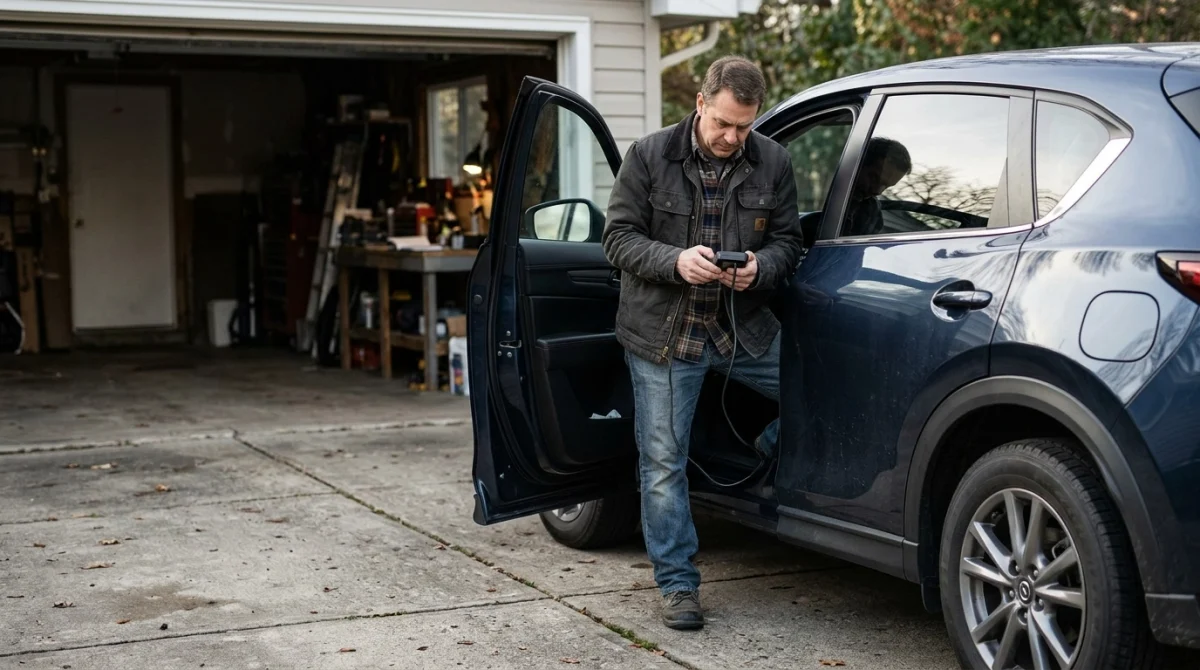
The best preparation is to verify your vehicle’s diagnostic status, correct any known problems, and confirm the rules for your inspection program. Avoid last-minute attempts to hide a warning light or manipulate the onboard diagnostic system.
Use this pre-inspection checklist
- Scan for trouble codes: Check stored and pending codes and investigate any relevant faults.
- Verify readiness: Identify incomplete monitors and check which ones your local program permits.
- Check the gas cap: Make sure it is properly installed and inspect it for obvious damage if your vehicle uses a conventional cap.
- Review recent repairs: Find out whether battery disconnection or code clearing reset the monitors.
- Confirm the inspection rules: Check the official state or local inspection program for your vehicle’s category and model year.
- Follow manufacturer guidance: Use the recommended drive-cycle procedure when monitors need to complete.
Should you clear the codes before the test?
No. Clearing codes just before an inspection is not a reliable way to pass, even if the check engine light goes out temporarily.
The reset can leave monitors incomplete and remove diagnostic information that would help identify the original problem. Some programs may also examine additional diagnostic information, so the consequences vary by jurisdiction.
Instead, diagnose the fault, complete any necessary repair, and verify readiness afterward. The goal is to make sure the vehicle’s emissions systems are operating properly, not simply to switch off the warning light.
What if the light is off but a code remains?
A stored code can remain after the dashboard light turns off, depending on the code type and the vehicle’s diagnostic logic. Some codes are historical, while others may be pending or associated with a fault that hasn’t fully cleared.
Read the code description and status rather than assuming every stored code has the same significance. Your inspection program’s rules and a proper diagnosis will determine whether further action is necessary.
Section Takeaway: Prepare by checking the vehicle’s actual diagnostic condition. Don’t erase codes or assume a warning light going dark means the car is ready.
How Long Does It Take for Monitors to Reset?
There is no single waiting period that works for every vehicle. Some monitors may complete after ordinary driving, while others need particular temperatures, fuel levels, speeds, or other operating conditions.
Why driving conditions matter
An OBD2 drive cycle is a sequence of operating conditions that allows the vehicle’s computer to run specific diagnostic tests. Some tests may require a cold start, steady-speed driving, deceleration, or other conditions defined by the manufacturer.
Simply idling the engine in the driveway may not complete every monitor. The correct conditions depend on the vehicle and the monitor that remains incomplete.
How to approach an incomplete monitor
Start by identifying which monitor says “Not Ready.” Then consult the owner’s manual, manufacturer information, or a qualified repair professional for the applicable procedure.
Use this general approach:
- Confirm that no unresolved fault is preventing the monitor from running.
- Check the manufacturer’s requirements for the specific monitor.
- Drive normally and safely under the prescribed conditions.
- Scan the vehicle again to see whether the monitor has completed.
- Repeat the process only as appropriate for the vehicle’s instructions.
Don’t follow a generic internet drive cycle if it conflicts with the manufacturer’s instructions. Not all vehicles complete their self-tests under the same conditions.
Can you drive straight to the inspection station after repairs?
Sometimes, but don’t assume the monitors will be ready immediately after a repair. If the repair involved clearing diagnostic codes or disconnecting the battery, the vehicle may need additional driving before all required tests finish.
Check readiness with a scanner before making the trip. If the inspection deadline is close, a qualified technician may help determine whether a specific monitor is incomplete because of normal drive-cycle requirements or an unresolved problem.
Expert tip: Verify readiness after repairs rather than relying on a fixed number of miles or days. The scanner’s status and your state’s rules are more useful than a universal waiting estimate.
Section Takeaway: Allow the vehicle’s own diagnostic system to complete its tests. Check the actual monitor status before visiting the inspection station.
Frequently Asked Questions
Can I pass emissions if my check engine light just turned off?
Yes, possibly. The light may have turned off because the computer no longer detects the original fault, but required readiness monitors may still be incomplete. Scan the vehicle for trouble codes and readiness status, then check your local inspection rules before testing.
Will clearing codes make my car pass emissions?
No, clearing codes does not guarantee a passing result. It may turn off the warning light temporarily, but it can also reset readiness monitors and erase useful diagnostic information. Repair the underlying problem and verify the vehicle’s status before the inspection.
How many monitors can be not ready and still pass?
The allowance depends on the inspection program, model year, and vehicle category. Some programs permit a limited number of incomplete monitors, while others have different rules. Check your state’s official emissions-testing guidance rather than relying on a nationwide assumption.
Can an OBD2 scanner tell me if my car will pass emissions?
An OBD2 scanner can help you assess readiness, MIL status, and diagnostic trouble codes. However, it cannot guarantee a pass because the inspection station applies local requirements and may perform additional checks. Use scanner results as a preparation tool, not an official inspection result.
Will a disconnected battery cause an emissions test failure?
A disconnected battery can reset readiness monitors on many vehicles. If too many required monitors remain incomplete, the vehicle may fail or be ineligible for testing. After battery work, drive according to the manufacturer’s guidance and confirm readiness with a compatible scanner.
Can my car pass emissions with a stored trouble code?
It depends on the code, its status, and your local program’s requirements. A stored historical code may be treated differently from an active fault that commands the MIL on. Have relevant codes interpreted before testing instead of assuming every code guarantees failure or is harmless.
What should I do if the check engine light is off but my car still fails?
Review the inspection report to identify the reason for failure. Check for incomplete readiness monitors, diagnostic faults, warning-lamp problems, or other failed inspection items. Correct the identified issue, verify the results, and follow the local program’s retest procedure.
Final Takeaway: Check Readiness Before You Test
You can pass emissions with the check engine light off, but the warning light is only one part of the picture. Your vehicle must also meet the applicable diagnostic and inspection requirements.
Before your appointment, use an OBD2 scanner to check the MIL command status, trouble codes, and readiness monitors. If a monitor is incomplete or a fault remains, investigate it before testing rather than clearing codes to make the dashboard look normal.
For the most reliable answer, consult your state’s official emissions program and your vehicle manufacturer’s guidance. A properly diagnosed vehicle with completed required monitors gives you a much clearer basis for deciding when to schedule the inspection.
