
What Does P0411 Mean? Secondary Air Injection Incorrect Flow Explained

Quick Answer
P0411 means your vehicle’s computer detected incorrect airflow from the secondary air injection system. The problem often involves the air pump, switching or check valve, hoses, electrical controls, or blocked air passages. An OBD-II code scan confirms the stored code, but further testing is needed before replacing parts.
Common P0411 causes
- Failed air pump: The secondary air pump may not create enough airflow during a cold start.
- Stuck air valve: A check or switching valve can stick closed and prevent air from reaching the exhaust.
- Blocked passages: Carbon or other deposits can restrict the air passages in some engines.
- Damaged hoses: Cracked, loose, collapsed, or disconnected hoses can change system airflow.
- Electrical problem: A blown fuse, failed relay, damaged connector, or wiring fault can stop the pump or valve.
Best first check
- Read all stored and pending codes, save freeze-frame data, and inspect the air injection system before buying parts.
If your scanner just displayed P0411, don’t assume the air pump automatically needs replacement. I’ve seen airflow codes caused by everything from a loose hose to a blocked cylinder-head passage.
The important step is finding out why the computer didn’t see the airflow it expected. This guide explains what P0411 means, what causes it, and how I would narrow it down.
In This Guide
What Does the P0411 Code Mean?
P0411 is an OBD-II powertrain diagnostic trouble code for incorrect secondary air injection system flow. The computer commanded the system to operate but didn’t detect the airflow response it expected.
The secondary air injection system is an emissions-control system used on certain gasoline vehicles. It pumps fresh air into the exhaust during specific operating conditions, commonly shortly after a cold start.
What does the secondary air injection system do?
Fresh air entering the exhaust helps support oxidation of unburned exhaust gases while the emissions system warms up. The system usually operates for a limited period rather than running continuously.
Depending on the vehicle, the system can contain several components:
- Secondary air pump: Creates the airflow.
- Check valve: Helps keep hot exhaust gases from flowing backward toward the pump.
- Switching valve or solenoid: Controls when air enters the exhaust.
- Air hoses and pipes: Carry air from the pump to the exhaust passages.
- Fuse and relay: Supply and control electrical power to the pump.
- Vacuum lines: Operate valves on some older system designs.
- Pressure or oxygen-sensor feedback: Helps the powertrain control module determine whether airflow occurred.
The exact design changes considerably by manufacturer, engine, and model year. That’s why replacing a pump based only on P0411 is risky.
Ford’s published OBD-II code information identifies P0411 as an air-system incorrect-flow fault. A General Motors service bulletin also documents restricted secondary-air passages as one possible P0411 cause on certain engines.
Technician’s note: manufacturer-specific diagnostic information matters here. Don’t assume a repair published for one engine applies to another vehicle.
What Are the Symptoms of P0411, and Is It Serious?
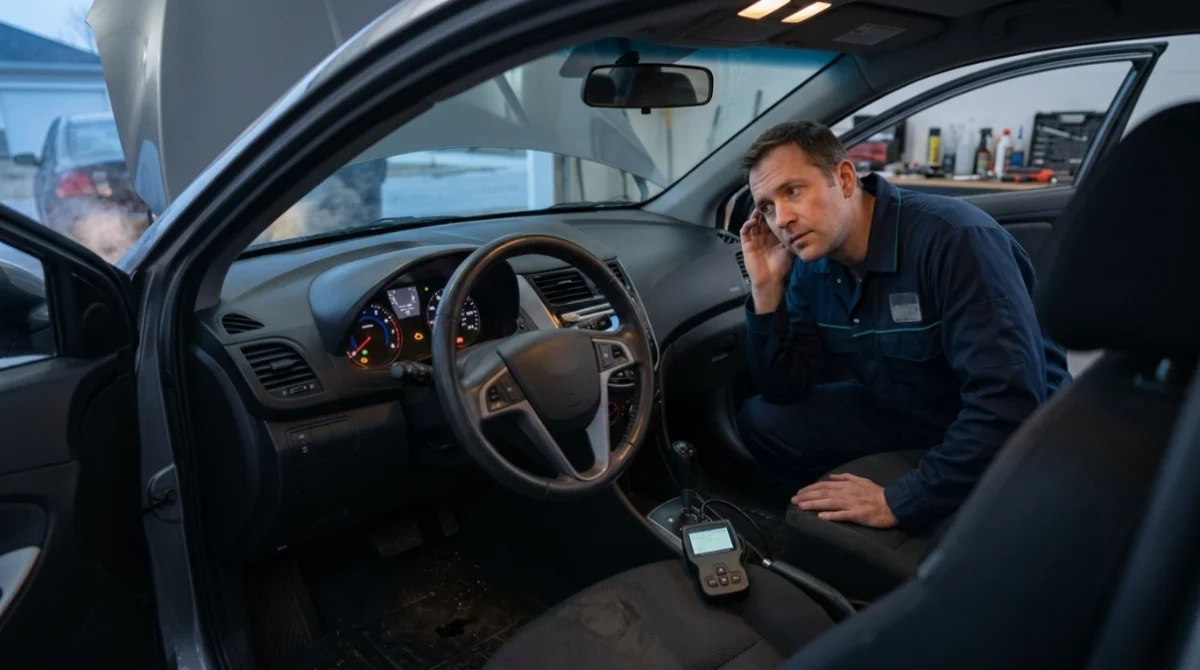
P0411 often produces a Check Engine Light with few noticeable driving symptoms. However, symptoms depend on the component that failed and whether other trouble codes are present.
Common P0411 symptoms
- Check Engine Light: This is often the first or only symptom.
- Failed emissions inspection: An active emissions-related trouble code can prevent a vehicle from passing applicable testing.
- Unusual pump noise: A worn pump may become louder than normal during a cold start.
- No pump sound: A failed pump, fuse, relay, or electrical circuit can leave the system silent when commanded.
- Rough cold operation: Some vehicles may show temporary roughness, although P0411 alone doesn’t guarantee a drivability problem.
- Additional codes: Valve-circuit, bank-specific airflow, oxygen-sensor, or electrical codes may appear with P0411.
Ford notes that a failed secondary-air valve or solenoid may produce little more than a Check Engine Light while affecting emissions-system operation. That makes visual inspection and scanner data important.
Can you drive with P0411?
A vehicle with only P0411 may still drive normally, but you shouldn’t ignore the code indefinitely. The underlying fault can prevent the emissions system from operating as designed.
A flashing Check Engine Light is different. If the light flashes or the engine runs badly, reduce driving and have the vehicle inspected promptly.
AAA advises drivers to seek professional diagnosis when a Check Engine Light problem isn’t easily identified. A flashing light deserves more urgent attention.
What Causes a P0411 Code?
P0411 appears when commanded secondary-air flow doesn’t match what the computer expects. Several mechanical and electrical failures can create that result.
1. Failed secondary air injection pump
The pump can fail electrically or mechanically. Water intrusion, worn bearings, internal corrosion, or electrical faults may stop it from moving enough air.
Don’t condemn the pump because it’s quiet. A blown fuse, failed relay, poor ground, or missing command can produce the same symptom.
2. Stuck check valve or switching valve
A valve that stays closed can block airflow even when the pump works correctly. A valve stuck open may also expose the system to hot exhaust gases and condensation.
I prefer to test airflow and valve operation before ordering either component. Guessing gets expensive fast.
3. Cracked, loose, or blocked air hoses
Air must travel from the pump to the exhaust without major leakage or restriction. Split hoses, loose clamps, disconnected tubes, or internal blockage can change the measured flow.
4. Carbon-blocked secondary-air passages
This problem deserves attention because it can imitate a failed pump. The pump may run, yet little air reaches the exhaust.
A GM technical bulletin for specific Cadillac and Chevrolet applications documents restricted secondary-air ports as a possible P0411 cause. The bulletin directs professional technicians to clean the passages after confirming the restriction.
5. Fuse, relay, connector, or wiring fault
The pump can draw substantial electrical current, so its power circuit matters. Heat, moisture, corrosion, damaged wiring, or a weak connection can interrupt operation.
6. Vacuum-control problem
Some systems use engine vacuum to operate an air valve. A cracked vacuum hose or failed control solenoid may prevent that valve from opening.
7. Incorrect feedback from another component
The computer needs a way to confirm airflow. A pressure-sensor problem or abnormal oxygen-sensor response can complicate diagnosis on vehicles that use those strategies.
| Possible cause | Typical clue | Check before replacing parts |
|---|---|---|
| Air pump | No airflow or abnormal pump noise | Power, ground, fuse, relay, command signal |
| Check/switching valve | Pump runs but flow doesn’t reach exhaust | Valve movement, vacuum or electrical control |
| Hose or pipe | Air leak, disconnected tube, visible damage | Entire air path for leaks and restrictions |
| Blocked passages | Pump and valve work but airflow remains low | Manufacturer diagnostic procedure |
| Electrical circuit | Intermittent or completely inactive system | Fuse, relay, connector, wiring and ground |
Section Takeaway: P0411 doesn’t identify one bad component. Diagnose airflow, valve operation, plumbing, and electrical controls before replacing the pump.
How Do You Diagnose P0411 Correctly?
Start with the scan data, then inspect the complete air path. The goal is to learn whether the system isn’t being commanded, isn’t producing air, or can’t deliver that air to the exhaust.
Step 1: Scan for every trouble code
Record P0411 plus all pending and stored codes. Related codes can point toward a particular valve circuit, bank, sensor, or electrical problem.
Save the freeze-frame information before clearing anything. Engine temperature and operating conditions can help explain when the monitor failed.
Step 2: Inspect the system visually
- Check hoses for cracking, collapsing, or disconnection.
- Look for damaged electrical connectors.
- Inspect visible wiring for rubbing or heat damage.
- Check vacuum lines if the system uses vacuum-operated valves.
- Look for signs of moisture near the pump and valves.
Step 3: Check the fuse and relay
A blown fuse is evidence, not a complete diagnosis. If a replacement fuse fails again, determine why the circuit is drawing excessive current.
Step 4: Test operation during the correct conditions
Many secondary-air systems run around a cold start, so testing a fully warmed engine may tell you little. Follow the manufacturer procedure for your engine.
A scan tool with bidirectional controls may let a technician command the pump or valve. Basic code readers normally can’t perform these active tests.
Step 5: Verify airflow instead of just listening
A running pump doesn’t prove that air reaches the exhaust. A blocked valve, split hose, or plugged passage can still set P0411.
This is one of the most common diagnostic traps. I want proof of airflow before calling the pump good.
Technician’s note: testing around a running engine and hot exhaust carries burn and moving-component risks. Use manufacturer procedures or have a qualified technician perform the test.
Section Takeaway: Don’t diagnose P0411 by sound alone. Confirm the electrical command, actual pump operation, valve control, and airflow path.
How Do You Fix P0411?
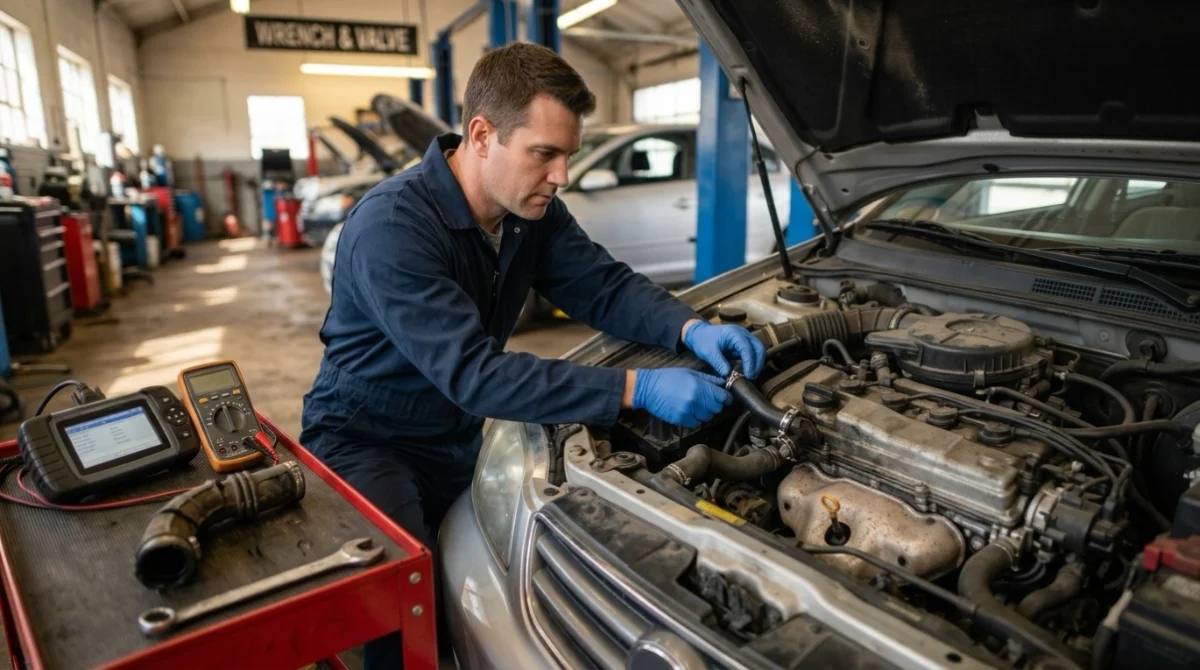
The correct P0411 repair depends on the failed test. There isn’t one universal part that fixes every vehicle with this code.
Possible repairs include:
- Reconnect or replace a damaged secondary-air hose.
- Repair corroded wiring or electrical connectors.
- Replace a failed fuse or relay after finding the underlying cause.
- Replace a failed secondary air injection pump.
- Repair or replace a sticking check or switching valve.
- Repair a damaged vacuum line or control solenoid.
- Clean restricted secondary-air passages when the manufacturer’s procedure calls for it.
- Repair a relevant sensor or feedback circuit after testing confirms the fault.
Can you fix P0411 yourself?
Basic visual checks can be reasonable DIY work. Inspecting hoses, connectors, fuses, and obvious damage usually doesn’t require advanced diagnostic equipment.
Pump current testing, active valve commands, exhaust-side work, and passage cleaning are more involved. Some repairs also require removing components around hot or difficult-to-reach areas.
How much does P0411 cost to repair?
There is no reliable single repair price for P0411. A damaged hose or electrical connection can be far cheaper to correct than a failed pump, valve assembly, or heavily restricted passage.
Make, model, engine, labor access, parts availability, and local shop rates all change the total. Get a diagnosis before approving expensive parts.
Pro tip: ask the shop which test proved the recommended component failed. A trouble code by itself isn’t proof that a particular part needs replacement.
Will clearing P0411 fix it?
No. Clearing the code only erases diagnostic information and turns the warning light off temporarily if the fault hasn’t been repaired.
The code can return when the vehicle reruns its secondary-air monitor. Repair the cause first, then verify the monitor completes without resetting P0411.
Is P0411 the Same as P0410, P0491, or P0492?
No. These codes belong to the same general emissions-system family, but they describe different detected conditions.
- P0410: A general secondary air injection system malfunction on applicable vehicles.
- P0411: Incorrect secondary-air flow detected.
- P0412-P0417: Various switching-valve circuit faults, depending on the exact code.
- P0491: Insufficient secondary-air flow on Bank 1.
- P0492: Insufficient secondary-air flow on Bank 2.
A related electrical code can change the diagnostic direction significantly. For example, a valve-circuit code makes electrical testing more important than blindly replacing an air pump.
Always diagnose the full code set as one picture. Fixing the first code displayed isn’t always enough.
P0411 FAQ
Does P0411 mean the secondary air pump is bad?
No. A failed pump can cause P0411, but so can a sticking valve, damaged hose, blocked passage, fuse, relay, wiring problem, vacuum fault, or feedback issue. Test the complete secondary-air system before replacing the pump.
Can a clogged passage cause P0411?
Yes. Restricted secondary-air passages can prevent the expected airflow even when the pump operates. General Motors has documented restricted SAI ports as a P0411 cause on certain engines, so vehicle-specific service information matters.
Can a bad oxygen sensor cause P0411?
It can complicate diagnosis on vehicles that use oxygen-sensor response to monitor secondary-air operation. However, don’t replace an oxygen sensor simply because P0411 is present. Check related codes and manufacturer test procedures first.
Will P0411 make my car run badly?
Not necessarily. Some vehicles show little more than a Check Engine Light because the secondary-air system mainly supports emissions operation during specific conditions. Other faults present at the same time may create additional symptoms.
Can P0411 cause an emissions-test failure?
An active emissions-related Check Engine Light or incomplete readiness monitor can cause problems during an inspection where OBD-based emissions testing applies. Repair the fault and allow the required monitors to complete before testing.
Why does P0411 return after I clear it?
The computer reruns the secondary-air monitor when the required conditions occur. If airflow remains outside the expected range, P0411 returns. Clearing the code cannot repair a failed pump, valve, hose, circuit, or restriction.
What should I check first for P0411?
Start by scanning every code and saving freeze-frame data. Then inspect the pump hoses, electrical connectors, fuse, relay, valve controls, and visible air plumbing before spending money on replacement parts.
The main takeaway is simple: P0411 means incorrect secondary-air flow, not automatically a failed air pump.
Confirm the airflow problem first. Then repair the component or restriction that caused it and rescan the vehicle to verify the code stays gone.
