
Why Your Key Fob Has Poor Range and What to Do About It

If your key fob only works when you’re standing right next to the car, you’re not alone. In most cases, weak range comes down to a small set of causes: a tired fob battery, a weak vehicle battery, signal interference, or damage inside the fob itself.
A good troubleshooting order is: test the spare fob, replace the fob battery, check for interference, then evaluate the vehicle battery and receiver or antenna issues. That sequence usually narrows the problem quickly, although some vehicles still need professional diagnosis if the vehicle-side system is involved.
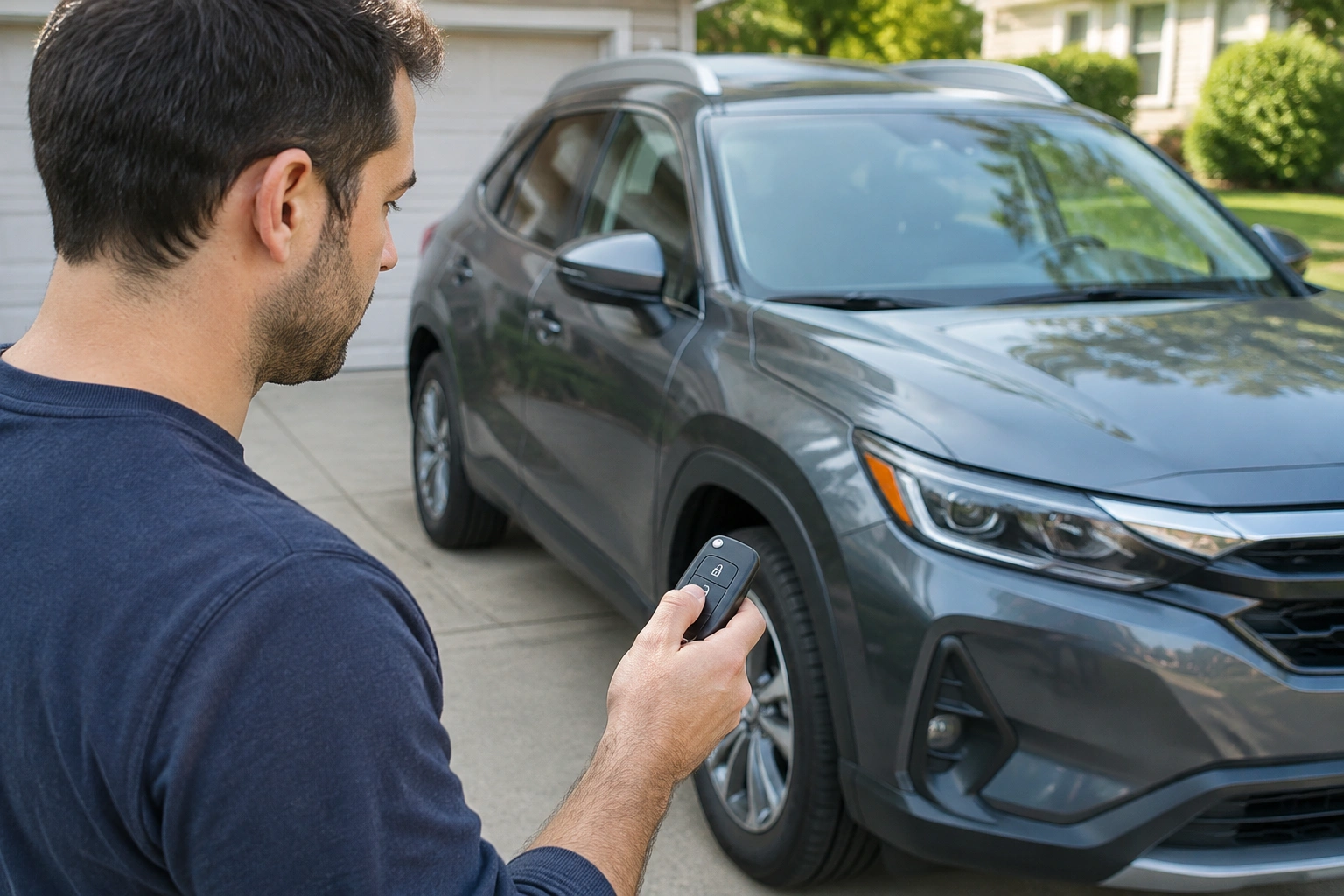
Quick Diagnosis: What Poor Key Fob Range Usually Means
A key fob that suddenly needs to be held very close to the car is usually telling you one of three things:
- The fob battery is weak.
- Something is interfering with the RF signal.
- The fob or vehicle hardware is not transmitting or receiving normally.
Start with the spare fob if you have one. If the spare works normally, the original fob is the likely culprit. If both fobs have the same weak range, the vehicle side becomes more suspicious. If only one fob is acting up, the problem is usually in that fob.
If the fob works fine in your driveway but barely functions in a parking garage, that often points to interference or signal blockage rather than a dead fob. If it only works when pressed against the door handle, that can point to a weak fob battery, damaged buttons, or a vehicle-side issue.
Most Likely Causes of Weak Key Fob Range
1. Weak key fob battery
This is the first thing I’d check. A dying battery often shows up as short range before the fob stops working completely. You may still be able to lock or unlock the car, but only when you’re close or when you press the button harder than usual.
A weak battery doesn’t always cause a total failure. Sometimes the fob still works, just inconsistently. That’s why people often replace the battery only after weeks of frustration.
2. Vehicle battery or low-voltage issues
A weak car battery can affect more than starting. In some vehicles, low voltage can make the remote entry system behave poorly or reduce the receiver’s ability to respond normally.
This is especially worth checking if:
– the car has been slow to crank,
– interior lights seem dim,
– warning lights have appeared,
– or both the main fob and spare fob have the same poor range.
If the vehicle has broader electrical symptoms, don’t assume the fob is the only problem.
3. Interference from the environment
Interference is a very common reason range changes from place to place. Buildings, parking structures, metal walls, other vehicles, and nearby electronics can all make a signal harder to receive.
A practical example: if your fob works from across the driveway at home but not in a busy downtown parking garage, the fob may be fine. The environment is likely the issue.
4. Physical damage or wear inside the fob
A cracked case, worn buttons, corrosion, or water exposure can all weaken performance. A fob can still appear to work while the signal gets worse and worse. If the case has been dropped hard, opened repeatedly, or exposed to moisture, internal damage is worth suspecting.
Damaged buttons or worn rubber membranes can also cause intermittent range issues even if the fob still works at very close range.
How to Tell If the Problem Is the Fob, the Car, or the Environment
The fastest way to avoid guesswork is to compare patterns.
| Symptom pattern | Most likely cause | Best next step |
|---|---|---|
| One fob has poor range, the spare works normally | Fob battery, damage, or internal wear | Replace the battery first, then inspect the fob |
| Both fobs have poor range everywhere | Vehicle battery, receiver, or antenna issue | Check vehicle battery and consider professional diagnosis |
| Both fobs work normally in one place but not another | Interference or signal blockage | Test in an open area away from buildings and other cars |
| Fob only works when held very close | Weak battery, damaged fob, or receiver issue | Replace battery and inspect the fob case and buttons |
| New battery made no difference | Internal fob damage or vehicle-side problem | Try the spare fob and check the car’s electrical system |
One of the best tests is the spare fob test. If the spare works better, the original fob is the likely culprit. If both behave the same, the vehicle is more likely to blame.
A simple decision rule helps after you’ve already replaced the fob battery: if the spare fob works normally, focus on the original fob; if both fobs still have weak range, focus on the vehicle battery, receiver, or antenna.
Another useful test is location-based. Try the fob in an open driveway, then in a garage, then beside the driver door. If the range changes a lot by location, that’s a strong clue that interference is involved.
Step-by-Step Fixes to Try at Home
Check the simple stuff first
Before opening anything, try the fob from different positions:
– hold it higher,
– stand closer to the driver door,
– and try a more open location.
If the range improves, that tells you the signal is probably reaching the car, just not very well in the original spot.
Replace the key fob battery
This is the cheapest first move. Use the correct battery type for your fob, install it in the same orientation as the old one, and make sure the contacts are seated firmly.
A common mistake is putting in a new battery but not snapping the case together fully, or leaving a contact slightly bent. If the battery is installed backward or not touching properly, the fob can still seem “sort of” alive without actually sending a strong signal.
Inspect the fob for damage
Look for:
– a cracked shell,
– loose buttons,
– signs of moisture,
– green or white corrosion,
– or a battery compartment that doesn’t close tightly.
If the fob has been wet, don’t keep forcing it open and closed. Corrosion can spread and make the problem worse.
Test the spare fob
If the spare works normally, you’ve learned something important without spending money. That usually means the car is okay and the original fob needs attention.
Check for obvious electrical symptoms in the car
If the car has been showing low-voltage behavior, address that before chasing the fob. A weak vehicle battery can create misleading symptoms that look like a bad remote.
For more on related no-detection issues, see our guides on how to start a car when the key fob is not detected and what to do when the key fob is not detected after a jump start.
How to Replace the Key Fob Battery Correctly
Battery replacement sounds simple, but the details matter.
- Open the fob carefully using the correct seam or release point.
- Remove the old battery and note which side faced up.
- Install the new battery in the same orientation.
- Check that the battery sits flat and does not wobble.
- Snap the case back together fully.
- Test the fob immediately.
If the range improves right away, you’ve probably solved it. If nothing changes, don’t keep swapping batteries and hoping for a miracle. Move on to the next test.
One caution: if the battery looks swollen or leaking, handle it carefully and avoid pressing it further into the fob. That’s a sign the battery should be removed and disposed of properly.
When a New Battery Does Not Fix the Range
If the range stays poor after a fresh battery, the problem is usually one of these:
- worn or damaged buttons,
- corrosion on the circuit board,
- a cracked internal solder joint,
- water damage,
- or a vehicle-side issue.
This is where pattern matters again. If only one fob has the problem, the fob itself is the likely suspect. If every fob is weak, the car’s receiver or electrical system moves higher on the list.
A fob can also work only when pressed directly against the car and still be failing internally. That close-range survival mode is common when the signal is barely getting out at all.
When Reprogramming May Be Needed
Reprogramming can help if the fob and vehicle have lost sync. That’s more plausible when the fob battery was dead for a while, the vehicle battery was disconnected, or the fob started acting oddly after service.
It is most likely to help when the fob is otherwise in good condition but the car no longer recognizes it properly. In that case, reprogramming can restore communication between the fob and the vehicle.
Reprogramming will not fix:
– a dead battery,
– broken buttons,
– liquid damage,
– a damaged circuit board,
– or a receiver/antenna problem on the vehicle side.
Some vehicles can be reprogrammed with owner-accessible steps, but others require dealer-level tools or security access. If the car uses a more restricted system, a locksmith or dealer may need to handle the programming.
So if a new battery did nothing and the fob looks physically sound, reprogramming might be worth considering. If the case is cracked or the board is corroded, programming is unlikely to save it.
When the Vehicle May Be the Problem
The vehicle side can absolutely cause poor range. The most common suspects are the receiver antenna and low vehicle voltage.
Antenna or receiver issues are more likely when both fobs have the same poor range after you’ve already replaced the fob battery. If the signal is weak from every location and every fob, the car may not be receiving properly.
Vehicle battery issues are more likely when the car also shows other low-voltage symptoms, such as slow cranking or dim lights. If the battery is weak, it can create confusing remote-entry behavior that looks like a key fob problem.
A simple rule: if a fresh fob battery and a spare fob both behave the same, check the vehicle battery first; if the vehicle battery seems fine, suspect the receiver or antenna and move toward professional diagnosis.
For a broader look at keyless-entry behavior and backup start methods, Edmunds has a helpful overview of keyless ignition and smart key systems.
When to Consult a Locksmith
A locksmith is often the best first call for:
– key fob battery replacement,
– fob shell or button replacement,
– replacement fob supply,
– and reprogramming in many vehicles.
If the issue seems to be on the vehicle side, a dealer or repair shop may be needed instead. That’s especially true when you suspect the receiver, antenna, or broader electrical system rather than the fob itself.
A locksmith can often tell you whether the issue is the fob, the programming, or the car’s receiver side. That can save you from buying a replacement you don’t need. If you’re shopping for a replacement, OEM fobs usually offer the most predictable fit and quality, while aftermarket options can cost less but vary more in reliability.
If you suspect the vehicle’s electrical system is involved, a shop or dealer diagnosis may be the better route. The National Highway Traffic Safety Administration also offers general vehicle safety and maintenance resources at NHTSA.gov.
How to Prevent Poor Key Fob Range in the Future
A few habits help keep range problems from coming back:
- replace the battery before the fob goes completely dead,
- keep the fob dry,
- avoid dropping it on hard surfaces,
- and watch for early signs like shorter range or intermittent response.
If your fob starts needing a second button press or only works from one side of the car, treat that as an early warning. Catching it then is usually easier than waiting until it quits altogether.
FAQ
Why does my key fob only work when I’m close to the car?
That usually points to a weak fob battery, interference, or internal damage in the fob. If both fobs behave the same way, the car’s receiver or battery becomes more likely.
Can a car battery cause weak key fob range?
Yes. A low vehicle battery can affect the remote entry system in some vehicles, especially if the car is already showing other low-voltage symptoms.
What interferes with key fob signal range?
Buildings, parking garages, metal structures, and other vehicles can all reduce signal performance. If the problem changes by location, interference is a strong possibility.
Should I replace the battery or reprogram the fob first?
Replace the battery first. Reprogramming won’t help if the battery is weak or the fob has physical damage.
When should I replace the whole fob?
If the case is cracked, the board is corroded, the buttons are worn out, or a fresh battery doesn’t improve range, replacement may be the practical choice.
Is an OEM fob better than an aftermarket replacement?
OEM fobs are usually the safer bet for fit and reliability. Aftermarket fobs can be cheaper, but quality varies more, so they’re best chosen carefully.
What if both of my key fobs have poor range?
That usually points to the vehicle side rather than both fobs failing at once. Check the car battery and consider a professional diagnosis of the receiver or antenna.
Can a damaged fob still work a little bit?
Yes. A damaged fob can still unlock the car at very close range while performing poorly from farther away. That’s a common sign that the fob is fading rather than completely dead.
Who should I call if I need reprogramming or receiver diagnosis?
A locksmith is often the best first call for reprogramming and fob-related fixes. For receiver, antenna, or broader vehicle electrical diagnosis, a dealer or repair shop may be the better choice.
