
How to Unfreeze Car Door Locks (Safe Methods That Work)

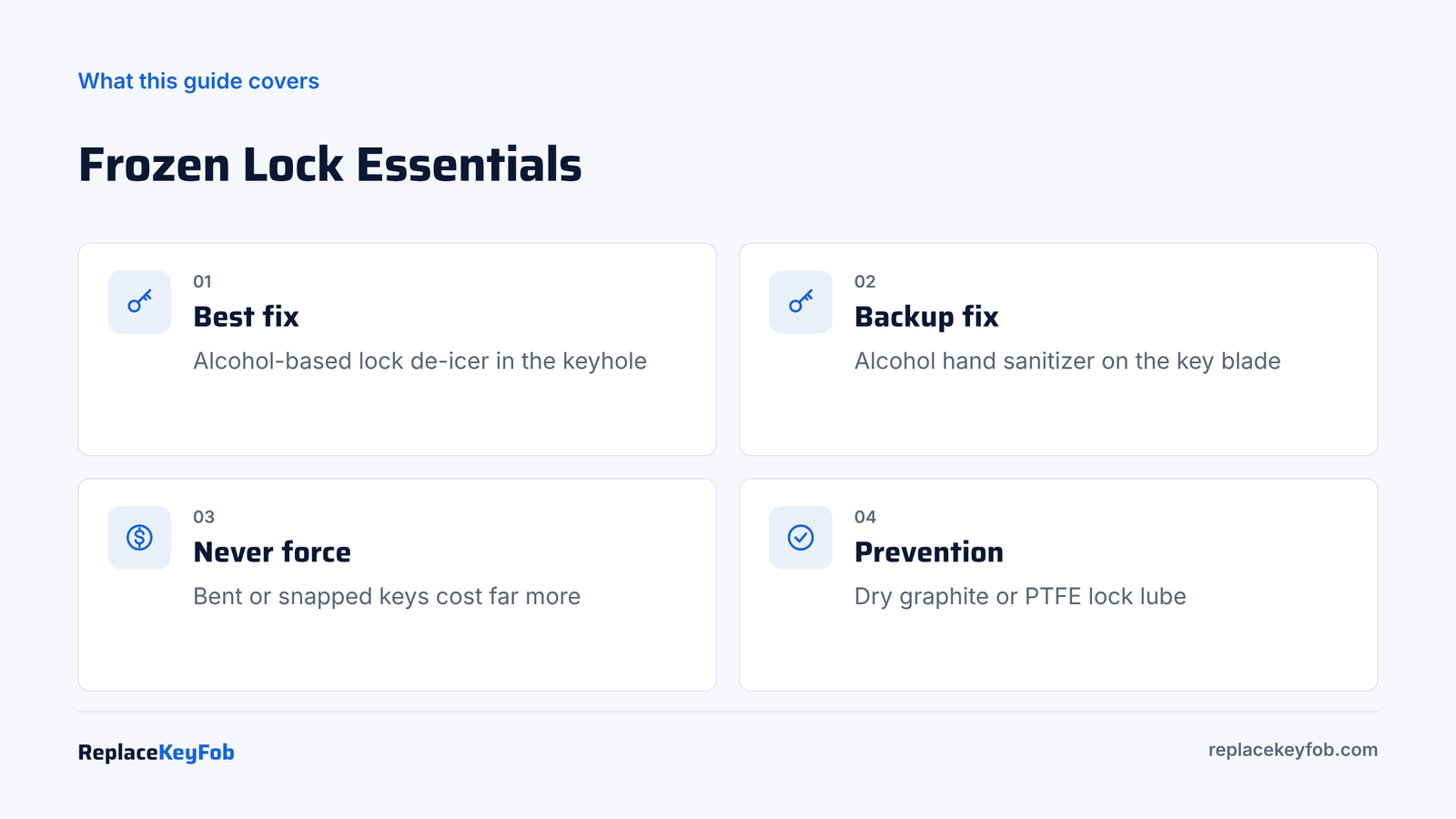
To unfreeze car door locks, spray an alcohol-based lock de-icer into the keyhole, wait a minute, then insert the key and turn it gently. No de-icer? Coat the key blade with alcohol hand sanitizer, or warm only the metal blade and insert it several times. Never force the key, and lube the lock with graphite once it works.
A frozen door lock is a small problem that can turn into an expensive one. Water gets into the keyhole, freezes around the pin or wafer tumblers, and the key will not slide in or will not turn. If you force it, you can bend the blade, snap it off in the lock, or break the lock rod behind the cylinder.
Before you work on the keyhole, ask if you even need it today. If your remote or smart key still unlocks the car, the frozen cylinder does not matter today. The keyhole only becomes urgent when the fob battery is dead, the car battery is flat, or the door is the only way in. If the lock turns but the door still will not open, the problem is the seal, not the lock; see how to unfreeze a car door.
How a Car Door Lock Freezes
Most car door locks are wafer-tumbler cylinders. Small spring-loaded wafers sit inside the cylinder and line up when the right key goes in. Water enters through the keyhole shutter, collects around the wafers and their springs, and freezes them in place. The key cannot push the wafers into position, so it either stops halfway or goes in but will not rotate.
Cars that are washed in winter, parked outside after freezing rain, or driven through slush freeze most often. Older locks with worn shutters let in more water.
Where the keyhole is on modern cars
Many newer cars only have one keyhole, on the driver door, and some hide it under a plastic cap at the end of the door handle. If you cannot see a keyhole, look for a small slot under the handle end. Insert the tip of the mechanical key blade from your fob into the slot and gently lever the cap off. Your owner’s manual shows the exact spot. The emergency blade usually slides out of the fob after you press a small release button.
What You Need
- Alcohol-based lock de-icer (small spray can with a nozzle tip)
- Alcohol hand sanitizer gel, as a backup
- Lighter or matches (only for warming a bare metal key)
- A drinking straw
- Hair dryer and extension cord, if available
- Dry graphite lock lubricant or a dry PTFE lock lube for prevention
Lock de-icer with lubricant
Pick a pocket-size alcohol-based lock de-icer with a narrow nozzle, ideally one that also leaves a light lubricant. Keep it in your bag or house, not in the frozen car.
As an Amazon Associate, ReplaceKeyFob earns from qualifying purchases.
6 Ways to Unfreeze a Frozen Car Door Lock
Start with method 1. Each method below is safe for the lock if you stay patient.
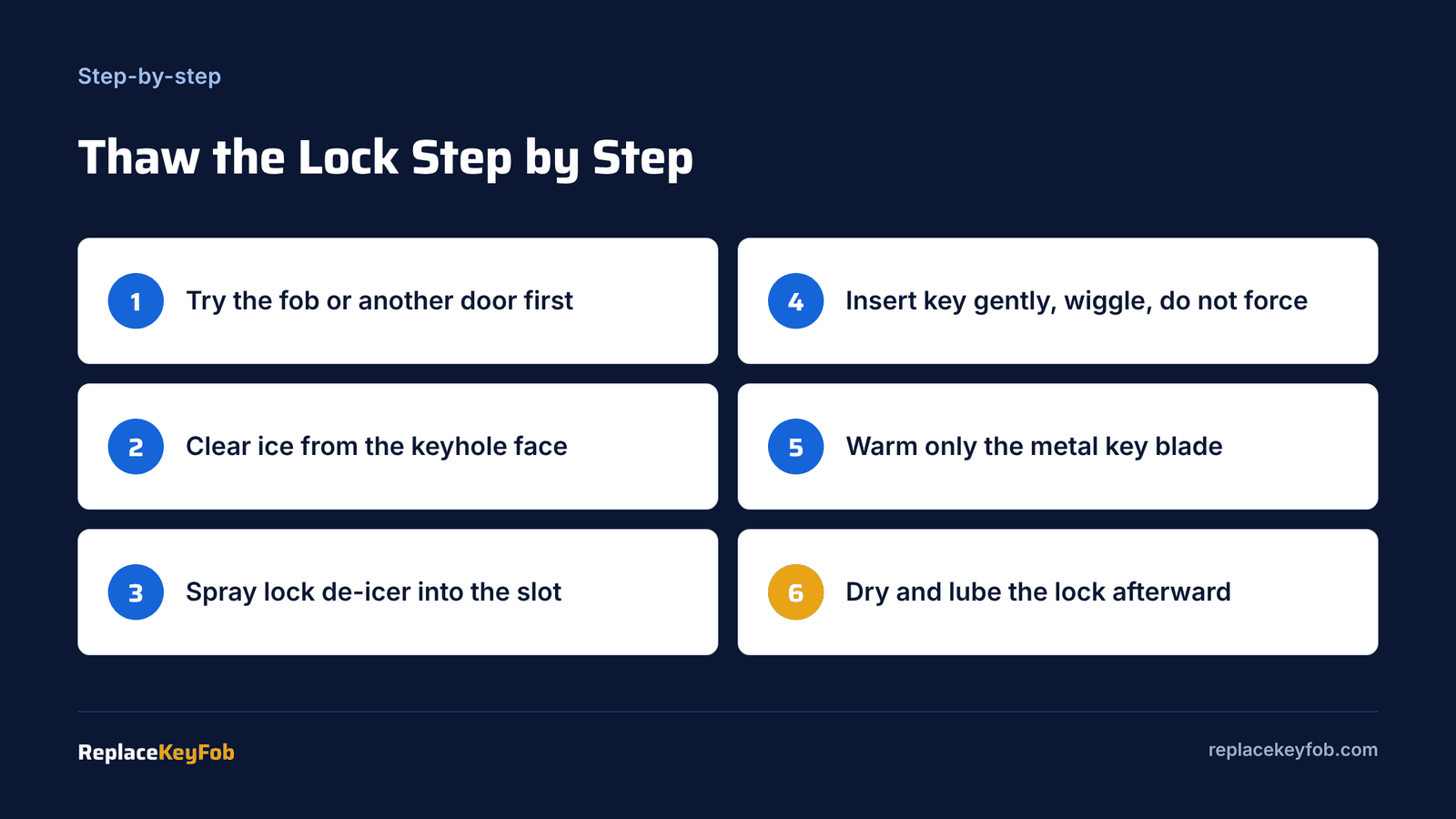
1. Lock de-icer spray
- Brush or scrape ice off the keyhole face and shutter with a gloved finger or plastic scraper.
- Put the de-icer nozzle against the keyhole and spray for one to two seconds.
- Wait 30 to 60 seconds for the alcohol to work into the tumblers.
- Insert the key slowly. If it stops, pull it out, spray again and wait.
- Turn the key gently back and forth in small movements until it rotates fully.
Alcohol lowers the freezing point of water, which is why de-icer melts ice in a tight space where heat cannot reach.
2. Hand sanitizer on the key
Most hand sanitizers contain about 60 to 70 percent alcohol. Squeeze a little onto the key blade, spread it along both sides, insert the key and wait 30 seconds. Repeat two or three times. Wipe the key dry afterward. Do not squirt gel directly into the keyhole if you can avoid it; it can leave residue that collects dirt.
3. Warm the metal key blade
Hold the key by the blade end with gloves, warm only the metal blade with a lighter for 5 to 10 seconds, then insert it into the lock and hold it there. The heat transfers into the tumblers. Repeat a few times.
This is safe only for an all-metal blade. Do not heat a key with a plastic head or a remote built in, because the transponder chip and circuit board are inside that head. If you have a switchblade key or smart key, remove the emergency blade from the fob first, then warm the blade alone.
4. Warm breath through a straw
Place a drinking straw against the keyhole, cup your hands around it and blow slowly for a minute or two. Your breath is warm enough to melt a thin film of ice. It is slow but it works when you have nothing else. Avoid blowing directly with your mouth on the lock in very low temperatures, because your lips can stick to cold metal.
5. Hair dryer
If the car is near an outlet, aim a hair dryer on medium heat at the lock from about 4 to 6 inches away for two to five minutes. Keep it moving so the paint does not get too hot.
6. Warm the car from another door
If any door, the hatch or the trunk opens, get in, start the engine and run the heater on high. In 10 to 20 minutes the door shell warms enough to free the lock from the inside. On cars with remote start, start the car with the fob and let it warm up while you wait.
After the Lock Thaws
Do not stop once the door opens. Water from the melted ice is still inside the cylinder and will refreeze tonight.
- Lock and unlock with the key five or six times to push moisture out.
- Dry the keyhole face with a cloth.
- Puff dry graphite into the keyhole, or spray a dry PTFE lock lubricant, then work the key in and out several times.
- Keep the key on you, warm, not in a frozen cup holder.
Graphite and dry PTFE do not attract dirt or thicken in the cold. Oily sprays and grease can gum up in low temperatures and make the next freeze worse.
Troubleshooting a Lock That Still Won’t Work
| Problem | Likely cause | Fix |
|---|---|---|
| Key will not go in at all | Ice blocking the shutter or front wafers | De-icer, then insert slowly; repeat |
| Key goes in but will not turn | Wafers frozen, or worn key | Second de-icer dose; try the spare key |
| Key turns, door does not unlock | Frozen lock rod or latch inside the door | Warm the cabin; check the latch area |
| Key turns, door unlocks, will not open | Seal frozen to the frame | Push the door in, de-ice the seam |
| Lock stiff even in warm weather | Dirt and old grease in the cylinder | Clean and lube; see our lubrication guide |
| Fob also does nothing | Dead fob or car battery | Replace the fob battery or charge the car battery |
If the fob does not work either, the cold may have weakened its battery. Read does cold weather affect key fobs and why a key fob locks but won’t unlock to narrow that down.
Mistakes That Break Keys and Locks
- Forcing the key. Turning hard against frozen wafers bends the blade or snaps it in the cylinder. Removing a broken piece is a locksmith job if it sits deep.
- Hot water into the keyhole. It melts the ice briefly, then refreezes inside the lock with more water than before.
- Heating a key with electronics. The chip and remote board sit in the plastic head. Heat can wreck them, and a replacement smart key often costs a few hundred dollars.
- Oil and grease in winter. Thick lubricants slow the tumblers in cold weather.
- Hitting the lock. Tapping the lock with a tool can dent the door skin or crack the keyhole bezel.
How to Keep Car Door Locks From Freezing
- Lubricate the keyhole with graphite or dry PTFE at the start of winter and after every car wash.
- Cover the keyhole with a small piece of painter’s tape or a magnetic keyhole cover before freezing rain.
- Dry door handles and keyholes after washing the car in winter.
- Park in a garage or under cover on nights with freezing rain.
- Replace a missing or broken keyhole shutter; it is the main barrier against water.
When to Call a Locksmith
Call a locksmith if the key has broken in the lock, the cylinder turns freely without unlocking, or the lock still binds after it thaws. A mobile locksmith lockout call typically costs about $75 to $175 in 2026, and repairing or rekeying a door lock cylinder usually runs about $100 to $250. If you are locked out with no working key at all, see how to unlock a car when the key is lost.
Frequently Asked Questions
An alcohol-based lock de-icer sprayed into the keyhole usually frees it in under two minutes. Hand sanitizer on the key blade is the next fastest option.
WD-40 can help displace water in an emergency, but it leaves an oily film that collects dirt and thickens in the cold. Follow up with a dry graphite or PTFE lock lubricant.
Only if the key is all metal or you have removed the bare emergency blade from the fob. Never heat a key with a plastic head, because it holds the transponder chip.
The driver lock is often the only keyhole, so it gets the most use and the most water. A worn shutter or a lock that has never been lubricated also lets water in more easily.
No. The remote uses the power locks, not the key cylinder. If the fob does not work, the cause is usually a weak fob battery, a dead car battery or a frozen latch inside the door.