
P0171 System Too Lean Bank 1 — Causes, Symptoms, Fix (2026 Guide)

P0171 means the engine is running too lean on Bank 1, meaning too much air and not enough fuel in the combustion mix. This usually points to vacuum leaks, faulty fuel delivery, or airflow sensor issues. The engine control system detects this imbalance using oxygen sensor feedback and adjusts fuel trims until limits are exceeded.
This guide explains what P0171 actually means, why it happens, how to diagnose it correctly, and what fixes work in real-world conditions.
Quick Answer: What P0171 Means
P0171 is an OBD-II trouble code showing a lean fuel mixture on Bank 1. The engine is receiving excess air or insufficient fuel. Common causes include vacuum leaks, dirty Mass Air Flow (MAF) sensor, weak fuel pump, or clogged fuel injectors. Fixing it requires identifying air leaks or restoring correct fuel pressure.
What P0171 Code Really Means
P0171 is part of the :contentReference[oaicite:0]{index=0}. It appears when the engine control module detects a lean condition on Bank 1. Bank 1 refers to the side of the engine containing cylinder number one.
The system uses feedback from the :contentReference[oaicite:1]{index=1} to measure combustion efficiency. When oxygen levels in exhaust are too high, the ECU assumes the mixture is lean.
This triggers fuel trim corrections. If adjustments exceed safe limits, P0171 is stored.
In short: the engine is adding too much air or losing fuel delivery capacity.
Common Causes of P0171
P0171 happens due to unbalanced air-fuel ratio. The issue is usually mechanical or airflow-related, not just electronic.
The most frequent causes include vacuum leaks, sensor contamination, and fuel supply weakness.
- Vacuum leaks in intake hoses or manifold
- Dirty or failing MAF sensor
- Low fuel pressure from weak pump
- Clogged fuel injectors
- Exhaust leaks before oxygen sensor
Each issue affects combustion differently, but all lead to excess oxygen readings.
What most drivers miss is that small air leaks cause major fuel corrections.
Vacuum Leaks — The #1 Hidden Cause
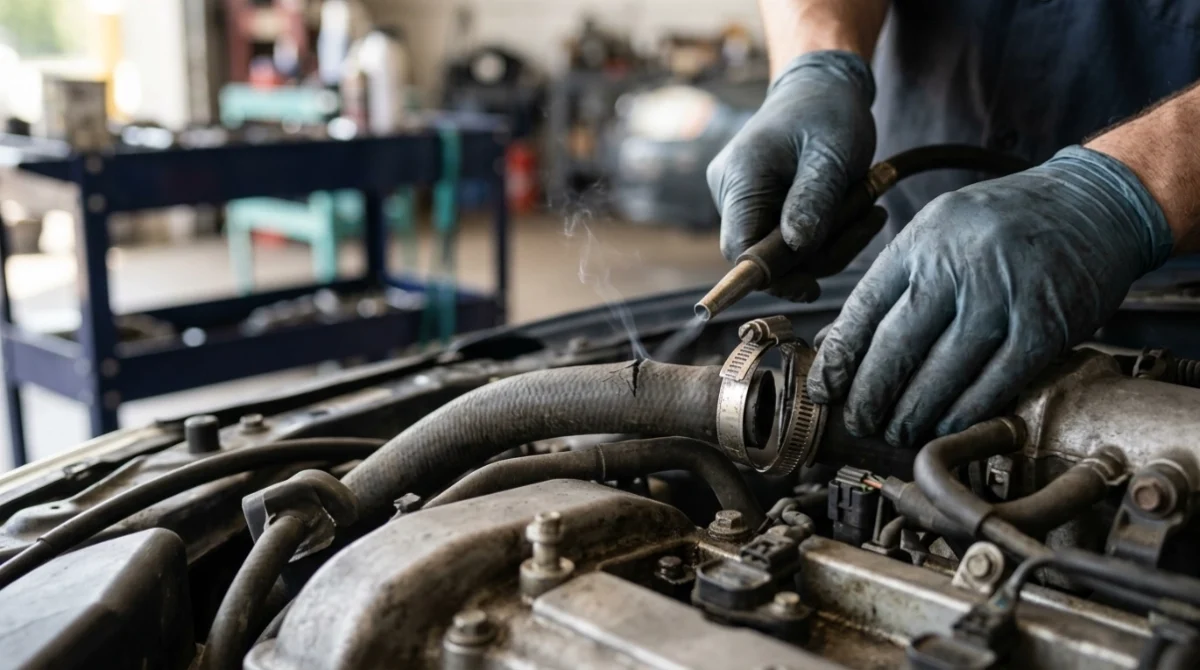
Vacuum leaks are the most common reason for P0171. Even a small crack in a hose can distort airflow readings significantly.
Engines rely on sealed air systems for accurate fuel calculation. When unmetered air enters, the ECU miscalculates fuel delivery.
For example, a loose intake clamp can create a lean condition at idle but not at high RPM.
Result: rough idle, stalling, and fuel trim spikes.
Spray testing or smoke testing is often used to detect these leaks accurately.
Mass Air Flow Sensor Issues
The :contentReference[oaicite:2]{index=2} measures incoming air volume for fuel calculation. When dirty, it under-reports airflow.
This causes the ECU to inject less fuel than required, creating a lean condition.
Oil contamination from aftermarket air filters often triggers this issue.
Cleaning or replacing the MAF sensor often restores correct fuel trims instantly.
Fuel Delivery Problems
Fuel system weakness directly triggers P0171. If fuel pressure drops, combustion becomes lean regardless of airflow accuracy.
Weak fuel pumps, clogged filters, or failing injectors reduce fuel volume reaching cylinders.
This condition often appears during acceleration or load.
Real-world symptom: engine feels weak when climbing or overtaking.
Symptoms of P0171 Code
P0171 symptoms vary depending on severity and driving conditions. Some vehicles show mild signs, while others struggle significantly.
- Check engine light on
- Rough idle or shaking
- Engine hesitation during acceleration
- Poor fuel economy
- Engine misfires under load
These symptoms worsen over time if ignored.
Long-term lean running can damage engine valves and pistons.
How to Diagnose P0171 Correctly
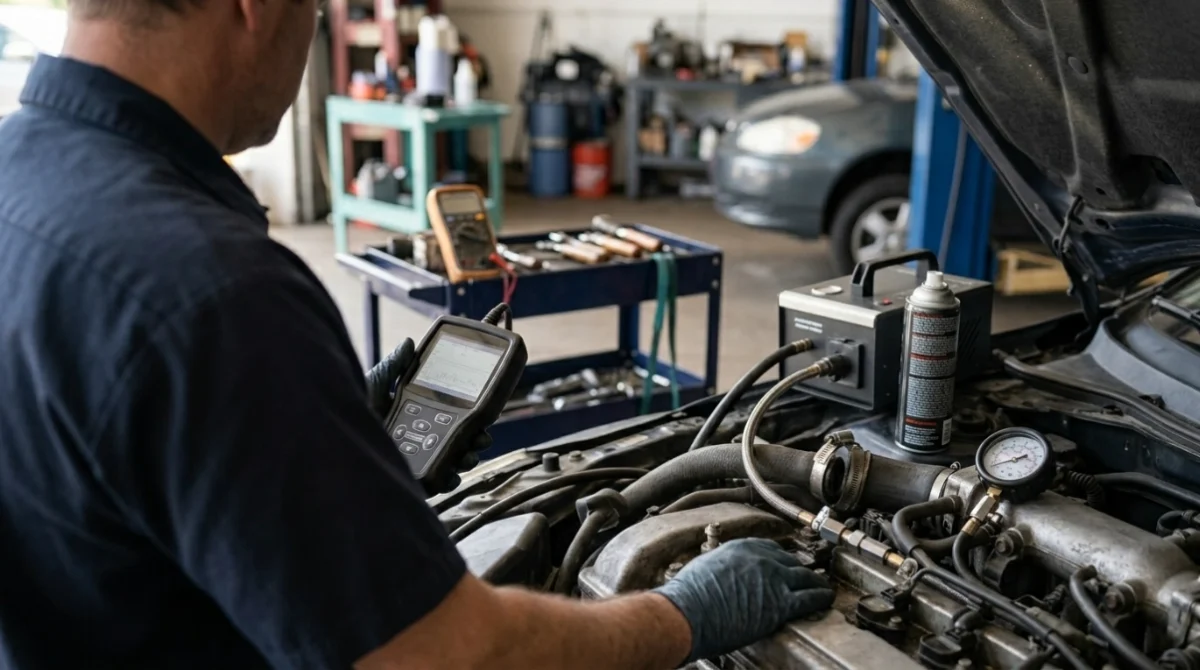
Correct diagnosis requires step-by-step elimination, not guessing parts.
Start with air leaks, then sensor data, then fuel system pressure.
- Check fuel trim values using scanner
- Inspect intake hoses for leaks
- Clean MAF sensor carefully
- Test fuel pressure output
- Check oxygen sensor behavior
Skipping steps often leads to unnecessary part replacement.
Bank 1 vs Bank 2 Confusion
Engines with multiple cylinder banks use separate sensors. Bank 1 always includes cylinder 1 side.
P0171 affects only Bank 1, while P0174 affects Bank 2.
If both appear together, the issue is usually global airflow or fuel delivery.
Dual-code failure strongly points to MAF or fuel pressure issues.
What Most People Get Wrong About P0171
Many assume P0171 means oxygen sensor failure. This is incorrect in most cases.
Oxygen sensors report problems — they rarely cause them.
Another misconception is that clearing the code fixes the issue. It does not.
The real root cause is usually air measurement or fuel imbalance.
Repair Options and Fix Strategy
Fixing P0171 depends on diagnosis results. There is no single universal repair.
Each system must be tested in order of probability and cost efficiency.
| Cause | Fix | Difficulty |
|---|---|---|
| Vacuum leak | Seal or replace hoses | Low |
| Dirty MAF | Clean or replace sensor | Low |
| Fuel pump issue | Replace pump or filter | High |
| Injector clog | Fuel system cleaning | Medium |
The correct fix depends on confirmed diagnostic results.
Can You Drive With P0171?
Driving with P0171 is possible but not recommended for long periods.
Lean conditions increase engine temperature and stress internal components.
Short trips are usually safe, but prolonged driving increases damage risk.
Ignoring it can lead to expensive engine repairs.
Advanced Insight: Fuel Trim Behavior
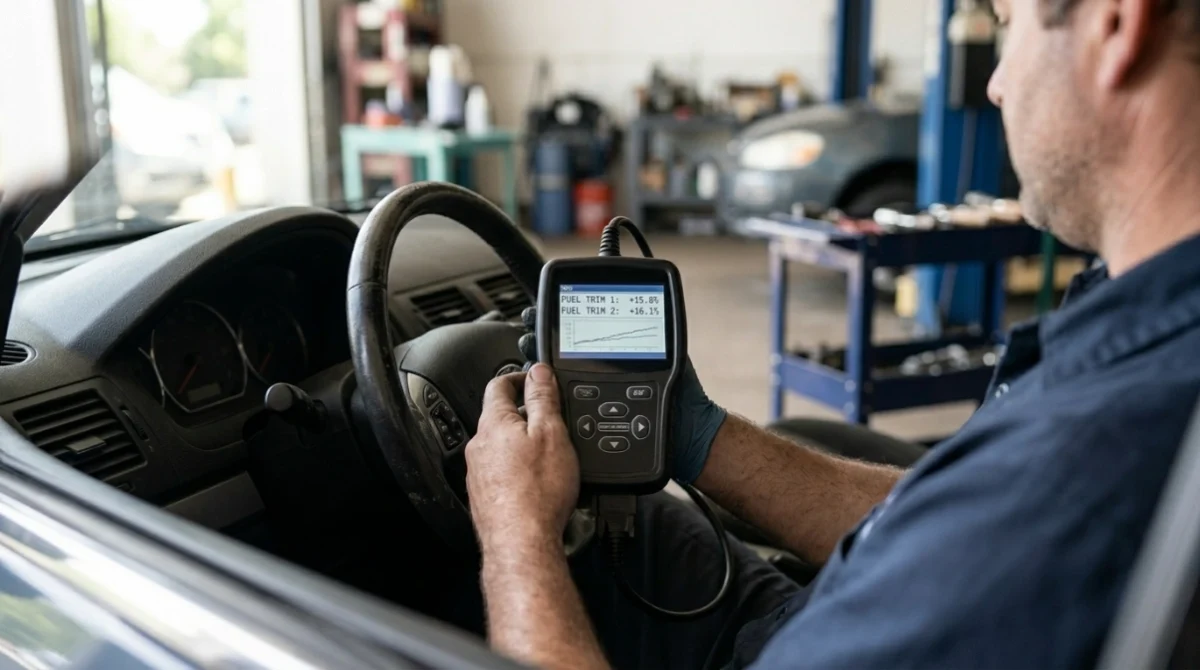
Fuel trims reveal hidden engine behavior patterns. High positive trims indicate lean correction attempts by ECU.
If short-term and long-term trims stay above +15%, the system is struggling.
This is often the earliest warning before drivability issues appear.
Fuel trim analysis is the fastest diagnostic shortcut.
Final Diagnostic Decision Guide
If idle is rough → check vacuum leaks first.
If acceleration is weak → inspect fuel pressure system.
If both banks are affected → suspect MAF sensor or fuel pump.
This structured approach reduces repair cost and time significantly.
P0171 indicates a lean fuel condition caused by air-fuel imbalance in Bank 1. The most common triggers are vacuum leaks, MAF sensor contamination, or fuel delivery weakness. Accurate diagnosis always starts with airflow inspection before replacing parts.
The key insight is that P0171 is a system imbalance, not a single faulty sensor. Future vehicles will detect these issues earlier using smarter airflow modeling.
Start by inspecting intake hoses and cleaning the MAF sensor within 2 minutes today.
Frequently Asked Questions
Is P0171 serious?
P0171 is moderately serious because it indicates a lean condition. While the car may still run, long-term driving can damage engine components due to higher combustion temperatures.
Can a dirty air filter cause P0171?
A dirty air filter rarely causes P0171 directly, but restricted airflow can contribute to inaccurate fuel readings. Most cases are linked to vacuum leaks or sensor issues instead.
How much does it cost to fix P0171?
Repair cost ranges from simple $20 sensor cleaning to $500+ fuel system repairs. Cost depends on whether the issue is airflow, sensor, or fuel delivery related.
Will P0171 clear itself?
No, P0171 does not fix itself. Even if the code clears temporarily, the underlying imbalance will return unless the root cause is repaired.
What happens if I ignore P0171?
Ignoring P0171 can lead to poor fuel economy, engine misfires, and long-term engine wear. Extended lean running increases internal temperature and stress.
