
10 Best Code Reader for Mercedes: Top Diagnostic Tools Compared

A code reader helps diagnose warning lights, check vehicle systems, and understand fault codes without visiting a repair shop first. For Mercedes-Benz vehicles, a reader can offer basic engine scans or deeper access to systems such as the transmission, air bags, brakes, and body controls.
The best code reader for Mercedes should match your model year, support the systems you need to scan, and provide clear code descriptions instead of only showing numbers. We also look for live data, code clearing, update support, and a simple interface. Some readers offer broad coverage across many brands, while others provide more detailed Mercedes-specific functions.
We compared code readers based on compatibility, diagnostic coverage, ease of use, and long-term value to identify the options that make Mercedes troubleshooting simpler and more useful.
Best Code Readers for Mercedes
We reviewed code readers that help us diagnose Mercedes vehicles quickly and accurately. Our list includes options for different skill levels, budgets, and diagnostic needs.
VDIAGTOOL VD10 Code Reader
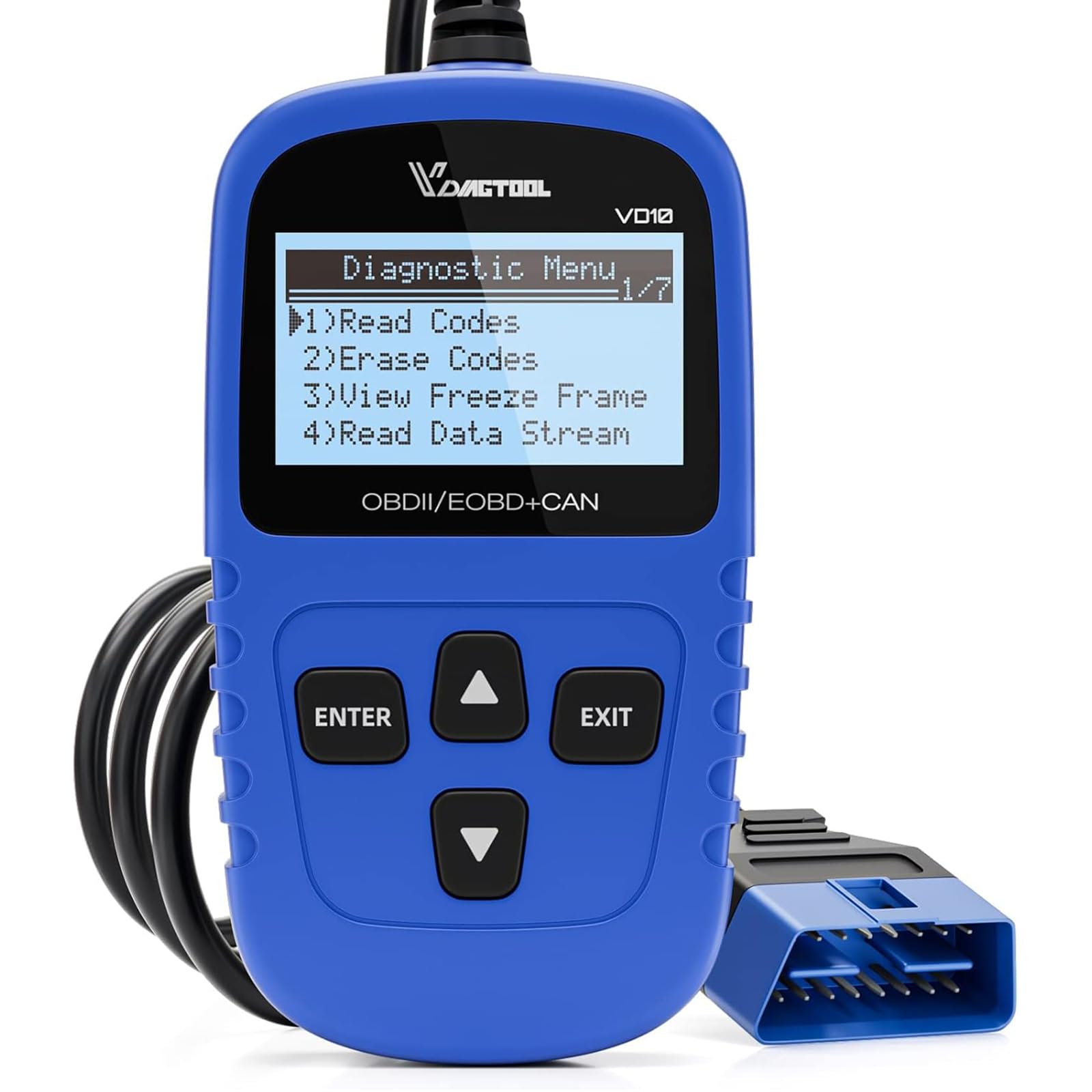
We recommend the VD10 for Mercedes owners who want a simple tool for reading and clearing basic engine codes without using a phone app.
Pros
- Quick plug-and-play setup with power from the car
- Displays code definitions and useful live data
- Includes freeze-frame and emissions readiness checks
Cons
- Focuses mainly on standard OBD-II engine diagnostics
- May not access Mercedes-specific systems, such as airbags or transmission modules
- The small screen can make data harder to read
We plugged the reader into the vehicle’s OBD-II port and got started without batteries, charging, or account setup. The controls felt straightforward, making it a practical choice for checking a check-engine light at home.
The VD10 can read and clear fault codes, show freeze-frame information, and display data such as engine speed and fuel readings. Its built-in code descriptions also reduce the need to search every number online.
For Mercedes vehicles, compatibility depends on the model and the type of fault. This scanner works best for standard engine and emissions codes on OBD-II cars. It should not replace a Mercedes-focused scanner when we need access to body, transmission, airbag, or other manufacturer-specific systems.
The I/M readiness feature helps us check whether emissions monitors have completed before an inspection. We would choose this reader for basic troubleshooting, but buyers seeking deeper Mercedes diagnostics should consider a more advanced tool.
ANCEL AD310 Code Reader

We recommend the ANCEL AD310 for Mercedes owners who need a simple, affordable tool for checking and clearing engine-related codes.
Pros
- Simple controls and a clear screen
- Reads live data and freeze-frame information
- Compact design with a sturdy cable
Cons
- Covers only OBD-II emission-related codes
- Does not diagnose many Mercedes-specific systems
- Requires a compatible OBD-II port
We found the AD310 easy to use during a basic check-engine diagnosis. It powers through the car’s OBD-II port, so we did not need batteries or a separate charger. The labeled buttons and simple menus made code reading quick.
The reader can show stored codes, live data, freeze-frame details, and inspection readiness status. We could also clear engine codes after addressing the problem. That makes it useful for common issues such as an emissions fault or a loose fuel cap.
Mercedes vehicles often need deeper diagnostics than this tool provides. The AD310 does not access systems such as the transmission, airbag, ABS, or other manufacturer-specific modules. We should confirm compatibility with the model and year before buying.
Its compact body fits easily in a glove box or tool bag. The thick cable also feels more durable than the thin leads found on many low-cost readers. For basic engine-code checks, the ANCEL AD310 offers good value, but Mercedes owners needing full system access should choose a more advanced scanner.
OBDMATE OM807 Mercedes Scanner
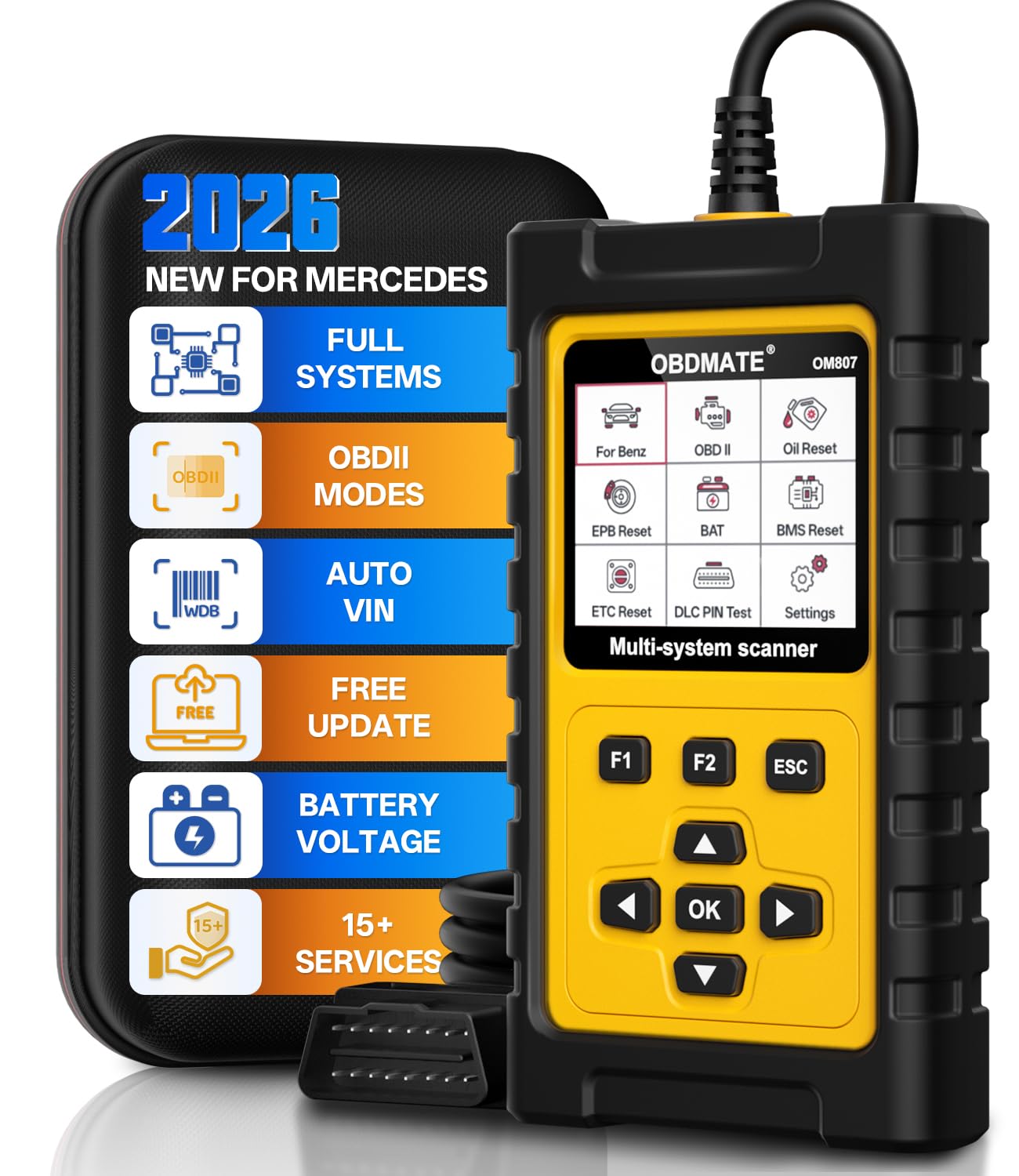
We recommend the OM807 for Mercedes owners who want deeper system checks and useful maintenance resets without paying for a basic dealer scan.
Pros
- Reads several Mercedes systems, including the engine, ABS, SRS, and transmission
- Offers useful resets for oil service, battery registration, EPB, and more
- Supports free software updates and general OBD2 testing
Cons
- Some functions may not work on every Mercedes model or year
- Update setup may require extra computer work
- The small screen can limit how much data we see at once
We found the OM807 easy to connect through the car’s diagnostic port. Its automatic VIN feature helped us start quickly, and the color display made fault codes and live sensor readings easy to follow.
This scanner goes beyond engine codes. We could check several vehicle systems and use service functions such as oil reset, battery reset, electronic parking brake service, and steering angle calibration. Diesel owners may also find the DPF and AdBlue functions useful, but compatibility needs checking first.
The OM807 also works with standard OBD2 systems on many vehicles built after 1996. That makes it more useful than a Mercedes-only tool. Still, advanced features depend on the exact model, year, and equipment.
We like the lifetime update support, though computer-based updates may take some effort. The compact case, USB-C cable, and straightforward plug-and-play design make this a practical choice for home diagnosis and routine Mercedes maintenance.
iCarsoft MB V2.0 Mercedes Scan Tool
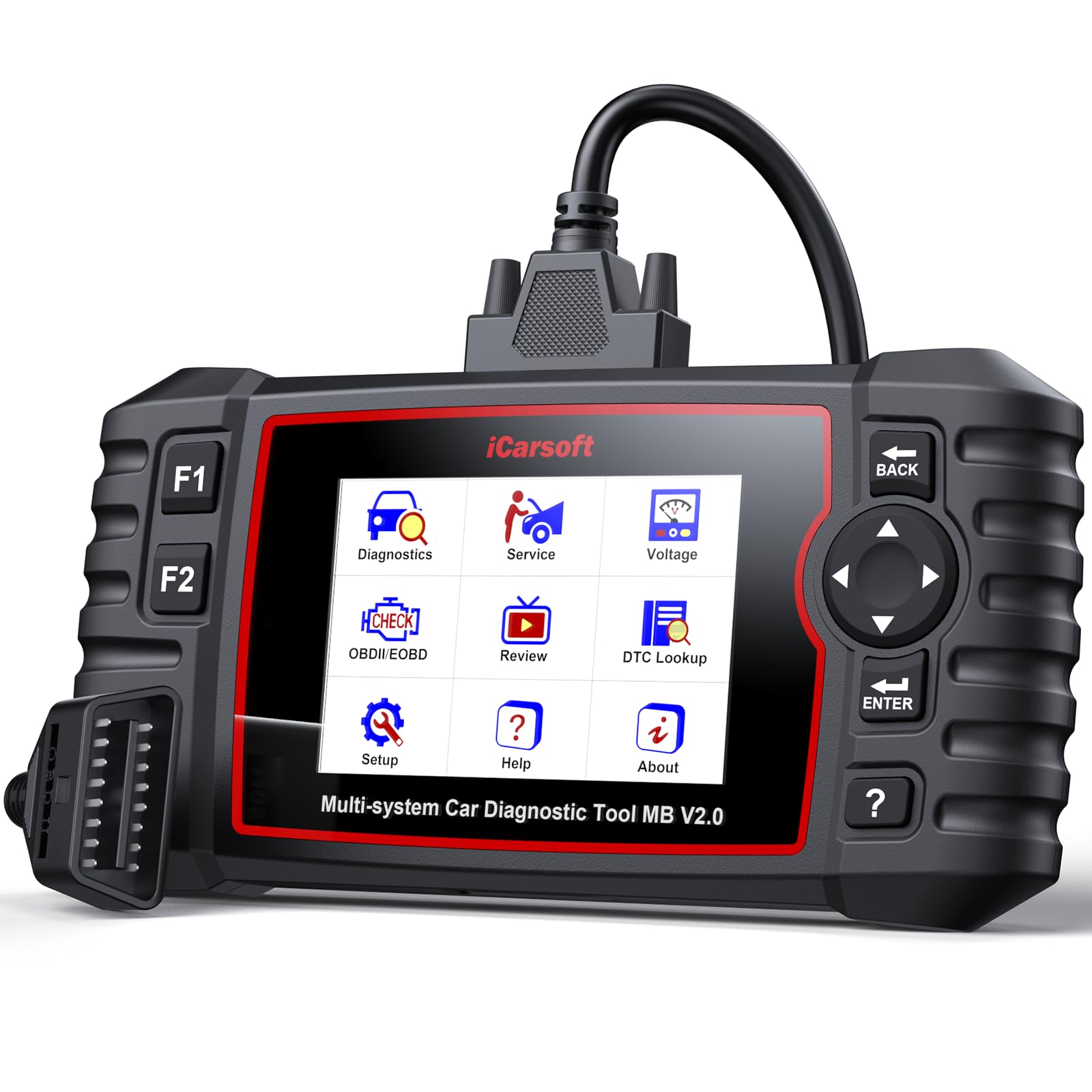
We recommend this reader for Mercedes owners who want deeper system scans and maintenance functions, but we suggest checking VIN compatibility before buying.
Pros
- Scans many Mercedes, Sprinter, Smart, and Maybach control systems
- Includes useful functions such as oil, EPB, SAS, battery, and injector services
- Displays live data, freeze-frame details, and module information
Cons
- Some functions work only on selected models
- Older Mercedes models may need a separate 38-pin adapter
- Vehicle coverage can vary, even within the same model year
We used the MB V2.0 to look beyond basic engine codes. It can access systems such as ABS, air bags, transmission, climate control, parking sensors, and suspension on supported vehicles. Live graphs also help us watch readings such as engine speed, coolant temperature, and transmission oil temperature.
The nine service functions add value for home maintenance. We found the oil reset, electronic parking brake service, steering-angle calibration, battery service, and injector coding more useful than a basic code reader’s warning-light reset. However, these features depend heavily on the vehicle’s exact control modules.
Auto VIN and automatic scanning make setup simple on newer Mercedes models with a standard 16-pin port. Owners of many pre-2003 vehicles will need the separately sold 38-pin adapter, and one reported review found that a 2004 CLK 500 was not supported as expected. We recommend confirming the VIN and required functions before purchase.
The tool includes a one-year warranty and supports several languages. Its corded design means we do not need to manage a battery, though the cable limits where we can position the scanner while working.
BlueDriver Pro OBD2 Scanner
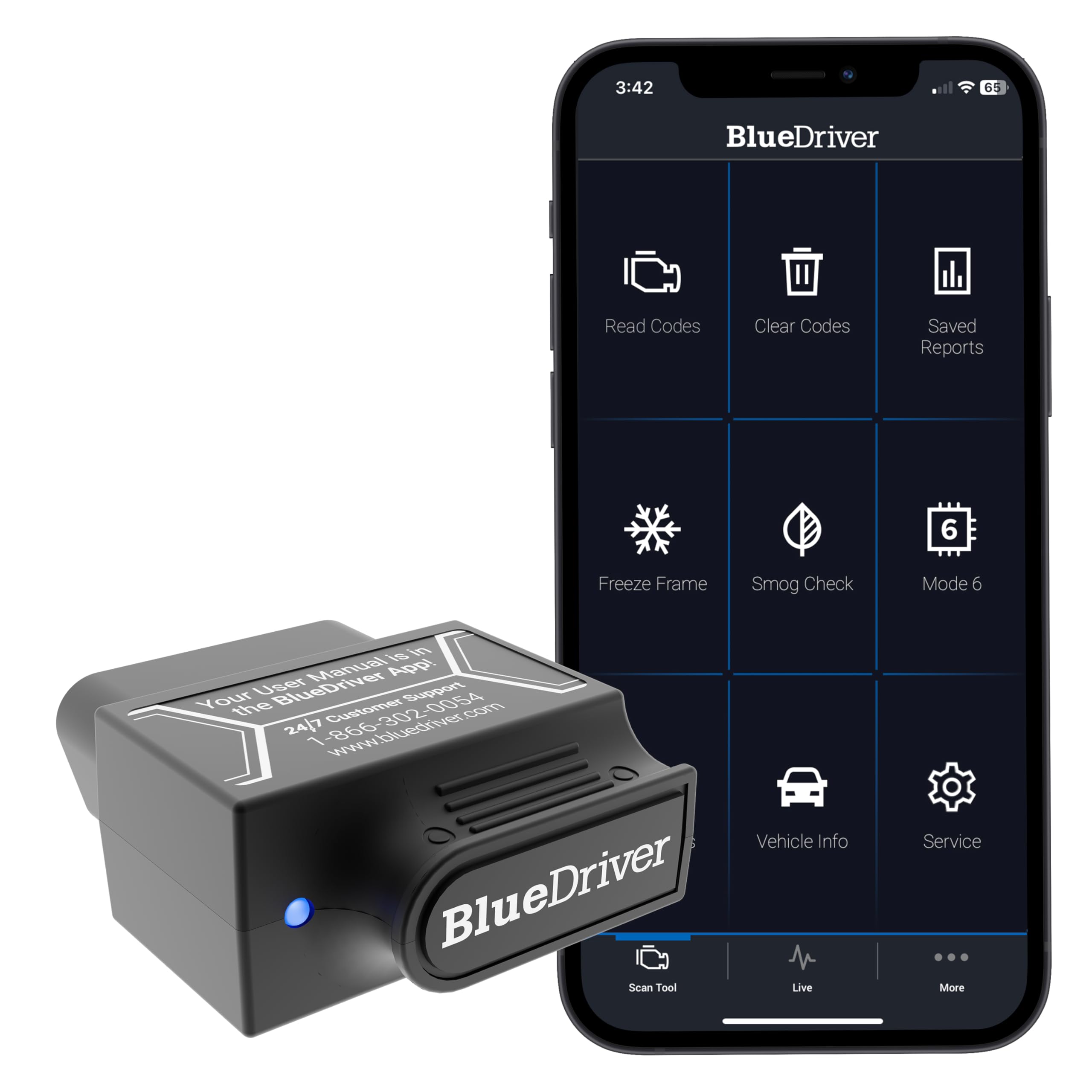
We recommend the BlueDriver Pro for Mercedes owners who want broad diagnostics, repair guidance, and phone-based convenience without a subscription.
Pros
- Reads more than basic engine codes, including ABS, SRS, TPMS, and transmission faults
- Provides repair reports, live data, freeze frames, and readiness checks
- Works with iPhone and Android devices through Bluetooth
Cons
- Mercedes coverage can vary by model and system
- Requires a compatible phone or tablet
- Bluetooth pairing may take some troubleshooting
We plugged the compact scanner into the vehicle’s OBD-II port and used the app to check stored faults. The layout made code descriptions easier to understand than the short messages shown by many basic readers.
For Mercedes vehicles, the main advantage is access to several systems beyond the check-engine light. We could review data from areas such as ABS, airbags, transmission, and TPMS when supported by the specific model.
The repair reports added useful context by showing possible causes and verified fixes linked to the vehicle identification number. Live readings and freeze-frame data also helped us see what the car recorded when a fault appeared.
Bluetooth operation kept the cabin free of cables, but pairing was not always instant. Mercedes support can also differ by year and model, so we would check BlueDriver’s coverage before buying. No subscription fee is required after purchase.
MOTOPOWER MP69033

We recommend this reader for Mercedes owners who need a simple tool for checking and clearing basic engine codes without extra setup.
Pros
- Easy plug-in use with power from the car
- Clear screen with useful live-data readings
- Built-in code lookup helps explain faults
Cons
- Does not read ABS or airbag codes
- Some live-data terms may be unclear
- Coverage can vary by Mercedes model
We found the MP69033 simple to operate. After connecting it to the OBD2 port and turning on the ignition, it started without a battery or charger. The buttons and screen made basic code checks straightforward.
The built-in lookup helped us understand what a fault code meant before deciding what to inspect next. We could also view information such as engine speed, coolant temperature, and selected live data.
This scanner works best for the check-engine system. It cannot access Mercedes-specific systems such as ABS, airbags, or service reminders, so it will not replace a professional Mercedes diagnostic tool.
Its compact body and flexible cable made it easy to use from the driver’s seat. We would choose it for routine engine checks, but buyers needing full Mercedes system coverage should consider a more advanced scanner.
ONATREX Mercedes OBD1 Code Reader

We recommend this reader for owners of 1988–1995 Mercedes models with an 8- or 16-pin diagnostic port who want a simple way to read and clear fault codes.
Pros
- Supports many older Mercedes models, including the W124, W126, W140, and R129
- Includes clear instructions and a code reference file
- Sturdy leads, bright LED, and a storage bag
Cons
- Works only with older OBD1 Mercedes systems
- Some users reported compatibility problems
- The process feels basic compared with modern scan tools
We found the ONATREX easy to use once we located the diagnostic port. The included leads connect to the car’s 8- or 16-pin socket, and the bright LED makes the results easy to see in a garage or driveway.
The instructions and master code file add useful guidance. We could identify the fault codes without relying on a repair shop, then reset them after addressing the issue. This makes the reader practical for owners who maintain older Mercedes vehicles themselves.
Compatibility remains the main concern. Although it targets 1988–1995 models, user feedback includes reports of units that did not work on specific cars. We recommend confirming your Mercedes has the correct port before ordering.
This reader suits a classic Mercedes owner who needs basic code access rather than advanced live data or full-system diagnostics. Its 3.9-star rating from 23 reviews also suggests that results may vary by vehicle.
FOXWELL NT604 Elite

We recommend this Mercedes code reader for owners who want affordable access to engine, ABS, SRS, and transmission fault codes.
Pros
- Covers several key control systems
- Easy to use without paid software
- Includes live data and a protective case
Cons
- Does not perform service resets or relearns
- Vehicle coverage varies by model and year
- Updates may take time to install
We found the NT604 Elite simple to start with: connect the cable, choose the vehicle, and begin the scan. Its AUTOVIN feature can identify supported vehicles quickly, though we would check compatibility first, especially with older Mercedes models.
The scanner reads and clears many common engine, ABS, SRS, and transmission codes. We also found the live data display useful for checking sensor readings, while the built-in code library helped explain fault messages without searching for every code separately.
This is a diagnostic tool, not a repair device. It cannot handle functions such as oil resets, battery registration, ABS bleeding, throttle relearns, or crash-data removal. We would choose it for finding faults before visiting a repair shop, but Mercedes owners who need advanced maintenance functions should consider a more capable scan tool.
BLCKTEC 460T

We recommend the BLCKTEC 460T for Mercedes owners who want broader system scans and useful service resets without paying for a professional shop tool.
Pros
- Scans engine, transmission, ABS, and SRS systems
- Offers several useful reset and relearn functions
- Provides free lifetime software updates
Cons
- Some functions may not work on every Mercedes model
- Requires compatibility checking before purchase
- Advanced features may take time to learn
We used the 460T to look beyond basic check-engine codes, and its ability to scan multiple control systems made it more useful than a simple OBD2 reader. The AutoVIN and automatic scan features also reduced setup time.
Live data, freeze-frame details, and graphing helped us review faults more closely. We could view several data streams together, which made the tool more helpful for tracking an intermittent issue.
The scanner includes service functions such as oil, battery, electronic parking brake, steering angle, throttle, and transmission resets. However, Mercedes support can vary by year and model, so we would check BLCKTEC’s compatibility tool before ordering.
The included RepairSolutions2 app adds repair information, maintenance details, recalls, and saved scan reports. We also like the lifetime updates, though the tool and app are limited to use in the United States and Canada.
FOXWELL NT301 OBD2 Scanner

We recommend the FOXWELL NT301 for Mercedes owners who need a simple tool for check-engine codes and basic live data.
Pros
- Reads and clears standard engine fault codes
- Shows live sensor data and emissions readiness
- Plug-and-play design with no subscription
Cons
- Does not scan ABS, SRS, or other Mercedes control modules
- Vehicle support varies by model, year, and VIN
- Updates require a Windows computer
We plugged the NT301 into the diagnostic port, and it powered on without a separate battery or setup process. The color screen was easy to read, and the menus made basic code checks straightforward.
Live data helped us watch readings such as engine speed, coolant temperature, oxygen sensors, and fuel trims. The emissions readiness button also gave us a quick way to check whether the vehicle was ready for testing.
This scanner works best as a basic engine diagnostic tool. It cannot access many Mercedes-specific systems, including air bags, anti-lock brakes, parking brakes, or climate control. We would choose a more advanced Mercedes scanner for those tasks.
The NT301 offers useful functions for home mechanics at a reasonable level of complexity. We would buy it for routine check-engine troubleshooting, but we would confirm compatibility before ordering.
Buying Guide
We should choose a Mercedes code reader based on the vehicle’s model year, engine, and electronic systems. A reader must support the correct diagnostic protocol and connector, especially for older vehicles that may not use the same setup as newer models.
Key features to compare include:
- System coverage: Look for access to more than the engine control unit, such as the transmission, airbag, ABS, and body systems.
- Code functions: Choose a tool that can read, explain, and clear fault codes. Live data and freeze-frame data can help us find the cause of a fault.
- Mercedes support: Confirm that the reader supports Mercedes-specific codes and functions, not only generic OBD-II codes.
- Reset and service tools: Consider oil-service resets, battery registration, steering-angle resets, or other functions that match our maintenance needs.
- Ease of use: A clear display, simple menus, and useful code descriptions make diagnosis easier.
- Updates: Check whether software updates are included, optional, or limited by a subscription.
| Feature | Why it matters |
|---|---|
| Vehicle coverage | Prevents compatibility problems |
| Full-system scanning | Finds faults outside the engine |
| Live data | Helps track sensor performance |
| Code definitions | Makes results easier to understand |
| Update support | Keeps coverage current |
We should also check the tool’s warranty, return policy, language options, and power source. A reader with a durable cable and regular updates may offer better value for frequent use.
Editor’s Choice
We recommend the Autel MaxiCOM MK808S as our editor’s choice for Mercedes owners who want broad diagnostic coverage without the cost of a professional workshop scanner. It reads and clears trouble codes from many major systems, including the engine, transmission, ABS, and airbag modules.
The MK808S also displays live data and provides useful service functions, such as oil reset, battery registration, and electronic parking brake service. Coverage can vary by Mercedes model and year, so we should confirm compatibility before buying.
| Feature | Autel MaxiCOM MK808S |
|---|---|
| Code reading | Engine and many vehicle systems |
| Live data | Yes |
| Service functions | Yes |
| Updates | Available through Wi-Fi |
| Best for | Home users and independent garages |
We value its guided menus and clear test results, which make fault tracing easier than with a basic OBD2 reader. However, it does not replace Mercedes STAR diagnostic equipment for advanced programming, coding, or dealer-level repairs.
Conclusion
We should choose a code reader based on the Mercedes systems we need to diagnose, not only its price. A basic OBD2 scanner can read common engine and emissions faults, while a Mercedes-focused tool can access systems such as the transmission, ABS, airbag, and body modules.
Before buying, we should confirm vehicle coverage, software support, and update costs. Wireless models offer convenience, but a wired scanner may provide a steadier connection during longer tests.
| Need | Best choice |
|---|---|
| Basic fault checks | Standard OBD2 reader |
| Mercedes-specific systems | Dedicated Mercedes scanner |
| Home repairs | Mid-range bidirectional tool |
| Professional diagnostics | Advanced scanner with live data and coding |
We should also look for clear fault descriptions, live data, vehicle identification support, and a return policy. These features make the tool easier to use and reduce the risk of buying a reader with limited coverage.
A suitable code reader helps us identify problems before replacing parts. We should match the scanner’s functions to our Mercedes model, model year, and repair needs.
FAQs
What code reader works best with Mercedes-Benz vehicles?
We recommend a reader that supports Mercedes-specific systems, including the engine, transmission, ABS, SRS, and body control modules. Basic OBD2 scanners may only read emissions-related codes.
Can we use one reader for every Mercedes model?
Most readers support a wide range of Mercedes vehicles, but coverage depends on the model year and control modules. We should check the manufacturer’s compatibility list before buying.
Will a code reader reset the check engine light?
Many readers can clear fault codes after we repair the problem. Clearing a code does not fix the cause, and the warning light may return if the fault remains.
Do we need a bidirectional scanner?
A bidirectional scanner can send commands to vehicle systems, such as activating a fuel pump or testing cooling fans. We need this feature for advanced diagnosis, but not for simple code checks.
Can a scanner register a new Mercedes battery?
Some advanced Mercedes scanners support battery registration. We should confirm this feature before purchase, especially if our vehicle uses a battery monitoring system.
| Feature | Why it matters |
|---|---|
| Mercedes system coverage | Reads more than basic engine codes |
| Live data | Helps us monitor sensor readings |
| Service resets | Supports oil and maintenance procedures |
| Bidirectional tests | Allows active component testing |