
How to Fix P0441: EVAP Incorrect Purge Flow

Quick Answer
To fix P0441, start by scanning for related trouble codes, checking the fuel cap and EVAP hoses, then testing the purge valve and vent side of the system. P0441 means the computer detected incorrect evaporative-emissions purge flow, so use an OBD2 scanner to confirm the stored codes before replacing parts.
P0441 troubleshooting order
- Scan all codes: Record P0441 plus any purge, vent, pressure-sensor, or EVAP leak codes.
- Check the cap: Make sure the fuel cap seals correctly and isn’t damaged or missing.
- Inspect EVAP hoses: Look for disconnected, split, collapsed, pinched, or blocked vapor lines.
- Test the purge valve: A valve stuck open or closed can create incorrect purge flow.
- Check vent components: Inspect the vent valve, charcoal canister, wiring, and connectors.
- Verify the repair: Clear the code only after fixing the fault, then confirm the EVAP monitor completes without P0441 returning.
Before buying parts
- Don’t assume the purge valve is bad simply because P0441 appears. Test the system first because hose restrictions, vent problems, canister faults, or sensor issues can produce similar results.
P0441 is one of those check-engine codes that sounds more complicated than it usually is. The key is diagnosing the EVAP system in a logical order instead of throwing parts at the car.
I like to begin with scan data and simple visual checks. They can save a lot of unnecessary parts replacement.
In This Guide
What Does Code P0441 Mean?
P0441 means “Evaporative Emission Control System Incorrect Purge Flow.” The powertrain control module has determined that vapor flow through the EVAP system isn’t behaving as expected.
The EVAP system keeps gasoline vapors from escaping directly into the atmosphere. It stores vapors and later routes them into the engine to be burned.
Definition: The evaporative emission control system, or EVAP system, is the network of valves, hoses, sensors, and a charcoal canister used to contain and manage fuel vapors.
The purge valve sits between the EVAP vapor-storage system and the engine intake on many vehicles. When operating conditions are correct, the computer commands that valve to control vapor flow.
P0441 appears when the computer commands or evaluates purge operation but doesn’t see the pressure or flow response it expects.
- Too little purge flow: A valve, line, or passage may be blocked or stuck closed.
- Unexpected purge flow: A purge valve may leak when it should be closed.
- Incorrect pressure response: A sensor or vent-side problem may make the system appear to have improper flow.
- Connection problem: A disconnected or damaged vapor hose can change system pressure.
P0441 is therefore a diagnostic clue rather than a command to replace one specific component.
An OBD2 scanner reads the code stored by the vehicle computer. Better scanners can also display freeze-frame information, live data, readiness status, and sometimes command EVAP components on and off.
Pro tip: never order an EVAP valve solely from the trouble-code description. Verify the vehicle’s VIN, engine, model year, connector, and manufacturer service information first.
What Causes a P0441 Code?
The most common P0441 causes involve the purge path, but the entire EVAP system deserves attention. A restriction or false pressure reading can imitate a failed purge valve.
These are the areas I would check first.
1. Purge Valve Stuck Open or Closed
The EVAP purge solenoid controls vapor movement toward the intake manifold. Internal contamination or mechanical failure can stop it from sealing or opening correctly.
A stuck-open purge valve may also affect idle quality on some vehicles because manifold vacuum can continuously pull through the EVAP system.
2. Damaged or Disconnected EVAP Hose
EVAP vapor lines run between the fuel tank, charcoal canister, valves, and engine. Age, heat, previous repairs, or impact damage can crack or disconnect them.
Don’t ignore restrictions either. A pinched or blocked hose can prevent the expected purge flow even when the purge valve works.
3. Fuel Cap or Filler-Neck Problem
A loose or damaged fuel cap is worth checking because it is part of the sealed fuel-vapor system on vehicles that use a conventional cap. AAA also notes that fuel-cap faults can illuminate the check-engine light.
However, a cap is not automatically the cause of P0441. Several other EVAP codes are more directly associated with system leaks.
4. EVAP Vent Valve Problem
The vent valve lets the EVAP system control fresh-air movement and pressure during self-testing. Dirt, road debris, corrosion, wiring damage, or valve failure can affect its operation.
Vent-side problems matter because the computer evaluates changes in system pressure while performing EVAP tests.
5. Charcoal Canister Damage or Saturation
The charcoal canister stores fuel vapor until the engine can purge it. Physical damage, contamination, or liquid fuel entering the canister can interfere with airflow.
Repeatedly topping off the fuel tank after the pump clicks off can increase the chance of liquid fuel entering parts of the vapor-control system on some designs.
6. Pressure Sensor, Wiring, or Connector Fault
Many systems rely on a fuel-tank or EVAP pressure sensor to judge whether commanded purge created the expected pressure change. Bad wiring or a misleading sensor signal can therefore complicate P0441 diagnosis.
Inspect connectors for corrosion, loose pins, moisture, damaged insulation, and previous repairs before condemning a sensor.
Section Takeaway: P0441 doesn’t identify one failed part. Start with the purge path, but inspect hoses, vent components, the canister, wiring, and pressure feedback before replacing anything.
How Do You Diagnose P0441 With an OBD2 Scanner?
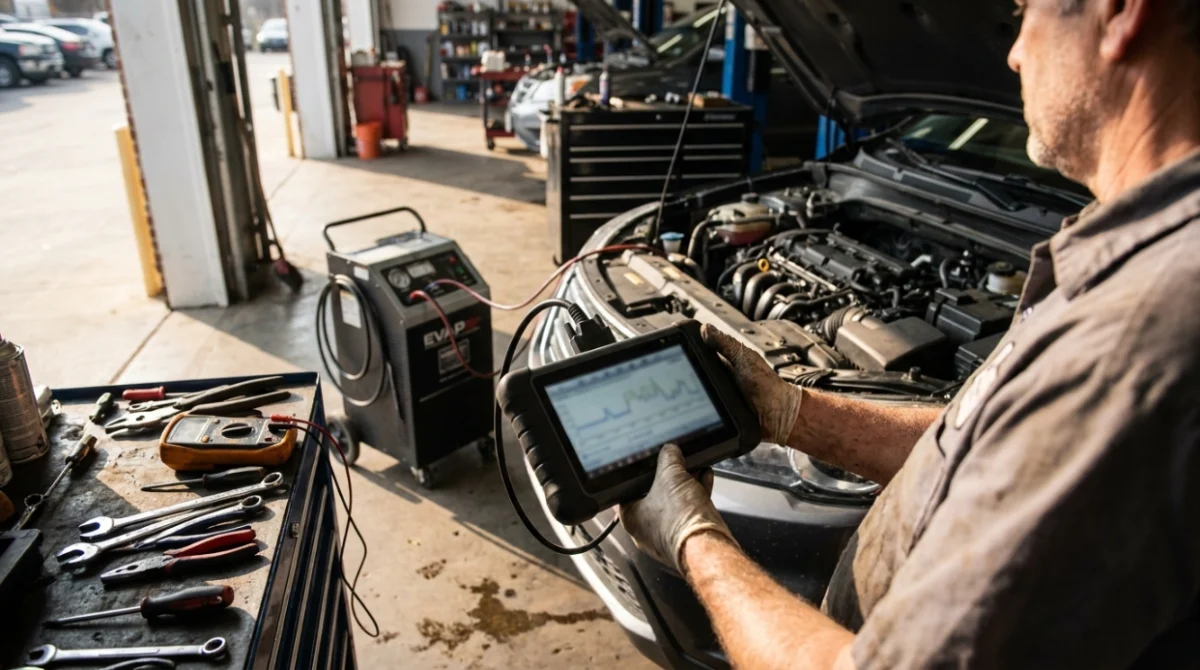
An OBD2 scanner should be your starting point because P0441 may appear with other codes. Those companion codes can completely change the diagnostic direction.
AAA notes that OBD2 codes give technicians important clues rather than automatically identifying a failed part.
Step 1: Scan Every Module or Available Powertrain Code
Connect your scanner with the ignition in the required position and read stored, pending, and permanent codes if your tool supports them.
Write everything down before clearing anything.
- P0440 may point toward a broader EVAP system malfunction.
- P0442 or similar leak codes suggest pressure integrity also needs investigation.
- P0443-type codes may indicate an electrical purge-control problem.
- Vent or pressure-sensor codes can redirect testing away from the purge valve.
Step 2: Save Freeze-Frame Data
Freeze-frame information records operating conditions around the time a code was stored. Depending on the vehicle, you may see engine speed, temperature, load, speed, or fuel-system data.
This can help separate an intermittent fault from one that occurs predictably during EVAP monitoring.
Step 3: Perform a Visual EVAP Inspection
Look before testing expensive components. A disconnected hose can defeat a perfect purge valve.
- Check the fuel cap and seal if your vehicle has one.
- Inspect accessible vapor hoses for cracks and loose connections.
- Look for pinched or collapsed lines.
- Check purge and vent valve electrical connectors.
- Inspect the charcoal canister for visible physical damage.
- Look for signs that previous engine work disturbed an EVAP connection.
Step 4: Check Purge Valve Operation
A bidirectional scan tool may let you command the purge valve under suitable conditions. Follow vehicle-specific service information because testing methods and expected readings vary.
If your scanner lacks active tests, a technician may use electrical checks, vacuum testing, or other manufacturer-approved methods.
Locksmith’s note: don’t apply battery voltage directly to an unfamiliar valve unless the service procedure specifically permits it. Control strategy and electrical specifications vary between vehicles.
Step 5: Use Live Data When Available
Advanced scanners may expose EVAP pressure or fuel-tank pressure data. The useful reading isn’t one universal number because manufacturers use different sensors and scaling.
Instead, look for plausible sensor response and compare it with the vehicle’s service information.
Step 6: Consider a Smoke Test
A professional smoke machine can help reveal leaking EVAP hoses, connections, valves, and canister faults. The system should only be tested using equipment and procedures designed for automotive EVAP systems.
Never improvise with compressed air, flame, or a homemade smoke source around fuel vapors.
Section Takeaway: scan first, save the evidence, inspect the system, then test components. Clearing P0441 before collecting freeze-frame and companion-code information can erase useful diagnostic clues.
How Do You Fix P0441 Step by Step?
The correct P0441 repair depends on what failed your testing. There is no universal part that fixes every vehicle.
Use this order to avoid unnecessary replacement.
- Confirm P0441: Read stored and pending codes and save freeze-frame information.
- Check for related codes: Diagnose electrical, pressure-sensor, or other EVAP codes that may affect purge monitoring.
- Inspect the fuel cap: Tighten it correctly and replace it only if its seal or mechanism is damaged.
- Inspect vapor lines: Repair disconnected, cracked, kinked, or restricted hoses using vehicle-appropriate parts.
- Test the purge valve: Confirm its electrical control and mechanical operation using manufacturer specifications.
- Inspect the vent side: Check the vent valve, filter, canister, wiring, and related plumbing.
- Test pressure feedback: Verify pressure-sensor data and circuits when scan data or related codes point there.
- Repair the confirmed fault: Replace or repair only the component proven defective.
- Clear the code: Erase P0441 after the repair rather than using code clearing as the repair itself.
- Verify monitor completion: Drive under normal conditions and recheck codes plus EVAP readiness status.
What if P0441 Returns After Replacing the Purge Valve?
If P0441 returns, stop replacing the same type of part. The original diagnosis may have missed a vent restriction, damaged hose, canister issue, wiring problem, or pressure-sensor fault.
I also check whether the installed replacement is correct for the exact vehicle application. Similar-looking valves don’t guarantee identical flow or control characteristics.
Before continuing, check manufacturer communications and recall information using your VIN through the NHTSA vehicle recall database. Manufacturer bulletins sometimes describe vehicle-specific EVAP diagnostic patterns that a generic code description cannot show.
Pro tip: use your VIN when looking up service information or replacement components. Model name alone may not distinguish engine, emissions package, build date, or updated parts.
Which P0441 Problem Should You Check First?
Start with tests that cost little and disturb the vehicle least. Move toward component replacement only after evidence points there.
| Possible Problem | What to Check | Useful Tool | Replace Immediately? |
|---|---|---|---|
| Fuel cap | Loose fit, damaged seal, cracked cap | Visual inspection | Only if defective |
| EVAP hose | Cracks, disconnection, kinks, restriction | Visual inspection / smoke test | Repair confirmed damage |
| Purge valve | Stuck open, stuck closed, incorrect operation | OBD2 scanner / vehicle-specific test equipment | Test first |
| Vent valve or canister | Blocked airflow, debris, physical damage | Scanner / smoke test / inspection | Test first |
| Pressure sensor or circuit | Implausible readings, wiring, connector faults | Live data / multimeter / service information | Only after verification |
The biggest DIY mistake is treating the diagnostic code as a parts list. P0441 describes what the computer detected, not necessarily which component caused it.
A basic code reader can confirm P0441. A scanner with live data and bidirectional controls can shorten diagnosis considerably on supported vehicles.
If testing requires removing the fuel tank, accessing difficult EVAP components, or diagnosing an electrical circuit you aren’t comfortable with, professional diagnosis is usually the safer route.
Pro tip: ask the shop for the diagnostic result, not just the replacement-part recommendation. A good explanation should connect the failed test to the proposed repair.
Can You Drive With a P0441 Code?
A vehicle with P0441 alone may still appear to drive normally because the code concerns the evaporative emissions system. That does not mean you should ignore the warning light.
EVAP faults can increase emissions, prevent emissions-readiness completion, or hide another problem that requires diagnosis.
If the check-engine light is flashing, treat the situation differently. A flashing malfunction indicator can indicate a more urgent engine problem such as a misfire.
Honda’s owner guidance, for example, instructs drivers to respond differently to a blinking malfunction indicator than a steady one. Always follow the instructions in your own vehicle’s manual.
You can review manufacturer-style warning guidance through Honda’s malfunction-indicator information as an example, but your vehicle’s instructions take priority.
Will P0441 Clear Itself?
The check-engine light can turn off after the computer completes enough successful tests, but that doesn’t prove the original problem permanently disappeared. Intermittent EVAP faults can return when the monitor runs again.
Don’t disconnect the battery simply to make the light disappear. Doing so may reset readiness monitors and remove useful diagnostic information.
After repairing the confirmed fault, clear the code with your scanner if appropriate. Then drive normally until the EVAP monitor has an opportunity to run.
EVAP monitors often require specific operating conditions, so they may not complete immediately after repairs. Temperature, fuel level, soak time, speed, and other enable criteria can vary by manufacturer.
Section Takeaway: a steady P0441 warning is normally a diagnose-soon problem, not permission to ignore the car indefinitely. A flashing check-engine light, poor running, fuel odor, or other abnormal symptoms deserve more urgent attention.
P0441 FAQ
What is the most common fix for P0441?
There isn’t one guaranteed fix. Common repair areas include a faulty purge valve, damaged or restricted EVAP hose, vent-system fault, fuel-cap problem, charcoal-canister issue, or incorrect pressure-sensor feedback.
Can a bad gas cap cause P0441?
A loose or defective gas cap can cause EVAP-related check-engine problems, so it should be inspected. However, P0441 specifically concerns incorrect purge flow, which means you shouldn’t assume the cap is responsible without diagnosing the rest of the system.
Can a bad purge valve cause P0441?
Yes. A purge valve that doesn’t open, doesn’t close, leaks, or responds incorrectly can prevent the EVAP system from producing the flow and pressure changes the computer expects.
Can I fix P0441 myself?
Basic checks such as scanning codes, inspecting the fuel cap, and looking for disconnected hoses are reasonable DIY tasks. Electrical testing, smoke testing, tank-area repairs, and bidirectional diagnosis may require professional tools and vehicle-specific service information.
Does P0441 mean there is an EVAP leak?
Not necessarily. P0441 describes incorrect purge flow, while other OBD2 codes are used for specific EVAP leak conditions, although leaks and purge-flow faults can occur together.
Should I replace the purge valve as soon as I see P0441?
No. Scan for companion codes and inspect hoses, electrical connections, the vent path, canister, and pressure feedback first. Replacing an untested purge valve can leave the real fault untouched.
How do I know the P0441 repair worked?
Clear the code after completing the repair, then recheck for pending or stored faults after normal driving. The strongest confirmation is that P0441 stays away and the EVAP readiness monitor eventually completes successfully.
Final Takeaway: Fix the Cause, Not Just the P0441 Code
The best way to fix P0441 is to treat it as a diagnostic starting point. Confirm the code, inspect the EVAP system, test the purge and vent functions, repair the proven fault, and verify the monitor afterward.
Start simple. A few minutes spent checking scan data, hoses, connectors, and the fuel cap can keep you from buying a purge valve or canister you never needed.
If P0441 keeps returning after basic checks, use vehicle-specific service information or have a qualified technician perform smoke, electrical, and bidirectional testing. That is usually faster than guessing.
