
Key Fob Out of Sync With Your Car: How to Diagnose and Fix It Fast

If your key fob out of sync with car symptoms showed up suddenly, don’t assume the fob is dead. In a lot of cases, the problem is a weak battery, a temporary communication glitch, or a vehicle-side issue that looks like a fob failure.
The good news: you can usually narrow it down in a few minutes. The trick is to test the fob, the car, and the battery separately instead of guessing.
What “Out of Sync” Usually Means
When a key fob is out of sync, the car and the fob are no longer communicating the way they should. That can happen with remote lock/unlock, passive entry, or push-button start.
People often use “sync,” “programming,” and “battery problem” interchangeably, but they point to different fixes:
- Battery issue: The fob still has the right code, but it can’t transmit reliably because power is low.
- Out of sync / relearn issue: The fob and car need to re-establish communication after a reset, battery change, or electrical event.
- Programming issue: The fob may need to be paired again, or the vehicle may require specialized programming tools.
A weak battery can mimic a sync problem so well that it sends people down the wrong path. Before you assume the fob has lost its programming, check the battery and your distance from the vehicle first. See RAC’s guidance on what to do when a key fob stops working.
Quick Symptom Check: What Works and What Doesn’t
The symptom pattern tells you a lot.
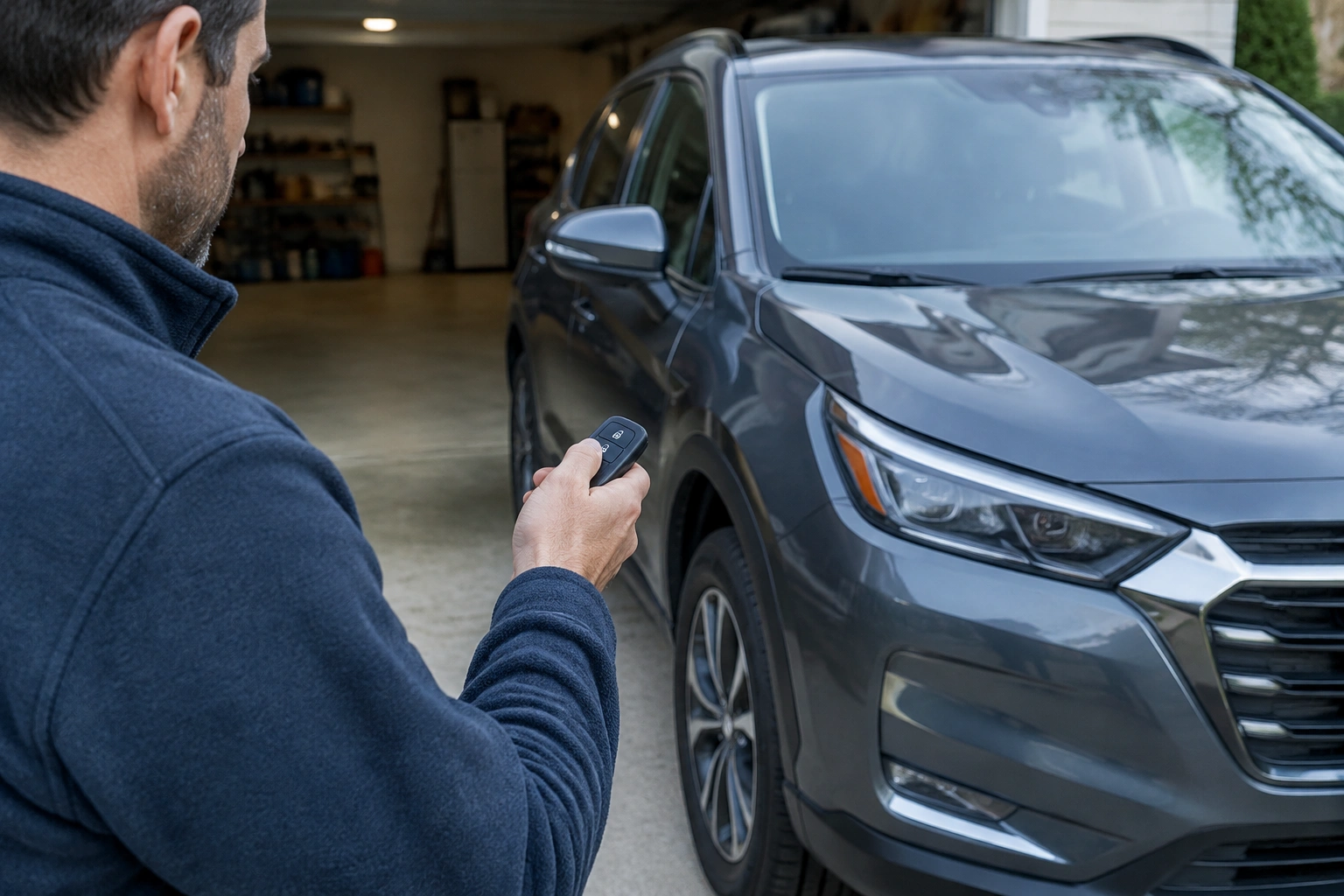
If none of the buttons work
That usually points to one of three things:
- a dead or very weak key fob battery
- a damaged fob
- a car-side receiver problem
If the fob is completely silent, try the spare first. If the spare works, the original fob is the likely problem.
If the doors unlock but the car won’t start
That often means the fob is still sending some signal, but the car’s immobilizer or start authorization isn’t accepting it. This is common on push-button start systems.
If the fob works only very close to the car
That points toward a weak battery or a range problem. If you have to press the fob against the start button or hold it right next to the handle, don’t ignore it. The fob may be on its last legs.
If it worked before a battery change or repair
That timing matters. A battery disconnect, fob battery swap, or vehicle repair can expose a relearn issue that wasn’t obvious before.
Most Likely Causes, From Common to Less Common
Here’s the order I’d check them in, based on the kind of failures I used to see in the shop.
| Likely cause | Typical clue | Best next step |
|---|---|---|
| Weak key fob battery | Short range, intermittent response, works only close up | Replace the fob battery first |
| Dead or weak car battery | Multiple electrical oddities, slow cranking, no response from the car | Test the vehicle battery |
| Lost sync after battery disconnect or repair | Fob used to work, then stopped after service | Try the owner’s manual relearn procedure |
| Damaged fob | Battery is new, but the fob still acts dead | Test a spare or replace the fob |
| Vehicle receiver or immobilizer issue | More than one fob fails | Seek diagnosis from a locksmith or dealer |
That last point is important: if both your original fob and spare fail, the problem is probably not the battery in the fob. It may be the car itself.
Fast Checks You Can Do in Minutes
Before you try any programming steps, do these quick checks.
1) Get close to the vehicle
It sounds simple, but range matters. Don’t test the fob from inside the house or across a parking lot and assume it’s broken. Interference and distance can make a healthy fob seem dead.
2) Try the spare key fob
This is the fastest way to separate a fob problem from a car problem.
- Spare works: the original fob is the likely culprit
- Spare also fails: look at the car battery, receiver, or immobilizer
3) Check the car battery
A weak vehicle battery can create weird keyless-entry behavior. If the car has been sitting, cranks slowly, or other electronics are acting up, the vehicle battery deserves attention before you blame the fob.
4) Replace the fob battery if it’s been a while
If you can’t remember the last battery change, replace it. Fob batteries often last years, but not forever. If the symptoms are intermittent, that’s especially worth doing.
After the battery swap, inspect the inside of the fob for physical damage, corrosion, or a loose battery contact. Sometimes a “battery problem” turns out to be an underlying hardware issue.
5) Try the emergency start position
Many vehicles will detect the fob if it’s held near a specific spot, such as the start button or a marked sensor area. Your owner’s manual should show the exact location.
For a deeper walkthrough of start-related failures, see our guide on how to start a car when the key fob is not detected.
Battery Replacement vs. True Sync Problem
A lot of fob complaints disappear after a battery swap, which is why I tell people to treat the battery as the first suspect.
Use this quick decision rule:
- Replace the fob battery first if the range is short, the response is inconsistent, or the battery is old.
- Test the spare fob to see whether the issue is isolated to one fob or affects the car.
- Check the car battery if multiple systems seem weak or the car has been sitting.
- Try a manual relearn only if the owner’s manual lists a user-level procedure.
- Stop and seek professional programming if both fobs fail, the vehicle has immobilizer or proximity issues, or the relearn doesn’t work.
Battery replacement is the quickest, lowest-risk step. It’s also cheaper than replacing the whole fob or paying for programming you may not need.
But if the battery is new and nothing changes, don’t keep swapping batteries and hoping for a different result. At that point, you may be dealing with damaged electronics or a vehicle-side issue.
How to Resync or Relearn the Key Fob
This is where a lot of people get tripped up: there is no universal resync method that works on every car.
Some vehicles have a simple relearn procedure. Others require a scan tool or specialized programming. The owner’s manual is the safest place to look for the exact steps for your make and model.
A general DIY relearn attempt usually makes sense when:
- the fob battery is good
- the car battery is healthy
- the problem started after a battery change, repair, or long storage
- the vehicle manual lists a user-level sync procedure
If your manual provides a procedure, follow it exactly. Don’t improvise with random button sequences from the internet. On some vehicles, the steps are very specific about timing, door position, ignition mode, or whether one or more fobs must be present.
If the relearn works, test every function: lock, unlock, trunk release, panic button, and push-button start if equipped. A partial success can hide a second problem.
If the manual doesn’t list a DIY procedure, or the relearn fails after one careful attempt, move on rather than repeating the same steps over and over. That’s usually the point where professional programming is the better next step.
If the Fob Unlocks the Car but Won’t Start It
This is a common and frustrating partial failure.
The reason is that some vehicles split the job into separate systems:
- remote keyless entry (RKE) for locking and unlocking
- passive entry for hands-free access
- vehicle immobilizer system for engine authorization
So a fob can still unlock the doors but fail to start the engine. That doesn’t automatically mean the fob is dead. It may mean the start authorization signal is weak, the battery is low, or the car isn’t reading the fob correctly.
If this happens:
- Try the emergency start method in the owner’s manual.
- Test the spare fob.
- Check whether the vehicle battery is weak.
- If both fobs unlock but neither starts the car, the issue may be on the vehicle side.
For a related symptom breakdown, our article on why a car won’t start but the key fob unlocks the doors walks through the most common causes.
How to Tell Whether the Problem Is the Fob or the Car
This is the decision point that saves the most time.
The fob is probably the problem if:
- the spare works normally
- the original fob has weak range
- the fob was dropped, soaked, or damaged
- a fresh battery doesn’t restore function
The car is probably the problem if:
- both fobs fail
- the car battery is weak
- the car only has issues after electrical work or a battery disconnect
- the vehicle won’t recognize any fob, even close to the sensor
A damaged fob can’t always be “fixed” by reprogramming. And sometimes the car’s receiver unit is the real failure point. That’s why testing a spare matters so much.
When to Consult a Locksmith
If your DIY checks don’t solve it, this is the point to bring in a professional.
Call a locksmith or dealer if:
- both fobs fail
- the car requires specialized programming
- the relearn procedure doesn’t work
- the fob was physically damaged
- the vehicle’s immobilizer or receiver seems suspect
An automotive locksmith can often program many vehicles, cut replacement keys, and diagnose common fob and immobilizer problems on-site. A dealer is more likely to be needed for certain proprietary systems, restricted security access, or when factory-level programming is required.
Some newer vehicles use rolling security codes or more advanced proximity systems, but that does not automatically mean the dealer is the only option. The right choice depends on the make, model, year, and the specific system involved.
Emergency Backup Entry and Start Options
Don’t wait until you’re stranded to learn the backup method.
Most vehicles have at least one of these:
- a hidden physical key inside the fob
- a manual door lock access point
- an emergency start location near the push-button start
- a designated sensor area for a dead fob
The exact method varies, so check the owner’s manual before you need it. If you know where the backup key is and how to use the emergency start feature, a dead or out-of-sync fob becomes an inconvenience instead of a tow.
If your car already says the fob is not detected, our guide on what to do when the key fob is not detected but the car still starts covers the same backup-start idea from a different angle.
How to Prevent Future Sync Problems
A few habits reduce repeat issues:
- replace the fob battery before it gets completely weak
- check the fob after battery disconnects or electrical repairs
- avoid storing the car for long periods with a weak vehicle battery
- keep the spare fob tested occasionally so you know it still works
- keep the fob dry and avoid impact damage
Some vehicles also need reprogramming after certain repairs or battery replacements, while others do not. Your owner’s manual is the deciding factor, so check it before assuming a reset is required.
If the fob starts acting up right after service, don’t assume the timing is a coincidence. That’s often when a relearn issue shows itself.
Bottom Line
If your key fob is out of sync with the car, the fastest path is simple: replace the fob battery first, test the spare, confirm the car battery is healthy, then follow the owner’s manual for any relearn steps.
If one fob works and the other doesn’t, the original fob is probably the issue. If both fail, look at the vehicle side. And if the car uses a more advanced security system, don’t waste time on random reset tricks that don’t match your model.
FAQ
How do I know if my key fob needs a new battery or reprogramming?
If the range is getting worse or the fob only works close to the car, start with the battery. If a new battery doesn’t help and the spare fob works, the original fob may need repair or replacement. If both fobs fail, the issue is more likely on the vehicle side.
Can I resync a key fob myself?
Sometimes. Some vehicles have a user-level relearn procedure in the owner’s manual. Others require professional programming tools. If your manual doesn’t list a DIY method, or the first attempt fails, stop and get help.
Will disconnecting the car battery make the key fob stop working?
It can on some vehicles. Others are unaffected. If the problem started after a battery disconnect, repair, or replacement, check the manual for relearn steps.
Do I need a dealer to program a key fob?
Not always. Many vehicles can be programmed by an automotive locksmith, while some systems do require dealer or factory-level access. It depends on the vehicle and the security system.
