
Key Fob Receiver Problem Symptoms: How to Tell When the Car Is the Issue

If your key fob has suddenly become unreliable, the receiver in the car is one possible culprit—but it is not the first one I’d blame. A weak fob battery, a damaged remote, or a low vehicle battery can create very similar symptoms.
The key is to look for patterns. Does one fob act up while the spare works? Do both fobs fail the same way? Does the problem get worse near buildings or in a parking garage? Those clues matter.
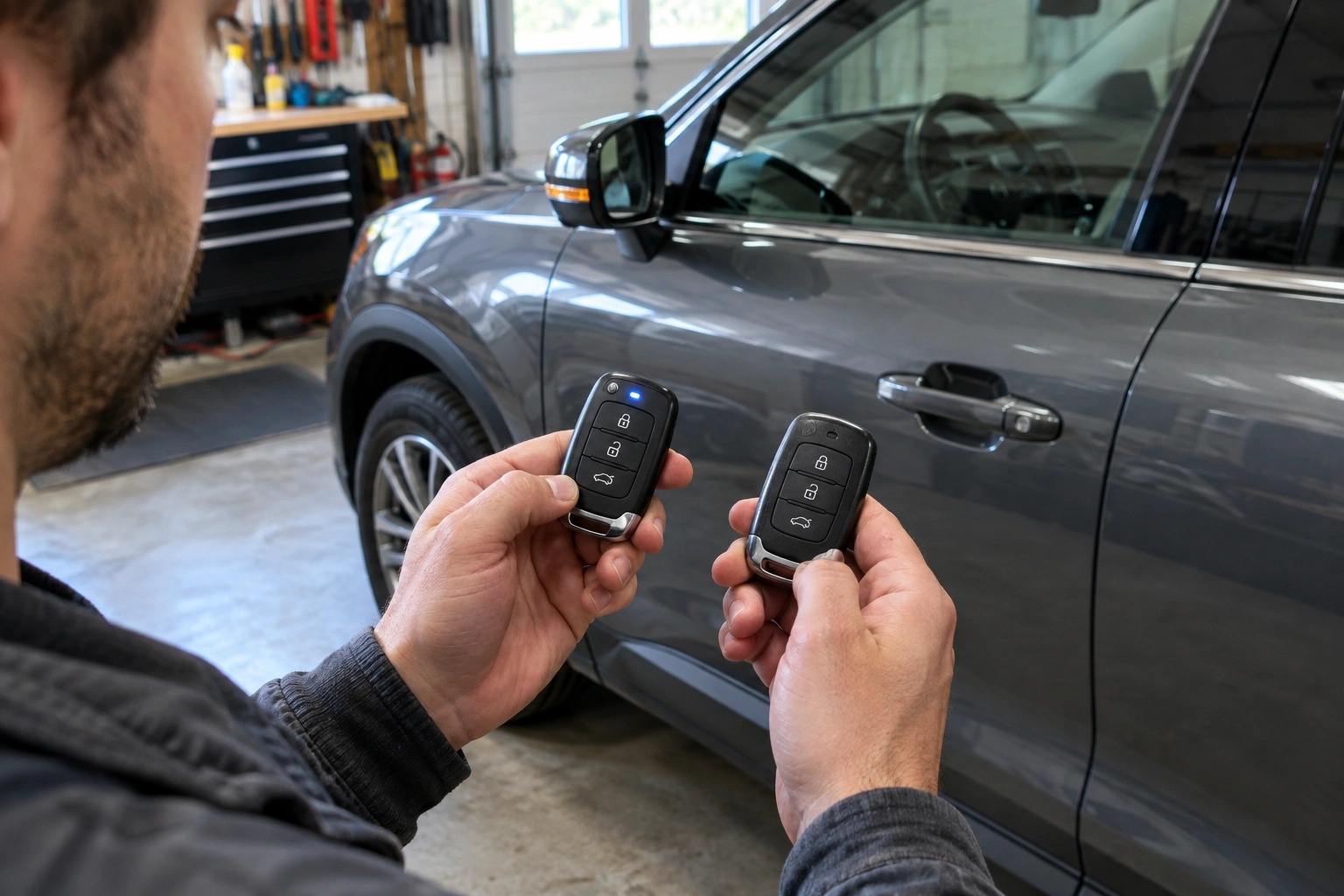
Quick symptom check: receiver problem vs. dead fob battery
A receiver issue usually shows up as the car not reacting consistently to a fob that seems to be transmitting normally. A dead or weak fob battery usually shows up as the fob itself becoming weak, unreliable, or completely unresponsive.
Use this tighter symptom-by-symptom comparison:
-
One fob fails, but the spare works normally
More likely: the original fob, not the receiver. -
Both fobs fail the same way
More likely: the receiver, antenna module, fuse, BCM, or vehicle power supply. -
Range is much shorter than usual on both fobs
More likely: vehicle-side issue, interference, or low vehicle voltage. If it affects only one fob, the fob battery is more likely. -
The car ignores button presses even with a fresh fob battery
More likely: receiver-side fault, antenna issue, or BCM issue. -
The fob works only when held very close to the car
More likely: weak fob battery, weak signal path, or a receiver/antenna sensitivity problem. -
The fob works in one place but not another
More likely: interference or a location-based signal issue, not necessarily a failed receiver. -
Passive entry works, but button presses do not
More likely: fob button or transmitter-side issue. -
Button presses work, but passive entry does not
More likely: vehicle-side passive entry receiver, antenna, or sensor issue.
That last point matters. Standard Auto Part notes that keyless entry problems can show up near large buildings, in garages, or in busy urban areas where signal interference is more common. Standard Auto Part
If the symptom is only “it works sometimes,” don’t jump straight to receiver replacement. Intermittent behavior is where dead fob batteries, weak vehicle batteries, and receiver faults overlap.
The fastest way to separate a receiver problem from a fob problem
The simplest rule is this: if the problem follows the fob, suspect the fob. If the problem stays with the car, suspect the car-side system.
Here’s how that looks in real life:
- Only one fob fails: the original fob is usually the likely problem.
- A spare fob works normally: that points away from the receiver and toward the original fob.
- Both fobs fail the same way: the receiver, antenna module, fuse, body control module, or vehicle power supply becomes more likely.
That “spare fob test” is one of the best first steps because it gives you a clean comparison. Keyless Entry Remote explains the same basic logic: if the spare works, the original fob is likely at fault; if neither works, the issue may be with the car itself. Keyless Entry Remote
A damaged fob can also create confusing symptoms. If the remote was dropped, soaked, or has a cracked shell, the buttons or internal board may fail even if the battery is good. RAC also notes that damage to the fob, battery, or housing can stop it from working properly, and some faults require reprogramming. RAC Drive
Comparison table: receiver issue vs. common lookalikes
| Symptom pattern | More likely cause | Best first test |
|---|---|---|
| One fob fails, spare works | Bad fob battery, damaged fob, or fob programming issue | Replace the fob battery, then test the spare |
| Both fobs fail at the same time | Vehicle receiver, antenna module, fuse, BCM, or vehicle power issue | Test the vehicle battery and related fuses |
| Range is suddenly much shorter | Weak fob battery, interference, or receiver-side issue | Try the fob in a different location and with a fresh battery |
| Works only very close to the car | Weak transmitter signal, interference, or receiver sensitivity issue | Test with the spare fob and away from buildings |
| Buttons do nothing at all | Dead fob battery, damaged fob, or receiver not seeing the signal | Check the fob battery and then test the spare |
| Passive entry works but button presses do not | Fob button/transmitter problem | Try the spare fob and test the button response separately |
| Button presses work but passive entry does not | Vehicle passive entry receiver, antenna, or BCM issue | Try passive entry from different sides of the car |
| Problem appeared after a weak car battery | Low vehicle voltage affecting the keyless entry system | Charge or replace the vehicle battery first |
That table is not a diagnosis by itself, but it gives you a practical starting point. The point is to see whether the failure is attached to one remote or to the vehicle.
Most likely causes, ranked from easiest to check to more serious
When a key fob acts up, I’d think about the causes in this order:
-
Weak or dead fob battery
This is still the most common easy fix. A weak battery can shorten range, cause delayed response, or make the fob seem dead in some situations but not others. -
Interference or location-based signal issues
Parking structures, crowded city areas, and some buildings can weaken the signal enough to make a working system seem faulty. -
Damaged fob or bad battery contact
A drop, water exposure, or corroded contacts can make one fob unreliable. -
Weak vehicle battery or low system voltage
Low voltage can disrupt modules that handle locking and keyless entry, creating symptoms that look like a receiver problem. -
Fuse, antenna module, or body control module issue
If the car-side electronics are not powering up or receiving signals properly, multiple fobs may fail. -
Programming or synchronization fault
Some problems are not hardware failures at all. A fob can lose sync or need reprogramming after a battery issue, repair, or module event.
Step-by-step tests to isolate the problem
You do not need special tools for the first round of troubleshooting.
1) Replace the fob battery first
This is the cheapest test and often the fastest answer. If the battery is old, swapping it out removes one major variable. If range and response improve right away, you likely found the issue.
2) Test the spare key fob
If the spare works normally, you have a strong clue that the original fob is the problem. If both fobs fail the same way, move your attention to the car.
3) Try the fob from different distances and positions
This is especially useful when you suspect a receiver-side fault. Try the fob:
– from very close to the driver door,
– from a few feet farther back,
– from the passenger side,
– and from inside the car.
If the fob only works from one tiny spot, that can point to an antenna or receiver coverage issue on the vehicle side. If it works much better when you stand near one door or near a specific area of the car, that also suggests a vehicle-side reception problem rather than a completely dead fob.
4) Separate passive entry from button presses
If your vehicle supports passive entry, test that separately from the lock/unlock buttons.
- If button presses fail but passive entry works, the fob transmitter or button circuit is more suspect.
- If button presses work but passive entry fails, the vehicle’s passive entry receiver, antenna, or related module is more likely.
That split can help you avoid blaming the wrong side of the system.
5) Check the vehicle battery
A weak car battery can create odd electrical symptoms before the car refuses to start. If the battery is old, slow-cranking, or recently discharged, address that before blaming the receiver.
6) Inspect related fuses
If your owner’s manual or service information identifies a fuse tied to the keyless entry system, check it. A blown fuse can make the receiver appear dead even when the fob is fine.
7) Watch whether the fault stays with the car
This is the key decision point. If both fobs fail, the problem is likely on the vehicle side. If only one fob fails, the fob itself is the better suspect.
For a deeper look at fob-side damage symptoms, see our guide on key fob circuit board damage symptoms. If your car says the fob is not recognized at all, our article on key fob not recognized by car can help you narrow that down further.
What it means if multiple key fobs fail at once
When more than one fob stops working at the same time, I stop thinking “bad remote” and start thinking “vehicle-side problem.”
That does not automatically mean the receiver itself is dead. The fault could also be:
- a blown fuse,
- a weak vehicle battery,
- an antenna issue,
- a body control module problem,
- or a programming/sync issue.
Also, some “receiver” complaints are really antenna or BCM problems. On some vehicles, the receiver is a separate part; on others, it is built into the antenna module or integrated into the body control module. That matters because a separate receiver may be replaceable on its own, while an integrated design can require module-level repair, programming, or replacement.
But simultaneous failure does make the car’s system much more suspicious than the individual remotes. If both fobs died right after the vehicle battery went weak or the car was jump-started, low voltage is especially worth checking.
This is also where symptoms can overlap with “works near the driver door only” behavior. If the fob seems to respond only in a tiny area, the issue may be signal strength, antenna placement, or a receiver-side fault. We cover that pattern in more detail in our guide to why your key fob works near the driver door only.
When reprogramming or a reset might help
Not every keyless entry problem is a failed part. Sometimes the fob and vehicle just need to be re-synced.
Reprogramming is worth considering when:
- the fob used to work and suddenly stopped after a battery event,
- the car responds inconsistently but the hardware checks out,
- or a replacement fob was installed and never paired correctly.
That said, reprogramming is not a cure-all. If the receiver, antenna, or BCM has a hardware fault, no amount of syncing will make it work reliably. RAC notes that some fob faults require reprogramming by the manufacturer, which is why it makes sense to rule out batteries and damage before assuming the worst. RAC Drive
Repair options for receiver-side faults
If the problem really is on the vehicle side, the realistic repair path usually looks like this:
- Replace a blown fuse if one is tied to the keyless entry system.
- Repair or replace the antenna module if the car is not receiving the signal well.
- Check the body control module if the issue affects multiple functions, not just the fob.
- Reprogram the system if the fault is software or pairing related.
- Replace the receiver or related module if the hardware has failed.
One important detail: some vehicles use a separate receiver, while others build the receiver into the antenna module or BCM. If the receiver is integrated, the repair may involve replacing the larger module rather than a small standalone part. That changes both the repairability and the cost.
Some of these are straightforward, but others require manufacturer-level diagnostics. That is especially true when the car has no response from multiple fobs and the vehicle battery is known to be good.
When to Consult a Locksmith
A locksmith or dealer becomes the better next step when basic checks do not narrow it down.
Call for professional help if:
- both fobs fail after you’ve replaced the fob battery,
- the vehicle battery checks out but the car still ignores the remotes,
- the keyless entry works only intermittently with no clear pattern,
- or you suspect a BCM, antenna, or immobilizer-related issue.
An automotive locksmith can often test, reprogram, or replace a fob faster than most owners can sort through the guesswork. A dealer may be the better choice if the vehicle needs module-level diagnostics or manufacturer programming.
Bottom line
The best way to spot key fob receiver problem symptoms is to compare the behavior of the fob, the spare fob, and the vehicle itself. One bad remote usually points to the remote. Multiple failing remotes, especially with a healthy vehicle battery, point more toward the car-side system.
Work through the simple checks first: fob battery, spare fob, vehicle battery, fuses, and location-based interference. If the fault stays with the car after that, you’ve narrowed it down enough to make a smart repair decision instead of guessing.
FAQ
How do I know if my key fob receiver is bad?
If both the main fob and the spare fail the same way, but the fobs have good batteries, the car-side receiver, antenna, fuse, or BCM becomes more likely.
Can a dead key fob battery look like a receiver problem?
Yes. A weak battery can cause short range, delayed response, or total failure, which can look very similar to a receiver issue.
Why does my fob work only near the car?
That can happen with a weak fob battery, interference, or a vehicle-side antenna or receiver problem. Testing from different sides and distances can help separate the cause.
Can a weak vehicle battery affect keyless entry?
Yes. Low vehicle voltage can cause unusual electrical behavior and may interfere with keyless entry modules.
Do I need to replace the whole receiver?
Not always. On some vehicles the receiver is separate, but on others it is integrated into the antenna module or BCM. That affects whether the part can be replaced on its own.
