
Why Your Key Fob Works Near the Driver Door Only: How to Diagnose the Real Problem

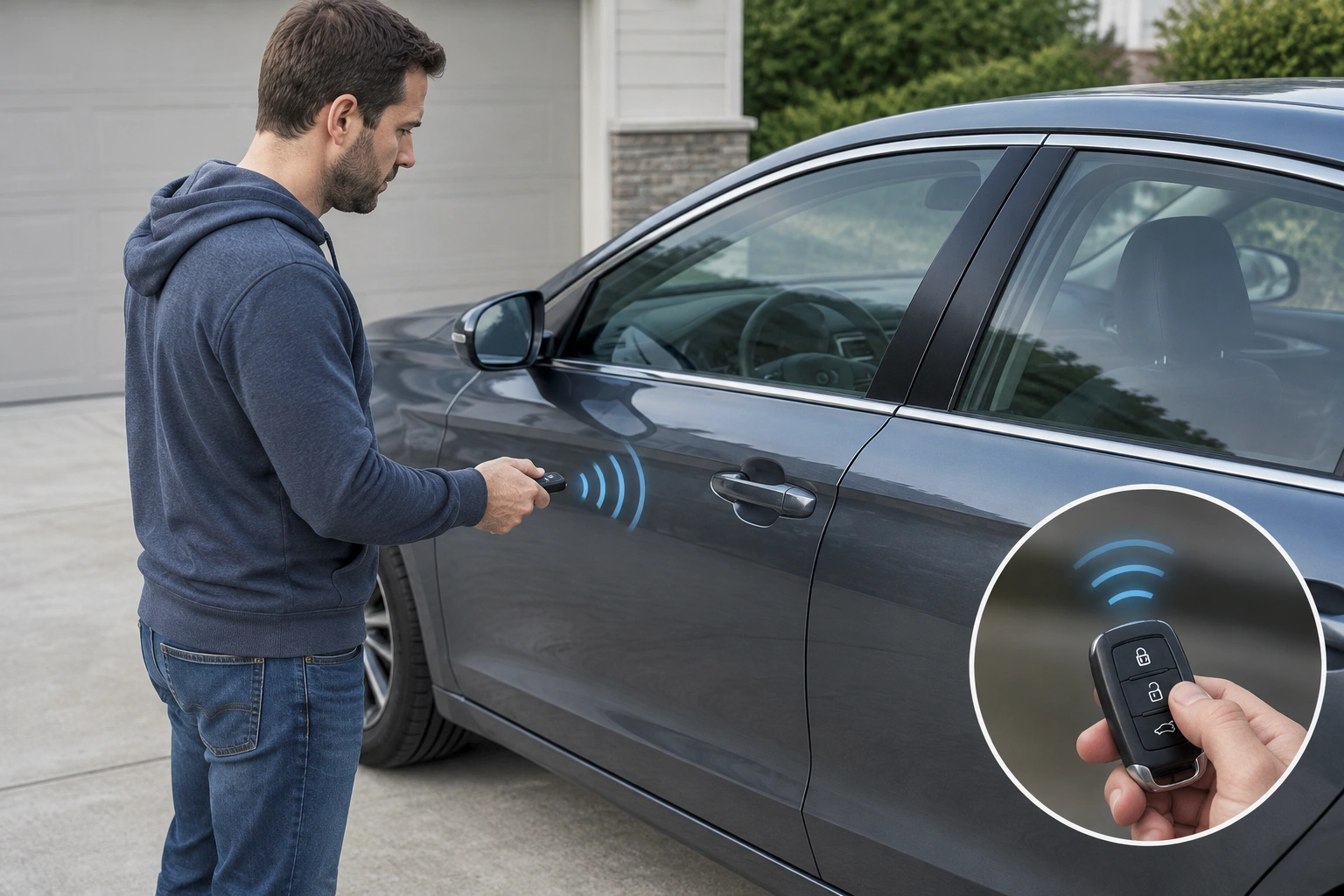
If your key fob works near driver door only, you’re usually dealing with a weak signal issue rather than a total failure. In plain English, the fob is still sending a signal, but the car is having trouble hearing it unless you stand close to one specific area.
That can happen for a few different reasons: a weak key fob battery, low vehicle battery voltage, radio interference, or a problem on the car side such as a receiver antenna or keyless entry module. The good news is that you can narrow it down pretty quickly without guessing or replacing parts blindly.
What the symptom is really telling you
A key fob has a limited radio range even when everything is working normally. If the range suddenly drops to just a few feet, or the fob only works by the driver door, that usually means the signal is being weakened somewhere along the way.
The important detail is where the fob still works. If it works only at the driver door but not the passenger side, rear hatch, or from farther away, that often points to one of two things:
- the fob signal is weak
- the car’s receiver is only picking up the signal well in one area
Some vehicles have antenna placement that makes one side easier to “hear” than another, especially on smart key systems. For example, a normal setup might place a receiver antenna closer to the driver door so the car responds more readily there, while a fault can make that same “driver-door-only” behavior sudden or much more extreme than before. That’s why location-specific behavior matters. It can look random, but it often isn’t.
Quick symptom check: what exactly is failing?
Before you replace anything, figure out which function is acting up.
If lock and unlock both fail from a distance
That leans toward a weak fob battery, low vehicle battery voltage, or interference.
If lock/unlock works, but passive entry does not
Passive entry is usually more sensitive to weak signal issues. A fob battery that still has some life left can sometimes handle button presses better than hands-free entry.
If only passive entry or push-start fails while the buttons still work, start with the fob battery and then test the fob from inside the vehicle. If it works better when you’re inside or very close to the start area, that often suggests the fob is still transmitting but not strongly enough for the car’s passive-entry or start antennas to read it well. If the buttons work normally but passive entry does not, that can also point to the vehicle-side receiver/antenna path rather than a dead fob.
If the car won’t detect the fob for push-button start
That can still be a fob battery issue, but it can also point to low vehicle voltage or a receiver problem. If the car only starts when you hold the fob very close to the start button or steering column, the signal is borderline.
If both fobs act the same way
That shifts suspicion away from the fob battery and toward the vehicle itself. Shared symptoms usually mean the problem is on the car side, not with one individual remote.
Most likely causes, from simplest to more serious
Here’s the order I’d check things in, based on the symptom pattern.
1. Weak key fob battery
This is the easiest place to start. A weak coin-cell battery can reduce range before the fob stops working completely. Many owners notice the first clue is shorter range, not a dead fob.
2. Low vehicle battery voltage
A car battery can be weak enough to affect keyless entry even if the engine still starts. That surprises people. The vehicle may have enough power to crank, but not enough stable voltage for the smart key system to behave normally.
If the issue showed up after the car sat unused, after a cold snap, or after a jump-start or battery replacement, low voltage moves higher on the list. Look for other low-voltage clues such as slow cranking, dim lights, warning messages, or odd electrical behavior. Those signs don’t prove the battery is the cause, but they do make it more suspicious.
3. RF interference
Nearby electronics, parking garages, metal structures, and some high-signal areas can interfere with the fob’s radio signal. If the problem happens in one parking spot but not another, interference is worth suspecting.
4. Spare-fob difference
If one fob works normally and the other doesn’t, the problem is probably in the weak fob itself. If both behave the same, look at the car.
5. Receiver or antenna fault
If the fob only works near one side of the car, or only very close to the driver door, a receiver antenna or keyless entry module issue becomes more likely. On some vehicles, antenna placement can also create a noticeable “best spot” near the driver side, but a sudden change in range still deserves attention.
A practical troubleshooting order that actually helps
You do not need a scan tool for the first round of checks.
Step 1: Try the spare key fob
If you have one, test it in the same spot. This is the fastest way to separate a fob problem from a vehicle problem.
- Spare works normally: your original fob battery or fob electronics are the likely issue.
- Spare acts the same: focus on the car battery, interference, antenna, or receiver.
Step 2: Replace the fob battery if it’s old or unknown
This is a cheap, reasonable first move if the battery has been in the fob for a while. It’s especially sensible if the problem is gradual, not sudden.
Don’t expect this to fix everything if both fobs are weak in the same way. But if one fob battery is tired, range often improves right away after replacement.
Step 3: Check whether the problem changes location
Try the fob in a different driveway, a different parking lot, or away from large metal structures. If it works fine somewhere else, interference is a stronger possibility than a broken receiver.
Step 4: Look for other low-voltage clues
Slow cranking, dim lights, warning messages, or odd electrical behavior can all fit a weak vehicle battery. Even if the engine starts, low voltage can still upset the keyless entry system.
For a broader look at no-detection symptoms, our guide on what to do when the key fob is not detected near the car explains the overlap between fob, battery, and vehicle-side issues.
Step 5: Test the backup start method if your car has one
If passive entry or push-start is the main issue, use the car’s backup method. That can help confirm the fob is still transmitting something, just not strongly enough for normal operation. If you need a refresher, see how to start a car when the key fob is not detected.
How to tell fob battery, car battery, and receiver problems apart
Here’s the simplest comparison.
| Symptom pattern | Most likely cause | What it usually means |
|---|---|---|
| Range is weak on both fobs | Car battery, receiver, interference | The car side is more suspicious than the fob |
| One fob works better than the other | Fob battery or fob electronics | Replace or test the weaker fob first |
| Works only very close to driver door | Receiver/antenna issue or weak signal | The car may be hearing the fob poorly in most locations |
| Works in one parking area but not another | RF interference | The vehicle may be fine |
| Buttons work, but passive entry fails | Weak fob battery or signal sensitivity | The fob may be borderline, not dead |
| Push-start fails unless fob is held close | Weak signal, low vehicle voltage, or backup-mode issue | The system is struggling to read the fob normally |
A few extra clues can help separate the causes:
- If the symptom improves after replacing the car battery or after a full charge, that points more toward low vehicle voltage than a bad fob.
- If the fob works better from inside the vehicle than from outside, that suggests the fob is still transmitting but the normal passive-entry or receiver path is weak.
- If the driver door is the only reliable spot, that can be normal on some vehicles, but a sudden driver-door-only bias is more suspicious than a design quirk.
A fob battery problem usually affects range first. A vehicle battery or receiver issue often affects both fobs in the same way. Interference is the one that tends to look inconsistent.
Why interference or location can make it seem random
This is one of the most frustrating parts of the diagnosis. The fob may work perfectly in your driveway, then act dead at the grocery store.
That doesn’t always mean the fob is failing. Radio signals can be affected by:
- parking garages
- large metal buildings
- other electronic devices nearby
- dense key rings or metal objects close to the fob
- certain parking locations with strong local interference
If the problem shows up only in one spot, don’t rush to replace the car’s receiver. Move the vehicle, test again, and see whether the symptom follows the car or the location.
When to replace the key fob battery, and when not to
Replace the fob battery first if:
- the battery is old or unknown
- range is weak but not completely dead
- only one fob is affected
- the problem got worse gradually
Hold off and test the vehicle first if:
- both fobs behave the same
- the issue started after the car battery went weak or was disconnected
- the problem only happens in one location
- the fob battery was replaced recently
That decision rule saves time and avoids the common mistake of throwing batteries at a car-side problem.
When to suspect the vehicle battery, antenna, or keyless entry module
If both fobs have the same short range, I’d look past the fob battery and pay more attention to the vehicle.
A weak car battery can create weird keyless entry behavior even when the car still starts. If the symptom came on after the car sat unused, after cold weather, or after another electrical issue, low voltage moves higher on the list.
If the fob works only by the driver door, that can also fit a receiver or antenna problem. Some vehicles place antennas in locations that make one side of the car more responsive, so a driver-door-only pattern is not automatically a fault. The difference is whether that pattern has always been there or whether it changed suddenly. A new or extreme range drop, especially if the passenger side and rear area stop responding almost entirely, is more suggestive of a receiver/antenna issue than normal placement.
A dealer or qualified auto electrician may need to scan the keyless entry system if the basic checks don’t show anything obvious.
When to consult a locksmith
A locksmith is a smart next step when the issue looks fob-related rather than module-related. That usually means:
- one fob works and the other doesn’t
- the battery replacement didn’t help
- you need the fob case, battery, or internal contacts checked
- you want a faster, less expensive diagnosis than a dealer visit
If both fobs fail the same way, or if the car has smart key modules that need electrical testing, a mechanic or dealer is more likely to be the right fit. The more the problem points to the car’s receiver or wiring, the less likely a simple fob service will solve it.
For general vehicle electrical concerns, the NHTSA’s consumer resources are a useful starting point: NHTSA vehicle safety information.
Can you keep driving with this problem?
Usually, yes, at least for a short time if the car still starts normally. But I wouldn’t ignore it for long.
A weak fob signal can turn into a lockout or no-start problem if the battery, receiver, or vehicle voltage gets worse. If your car relies on passive entry or push-button start, the issue can become more than an annoyance.
If the symptom is getting worse week by week, or if you already need to hold the fob right against the car to make it work, that’s your cue to diagnose it before you get stranded.
For broader context on vehicle behavior and owner complaints, Edmunds and Car and Driver also cover common smart-key and battery-related ownership issues.
FAQ
Why does my key fob only work near the driver door?
That often points to a weak signal, a weak car battery, or a receiver/antenna that is only hearing the fob well near one area of the vehicle. On some cars, the driver-door side is naturally stronger because of antenna placement, but a sudden change is worth checking.
If lock and unlock work, but passive entry does not, what does that mean?
It usually means the fob is still transmitting, but not strongly enough for the vehicle’s passive-entry system. Start with the fob battery, then test whether the problem changes when you’re inside or very close to the vehicle.
Can a weak car battery affect keyless entry even if the car still starts?
Yes. A car can have enough power to crank the engine but still have low enough voltage to cause keyless entry problems, especially after sitting unused, after cold weather, or after a jump-start or battery replacement.
If both fobs fail the same way, is the car at fault?
That makes the car more suspicious than the fobs, but it does not prove a module failure. Check the vehicle battery, interference, and antenna placement first. If the basic checks don’t show anything obvious, a scan of the keyless entry system may be needed.
Bottom line
When a key fob works near driver door only, the most useful first question is not “Is the fob bad?” It’s “Does the problem follow the fob, the car, or the location?”
That one question usually narrows it fast:
- One fob only: replace the fob battery first
- Both fobs affected: look at the car battery, receiver, or interference
- Works in one place but not another: suspect RF interference or antenna placement
- Passive entry or push-start only: think weak signal, a weak car battery, or a vehicle-side keyless entry issue
If you test in that order, you’ll avoid unnecessary parts, and you’ll know when the fix is simple versus when it’s time for professional diagnosis.
