
Does Cold Weather Affect Key Fobs? What to Check When Your Remote Stops Working

Cold weather can absolutely affect a key fob. In many cases, the fob itself is fine — the cold is just exposing a weak coin-cell battery, slowing the electronics, or making a vehicle-side system less responsive. That means a “dead” fob on a freezing morning is often a temporary problem, not a permanent failure.
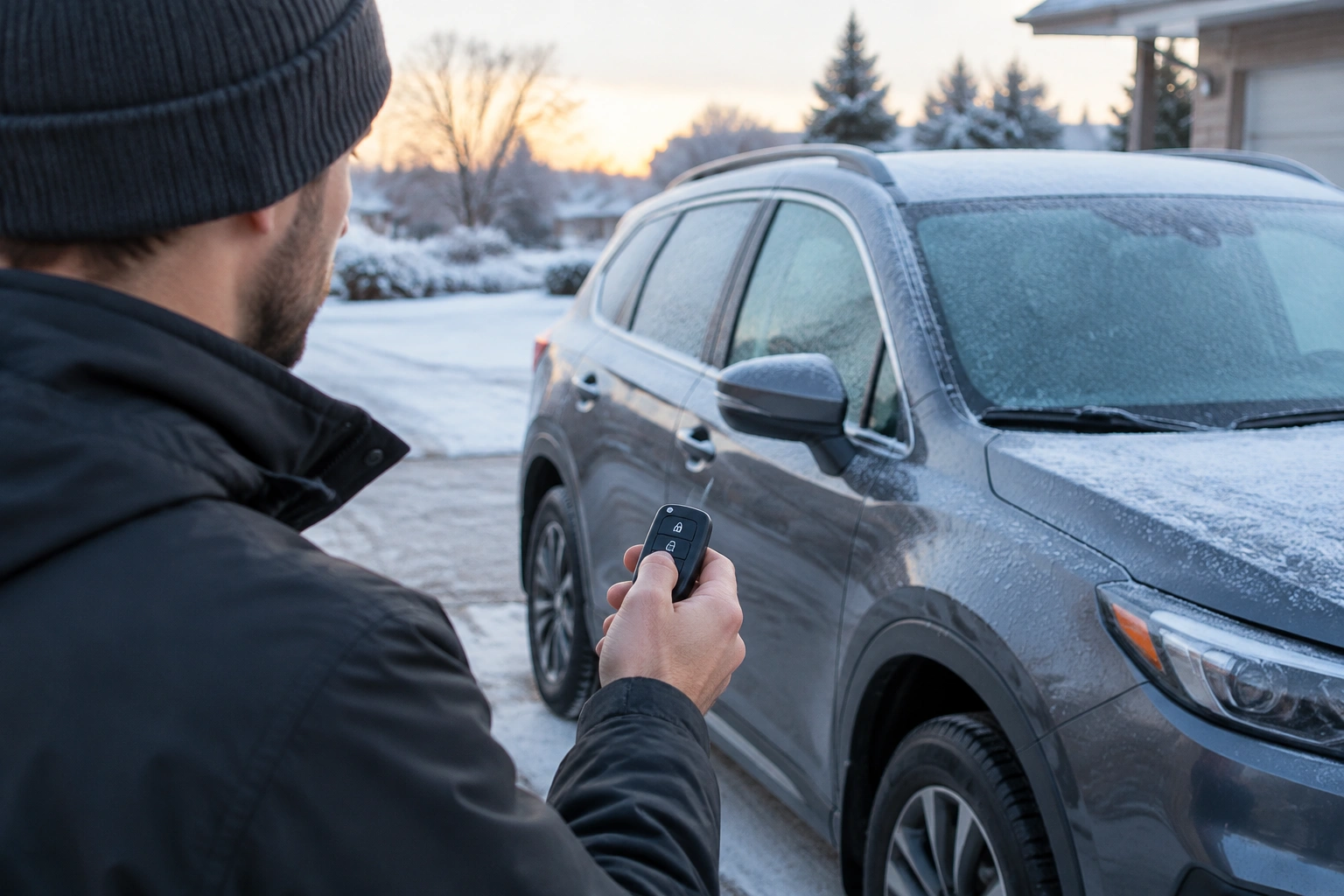
If your remote works indoors but acts up outside, that pattern is a strong clue. A cold morning can make a weak battery or a marginal vehicle system show problems that weren’t obvious at room temperature.
Does Cold Weather Affect a Key Fob?
Yes — cold weather can affect a key fob’s performance, especially if the battery is already weak.
Most modern key fobs use a small coin-cell battery. In lower temperatures, the battery’s internal resistance increases and the chemical reactions slow down, which can reduce voltage output and make the fob less reliable. That can show up as shorter range, delayed response, or a fob that only works after you get it warm again.
Drivers are often advised to keep car keys in a warm place when not in use, and that practical step can help reduce winter failures. The reason is simple: a fob that is already borderline may work indoors, then struggle once it’s exposed to cold air.
How cold is too cold? There isn’t one exact cutoff. Problems can start around freezing for some batteries, while older batteries or vehicles with less margin may show issues at milder temperatures.
For a broader look at what happens when a vehicle is not recognizing the remote at all, see our guide on key fob not detected in cold weather.
Cold-Weather Symptoms That Point to a Key Fob Problem
Cold-related key fob issues usually follow a pattern. The biggest clue is inconsistency.
Common signs to watch for
- Shorter range: You have to stand much closer to the car than usual.
- Delayed response: The doors unlock, but only after a pause.
- Intermittent operation: One button press works, the next one doesn’t.
- Passive entry failure: The car won’t detect the fob until it’s warmed up.
- Works indoors, fails outside: This is one of the clearest temperature-related clues.
A good example is a fob that unlocks the car in your garage but won’t respond in the parking lot on a freezing morning. That often points to a weak battery being pushed over the edge by the cold, not a completely dead fob.
Most Likely Causes, in Order of Probability
When a key fob stops working in cold weather, I’d troubleshoot in this order:
1. Weak or cold coin-cell battery
This is the most common place to start. A battery that was already getting weak may still seem okay at room temperature, then struggle once the temperature drops.
2. Moisture or condensation
Moving a fob from a warm house into cold air — then back into warmth — can create condensation. That moisture can interfere with buttons, contacts, or the small electronics inside the fob.
3. Vehicle-side issue
Sometimes the problem isn’t the remote at all. Cold can affect the vehicle’s receiver, passive-entry system, or door lock mechanism. If the car isn’t reading the fob correctly, replacing the fob battery alone may not solve it.
Quick Fixes to Try Before Replacing the Fob
Before you assume the key fob has failed, go through these checks in order.
1. Warm the fob in your hand or pocket
If the fob only fails outside, warm it for a few minutes and try again. A pocket, glove, or your hand is better than blasting it with heat. You want gentle warming, not a hot dashboard, hair dryer, or heater vent.
2. Test it in a warmer location
Try the same fob indoors, in a garage, or near the vehicle after it has had time to warm up. If it starts working again, that’s a strong sign temperature is part of the problem.
3. Look for moisture
If the fob was exposed to snow, slush, or condensation, dry the outside thoroughly. If the battery compartment is easy to access, check for visible moisture before putting it back into service.
4. Use the mechanical key if needed
If the remote won’t unlock the car, use the mechanical key to get in safely. That backup exists for exactly this kind of situation.
If your car uses a push-button start and the vehicle says the fob isn’t detected, our guide on why a car starts only when the key fob is held near the start button can help you narrow down the cause.
How to Tell a Cold Fob from a Dead Battery
This is the decision point that saves people time and money.
| Symptom | More likely cold-related | More likely dead or dying battery |
|---|---|---|
| Works again after warming up | Yes | Sometimes, but less likely |
| Works indoors but not outside | Yes | Yes, especially if battery is weak |
| Range is shrinking over time | Less likely | Yes |
| Buttons feel normal but response is inconsistent | Yes | Yes |
| Fob has been in use for years | Possible | More likely |
| Fresh battery makes no difference | Less likely | Could be a vehicle or fob issue |
Here’s the practical rule: if the fob only acts up in cold weather and recovers when warmed, the battery may still have some life left. If the range has been getting worse for weeks or months, replace the battery now instead of waiting for a no-start moment.
Some vehicles will also show a low-fob-battery warning before winter problems become obvious, which can help you tell a dying battery from a temporary cold-related issue.
When the Problem Is the Car, Not the Fob
A weak fob battery gets blamed a lot, but the car can be the real source of the trouble.
Signs the vehicle may be involved
- The fob works at very close range but not normally
- Passive entry fails, but the button battery in the fob is new
- The car unlocks inconsistently from the same fob
- The mechanical key opens the door, but the vehicle still won’t recognize the remote
Cold can affect the vehicle’s receiver, the passive-entry system, or the door lock mechanism itself. If the receiver is less responsive in low temperatures, the fob may be fine but the car still won’t detect it reliably. And if the lock mechanism is stiff from freezing temperatures, the remote may appear to fail even though the real issue is mechanical.
For more on the vehicle-side diagnosis, the NHTSA has useful consumer safety information related to vehicle systems and owner awareness, and that’s worth checking when the symptoms don’t point clearly to the fob.
When to Replace the Key Fob Battery
Replacing the battery is usually the fastest first repair when the symptoms point to a weak fob.
Replace the battery now if:
- Range is noticeably shorter than it used to be
- Button response is inconsistent
- The battery is old or unknown
- The fob works only when held very close to the car
- Cold weather seems to push it over the edge
This is one of those repairs that’s often inexpensive and low-risk compared with waiting for the fob to fail completely. Even if cold is the trigger, a weak battery is often the underlying reason the cold exposed the problem.
If you’re deciding whether to replace the battery before a dealer visit, that’s usually the smarter first move unless the fob has physical damage, water intrusion, or a fresh battery already installed.
When to Consult a Locksmith
If a new battery doesn’t help, it’s time to look beyond the coin cell.
A locksmith or dealer can help when:
- The fob still won’t unlock or start the car after a battery change
- The car does not detect the fob at all
- The mechanical key works, but the remote functions do not
- You suspect moisture damage or internal failure
- Multiple fobs act the same way, which points to the vehicle rather than the remote
A locksmith is especially useful when you need a practical diagnosis, not just a parts swap. They can tell you whether the issue is the fob, the vehicle receiver, or something else in the entry system.
How to Prevent Winter Key Fob Problems
A few habits can reduce cold-weather surprises without much effort.
Keep the fob warm when possible
The simplest prevention step is to avoid leaving the fob in a freezing car overnight. Keep it in your home, coat pocket, or bag instead of a cold center console.
Replace weak batteries before winter
If the fob has been acting sluggish, don’t wait for the first hard freeze. A battery that is already fading is much more likely to fail when temperatures drop.
Watch for moisture
If you come in from snow or freezing rain, let the fob dry before tossing it onto a wet surface or stuffing it into a damp pocket. Condensation can create intermittent problems that look a lot like battery trouble.
Keep the backup key accessible
If your fob has a mechanical key hidden inside, make sure you know how to remove it before you need it. That backup can save time when the remote side is being stubborn.
For a second seasonal angle, our article on why your key fob may not be detected in hot weather shows that temperature swings in either direction can expose a weak fob or vehicle-side issue.
Bottom Line
Cold weather can affect a key fob, but that does not automatically mean the remote is bad. In many cases, low temperatures are exposing a weak coin-cell battery, a little moisture, or a vehicle-side detection issue. If the fob works again after warming up, that’s a useful clue. If the range keeps shrinking, replace the battery first. If a fresh battery doesn’t solve it, the car or the fob itself may need a closer look.
FAQ
How cold does it have to be before a key fob stops working?
There’s no single temperature where every fob fails. Problems can start near freezing for some batteries, while older batteries or certain vehicles may show issues sooner.
Can cold weather drain a key fob battery faster?
Cold can make a weak battery perform poorly by reducing its available output, which can look like faster drain even when the battery is not fully dead.
Why does my key fob work inside but not outside?
That usually points to temperature, moisture, or a borderline battery. If the fob works again after warming up, the battery is a strong suspect.
Should I replace the battery or the whole fob first?
Start with the battery unless the fob is physically damaged, water-damaged, or already has a fresh battery installed. That is usually the simplest and least expensive first step.
