
Why Your Key Fob Signal Feels Weak — and What to Check First

If your key fob only works when you’re close to the car, or it seems hit-or-miss from the driveway, the problem is usually real. A weak signal can reduce the distance at which the car responds to lock, unlock, or start commands. That can be annoying, but it also gives you a useful clue: the issue may be with the fob itself, the vehicle, or the environment around you.
The good news is that you can narrow it down pretty quickly without guessing. In most cases, I’d work through the problem in this order: battery, location/interference, spare fob, then vehicle-side checks. That sequence saves time and keeps you from replacing parts you didn’t need.
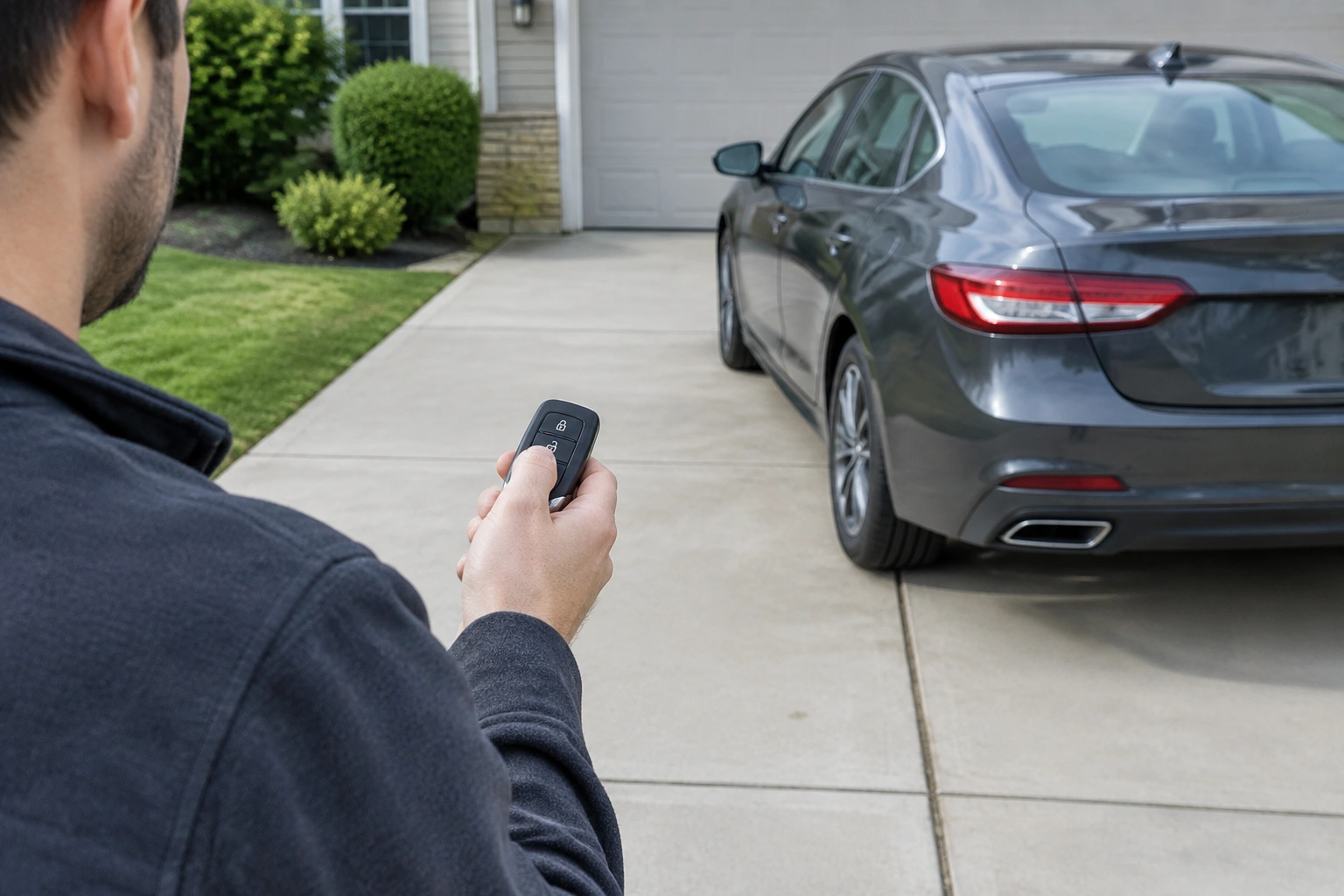
What “Weak Range” Actually Looks Like
A healthy fob does not always work from the same distance in every situation. Range can vary with vehicle model, battery condition, and even where you’re standing. As a practical benchmark, many fobs should work from several feet away, but the exact distance varies by vehicle and system type. If yours suddenly needs to be right next to the door handle, or it only works after several button presses, that’s no longer normal variation.
A weak signal usually shows up in one of these ways:
- The car unlocks only when you’re very close
- The lock/unlock button works intermittently
- Remote start or trunk release is less reliable than before
- A traditional button-press remote only works at short range
- A proximity key or smart key is detected only when held near a specific spot on the vehicle, such as the start button or door handle
That pattern matters because it helps separate a real fault from a normal range difference. If the fob used to work across a parking lot and now barely works at arm’s length, something changed.
Quick Checks You Can Do Right Now
Before you dig deeper, use this diagnostic order:
-
Test the fob in a different location.
Try it in an open area away from garages, buildings, metal structures, and other electronics. If the range improves immediately, interference is a strong suspect. -
Replace the fob battery.
A tired coin cell is the most common cause of weak range. If the battery is old, unknown, or you’ve never changed it, replace it first. -
Test a spare fob.
If the spare works normally from the same distance, the problem is likely in the original fob. If both fobs act weak, look at the vehicle or the environment. -
Check the vehicle battery.
A weak car battery can affect the receiver side of keyless entry in some vehicles. If the vehicle battery is low, the fob may seem fine but the car may not respond reliably. -
Suspect the receiver, antenna, or reprogramming.
If the fob battery is good, the spare behaves the same, and the problem is not location-dependent, the vehicle-side electronics or synchronization become more likely.
That simple comparison is one of the fastest ways to avoid unnecessary parts swapping.
The Most Likely Causes, in Order
1) Dying key fob battery
This is the first thing I’d check. A weak coin cell can still let the fob work, but only at shorter range or with inconsistent response. Sometimes the battery is not completely dead, which is why people miss it.
A fresh battery is especially worth trying if:
- The fob is more than a couple of years old
- The range has gradually gotten worse
- You have to press buttons more than once
- The fob works better after being warmed in your hand
2) RF interference or a noisy environment
Garages, parking structures, dense urban areas, and places packed with electronics can reduce usable range. Smartphones, wireless devices, aftermarket alarms, and other RF noise sources can all make the signal seem weaker than it really is.
A useful test is to stand in an open area and try the fob again. If it suddenly works better, the fob may be fine and the environment is the problem.
3) Physical damage or worn internal parts
A dropped fob, cracked shell, worn buttons, or moisture exposure can create intermittent problems. I’ve seen fobs that worked only when squeezed in a certain way because the internal contact was no longer making consistent connection.
If the casing is loose, the buttons feel mushy, or there’s visible corrosion, that points away from simple battery trouble and toward hardware damage.
4) Weak vehicle battery
This one gets overlooked. A low car battery can affect electronic systems in some vehicles, including the receiver side of keyless entry. If the vehicle battery is weak, the fob may seem fine but the car may not respond reliably.
If the car also cranks slowly, shows dim lights, or has other electrical odd behavior, don’t ignore the battery just because the engine still starts.
5) Receiver, antenna, or synchronization issues
If the fob battery is good and the problem happens with more than one fob, the vehicle’s receiver or antenna becomes more suspicious. A lost synchronization or programming issue can also cause short range or inconsistent response.
That’s the point where you stop assuming the fob is the only problem.
How to Tell Whether It’s the Fob or the Vehicle
Here’s the simplest comparison I use:
| Symptom | More Likely Cause | Best Next Step |
|---|---|---|
| One fob works poorly, spare works normally | Original fob battery, damage, or worn contacts | Replace battery, inspect casing, consider replacement |
| Both fobs have weak range | Vehicle receiver, antenna, low vehicle battery, or interference | Test in another location, check vehicle battery, seek diagnosis |
| Works poorly only in garages or dense areas | RF interference | Test in open air and compare |
| Traditional remote buttons only work when very close | Weak fob battery, damaged fob, or vehicle-side issue | Replace battery first, then test spare |
| Proximity or smart key only fails at push-to-start or door-handle detection | Proximity system issue, vehicle battery, antenna, or interference near the car | Check vehicle battery, test away from nearby metal or electronics, seek diagnosis if it persists |
| Intermittent after being dropped or wet | Internal damage or corrosion | Replace the fob or have it inspected |
| Problems started after battery replacement or a jump start | Synchronization or vehicle voltage issue | Recheck battery fit and consider resync |
That table is the fastest way to avoid chasing the wrong part.
Battery Replacement: What to Check and Why It May Not Be Enough
Replacing the coin cell is still the best first repair, but only if you do it correctly.
Check these details:
- Use the correct battery type for your specific fob
- Make sure the battery is seated flat and the contacts are clean
- Watch for bent clips or corrosion inside the case
- Reassemble the fob tightly so the shell doesn’t shift
If the battery change helps immediately, that’s a strong sign the old battery was the issue. If the range barely improves, don’t assume the new battery failed. The problem may be interference, a worn contact, or the vehicle itself.
A battery swap is less likely to help when both fobs behave the same way, when the problem only happens in one location, or when the issue is limited to a proximity key rather than the button-press functions. In those cases, the cause is more likely to be environmental or vehicle-side.
If you already replaced the battery and the fob still behaves badly, this guide pairs well with our article on what to check when a key fob is not detected after replacing the battery.
Interference and Environment Problems
When a fob works in one spot and not another, I think environment before electronics. That’s especially true in parking garages and crowded lots.
Common interference sources include:
- Concrete parking structures
- Tall buildings and metal doors
- Other wireless devices nearby
- Aftermarket security systems
- Areas with lots of RF noise
- Metalized windshield coatings, aftermarket window tint, or accessories placed near the vehicle, which can sometimes affect proximity systems
Try the same fob:
- In a driveway or open street
- Farther from other parked cars
- With your phone moved away from the fob
- After leaving a garage or enclosed structure
If the signal improves in cleaner surroundings, you probably do not have a failed fob. You have a location problem.
Vehicle Battery, Receiver, and Antenna Issues
If both fobs act weak, the car deserves attention. A low vehicle battery can affect the electronics that listen for the fob signal. In some vehicles, that means the remote entry system becomes sluggish before anything else obviously fails.
The receiver or antenna can also be the problem. That usually shows up as:
- Both fobs having the same short range
- The issue staying the same after battery replacement
- The car responding inconsistently no matter where you stand
- A proximity key failing at the push-to-start button or door handle even though the button-press remote functions still work
At that point, the fix is not usually another battery. It’s a vehicle-side diagnosis.
Reprogramming or Resynchronizing the Key Fob
Sometimes the fob hardware is fine, but the vehicle and fob are no longer fully in sync. That can happen after a battery issue, electrical event, or service work.
Reprogramming is worth considering when:
- The battery is good
- The casing is intact
- The fob worked before and then became inconsistent
- The vehicle recognizes the fob only part of the time
This is where a professional can save you time. A dealership may have broader access to model-specific procedures, while an automotive locksmith can often handle fob-related diagnosis and programming faster or at lower cost, depending on the vehicle.
If you want a practical backup-start reference while troubleshooting, see our guide on how to start a car when the key fob is not detected.
When to Repair, Replace, or Call a Professional
Here’s the decision rule I’d use:
- Replace the battery first if the fob is old, the range faded gradually, or the battery has never been changed.
- Test in another location if the problem appears mostly in garages, parking lots, or near electronics.
- Use a spare fob to decide whether the issue is with the fob or the vehicle.
- Consider repair or replacement if the fob is cracked, wet, corroded, or still weak after a fresh battery.
- Seek professional diagnosis if both fobs fail, the vehicle battery seems weak, or the car may need reprogramming.
If you recently had a jump start and noticed strange keyless behavior afterward, it may be worth considering whether the vehicle voltage changed enough to affect the system, so a locksmith or dealer can check for that possibility along with the fob itself.
As a rule, if the same weak range shows up with multiple fobs in different locations, the car deserves a closer look.
Practical Bottom Line
A weak key fob signal usually comes down to one of five things: the fob battery, interference, physical damage, the vehicle battery, or the receiver/antenna system. The fastest way to diagnose it is to test in a clean location, swap in a fresh battery, and compare the original fob with a spare.
If the weak range disappears after one of those checks, you’ve likely found the cause. If it doesn’t, stop the DIY guessing and call a locksmith or dealer for diagnosis and reprogramming before you replace more parts.
FAQ
Why does my key fob only work when I’m close to the car?
That usually points to a weak fob battery, interference, a damaged fob, or a vehicle-side issue. Start with a battery swap and a spare-fob test.
Why does my smart key work for unlocking but not for push-to-start?
That can happen when the proximity side of the system is affected even though the button-press remote still works. Check the vehicle battery, nearby interference, and whether the car detects the key at the door handle or start button.
Can window tint or windshield coatings affect keyless entry?
Sometimes, especially with proximity systems and aftermarket materials near the vehicle. It’s not the most common cause, but it can be worth considering if the problem is location-specific.
When should I stop troubleshooting and get help?
If both fobs act the same, the battery check doesn’t help, and the problem is not tied to one location, it’s time to call a locksmith or dealer.
