
Key Fob Not Detected in Cold Weather: What’s Causing It and How to Fix It

Cold weather can turn a normally reliable key fob into a frustrating problem fast. You walk up to the car, press the button, and nothing happens. Or the dash flashes “key fob not detected” even though the fob worked fine yesterday.
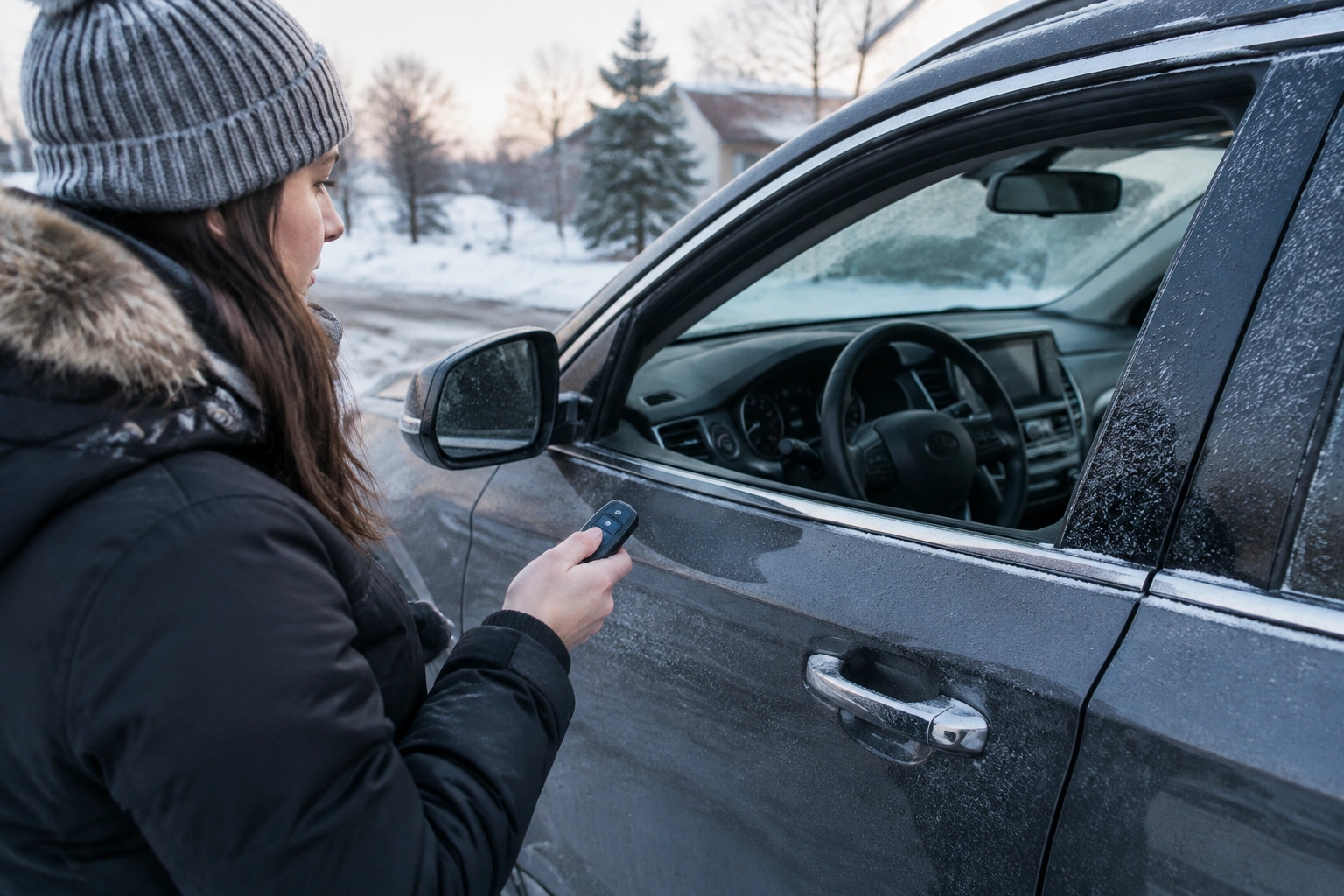
The good news: in many cases, this is a temporary issue, not a dead fob. Cold temperatures can weaken battery performance, reduce signal strength, and expose a problem that was already starting to show up. That means the fix may be as simple as warming the fob, replacing a coin-cell battery, or using the backup start method.
Here’s how I’d troubleshoot it if you were in my service bay.
What the warning usually means
When your car says the key fob is not detected in cold weather, it usually means the vehicle’s receiver is not getting a strong enough RF signal from the fob to confirm that the key is present.
That can happen for a few different reasons:
- the key fob battery is weak
- the car battery voltage is low
- the fob is cold enough that it is transmitting poorly
- moisture or condensation is interfering with the electronics
- the vehicle’s receiver, sensor, or immobilizer system has a fault
A useful clue is how the problem behaves. If the fob still unlocks the doors at short range but fails to start the car, that often points to a weak fob battery. If both the unlock and start functions become unreliable, especially during a cold snap, the car battery or the vehicle-side system deserves more attention.
The most likely causes, ranked
In real-world troubleshooting, I’d usually check these in order.
1. Weak key fob battery
This is the most common place to start. A coin-cell battery can still have enough power for occasional use, but not enough reserve to send a strong signal in cold weather. That’s why a fob may work one day and act flaky the next.
Cold can make an already weak battery fail sooner. If your fob has been acting inconsistent for weeks—shorter range, delayed response, needing extra button presses—cold weather may simply be exposing the problem.
2. Low car battery voltage
A weak 12V car battery can create weird symptoms that look like a fob problem. Push-to-start systems depend on stable voltage to wake up the vehicle electronics and read the key.
If the car cranks slowly, the dash lights seem dim, or other electrical items also act weak, don’t blame the fob first. The vehicle may not be powering the detection system properly.
3. Cold-related signal reduction
Cold weather can reduce range and make button response feel delayed. Keeping the fob warm and dry may help temporarily, but that usually points to an underlying battery or signal-strength issue rather than a permanent fix.
4. Moisture or condensation
A fob that was brought from a cold pocket into a warm house, or left in a damp coat, can develop condensation inside the case. That can cause intermittent detection problems, especially if the issue comes and goes after temperature swings.
5. Vehicle receiver, sensor, or immobilizer issue
If both fobs fail, or the problem keeps returning after a battery swap, the issue may be on the car side. That can mean the receiver, proximity sensor, or immobilizer system needs diagnosis.
Quick fixes to try first
These are the low-risk steps I’d try before replacing anything major.
Warm the fob gently
Hold the key fob in your hands for a minute or two, or keep it in a warm, dry pocket while you approach the car. The idea is not to cook it—just to take the edge off the cold.
Avoid direct heat sources like a hair dryer on high or sitting the fob on a heater vent. Too much heat can damage the battery or the electronics.
Try the spare fob
A spare fob is one of the best diagnostic tools you have. If the spare works normally while the main fob does not, that strongly suggests the problem is in the fob itself, not the car.
If both fobs fail in the same cold conditions, the vehicle battery or receiver becomes more suspicious.
Replace the coin-cell battery
If the fob uses a replaceable battery and it’s been a while since you changed it, swap it out. This is often the fastest, cheapest step, and it can save you from replacing the whole fob unnecessarily.
Check whether the problem improves after a short warm-up
If the car starts working again after the cabin warms up or after the fob has been in your hand for a few minutes, that points toward a cold-related signal issue or a weak battery rather than a hard failure.
How to start the car when the fob is not detected
If your push-to-start vehicle won’t recognize the fob, check the owner’s manual for the exact backup start procedure for your make and model. The emergency start location and method vary by vehicle, so the manual is the best source for the correct steps. Many vehicles have one of two setups:
- a designated backup start area or slot
- a method that lets the vehicle read the fob when it is held very close to the push-button start area
Here’s the practical approach:
- Sit in the driver’s seat with the fob.
- Press the brake pedal.
- Hold or place the fob in the backup detection area described in the manual.
- Press the start button as instructed.
- If it doesn’t work, try the spare fob before repeated attempts drain the car battery further.
If your vehicle has a hidden mechanical key inside the fob, use that for door access if needed. Many cars include that backup, and it can get you inside even when the electronics are being stubborn.
For a broader walkthrough of push-button start troubleshooting, see our guide on what to check when a key fob is not detected on push-button start.
Key fob battery vs car battery: how to tell which one is the problem
This is the decision that saves people the most time.
| Symptom | More likely key fob battery | More likely car battery |
|---|---|---|
| Doors unlock only at very close range | Yes | Sometimes |
| Fob works inconsistently in cold weather | Yes | Possible |
| Car cranks slowly or dashboard seems weak | No | Yes |
| Both fobs fail the same way | Unlikely | More likely |
| Spare fob works normally | Yes, original fob issue | Less likely |
| Multiple electrical issues happen at once | Unlikely | Yes |
A weak fob battery usually shows up as reduced range, delayed response, and intermittent detection. A weak car battery usually shows up as broader electrical weakness, not just keyless-entry trouble.
If the car battery is near the end of its life, cold weather can push it over the edge. That’s why a car that seems fine in mild weather may suddenly act up on the first freezing morning.
For a more detailed comparison of symptoms, our article on key fob not detected and the car won’t start can help you separate fob trouble from vehicle trouble.
When cold weather is exposing a failing fob
Sometimes the cold is not the real cause—it’s the trigger.
A fob that has been aging for a while may still work most of the time, but fail when conditions get less forgiving. Look for these patterns:
- the range has been shrinking over time
- you need to press buttons more than once
- the car detects the fob only intermittently
- the problem improves after a battery swap, but only for a short time
- the fob works better indoors or in warmer weather
That pattern usually means the fob battery is weak, the contacts are marginal, or the fob itself is aging out. If a fresh battery fixes the issue for a while and then the symptoms return, the fob may be nearing the end of its usable life.
When moisture or condensation may be the real cause
Cold-to-warm temperature swings can create condensation inside the fob. That can happen if the fob was left in a damp glove box, coat pocket, or bag and then brought into a warm car or house.
Signs moisture may be involved:
- the fob worked before but became intermittent after getting wet or damp
- it behaves differently after being warmed up
- buttons feel sticky or inconsistent
- the problem comes and goes rather than staying constant
- you notice corrosion on the battery contacts or inside the battery compartment
If you suspect moisture, let the fob dry fully before testing it again. If it starts working and then becomes intermittent again after drying, that can be a sign the internal contacts or battery terminals were affected. Don’t keep pressing buttons over and over if the electronics may still be damp. That can make diagnosis harder and may worsen corrosion over time.
When the vehicle-side system may be at fault
If both fobs fail, the battery is fresh, and the backup start method still doesn’t work, the issue may be in the vehicle.
Common vehicle-side clues include:
- both fobs fail in the same way
- the car sometimes recognizes the fob and sometimes does not
- the issue gets worse when the car battery is weak
- the warning appears even when the fob battery is known good
- proximity detection near the door handle or start button is inconsistent
That can point to the receiver, antenna, proximity sensor, or immobilizer system. At that stage, more guessing usually wastes time. A proper scan and electrical check are more useful than swapping parts blindly.
When to replace the battery, replace the fob, or book service
Use the results of your troubleshooting to decide the next move.
Replace the key fob battery now if:
- the fob range has dropped
- the buttons respond slowly
- the problem improves when the fob is warmed up
- the battery is old or unknown
Test or replace the car battery if:
- the car cranks slowly
- dashboard electronics seem weak
- multiple systems act up in cold weather
- both fobs show the same detection problem
Use the spare fob if:
- you want to separate a fob problem from a vehicle problem
- the main fob is intermittent but the spare works normally
- you need a reliable backup while diagnosing the issue
Replace the whole fob or seek service if:
- a new battery does not help
- the fob has visible damage, water exposure, or corrosion
- the spare fob also fails
- the vehicle still says “not detected” after battery and backup-start checks
If you want a broader overview of why push-to-start systems act up, Edmunds has a consumer-facing overview of keyless-start systems and their quirks on Edmunds. For safety-related battery guidance and vehicle electrical issues, the NHTSA is a good reference point.
When to Consult a Locksmith, Dealer, or Mechanic
If the problem keeps returning after a battery change, the spare fob fails too, or the backup start method does not work, it’s time to stop troubleshooting and get help.
A locksmith or automotive key specialist is often the best next step if the issue seems limited to the fob itself, the key blade, or battery-contact problems inside the fob. They can also help if you need a replacement or reprogramming for the fob.
If the issue appears vehicle-side—especially if both fobs fail, the backup start method does not work, or the car battery and receiver seem suspect—a dealer or independent mechanic may be the better choice. A dealer is often the most direct option for brand-specific diagnostics and programming. An independent mechanic can be a good fit for battery, charging, receiver, or electrical testing if they have the right scan tools.
You should also book service if the fob was exposed to moisture, the car battery seems weak, or the vehicle only recognizes the key intermittently in cold weather. At that point, the problem is probably bigger than a simple battery swap.
FAQ
Why does my key fob stop working when it’s cold?
Cold weather can weaken a fob battery, reduce signal strength, and make an already marginal fob fail sooner. In some cases, the car battery is also weak, which makes detection worse.
Is the fob battery dead or just weak in cold weather?
If the fob works better when warmed up, or if it still works at very short range, the battery may be weak rather than completely dead. A fresh battery is usually the quickest way to test that.
Can cold weather affect the car battery enough to cause this?
Yes. A weak 12V battery can cause low-voltage problems that affect the receiver and push-button start system, especially when temperatures drop.
What if my key fob got wet or damp?
Let it dry completely and inspect the battery compartment for corrosion or residue. If the fob becomes intermittent after drying, the contacts or internal electronics may have been affected.
What if my car says key fob not detected and won’t start?
Use the exact backup start method in the owner’s manual, try the spare fob, and check the car battery if the vehicle seems electrically weak. If none of that works, service is the next step.
Should I replace the whole fob?
Not right away. Try a battery swap and a spare-fob test first. Replace the whole fob only if the problem persists or the fob is physically damaged.
Could this be the vehicle receiver or sensor?
Yes, especially if both fobs fail or the problem keeps coming back after battery checks. That usually means the issue is on the car side, not the fob.
What’s the fastest way to narrow it down?
Use the spare fob. If the spare works, the original fob is the likely problem. If both fail, look at the car battery or the vehicle’s detection system.
