
Can a Bad Car Battery Cause Key Fob Problems? What Drivers Should Check First

Yes — a bad car battery can cause key fob problems. In many vehicles, the car battery does more than crank the engine. It also powers the systems that receive the fob’s signal, confirm the key’s presence, and authorize remote locking, unlocking, and push-button start.
That’s why a weak vehicle battery can create confusing symptoms: the fob may work only sometimes, only at close range, or not at all. In some cases, the car will still open with the mechanical backup key but ignore the remote signal. In others, the vehicle may unlock but refuse to start.
The good news is that this is often diagnosable without guesswork. If the problem appears when the car battery is weak, and disappears after a jump-start or battery replacement, the vehicle battery may have been the real culprit. A weak battery can sometimes interfere with the car’s ability to read the key’s chip or confirm the fob signal, which is why the issue can look like a dead fob even when the fob itself is fine.
Symptoms: Is It the Car Battery, the Key Fob Battery, or Something Else?
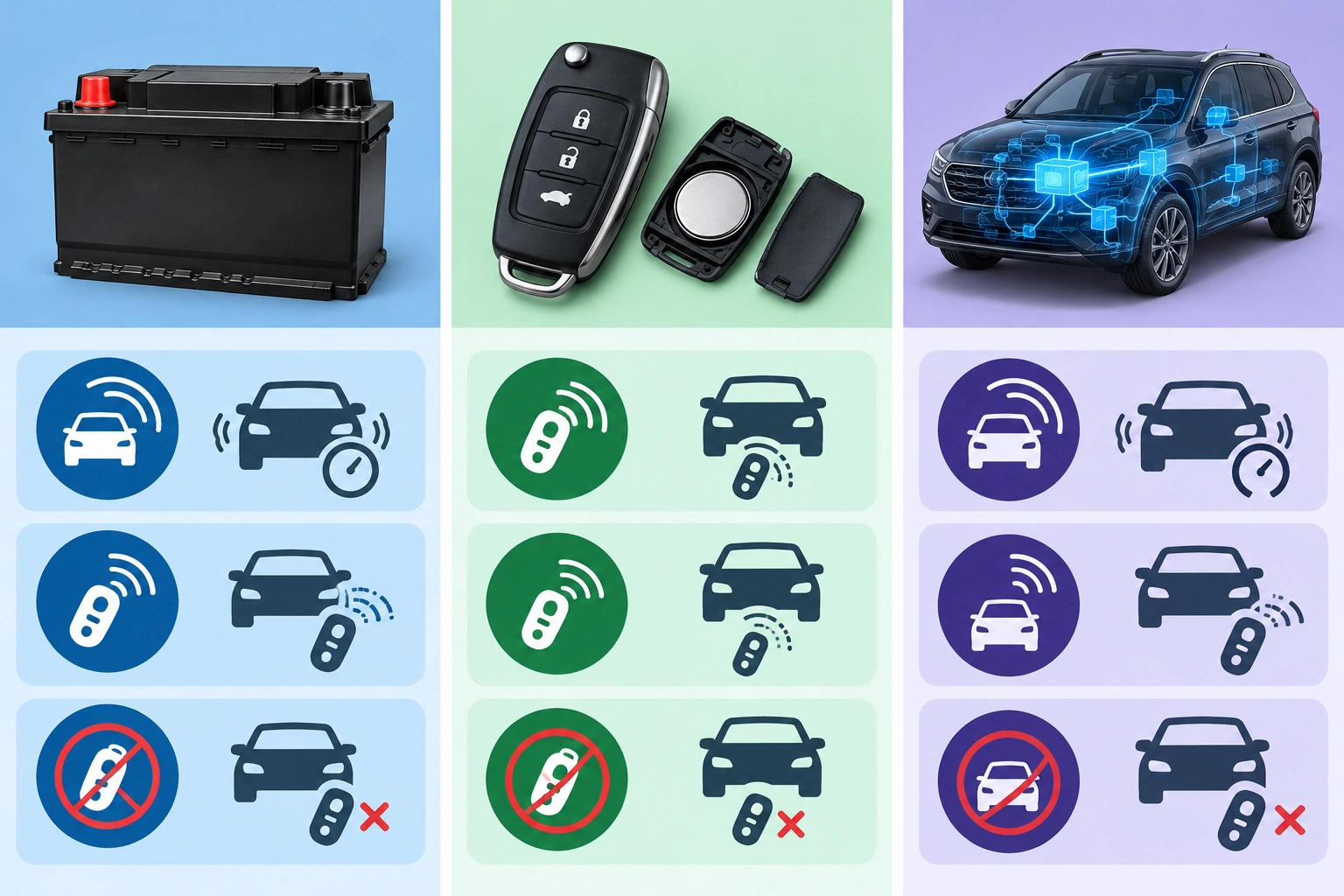
A fob problem is easiest to solve when you look at the pattern, not just the symptom. A dead key fob battery, a weak car battery, and a vehicle-side receiver issue can all cause “no response,” but they usually leave different clues.
| Symptom | More likely car battery | More likely key fob battery | More likely vehicle system issue |
|---|---|---|---|
| Slow cranking, dim lights, dashboard warnings | Yes | No | Sometimes |
| Fob works only very close to the car | Sometimes | Yes | Sometimes |
| Fob works intermittently | Yes | Yes | Yes |
| Car unlocks but won’t start with push-button start | Yes | Yes | Yes |
| Physical key works, remote does not | Sometimes | Yes | Yes |
| Jump-start restores normal fob behavior | Yes | No | Less likely |
| Fresh fob battery changes nothing | Sometimes | No | Yes |
A weak key fob battery usually shows up first as reduced range or delayed response. A properly functioning fob often works from a noticeable distance, while a fading coin-cell battery may force you to stand right next to the door handle.
A weak car battery tends to create broader vehicle symptoms. If the engine cranks slowly, the interior lights look dim, or the dashboard throws low-voltage warnings, that points away from the fob battery and toward the car battery or its connections.
A total no-response problem can still go either way. If the fob is dead, the car battery is weak, or the receiver/antenna is not reading the signal, the result can look identical from the driver’s seat. That’s why the next section matters.
Most Likely Causes, in a Practical Troubleshooting Order
When a key fob suddenly stops working, a sensible troubleshooting order is usually:
- Weak key fob battery
- Weak or dying car battery
- Corroded or loose battery terminals
- Interference, damaged fob, or worn buttons
- Vehicle receiver, antenna, or immobilizer issue
That order saves time because the cheapest fix is often the easiest to check first. A coin-cell battery is inexpensive and simple to replace. But if the car battery is old, slow to crank, or showing signs of voltage loss, replacing the fob battery first may not change anything.
The trade-off is simple: checking the fob battery first is fast and low-cost, but if the vehicle battery is weak, you can waste time chasing the wrong part. If the car has been slow to start lately, that clue should move the vehicle battery higher on your list.
Step-by-Step Troubleshooting: What to Check First
Here’s the sequence I use when a driver says the fob suddenly quit.
1) Replace the key fob battery if it’s due
If the fob range has dropped or the buttons only work inconsistently, replace the coin-cell battery first. That is the quickest, cheapest test, and it removes the most common point of failure.
If the battery is already fresh, or the fob battery was replaced recently, move on.
2) Check the car battery and its terminals
Look for slow cranking, dim lights, battery age, or corrosion on the terminals. A weak connection can behave like a weak battery. Even if the battery itself is not completely dead, low voltage can disrupt remote locking and key detection.
If you can safely jump-start the car, that’s a useful test. If the fob and vehicle then behave normally, that can be a likely sign the car battery or its connections were involved.
3) Try the backup mechanical key or emergency start method
If the remote won’t unlock the doors, use the backup key hidden inside the fob, if your vehicle has one. For push-button start vehicles, many models have an emergency start procedure or a backup reading location for the fob. The owner’s manual is the right place to confirm the exact method for your vehicle.
4) If both batteries check out, suspect the vehicle system
When the car battery is healthy and the fob battery is fresh, but the vehicle still does not respond, the problem may be in the receiver, antenna, or immobilizer system. At that point, the issue is no longer basic battery troubleshooting.
How to Tell If the Car Battery Is the Real Problem
A weak car battery usually leaves more than one clue.
Look for these signs:
– The engine cranks slowly
– Interior or dashboard lights seem weaker than normal
– Electrical accessories act sluggish
– The car has been sitting for a while and then starts acting up
– The fob works again after a jump-start
That last clue is especially useful. If jump-starting or charging the vehicle brings the fob back to life, that may indicate the battery or its connections were starving the system of voltage. In practical terms, the car may not have had enough stable power to confirm the fob signal or read the key correctly.
A battery that is merely “not dead yet” can still cause trouble. Drivers often expect battery failure to be dramatic, but low voltage can create intermittent electronics problems before the car stops cranking completely.
If the battery case is swollen, hot, or leaking, stop there and get help. That is no longer a simple troubleshoot-and-drive situation.
How to Tell If the Key Fob Battery Is the Real Problem
A weak fob battery usually behaves differently from a weak car battery.
Typical signs include:
– You have to stand much closer to the vehicle
– The fob works one moment and not the next
– Buttons respond slowly
– The car unlocks only after several presses
– Push-button start works inconsistently, but the car battery seems fine
A fresh fob battery should often restore consistent remote operation if the fob itself is healthy. If the new battery dies unusually fast, that is a clue that something else may be wrong. Possible causes include a defective fob, signal interference, or a low-quality battery.
One common mistake is assuming every fob issue is caused by the coin-cell battery. If the car battery is weak or the terminals are corroded, the fob battery replacement may do nothing at all.
Use the Backup Key or Emergency Start Method
When the remote side fails, the physical key is your fallback. Many fobs contain a hidden mechanical key for the driver’s door. That gets you into the vehicle even if the electronics are down.
For push-button start systems, some vehicles have an emergency start method that lets the car read the fob at very close range or from a specific location inside the cabin. The exact procedure varies by make and model, so this is one of the few times the owner’s manual is worth opening before you keep pressing buttons.
The practical value here is simple: backup access buys you time. You can get inside, confirm whether the car battery is the issue, and avoid being stranded by a dead remote alone.
When Replacing the Car Battery Should Fix the Issue
Replacing the car battery can be the right move when the vehicle shows battery symptoms and the fob issue tracks with them.
That usually means:
– The car cranks slowly or not at all
– The dash shows low-voltage warnings
– The fob starts working again after a jump-start
– The battery is old, weak, or tested as failing
– The battery terminals are clean and tight, but the voltage is still poor
In many cases, once the vehicle has proper power again, the remote functions return without any extra work. But not every vehicle behaves the same way. Corroded terminals, loose cable ends, low system voltage, or a vehicle-side fault can still leave the problem unresolved even after a battery change.
If you’re already replacing the battery, also inspect the terminals and cable ends. A brand-new battery can still perform poorly if the connection is dirty or loose. Testing the battery and terminals first is usually better than replacing the battery immediately.
When the Problem Is Probably the Keyless Entry System
If the car battery is healthy and the fob battery is fresh, but the vehicle still ignores the fob, the receiver or immobilizer side becomes more likely.
That’s especially true when:
– The fob battery is new but nothing changes
– The car battery tests well
– The physical key works, but the remote does not
– The vehicle no longer detects the fob for push-button start
– Only one door or one function works while others do not
At that point, the issue may be the vehicle’s antenna, receiver module, or part of the immobilizer system. Check the owner’s manual for any keyless-entry or push-button-start error message, then consider dealer or automotive locksmith diagnosis. This is where basic battery swaps stop being useful and diagnosis becomes more specialized.
When to Call an Automotive Locksmith
Call an automotive locksmith when the vehicle still won’t recognize the fob after you’ve checked both batteries, or when you need help getting back into the car without damaging the lock or fob.
A locksmith is also a smart next step if:
– The backup key is missing or won’t turn
– The fob shell is damaged
– The buttons are worn out
– The car needs a proper keyless entry diagnosis
– You’re not sure whether the problem is the fob, the receiver, or the immobilizer
If the battery is swollen, leaking, or hot, do not keep troubleshooting at the roadside. Get the vehicle inspected.
For related troubleshooting, see our guides on whether a weak car battery can affect your key fob and when a weak key fob battery can stop your car from starting.
Quick Fix Checklist
Use this order to avoid replacing the wrong part:
- Replace the fob battery if it is old or weak
- Check whether the car cranks slowly or shows low-voltage symptoms
- Inspect battery terminals for corrosion or looseness
- Try a jump-start if the vehicle battery seems weak
- Use the backup mechanical key if the remote won’t unlock the door
- Follow the emergency start method in the owner’s manual
- If the car still won’t recognize the fob, suspect the receiver or immobilizer system
Common Mistakes to Avoid
The biggest mistake is replacing the fob battery first and assuming the job is done. That works only when the car battery is healthy.
Other common errors:
– Ignoring slow cranking or dim lights
– Overlooking corrosion at the battery terminals
– Assuming every no-start issue means the fob is “bad”
– Forgetting the backup mechanical key
– Jumping straight to reprogramming when the problem may be voltage-related
A little order saves a lot of money. Battery problems often look like key fob problems, but the fix depends on which battery is actually failing.
FAQ
Can a bad car battery stop my key fob from working?
Yes. A weak car battery can interfere with the vehicle’s ability to receive the fob signal and confirm the key, which can make the fob seem dead or inconsistent.
If my car battery is dead, will the key fob still unlock the doors?
Sometimes the physical remote function will fail, even if the backup mechanical key still opens the door. If the vehicle has no usable power, the remote side may not respond.
Can a weak car battery cause push-button start problems?
Yes. Low voltage can prevent the vehicle from recognizing the fob or authorizing the start sequence.
Should I replace the car battery or the fob battery first?
If the car shows battery symptoms like slow cranking or dim lights, check the car battery first. If only the fob range is poor and the car starts normally, the fob battery is the better first test.
Will replacing the car battery reprogram my key fob?
Usually not, but some vehicles may need a reset or follow-up service. The outcome depends on the make, model, and how the system is designed.
What if the fob battery is new but the car still won’t respond?
Then the issue may be the vehicle receiver, antenna, immobilizer system, or a connection problem in the car itself.
How do I know if it’s the key fob battery and not the car battery?
A weak fob battery usually causes short range or inconsistent button response while the car battery still behaves normally. A weak car battery usually shows broader vehicle symptoms too, like slow cranking or dim lights.
Can a jump-start fix key fob problems?
If the problem is low vehicle voltage, yes. If the fob or receiver is damaged, a jump-start won’t solve it.
