
Can a Weak Key Fob Battery Stop Your Car From Starting?

A weak key fob battery can prevent starting in some vehicles, but not always. In many smart-key and push-button start systems, a fading fob battery causes flaky remote locking first, then eventually the car may stop recognizing the fob reliably. In other cars, the vehicle can still detect the fob at very short range or in a backup location even when the battery is too weak for normal use.
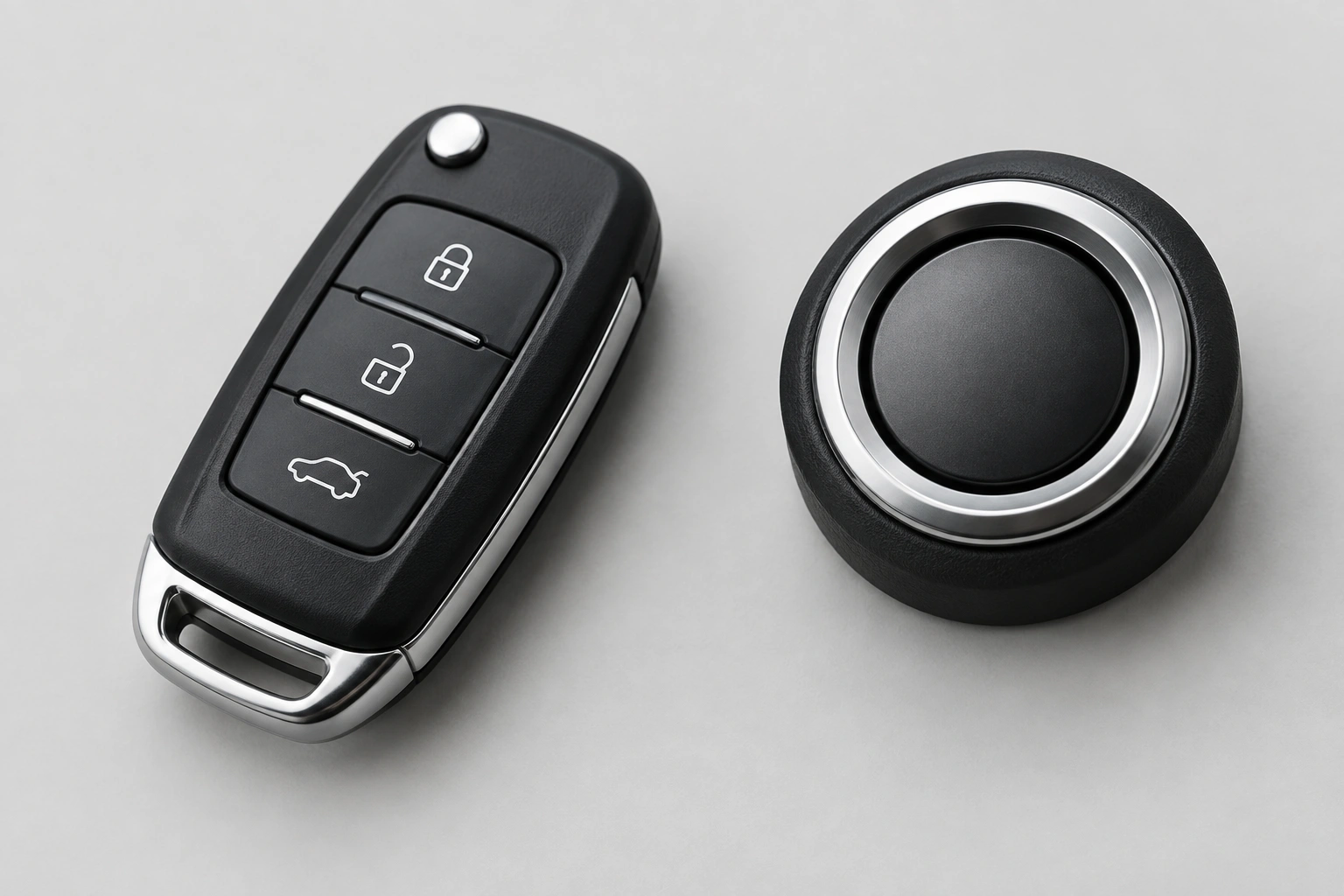
The practical takeaway: if your car says “key not detected,” or the fob only works when it’s close to the car, the battery is a strong suspect. But if the dash lights are dim, the engine only clicks, or the car cranks slowly, the problem may be the car battery instead.
Can a Weak Key Fob Battery Prevent Starting?
Yes, it can — especially on push-button start vehicles that rely on the fob’s signal to authorize the engine start. That said, a weak battery usually does not fail all at once. More often, it gets worse in stages.
Here’s the pattern I see most often:
- The remote range gets shorter.
- Buttons become inconsistent.
- The dash may show a key fob battery low message, depending on the vehicle.
- Eventually, the car may not recognize the fob unless you use a backup start method.
A dead fob battery usually does not damage the fob itself, but battery leakage or corrosion from an old battery can cause damage. Many newer vehicles may also warn you before the battery completely gives out, though warning behavior varies widely by make and model and is not guaranteed. That warning behavior is widely noted in automotive guidance such as Key Me’s overview of dying key fob batteries.
One important nuance: the fob battery is not always what actually “starts” the car. In many vehicles, the fob contains a transponder or smart-key system that the car reads to confirm authorization. If that signal is still detectable at close range, the car may start even when the battery is weak. In many cars, the battery mainly affects remote functions and proximity sensing rather than the chip itself, because the vehicle can still read the transponder at very short range or through a backup sensor path. If not, the car may reject the start attempt.
Weak Fob Battery vs. Car Battery: How to Tell the Difference
This is where a lot of owners get misled. A weak key fob battery and a weak car battery can look similar at first, but the symptoms usually point in different directions.
| Symptom | More likely key fob battery | More likely car battery |
|---|---|---|
| Remote unlock range is shorter than usual | Yes | No |
| Buttons work only sometimes | Yes | No |
| “Key not detected” message appears | Yes | Sometimes |
| Dashboard lights are dim | No | Yes |
| Engine clicks but doesn’t crank | No | Yes |
| Car starts with backup fob placement | Yes | No |
| Interior electronics seem weak or reset | No | Yes |
A simple rule helps here: if the fob’s remote functions are acting up first, think fob battery. If the whole vehicle seems electrically weak, think car battery.
For example, if the doors unlock from a few feet away but the car won’t start unless you hold the fob against the start button, that points to a weak fob battery or a recognition issue. If the dash goes dark, the dome light is faint, and you hear a click instead of a crank, the car battery is the better suspect.
For background on how low vehicle voltage can interfere with key recognition, see this helpful discussion from Gaucho Keys on weak car battery and key problems.
What to Try First When the Car Won’t Recognize the Key Fob
When the car acts like it doesn’t see the fob, I’d work through these steps in order:
1) Try the spare key fob
If you have a second fob, test it first. This is the fastest way to separate a bad fob battery from a vehicle-side problem.
- Spare works: the original fob battery or fob itself is likely the issue.
- Spare also fails: look harder at the car battery, receiver, or immobilizer system.
2) Check for warning messages
Look at the dash and infotainment screen for messages like:
- Key not detected
- Key fob battery low
- Press brake and start
- No key detected
Those messages can be useful, but the exact wording and whether they appear at all varies by vehicle. They help you narrow down whether the car is failing to identify the fob or whether the issue is broader.
3) Replace the fob battery if it’s old or inconsistent
If the battery is several years old, the remote range is fading, or the buttons are unreliable, replacement is usually the next sensible move. It’s a low-cost, low-risk step compared with chasing a more complicated electrical issue.
4) Check the car battery if the whole vehicle seems weak
If the lights are dim or the engine cranks slowly, do not keep hammering the start button. A weak car battery can make the fob system seem guilty even when it isn’t.
Emergency Start Methods for Push-Button Start Vehicles
If your vehicle uses push-button start, many models have a backup way to detect the fob when the battery is weak or dead. The exact backup location varies by make and model, so the owner’s manual is the best source for your vehicle. Capital One’s guide notes that the ignition can still work even when the fob battery is dead, and that the fob should be held as close as possible to the receiver.
In general, try this:
- Put the vehicle in park.
- Hold the brake pedal.
- Press the start button while holding the fob directly against the button, or against the marked backup sensor area if your model has one.
- If that fails, move the fob slowly around the steering column, center console, or the marked backup location in the cabin.
Some cars have a pocket, slot, or specific spot near the start button that acts as a backup reader. Others want the fob pressed right against the start button itself. A few models require the fob to be held against a marked icon or specific area rather than simply near the button. If the car starts this way, that tells you the normal recognition path is struggling, but the fob still has enough signal for emergency use.
If the backup method works once and then fails again later, replace the battery promptly. A one-time success is not a long-term fix.
How Push-Button Start Differs From Traditional Keyed Ignition
Traditional keyed ignitions and smart-key systems fail in different ways.
Traditional keyed ignition
With a standard metal key and a transponder chip, the chip usually does the security work, not the coin-cell battery in the fob shell. If the battery is weak, the remote buttons may stop working, but the car may still start because the transponder is read near the ignition cylinder.
Push-button start
With smart-key systems, the car depends more heavily on communication between the vehicle and the fob. That means a weak battery can affect both convenience features and start authorization.
That difference matters because it changes your troubleshooting path:
- Traditional key: focus on the transponder, ignition cylinder, and vehicle battery.
- Push-button start: focus on the fob battery, backup detection location, and smart-key system.
If you’re not sure which setup you have, look at the start method itself. A physical key inserted into a cylinder is a different system than a button that starts the engine when the fob is nearby.
How to Replace the Key Fob Battery Safely
Replacing the battery is usually straightforward, but a careful approach helps avoid damaging the fob case or internal contacts.
What to check first
- The exact battery type for your fob from the owner’s manual or the old battery
- The battery orientation before removal
- Whether the case opens with a small seam, release tab, or hidden screw
Basic replacement steps
- Open the fob gently using the correct seam or release point.
- Remove the old battery without bending the contacts.
- Install the new battery in the same orientation.
- Snap the case back together securely.
- Test the lock, unlock, and start functions.
If the remote works again but the car still says the key is not detected, the battery may not be the only issue. In that case, the fob could have a contact problem, a worn circuit board, or a vehicle-side recognition fault.
If you want a deeper look at why warnings sometimes stay on even after a battery swap, this article on why a key fob battery low warning can stay on after replacement is a useful follow-up.
If the Fob Battery Is Not the Problem, What Else Could It Be?
When a new battery doesn’t solve the issue, I’d move down this list.
Weak car battery
This is the most common “it looks like the key” confusion. A weak car battery can disrupt the vehicle’s ability to read the fob and can also cause slow cranking or clicking.
Starter problem
If the fob is recognized, the dash looks normal, and the car still won’t crank, the starter or starter circuit may be at fault.
Immobilizer or smart-key fault
If the car repeatedly says the key is not detected, even with a fresh fob battery and a known-good spare fob, the immobilizer system may need diagnosis.
Radio interference or signal blockage
Certain environments can interfere with fob communication. If you suspect that, this guide on radio interference and key fob problems can help you sort out a bad battery from a signal issue.
A practical test: if the problem only happens in one location, interference is more plausible. If it happens everywhere, the issue is more likely the fob, the car battery, or the vehicle’s security system.
When to Consult a Locksmith
If the backup start method fails, the spare fob fails, or the warning stays on after a battery replacement, it’s time to get help. A locksmith or dealer can diagnose whether the fob itself, the transponder, or the vehicle’s smart-key receiver is at fault.
Seek professional diagnosis sooner if:
- The car starts only intermittently
- The dash shows persistent security warnings
- The fob battery is new but the car still won’t detect the key
- The vehicle has both starting and locking issues
- The problem began right after another electrical issue, such as a dead car battery
If your fob is completely dead, this guide on whether a dead key fob can be repaired may help you decide whether repair or replacement makes more sense.
Quick Decision Guide
Use this short checklist to decide your next move:
- Remote range is weak, but the car still starts with backup placement: replace the fob battery.
- The spare fob works: the original fob battery or fob is the likely problem.
- The dash is dim, the engine clicks, or the car cranks slowly: check the car battery first.
- The car says “key not detected” even with a fresh battery and spare fob: suspect the immobilizer or smart-key system.
- The backup start method works only sometimes: replace the battery, then have the system checked if the issue returns.
In other words, a weak key fob battery can absolutely be part of a no-start problem, but it is not the only possible cause. The best fix is the one that matches the symptom pattern, not the one that sounds most convenient.
FAQ
Will a weak key fob battery always stop the car from starting?
No. Many vehicles will still start if the fob is close enough or placed in the backup detection area.
Can I drive with a weak key fob battery?
Usually yes, if the car starts and runs normally. The bigger risk is getting stranded later when the battery weakens further.
Does a dead fob battery mean the fob is ruined?
Not usually. A dead battery usually does not damage the fob, though corrosion or leakage from an old battery can cause problems.
Why does my car unlock but not start?
That often means the remote function still has enough power, but the start authorization signal is weak or not being read reliably.
Where should I place the fob if the battery is dead?
Check the owner’s manual for the exact backup start location, since it differs by model. On many vehicles, it’s near the start button or a marked sensor area in the cabin.
