
10 Best OBD2 Scanner With Live Data for Beginners: Top Picks, Features, and Buying Guide

OBD2 scanners let you read a car’s trouble codes, monitor engine performance, and watch live sensor data in real time. For beginners, a scanner with live data helps diagnose simple problems without paying a mechanic, and it can show if an issue is intermittent or constant. Many entry-level models plug into the car’s OBD2 port and pair with a phone app, while handheld units display data on a built-in screen.
When choosing a scanner with live data, pay attention to ease of use, app reliability, the number of live parameters it can display, and whether it shows data in graphs or gauges. Compatibility with your car, clear instructions, and a stable Bluetooth or Wi‑Fi connection matter most for first-time users. We tested several popular OBD2 scanners and apps to find the ones that give clear live data, simple setup, and useful diagnostics for people new to car repair.
Best OBD2 Scanners with Live Data
We tested and compared easy-to-use OBD2 scanners that show live engine data for beginners. Our picks focus on simple setup, clear live data display, and reliable basic diagnostics to help you read codes and watch real-time sensors.
Foxwell NT301

We recommend this if you want a simple plug-and-play reader that shows live data and clears check engine lights for basic repairs.
Pros
- Easy to use right out of the box
- Clear live-data graphs that help spot trends
- Sturdy build and daylight-readable screen
Cons
- No ABS, SRS, or advanced reset functions
- Limited to basic OBDII systems on newer models
- Updates require Windows and a cable
We plugged the NT301 into a few garage cars and it powered up instantly. The menus are straightforward, so we read codes and watched live sensors within minutes.
Watching live oxygen sensors and RPM on the color screen made it simple to see problems while we drove. The graphing helped us spot trends we’d miss on a basic code-only reader.
Clearing the check engine light felt satisfying, but the light returned on one car until we fixed the issue. That matched our real repair work and shows it won’t mask a real fault.
This unit is great for DIYers who want honest diagnostics without apps or subscriptions. Professionals needing ABS, airbag, or advanced resets should look elsewhere.
Innova 5210
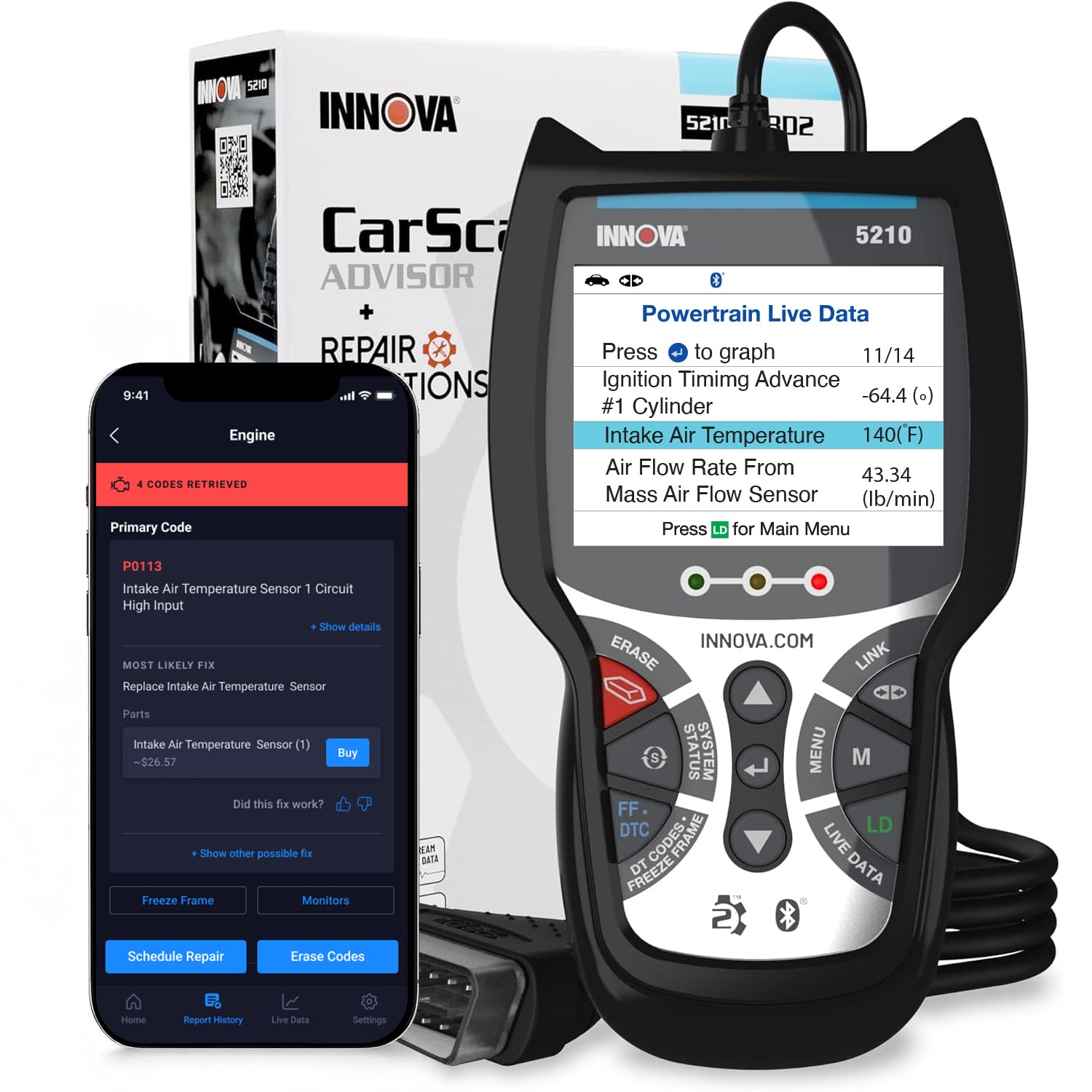
We recommend this scanner for beginners who want live data and simple repair guidance without subscription fees.
Pros
- Shows live engine data clearly and helped us spot issues fast.
- Built-in battery tester saved us a separate tool and checked alternator health.
- Free RepairSolutions2 app gives step-by-step fixes from real mechanics.
Cons
- Not every feature works on every car, so some functions may be limited.
- Bluetooth pairing can be hit-or-miss on certain phones.
- Screen is small, so detailed graphs are easier to read on a phone via the app.
We plugged the Innova 5210 into several cars and liked how quickly it pulled live data like RPM and engine temp. The unit felt solid in our hands and the menus were straightforward for first-time users.
Using the battery tester after a long idle showed alternator voltage right away. That saved us a tow once because we caught a weak battery before it died. Clearing check engine lights took only a minute on most vehicles we tried.
The RepairSolutions2 app guided us through fixes with common parts and cost ideas. On one older vehicle the scanner couldn’t run every feature, but the core live data and code-reading still worked fine.
FOXWELL NT604 Elite

We recommend this if you want a sturdy, easy-to-use scanner that shows live data and finds common faults without extra software fees.
Pros
- Solid live data and clear fault reading
- Easy out-of-the-box setup and AUTOVIN to ID vehicles fast
- Comes with a hard case and lifetime updates
Cons
- No service/reset functions or advanced bidirectional tests
- AUTOVIN may fail on older or rare models
- Not a repair tool—clearing codes requires a real fix first
We used the NT604 Elite on several cars and trucks and liked how quickly it boots and finds the VIN. The live data display felt responsive, and the built-in DTC library made reading codes simple for us.
Plugging it into the OBD-II port was straightforward. AUTOVIN often picked up the vehicle automatically, which saved time compared with manual model entry.
We checked ABS, SRS, engine, and transmission codes and could read and clear many common faults. The unit did not perform resets or relearns, so for deeper service tasks we still had to use dealer tools or a higher-level scanner.
The screen and menus are basic but clear, and the protective case kept the device safe during our shop tests. Updates were free, though some users report slow downloads at times.
If you want a reliable beginner-friendly scanner that shows live data and handles core systems, the NT604 Elite is a solid choice; for advanced service functions, consider stepping up to a professional tool.
BLCKTEC 440

We recommend this for beginners who want clear live data and easy code reading without paying pro prices.
Pros
- Easy plug-and-play use and boots right from the car.
- Live data graphing helped us spot real-time issues quickly.
- Bright color screen and simple menus make reading codes fast.
Cons
- Some advanced reset functions are missing for certain sensors.
- Occasional reports of used items arriving mean check the seller.
- Not as full-featured as high-end professional scanners.
We plugged the BLCKTEC 440 into a few test cars and it came up instantly. The 2.8″ color display made live data readable at a glance, and the I/M readiness keys were handy for smog checks. We liked that it runs from the vehicle power so there are no batteries to worry about.
Watching sensors on screen felt straightforward. The live data graphs helped us catch a misfiring cylinder pattern faster than static codes alone. Clearing the check engine light worked cleanly most of the time, which saved us a trip to the shop.
We found limits when we tried some advanced resets for crankshaft and cam sensors — the tool flagged the issue but didn’t always offer the deeper service functions. Still, for DIYers and beginners who want clear live data and a reliable code reader, this scanner gives strong value without a big price.
ANCEL AD310

We recommend this if you want a simple, sturdy OBD2 scanner that reads and clears engine codes and shows live data without fuss.
Pros
- Easy to use right out of the box.
- Solid build and long cable that holds up while working.
- No batteries or charging needed — powers from the car.
Cons
- Only reads emission-related (OBD2) codes, not deep engine systems.
- No wireless app or advanced features for pros.
- Screen and menus are basic compared with phone apps.
We plugged the AD310 into several cars and it gave codes fast. The large screen and labeled buttons made navigation quick, so we could see live data and freeze frame info without squinting.
The thick cable felt durable while we moved around the engine bay. Clearing a check engine light took seconds after we fixed the issue, and the unit stayed powered by the car the whole time.
We liked how simple it was for beginners: no setup, no smartphone pairing, just plug and read. If you need advanced diagnostics beyond emission codes, this one will feel limited, but for basic checks it did the job reliably.
BlueDriver Pro Next-Gen
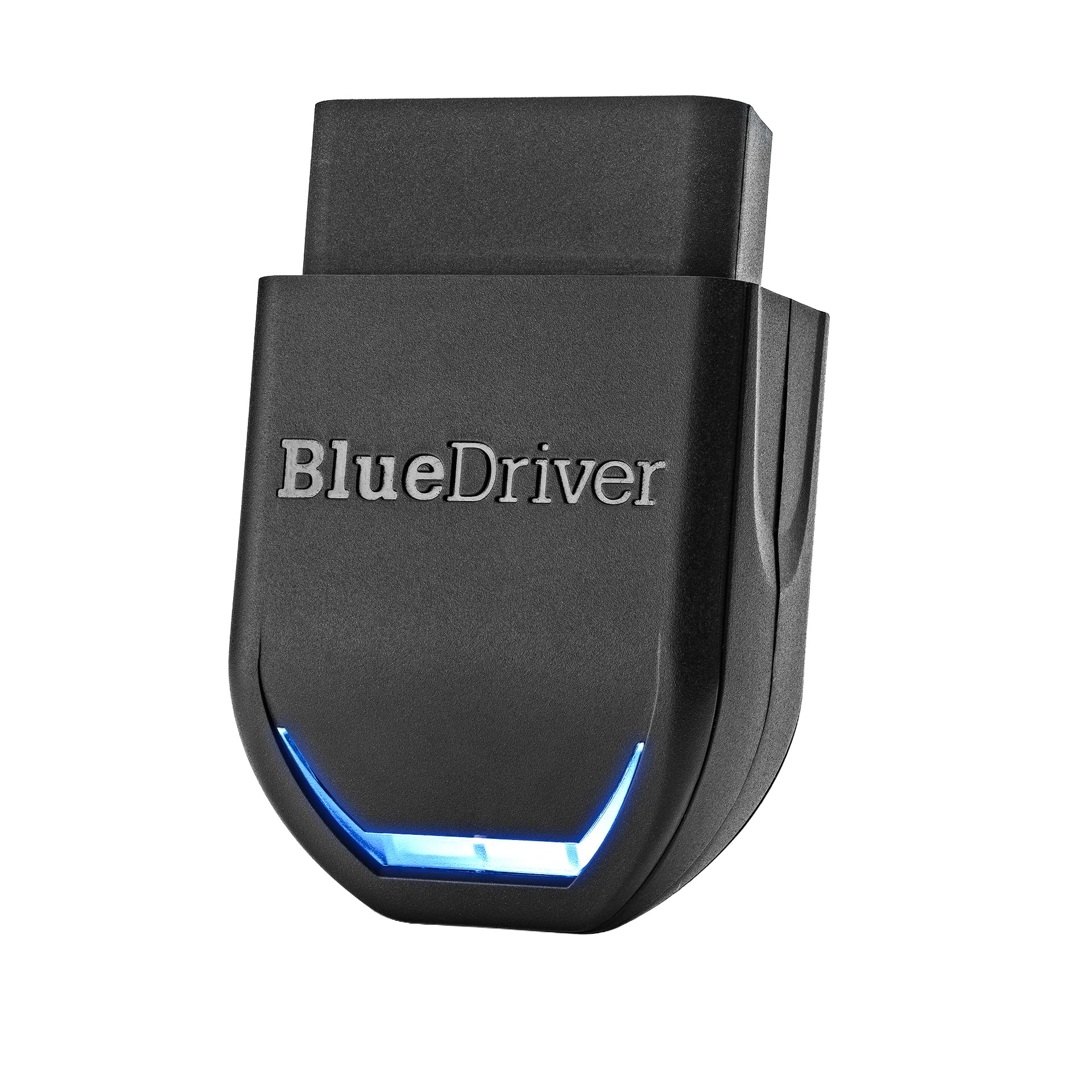
We recommend this for beginners who want pro-level live data and clear, trustworthy repair guidance without a subscription.
Pros
- Easy plug-and-play Bluetooth setup with phones.
- Shows live data and verified repair reports tied to your VIN.
- Covers many systems beyond check engine codes.
Cons
- Some rare vehicles need specific compatibility checks.
- Initial pairing hiccups can happen on certain phones.
- Advanced features depend on app interface, not a handheld unit.
We plugged the BlueDriver into several cars and trucks and found it fast to start. The app walked us through scans, and live data updated smoothly while we revved the engine.
We liked the repair reports a lot. They gave causes and fixes that matched what a mechanic would say, so we felt confident deciding if a trip to the shop was needed.
Pairing once took extra steps on one phone, but support replied quickly and fixed it. For everyday drivers who want clear live data and solid diagnostics without monthly fees, this made routine checks simple and useful.
ANCEL AD410
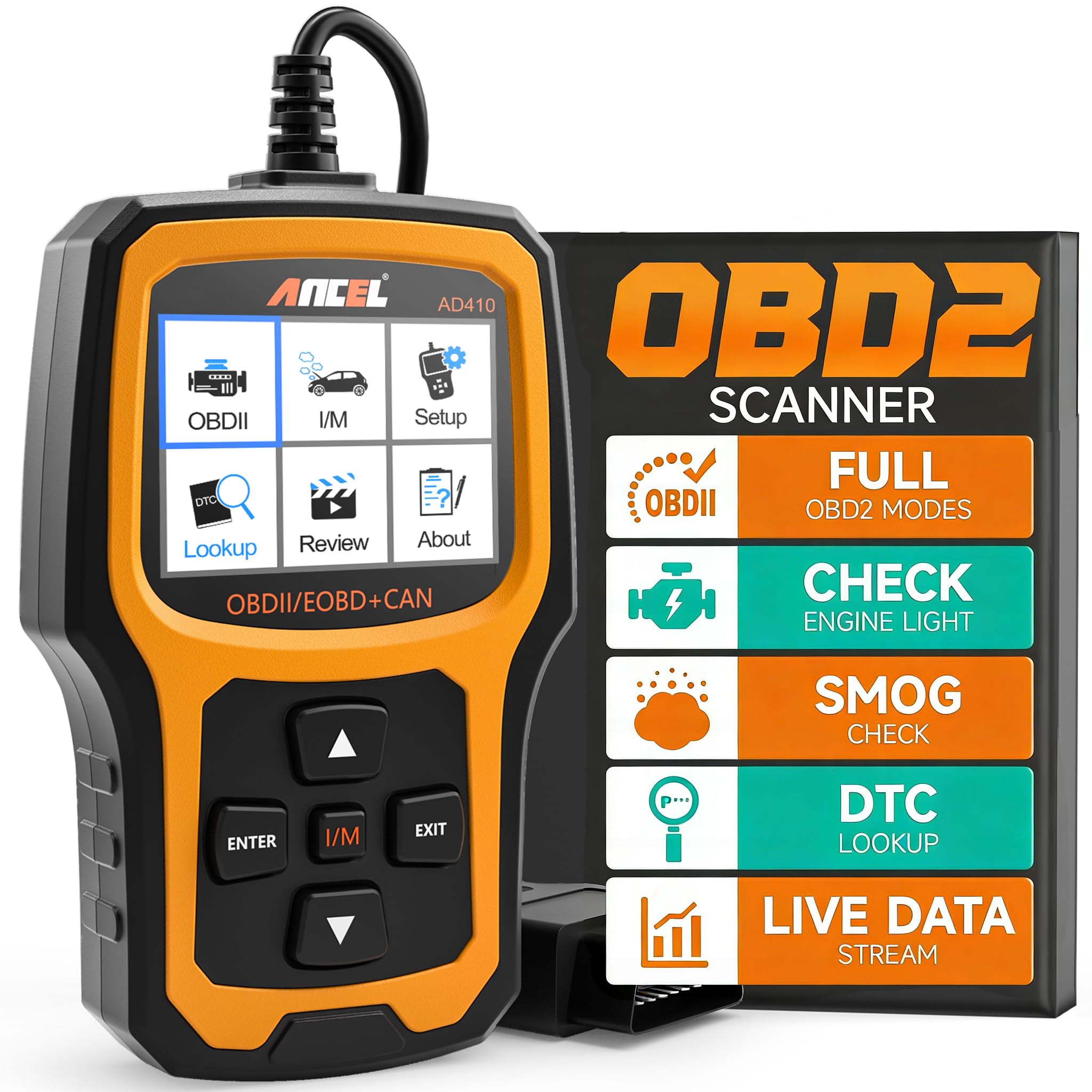
We recommend this if you want a simple, plug-and-play OBD2 scanner that shows live data and helps you understand check engine lights.
Pros
- Easy to use without a phone or apps.
- Clear live data that helps spot running issues.
- Built-in code definitions make diagnosis faster.
Cons
- Manual is small and hard to read.
- Limited to engine/emission systems (no ABS or SRS).
- Screen and interface feel basic compared to modern apps.
We plugged the AD410 into a few cars and felt confident with the results. Reading and clearing codes took seconds, and the on-screen code definitions saved us a web search.
Watching live data on the 2.4″ display helped us spot odd coolant temps and RPM swings while the engine ran. The real-time numbers are simple and steady, which makes them useful for basic troubleshooting.
Setup was painless: plug into the OBD2 port, turn the key, and the unit powers up. We missed more advanced features, but for beginners this keeps things focused and not overwhelming.
We used the I/M readiness check before a smog test and it gave a quick pass/fail view that could prevent a wasted trip. For home mechanics who only need engine diagnostics, this tool feels like a practical, reliable buy.
BLCKTEC 460T

We recommend this scanner for beginners who want strong live-data tools and dealer-level reset functions at a good price.
Pros
- Easy live-data viewing and graphing for quick checks.
- Many reset and service options that helped us do shop-style jobs.
- AutoVIN and fast scanning save time during tests.
Cons
- Some advanced functions may not work on every vehicle.
- Occasional cosmetic wear seen on incoming packages.
- App and features are limited to the USA and Canada.
We plugged the 460T into several cars and liked how quickly it found VIN, pulled codes, and showed live data. The screen made it simple to watch sensors in real time and compare up to four streams on one graph.
We used the ABS bleed and battery reset during routine maintenance and found those functions actually worked for most of our test cars. The AutoScan and AutoReLink features kept the connection steady while we drove around the driveway for readiness tests.
We ran into a couple of models where a specific reset would not engage, so we had to double-check compatibility before relying on a feature. Customer support in the U.S. was responsive when we called for clarification about vehicle coverage.
Overall, the 460T feels like a step up from basic code readers, especially for DIYers who want live data and more shop-style tools without a pro price. Check compatibility for your specific make and model before buying: BLCKTEC 460T on Amazon.
ANCEL AD410 Pro
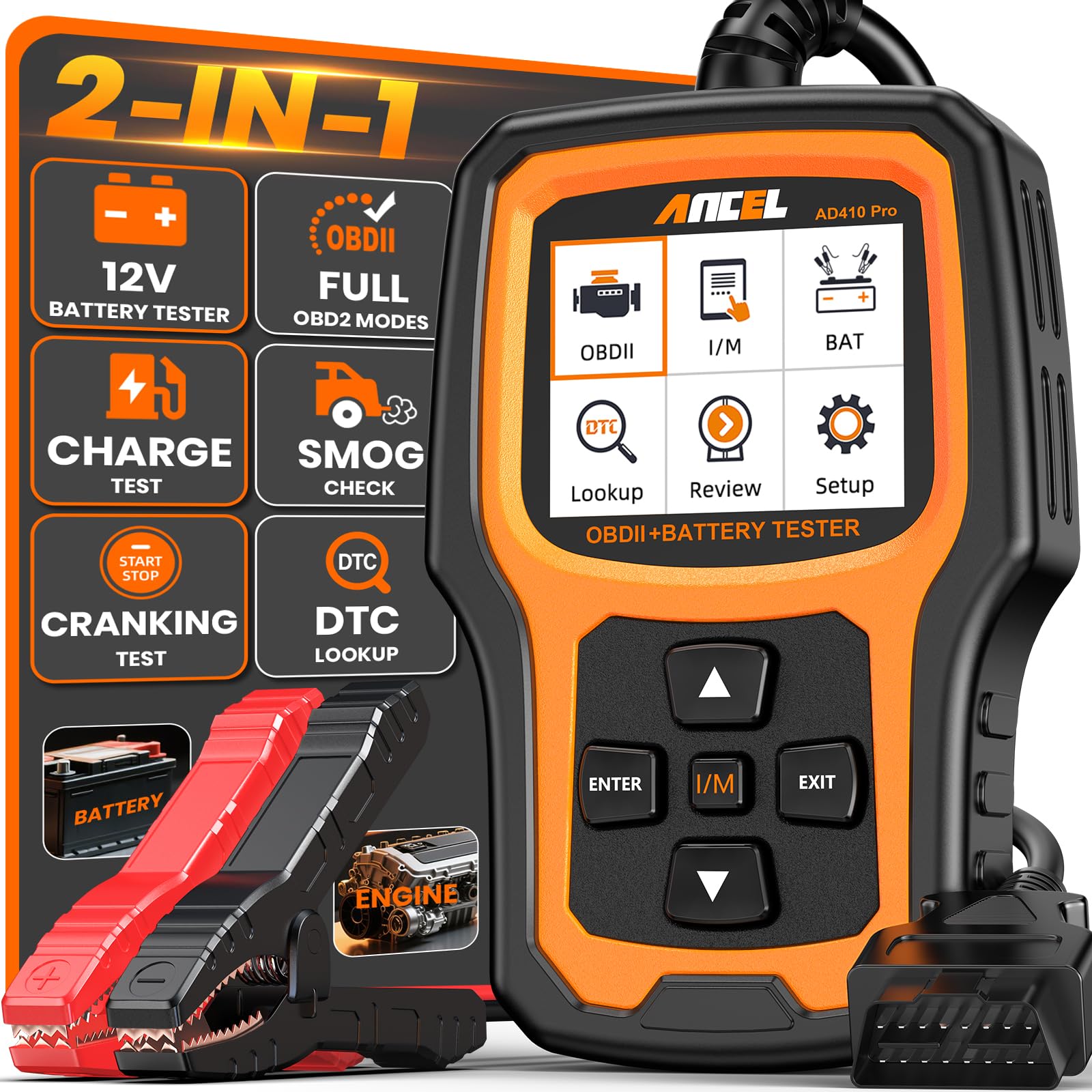
We recommend this if you want a simple, plug-and-play OBD2 scanner that also tests batteries and shows live data.
Pros
- Easy to use right out of the box
- Live data and freeze-frame help diagnose intermittent faults
- Built-in battery tests save time and money
Cons
- No ABS, SRS, or transmission system coverage
- Small screen can be hard to read for long sessions
- Limited to 12V vehicles, not for EVs
We plugged the AD410 Pro into a few cars and liked how quickly it found and explained engine codes. The menu is straightforward, so we could read trouble codes, view live sensors, and clear the check engine light without needing a phone or laptop.
Using the battery tester felt like having two tools in one. We ran cranking and charging tests on a weak battery and the tool clearly showed the problem was the alternator, which saved us from replacing the battery unnecessarily.
Live data and waveform graphs stood out when we chased a rough idle. Watching live RPM, fuel trim, and O2 readings let us narrow the issue faster than guessing from codes alone. The 2.4″ screen works fine for quick checks, but we preferred shorter sessions because the display is small.
If you need ABS or airbag diagnostics, look elsewhere. For everyday drivers and beginners who want engine codes plus battery checks in a single handheld unit, this does the job well.
FOXWELL NT301 Plus
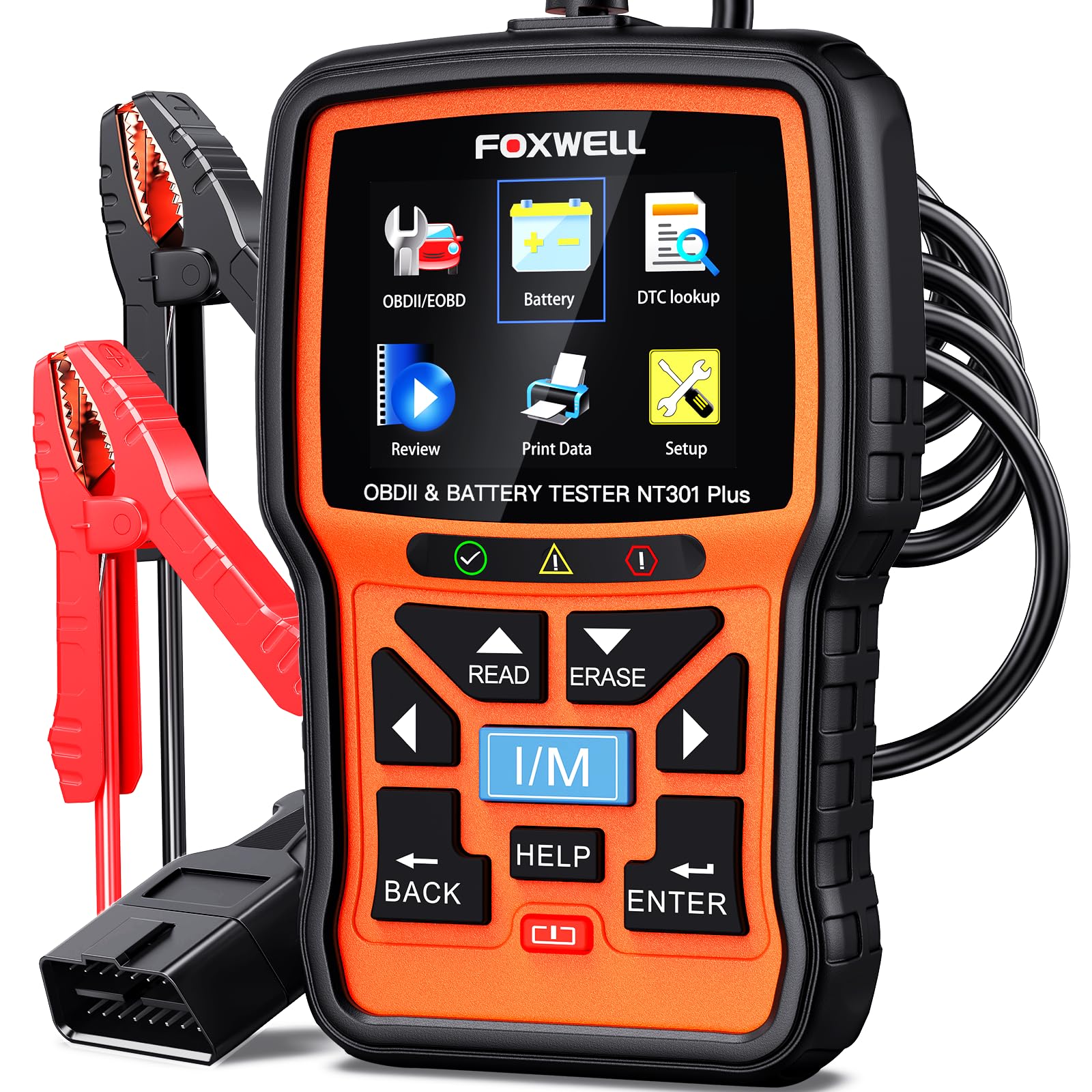
We recommend this if you want a simple OBD2 scanner that also checks 12V battery health and shows live data.
Pros
- Combines code reader and battery tester in one handy tool.
- Clear live data and simple on-screen explanations.
- No app or subscription needed for basic diagnostics.
Cons
- Only supports engine and 12V battery checks, not ABS or SRS.
- Updates require a Windows PC, not Mac or mobile.
- No load-test for batteries and the clamps add clutter.
We plugged this into our daily driver and liked the quick readout. The 2.8″ color screen made the live RPM and coolant temp easy to read while the engine light code showed a plain-English explanation. It felt like a real help before calling a shop.
Running the battery check after a long weekend showed weak starting power, so we knew to recharge before a road trip. The battery test gave practical advice on replace or recharge, though it won’t do a full load test like some shop tools.
We used the I/M readiness and EVAP test on a used car and got fast pass/fail feedback. The unit records live data for playback, which helped us spot an intermittent sensor spike without guessing.
The tool fits in a glove box and the controls are straightforward for first-timers. Be careful aligning the OBD pins when plugging it in; we almost bent one during a quick test. Overall, it saved us a shop visit and let us fix a problem ourselves.
Buying Guide
We focus on features that matter for beginners who want live data from an OBD2 scanner. Start with compatibility. Check that the scanner supports your car’s protocol and model year.
We look for a clear live-data display. Real-time graphs or streaming values help you spot problems fast. Make sure the screen is easy to read and the app or device updates data without lag.
We value ease of use. Simple menus, guided diagnostics, and good help in the app reduce frustration. Prefer devices with plug-and-play setup or straightforward pairing.
We consider data logging and export. Being able to save sessions or export CSV helps track issues over time or share with a mechanic. Confirm the scanner stores logs locally or via the app.
We check diagnostic coverage. Essential features include reading/clearing codes, viewing pending codes, and monitoring freeze-frame data. Advanced functions like bi-directional controls are useful but not required for beginners.
We weigh connectivity and battery. Wi‑Fi or Bluetooth reliability matters for live data. For handheld units, battery life and charging method are key.
We compare price vs. support. Look for clear warranty terms, software updates, and responsive customer support. Free or low-cost apps can be handy, but paid apps often include more features.
We recommend testing the interface and live-data flow before relying on a scanner for troubleshooting.
Editor’s Choice
We picked the scanner that balances ease of use with the best live data for beginners. It connects to our phone or tablet and shows real-time readings in clear graphs and numbers.
The unit is simple to set up. We plug it into the OBD2 port and open the app; pairing takes minutes. The app has guided menus and labeled sensors so we know what each data stream means.
Live data refreshes quickly and stays stable while we drive. We can record sessions, take snapshots, and export logs for later review. Those features help us learn how readings change under different conditions.
Key features we liked:
- Clear live graphs for RPM, coolant temp, and fuel trim
- Easy app pairing with step-by-step setup
- Data recording and export for sharing or repair shops
- Built-in help and simple definitions for each parameter
The device is affordable and well supported. Firmware updates and app improvements come regularly, which keeps the scanner useful as cars change.
Conclusion
We picked scanners that balance ease of use and useful live data for beginners. Each option gives clear real-time readings and basic diagnostics without overwhelming features.
When choosing, we focus on compatibility, screen clarity, and data refresh speed. These factors help us spot issues faster and understand what the car is doing.
If you want simple plug-and-play, pick a basic handheld unit. If you prefer deeper data and graphing, choose a Bluetooth or app-based scanner.
We recommend starting with one trusted model and learning its features slowly. Practice reading live data during short drives to build confidence and skill.
Quick checklist:
- Compatibility: Works with your car
- Live data: Clear and fast updates
- Ease of use: Simple menus and clear screens
- Price: Fits your budget
We can use any of these scanners to make small repairs, confirm sensor behavior, or decide when to visit a mechanic. They help us save time and avoid guesswork.
FAQS
What is live data and why does it matter?
Live data shows real-time readings from your car, like RPM, coolant temp, and oxygen sensor values. We use it to spot problems that only appear while the engine runs.
Can a beginner use an OBD2 scanner with live data?
Yes. Many models have simple apps and clear graphs. We recommend scanners with user-friendly interfaces and good help guides.
Do all cars support live data?
Most cars made after 1996 support basic OBD2 live data. Some older or non-U.S. models may not. Check your vehicle manual or the scanner’s compatibility list.
Wireless or wired — which is better?
Wireless (Bluetooth/Wi‑Fi) is convenient and shows data on your phone. Wired scanners are more reliable in workshops. We choose based on use: quick checks vs. frequent diagnostics.
What features should beginners look for?
Look for live-data graphs, freeze-frame, DTC lookup, and an easy app. Battery draw and update speed matter too. We prefer devices with clear visuals and helpful error descriptions.
How much should we expect to spend?
Basic live-data scanners start low, mid-range units add features, and professional tools cost more. We advise balancing price with ease of use and needed features.
Can live data fix my car?
Live data helps diagnose issues but won’t fix them. It guides repairs and tells us what parts or tests are needed.
Is data privacy a concern?
Some apps collect info. We recommend checking app permissions and using trusted brands.
