How to Diagnose a No-Start Problem With an OBD2 Scanner

Quick Answer
You can use an OBD2 scanner to diagnose many car no-start problems by reading diagnostic trouble codes (DTCs), checking live engine data, and identifying whether the engine computer recognizes cranking, fuel-system signals, and security authorization. First, determine whether the engine cranks; then scan all accessible modules, review relevant data, and confirm suspected faults with appropriate tests rather than replacing parts based on a code alone.
What to check first
- No crank: Check battery condition, connections, starter circuit, and start-request signals.
- Cranks but won’t start: Read engine codes and check RPM during cranking, fuel delivery, ignition, and compression as needed.
- Security light flashing: Investigate key recognition and immobilizer status with a compatible scanner.
- No trouble codes: Continue testing; mechanical, electrical, fuel, and security faults may not set a readable generic OBD2 code.
- Scanner won’t connect: Check battery voltage, the diagnostic connector, and the vehicle’s communication circuits.
Important diagnostic tip
- Save the codes and available freeze-frame data before clearing anything. If the security system is involved, a basic engine-code reader may not access the necessary body or immobilizer modules.
A car that won’t start can leave you wondering whether the battery, starter, fuel system, engine sensors, or key fob is responsible. An OBD2 scanner can narrow the possibilities, but it works best when you combine its readings with the symptoms you can observe.
In automotive locksmithing and key-system troubleshooting, one important distinction is whether the engine fails to crank or cranks normally without firing. Those symptoms point toward different diagnostic paths, and an immobilizer fault can sometimes resemble an ordinary engine problem.
This guide explains how to scan a no-start vehicle, interpret useful live data, recognize possible key-related faults, and decide when professional testing is necessary. The guidance reflects established diagnostic principles applicable in 2026, while vehicle-specific procedures still depend on the manufacturer’s service information.
In This Guide
1. How Do You Identify the Type of No-Start Problem?
A no-start condition means the engine does not start and run when you request it to. The first step is to determine whether the starter turns the engine, because this changes which tests make sense.
What is the difference between no-crank and crank-no-start?
A no-crank condition occurs when the engine does not turn over, or the starter does not rotate it normally. A crank-no-start condition occurs when the engine turns over but never starts running.
- No crank: Suspect a weak battery, poor battery connections, starter trouble, a faulty start switch, a park/neutral or clutch interlock, or an immobilizer-related start restriction.
- Slow cranking: Investigate battery condition, cable resistance, starter current draw, and possible mechanical resistance.
- Normal cranking without starting: Investigate fuel delivery, ignition, crankshaft and camshaft signals, engine compression, timing, and security authorization.
- Starts briefly and stalls: Consider immobilizer behavior, fuel delivery, sensor signals, or an electrical fault that interrupts engine operation.
Listen for clicking, observe the dashboard, and note whether the security indicator behaves differently from normal. These observations help direct your scanner checks, but none proves a particular component has failed.
Can you diagnose a no-crank problem with an OBD2 scanner?
Sometimes, but a generic scanner cannot test every part of the starting circuit. It may read relevant control-module codes or live data if the vehicle’s electronics remain powered and communication is available.
If the battery is completely discharged or the engine computer cannot communicate, begin with basic electrical checks. Do not assume a failed engine computer just because the scanner cannot connect.
Section takeaway: Identify the exact starting symptom first. A no-crank vehicle needs starting-circuit checks, while a cranking engine needs tests that explain why combustion never begins.
2. How Do You Scan for Trouble Codes Correctly?
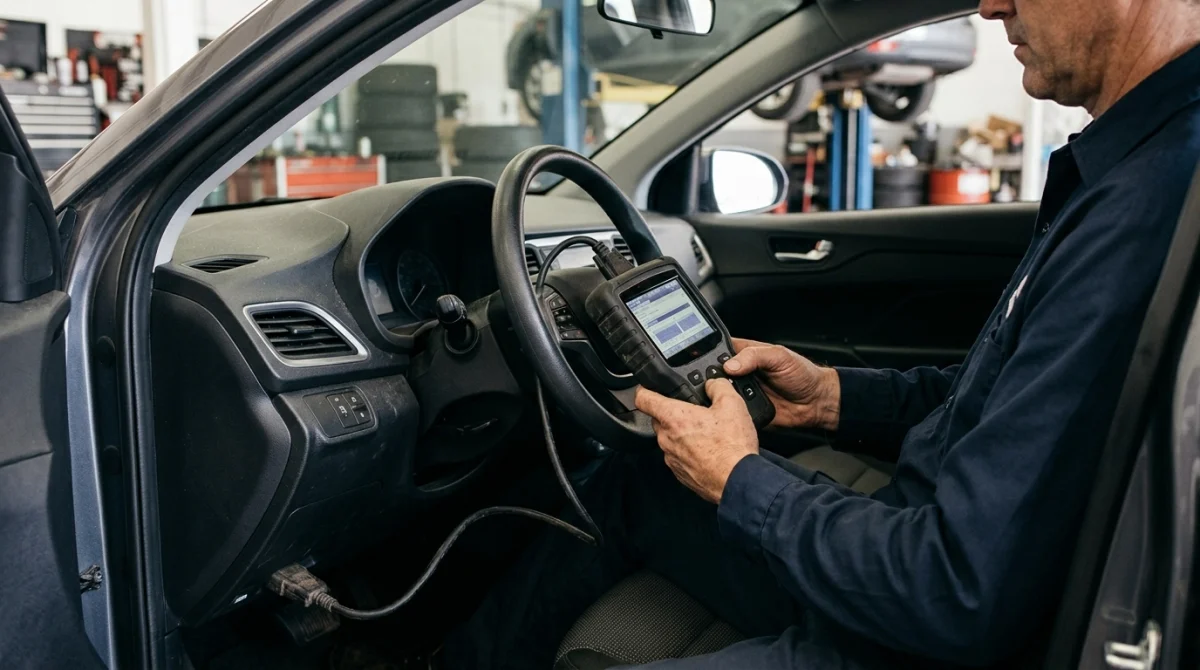
An OBD2 scan can reveal faults stored by the engine computer and, with a suitable diagnostic tool, other vehicle modules. Read the available information before clearing codes or disconnecting the battery.
Step 1: Connect the scanner safely
- Park securely, apply the parking brake, and select Park or Neutral as appropriate.
- Locate the vehicle’s diagnostic connector, commonly beneath the dashboard.
- Connect a compatible OBD2 scanner according to its instructions.
- Switch the ignition to the required position without repeatedly cranking the engine.
- Confirm that the scanner communicates with the vehicle.
If the engine is cranking, use short starting attempts and follow the vehicle’s instructions. Avoid repeated long cranking sessions that can overheat the starter or discharge the battery.
Step 2: Read stored, pending, and permanent codes
A diagnostic trouble code (DTC) identifies a condition the vehicle’s control system has detected. It does not automatically identify the failed part.
- Stored codes: Faults recorded by a module, sometimes from an earlier event.
- Pending codes: Fault conditions detected that may not yet meet the requirements for a confirmed code.
- Permanent codes: Emissions-related records that generally cannot be removed with a simple clear command; the vehicle must verify the repair under the applicable conditions.
- Manufacturer-specific codes: Additional information that may require an enhanced scanner and vehicle-specific definitions.
Save the exact code, its description, the module reporting it, and any freeze-frame data. Freeze-frame information captures operating conditions associated with certain stored faults, although it may not be available for every code or module.
Which codes may help diagnose a no-start?
| Example code | What it can indicate | Next diagnostic direction |
|---|---|---|
| P0335 | Crankshaft position sensor A circuit fault | Check the sensor circuit, wiring, signal, and related service information. |
| P0340 | Camshaft position sensor A circuit fault | Check sensor power, wiring, signal, and timing-related possibilities. |
| P0087 | Fuel rail or system pressure too low | Verify actual fuel pressure and follow the engine-specific test procedure. |
| P0201 | Cylinder 1 injector circuit fault | Test injector wiring, power, control, and the injector as specified. |
| P0513 | Invalid immobilizer key | Check key authorization and relevant security-module data with a compatible tool. |
These examples are diagnostic clues, not universal diagnoses. A sensor-related code can result from damaged wiring, missing power, a poor connection, or a mechanical timing problem rather than a failed sensor.
Locksmith’s note: Security-related code coverage varies by vehicle and scanner. Before buying a replacement key or authorizing programming, confirm the fault with a qualified automotive locksmith or dealer familiar with the vehicle.
Section takeaway: Record the complete scan before making changes. Use each code to choose a test, not to decide which part to replace.
3. What Live Data Should You Check While Cranking?
Live data shows values reported by the vehicle’s control modules in real time. When the engine turns over but will not start, a few carefully chosen readings can help identify which diagnostic path to follow.
Check engine RPM first
The engine RPM reading shows whether the scanner receives an engine-speed value from the vehicle. During cranking, a plausible nonzero reading generally indicates that the engine computer recognizes rotation, but it does not prove every crankshaft sensor function is correct.
- RPM remains at zero: Investigate the crankshaft position sensor circuit, wiring, power and ground where applicable, signal target, and engine-computer input.
- RPM appears intermittently: Consider an intermittent signal, damaged wiring, a poor connection, or an issue with the scan tool’s update rate.
- RPM looks plausible: Continue checking fuel delivery, ignition, compression, timing, and security authorization.
Do not replace the crankshaft position sensor based only on a zero reading. Confirm the sensor’s circuit and signal using the manufacturer’s diagnostic procedure.
Check battery voltage and sensor readings
Low voltage can interfere with starter operation and electronic-module communication. If your scanner supports it, observe module voltage during cranking and compare the results with vehicle-specific specifications.
Next, inspect other useful parameters when available:
- Engine coolant temperature (ECT): A cold engine should generally report a temperature reasonably consistent with its surroundings after sitting long enough to cool.
- Intake air temperature (IAT): Compare it with ambient conditions when the engine is cold, allowing for sensor location and heat soak.
- Throttle position: Look for plausible readings rather than assuming an unusual value proves a faulty throttle body.
- Fuel rail pressure: On supported vehicles, check whether the reported pressure follows the manufacturer’s cranking requirements.
- Camshaft/crankshaft synchronization: Some enhanced scanners display synchronization or related status information that helps identify timing-signal problems.
Not every scanner exposes these parameters, and some readings are available only through manufacturer-specific modules or enhanced diagnostic software.
How do you distinguish fuel problems from ignition problems?
Live data can show whether the computer recognizes engine rotation or commands certain functions, but it cannot always confirm that fuel is reaching the cylinders or that a strong spark exists.
If RPM and synchronization appear reasonable, a technician may next verify:
- Fuel pressure and delivery using suitable equipment and vehicle-specific specifications.
- Spark using an approved spark tester and the correct safety procedure.
- Injector command with appropriate diagnostic equipment.
- Mechanical compression and valve timing if electrical and fuel tests do not explain the symptom.
Modern direct-injection systems can contain fuel pressures high enough to cause serious injury. Do not loosen fuel lines or attempt high-pressure testing without the proper equipment and training.
Section takeaway: Engine RPM is a useful starting point, not a complete diagnosis. Combine live data with electrical, fuel, ignition, and mechanical tests to confirm the underlying fault.
4. How Do You Diagnose Key Fob and Immobilizer Problems?
A car may crank normally yet refuse to start because its security system does not authorize engine operation. An OBD2 scanner with enhanced security-system coverage can help distinguish a key-recognition problem from an ordinary engine fault.
What is an immobilizer?
An immobilizer is an electronic anti-theft system that prevents normal engine operation unless the vehicle accepts the required key or credential. Depending on the design, the system may use a transponder chip inside a key, a smart key, or another electronic authorization method.
A remote’s lock and unlock buttons can work even when the immobilizer does not recognize the key. The remote-entry function and engine-start authorization are related in some systems but are not necessarily the same function.
What signs point toward a key or security fault?
- The security or anti-theft indicator flashes or behaves differently during a start attempt.
- The dashboard displays a key-not-detected or security-system warning.
- The vehicle starts with a spare key but not the usual key.
- The problem begins after a key replacement, battery disconnection, electrical repair, or remote-start installation.
- An enhanced scan reveals a key-recognition, immobilizer, or communication fault.
These signs support further security-system checks, but they do not prove the key itself is defective. Wiring, low vehicle voltage, an antenna or reader fault, module communication problems, and authorization issues can produce similar symptoms.
How should you scan for immobilizer faults?
- Record the engine-control module’s codes and available live data.
- Use a compatible enhanced scanner to check the body control module, immobilizer, or other relevant security module when supported.
- Review available key-recognition and start-authorization status information.
- Try a known-working spare key if available and permitted by the vehicle’s instructions.
- Have a qualified technician follow the manufacturer’s procedure if authorization remains unavailable.
A basic code reader may not communicate with the security module or show a useful key-status parameter. A blank engine-code screen therefore does not rule out an immobilizer fault.
For general background on electronic immobilizers and vehicle theft prevention, consult the NHTSA vehicle theft prevention guidance.
Locksmith’s note: Key fob programming and immobilizer registration are vehicle-specific security procedures. Confirm the vehicle’s make, model, year, VIN, and correct key compatibility before ordering a replacement or arranging programming.
Section takeaway: If the security indicator behaves abnormally, check key authorization instead of assuming the engine has a fuel or sensor problem. Use a compatible security-capable scanner and follow the manufacturer’s procedure.
5. How Do You Interpret the Results and Choose the Next Test?
The best next test is the one that checks the suspected failure directly. An OBD2 scanner narrows the search, while a targeted test helps establish whether the problem comes from a component, its wiring, its power supply, or another system.
| Observed result | Possible direction | Recommended next step |
|---|---|---|
| No crank, weak lights | Battery or electrical connection | Test battery condition, terminals, cables, and voltage under load. |
| Single click, no rotation | Starter circuit or mechanical resistance | Check starter power, ground, control signal, and mechanical condition. |
| Cranks, RPM stays at zero | Missing or unreadable engine-speed signal | Test the crankshaft signal circuit and related components. |
| Cranks, low reported fuel pressure | Fuel supply or pressure-control fault | Confirm actual pressure using the specified procedure. |
| Security warning, start denied | Key recognition or authorization fault | Check enhanced security-module data and test an available spare key. |
| No codes, cranks without firing | Undetected electrical, fuel, ignition, or mechanical fault | Test spark, fuel delivery, injector command, compression, and timing as indicated. |
Use a diagnostic sequence instead of guessing
When the first scan does not reveal a clear answer, work through a consistent process:
- Confirm the symptom: Record whether the engine cranks, starts briefly, or remains completely inactive.
- Check electrical basics: Verify battery condition, terminal connections, and relevant fuses.
- Review codes and live data: Focus on information related to the observed symptom.
- Choose a confirming test: Check the suspected circuit, fuel pressure, ignition, or security authorization.
- Recheck after repair: Follow the manufacturer’s verification procedure and confirm that the original symptom has disappeared.
Consider a vehicle that cranks normally, displays no engine codes, and shows no RPM on the scanner. Replacing a crankshaft sensor immediately would be premature; testing its wiring, supply where applicable, signal, and related connections provides stronger evidence.
For manufacturer-specific warnings or starting procedures, consult the relevant owner’s manual or official support resources, such as Ford vehicle support for applicable Ford models.
Section takeaway: Match each test to the evidence already collected. Confirm the fault before replacing parts, and verify the repair under the conditions that originally caused the no-start.
6. What Are the Limitations of an OBD2 Scanner?
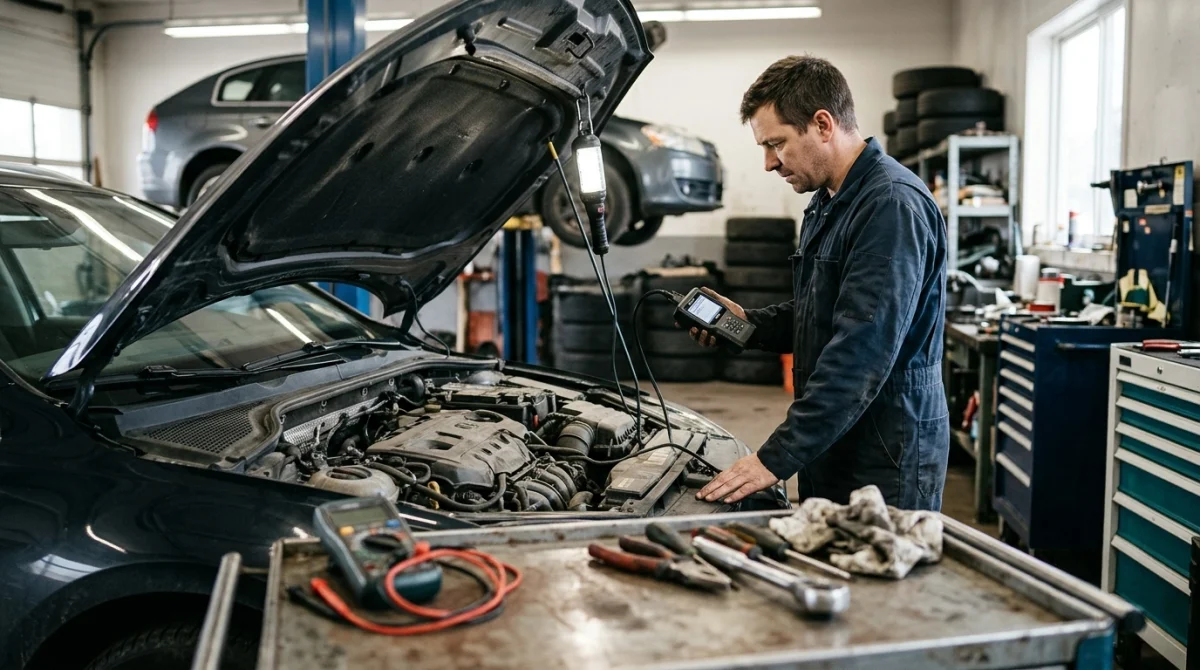
An OBD2 scanner is a diagnostic aid, not a complete replacement for electrical testing or mechanical inspection. Its usefulness depends on the vehicle, the scanner’s capabilities, module access, and the information available when the fault occurs.
Why might a scanner show no codes?
Some failures do not trigger a code that a generic reader can retrieve. Other faults may exist in a module that the scanner cannot access, or the conditions needed to set a code may not have occurred.
A no-code result does not prove that the engine has adequate fuel pressure, a strong spark, correct compression, proper valve timing, or valid immobilizer authorization.
Can a cheap scanner diagnose every no-start problem?
No. A basic code reader may retrieve standard emissions-related engine codes but lack enhanced live data, manufacturer-specific diagnostics, immobilizer access, or body-module communication.
Choose a tool according to the vehicle and the diagnostic task. Before buying one, verify that it supports the required make, model, year, communication protocol, and relevant module functions.
Which mistakes should you avoid?
- Clearing codes too early: Save diagnostic information before erasing anything.
- Replacing parts from code descriptions alone: Test the relevant circuit and component first.
- Ignoring battery voltage: Low voltage can cause misleading symptoms or communication failures.
- Assuming every scanner reads immobilizer faults: Confirm enhanced module coverage before relying on it.
- Attempting unsafe repairs: Avoid exposed moving parts, ignition hazards, and high-pressure fuel-system work without proper training.
- Using unverified programming instructions: Key programming and security procedures vary by vehicle and may require authorized tools or credentials.
If the scanner cannot communicate, several causes are possible, including a discharged battery, a connector or wiring problem, a blown fuse supplying the diagnostic circuit, or a module communication fault. Check the appropriate wiring diagram and service information before drawing conclusions.
Expert tip: If the vehicle has a security warning, recent key work, or a no-start condition after installing aftermarket remote-start equipment, tell the technician about that history before further parts are replaced.
Section takeaway: A scanner helps narrow the fault but cannot prove every system is healthy. Use the correct diagnostic coverage and confirm findings with appropriate tests.
7. Frequently Asked Questions
Can an OBD2 scanner tell me why my car won’t start?
It can identify relevant trouble codes and, on supported vehicles, display live data that helps narrow the cause. However, some no-start problems require battery testing, fuel-pressure measurement, ignition checks, security-module diagnostics, or mechanical inspection.
What does zero RPM mean when cranking?
Zero RPM may mean the engine computer is not receiving a usable engine-speed signal. Possible causes include a sensor-circuit fault, wiring damage, a missing signal, or a communication or display limitation; test the circuit before replacing parts.
Can a bad key fob cause a no-start condition?
Yes, if the vehicle cannot recognize or authorize the key, its immobilizer may prevent normal starting. A remote-button failure alone does not prove the immobilizer is at fault, so check the security indicator and use compatible security-module diagnostics.
Will an OBD2 scanner work if the engine does not crank?
Often it can communicate with the vehicle if the battery and relevant modules remain powered, but communication is not guaranteed. If it cannot connect, check battery voltage, diagnostic-connector power and ground, relevant fuses, and communication circuits.
Should I clear trouble codes before trying to start the car again?
No. Record the codes, freeze-frame data, and useful live readings first. Clearing codes can remove helpful diagnostic information, reset readiness monitors, or erase other useful evidence, depending on the vehicle and system.
Do I need a professional scanner to diagnose an immobilizer problem?
Not every vehicle requires a professional tool for initial checks, but many security systems need enhanced diagnostics to read key authorization, module faults, or programming status. Confirm the scanner’s coverage before purchasing it or arranging a repair.
When should I call an automotive locksmith or mechanic?
Contact a qualified professional when the security system rejects a known-compatible key, the vehicle needs key registration, the scanner cannot access a required module, or electrical and mechanical tests require specialized equipment. A mechanic can handle broader engine diagnosis, while an automotive locksmith can assess supported key and immobilizer issues.
Final Takeaway: Diagnose the Evidence Before Replacing Parts
To diagnose a no-start problem with an OBD2 scanner, first determine whether the engine cranks, then record trouble codes and examine relevant live data. Use those findings to choose the next test instead of assuming a code identifies the failed component.
If the engine cranks but will not fire, focus on engine-speed signals, fuel delivery, ignition, timing, compression, and security authorization as the evidence suggests. If the security light or key recognition appears involved, use a scanner with suitable coverage and seek qualified help when necessary.
The goal is a confirmed diagnosis, not simply a cleared warning light. Careful testing can help prevent unnecessary parts replacement and make the repair process more efficient.
