
EPLCSE V529 OBD2 Scanner Review: Is It Worth It?

Introduction
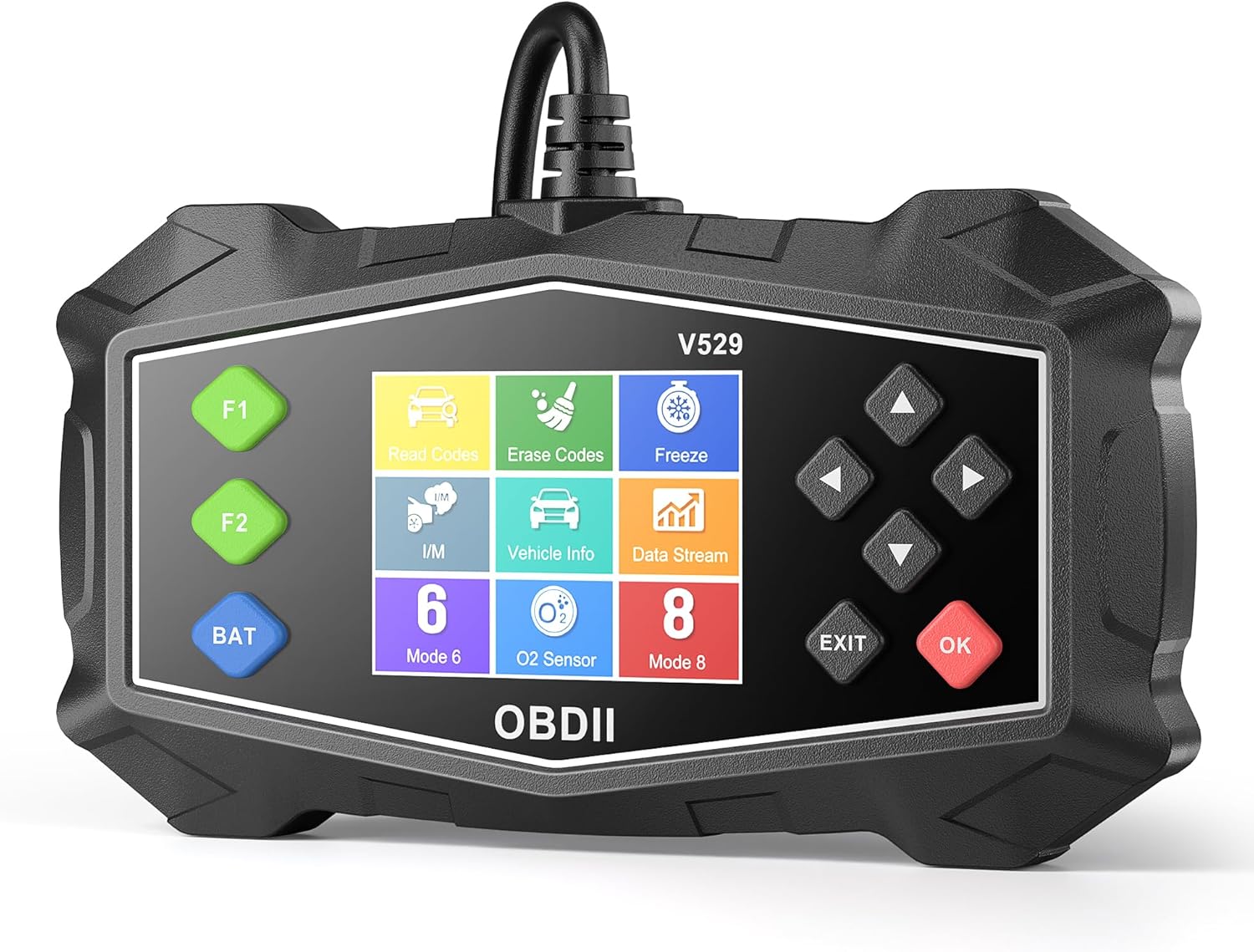
The EPLCSE V529 OBD2 Scanner is a wired automotive diagnostic code reader designed for engine, emissions, live-data, and basic battery-health checks. Its primary use is helping everyday drivers and DIY owners investigate a check-engine light, review emissions readiness, and examine selected real-time vehicle data before deciding on repairs.
This EPLCSE OBD2 Scanner review focuses on its verified capabilities: live data, O2 testing, Mode 6, Mode 8 EVAP functions, battery-voltage monitoring, and a test-report function. It remains an OBDII-focused handheld tool rather than a full-system professional tablet; see our OBD2 scanner vs code reader guide for the distinction.
🏆 My Quick Verdict
💡 Best For: DIY drivers who want check-engine diagnostics, emissions checks, live data, and battery-voltage monitoring in one wired handheld scanner.
⚡ Key Specs:
2.8-inch display, V529 model, nine OBDII protocol support, live data, O2 sensor testing, Mode 6, Mode 8 EVAP testing, I/M readiness, and battery-voltage waveform monitoring.
✅ Bottom Line: The V529 offers a useful step up from a basic trouble-code reader because it combines emissions-focused diagnostics with live data and battery checks. Its main limitation is that verified product information does not establish advanced ABS, SRS, bidirectional, coding, or key-programming capability.
At a Glance
- Reads and clears check-engine diagnostic trouble codes on compatible OBDII vehicles.
- Supports live data plus O2 sensor, Mode 6, Mode 8 EVAP, and I/M readiness functions.
- Includes battery-voltage readings and a real-time voltage waveform with health indication.
- Uses F1/F2 hotkeys for faster access to selected readiness and carbon-check functions.
- Supports nine OBDII protocols and is listed for most U.S. vehicles from 1996 onward.
- Advanced module diagnostics and key programming are not established in verified product specifications.
Premium Specifications Table
| Specification | Verified Detail |
|---|---|
| Brand / Model | EPLCSE V529 |
| Display | 2.8-inch screen |
| Power | Powered through the vehicle OBD2 connection |
| Core Diagnostics | Read/clear codes, live data, O2 sensor test, Mode 6, Mode 8 EVAP, I/M readiness |
| Battery Function | Voltage reading, real-time waveform, Poor/Medium/Good indication |
| Protocols | Nine OBDII protocols listed |
| Languages | 12 languages listed |
| Included Items | Scanner and instruction manual |
Design & Build Quality
The V529 uses a conventional handheld wired-scanner layout that keeps the screen and controls together without relying on a phone. The 2.8-inch display is compact, while dedicated F1/F2 hotkeys reduce menu navigation for frequently used checks.
Verified listings do not specify the housing material, so claims about impact resistance or rugged construction would be premature. Its practical appeal comes from a self-contained form factor and direct vehicle connection rather than premium physical materials.
Setup, Installation & Ease of Use
- Unbox the scanner and instruction manual, then inspect the cable and connector before use.
- Locate the vehicle’s 16-pin OBDII diagnostic port and confirm the vehicle is compatible.
- Connect the scanner firmly so it receives operating power from the diagnostic port.
- Follow the vehicle and scanner instructions for ignition position before starting a diagnostic session.
- Keep the diagnostic cable away from pedals, steering movement, and hot or moving components.
- Store the scanner dry and protected between uses so the connector pins and cable remain clean.
Core Performance & Feature Breakdown
The V529’s strongest capability is combining standard check-engine diagnostics with extra emissions and monitoring functions. It can read and clear fault codes, display live data, check I/M readiness, and provide O2 sensor, Mode 6, and Mode 8 EVAP functions on compatible vehicles.
Live data adds context that a code alone cannot provide. Values such as RPM and vehicle speed can be watched in real time during diagnosis.
Expert Insight
Treat a diagnostic code as a starting point, not a replacement-part instruction. Live data, freeze-frame context, wiring checks, and vehicle-specific service information should guide the next step before parts are purchased.
The battery function broadens the tool’s usefulness by showing voltage and a real-time waveform with a simple health indication. That can flag an obvious voltage concern, although it should not be treated as a substitute for every dedicated battery load or charging-system test.
Our live-data scanner guide explains how real-time readings add diagnostic context.
Key Features Explained
Check-Engine Code Reading and Clearing
The scanner reads and clears OBDII check-engine fault codes, making it useful for identifying stored engine and emissions problems. Clearing a code does not repair the underlying fault, so the correct repair should come first.
Emissions Readiness and Test Modes
I/M readiness, O2 sensor testing, Mode 6, and Mode 8 EVAP support make the scanner more useful for emissions-focused troubleshooting. Actual test availability can still depend on what the specific vehicle exposes through OBDII.
Live Data Monitoring
Real-time data lets the user watch changing values such as RPM and speed instead of seeing only static codes. This is especially useful when checking intermittent behavior or confirming whether a parameter responds normally.
Battery-Voltage Monitoring
The V529 can display battery voltage and a live voltage waveform with a simple condition indicator. It is useful for quick screening, but deeper battery or charging diagnosis may require dedicated test equipment.
Real-World Usability & Maintenance
A wired scanner avoids Bluetooth pairing, account login, and app dependency, while drawing power from the vehicle diagnostic port. That keeps the basic workflow simple.
Keep the screen, buttons, cable, and connector clean and dry, and never pull the tool by its cable. Inspect the pins before use because poor contact can interrupt communication.
The built-in test-report function can summarize vehicle identification and diagnostic data. Save findings before clearing codes or seeking repair advice.
Premium Pros & Cons Cards
Pros
- Combines code reading, live data, emissions tests, and battery-voltage monitoring in one tool.
- 2.8-inch standalone display avoids dependence on a phone or wireless connection.
- Nine-protocol support targets broad OBDII vehicle compatibility.
- F1/F2 shortcuts and a built-in report function improve everyday convenience.
Cons
- Verified specifications do not establish ABS, SRS, bidirectional control, coding, or key programming.
- The small handheld screen provides less viewing space than larger tablet-style scan tools.
- A verified manufacturer warranty duration was not found in the researched product information.
Common Issues & Fixes
Scanner Does Not Power On
A loose connection or an unpowered diagnostic port can prevent startup. Reseat the connector and check the vehicle’s relevant fuse and ignition requirements before assuming the scanner is faulty.
Scanner Will Not Communicate
Communication can fail when the vehicle is unsupported or the connection is poor. Confirm OBDII compatibility, inspect the connector, and retry with the correct ignition state.
Code Returns After Clearing
A returning code usually means the fault condition is still present. Diagnose and repair the underlying problem instead of repeatedly erasing the warning.
What to Know Before You Buy
The first pre-purchase check is compatibility. It is listed for most U.S. vehicles from 1996 onward and nine OBDII protocols, but coverage can still vary by vehicle.
Do not assume key programming, immobilizer access, bidirectional tests, ABS, or airbag diagnostics. Those capabilities are not established by the verified specifications.
If you are still comparing feature levels, our OBD2 scanners for home mechanics guide provides broader shopping context.
Who Should Buy It / Who Should Skip It
✅ Who Should Buy It
- DIY owners who want more information than a basic code-only reader provides.
- Drivers preparing for emissions inspection who need I/M readiness information.
- Home mechanics who value live data and quick battery-voltage screening.
- Users who prefer a standalone wired tool instead of a phone-based adapter.
✗ Who Should Skip It
- Technicians who need verified full-system diagnostics across many control modules.
- Users who require bidirectional active tests, coding, or service-reset functions.
- Anyone buying specifically for key programming or immobilizer work.
- Shoppers who need a clearly documented long-term manufacturer warranty.
Alternatives to Consider
ANCEL AD310
Best For: Drivers who want a simple, established engine code reader.
Main Advantage: Straightforward read/erase, live data, freeze frame, I/M readiness, and vehicle information.
Trade-off: Its 128 × 64 backlit LCD is simpler than a color display.
Key Spec: Vehicle-powered through the OBDII diagnostic connector.
Autel AutoLink AL319
Best For: Drivers who prioritize quick emissions-readiness checking.
Main Advantage: One-click I/M readiness with color LEDs, audible indication, and a TFT display.
Trade-off: It is still focused on OBDII engine and emissions diagnostics rather than full-system workshop functions.
Key Spec: 220 × 176 TFT color display.
Is It Worth It?
The EPLCSE V529 is worth considering when your priorities are engine-code diagnostics, emissions readiness, live data, and quick voltage monitoring in one standalone tool. Those functions give it more diagnostic usefulness than a bare read-and-clear code reader.
Its value becomes less clear if you need deeper workshop capabilities. Buyers requiring verified ABS, SRS, coding, active tests, service resets, or key programming should choose a tool that explicitly documents those functions for their vehicle.
Final Verdict
The EPLCSE V529 is a capable DIY-focused OBD2 scanner for check-engine troubleshooting, emissions checks, live data, and basic battery-voltage screening. It is a sensible choice for users who understand its OBDII-focused scope and confirm compatibility before buying.
Frequently Asked Questions
Will the EPLCSE V529 work with my car?
It is listed for most U.S. OBDII vehicles from 1996 onward, but exact compatibility should be confirmed. Vehicle year, market, engine, and supported test modes can affect which functions are available.
How large is the EPLCSE V529?
The verified product information confirms a 2.8-inch display, but reliable physical dimensions were not consistent across researched listings. It is best described as a compact handheld wired scanner rather than quoting uncertain measurements.
Does the EPLCSE V529 include a manufacturer warranty?
A verified manufacturer warranty duration was not found in the product information used for this review. Check the current seller and manufacturer terms before purchase because return coverage and warranty support can differ.
How should I maintain the scanner?
Keep the scanner, cable, and diagnostic connector clean, dry, and protected during storage. Avoid pulling the unit by its cable, and inspect the connector pins before plugging it into a vehicle.
Can it diagnose ABS or airbag problems?
Verified product specifications do not establish ABS or SRS diagnostic support. Buy a scanner that explicitly lists those modules for your vehicle if those systems are a priority.
Can the EPLCSE V529 program a key fob?
No verified key-programming or immobilizer-programming capability is listed for this scanner. Key programming usually requires a specialized tool with vehicle-specific security access.
Affiliate disclosure: ReplaceKeyFob earns a small commission when you purchase through links on this page — at no extra cost to you. Our editorial process is independent: affiliate relationships never influence which products we recommend or how we rank them.
“`
