
Key Fob Got Wet and Stopped Working? Here’s What to Do Next

A wet key fob does not automatically mean the fob is dead. If you act quickly, there is a real chance it can recover — especially after a splash, rain exposure, or a brief soak. The big mistake is treating it like a normal battery problem and testing it over and over while moisture is still inside.
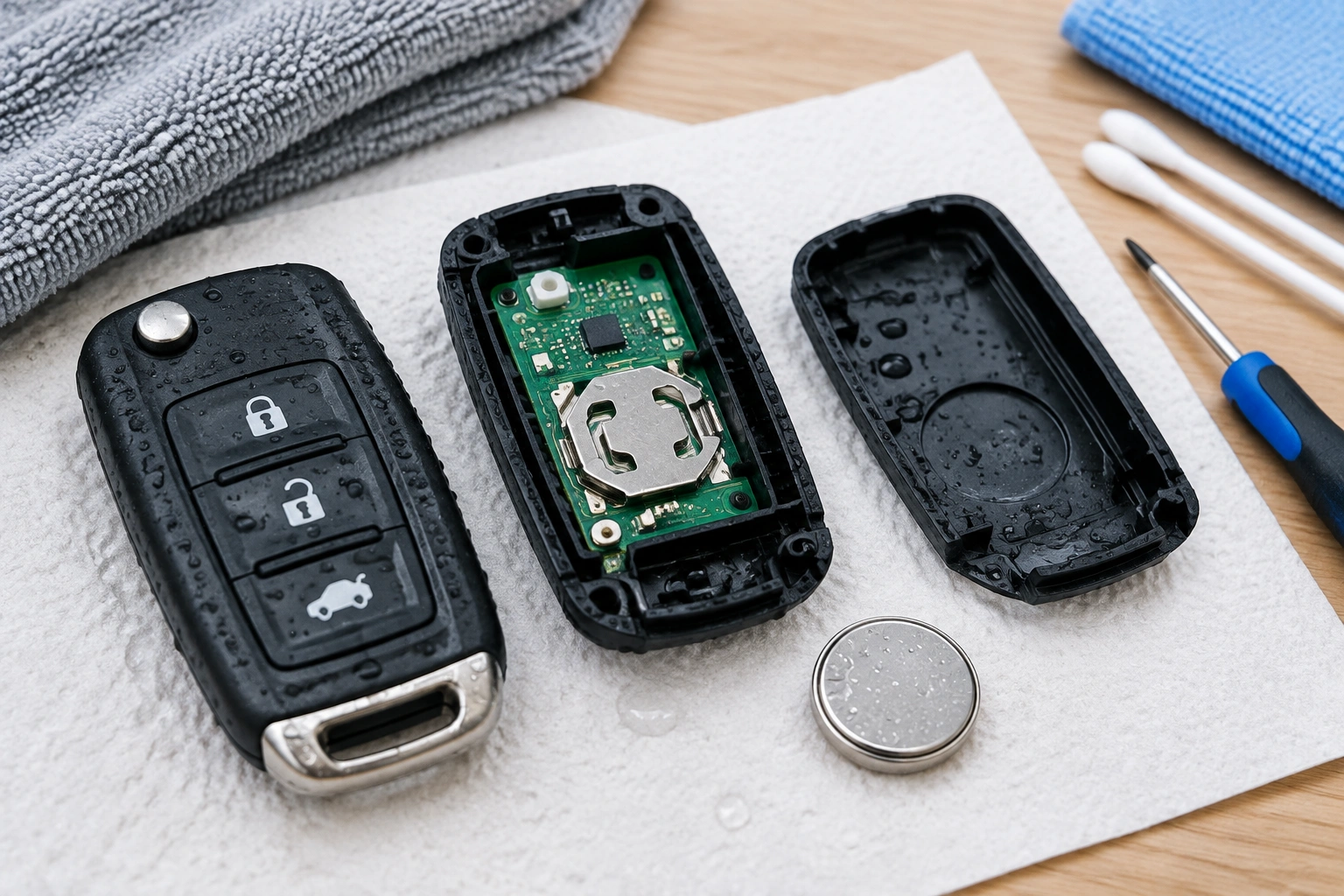
[image: Wet key fob troubleshooting guide]
The goal is simple: stop further damage, dry it correctly, then test it in a way that does not make things worse. If the fob was submerged, washed, or exposed to salt water or sticky liquid, the odds of internal damage go up and you should be more cautious about what you try next.
Can a Wet Key Fob Be Saved?
Sometimes, yes. A key fob that got wet and stopped working may come back after drying, battery removal, and a careful inspection. A fob that only got splashed is more likely to recover than one that went through a washing machine or sat in standing water.
The key difference is whether the water reached the circuit board and whether corrosion has started. If the fob was only damp on the outside, the fix may be straightforward. If it was soaked, the electronics may fail later even if the fob seems fine at first.
The practical rule is this: light moisture gives you a decent chance, but full submersion, saltwater, or sticky liquid exposure should make you think in terms of “save if possible, replace if necessary.”
Do This Immediately After the Key Fob Gets Wet
If the fob is still wet, the first move is to remove the battery right away if you can do so safely. That reduces the chance of a short circuit. Open the fob carefully at the seam, then take out the coin-cell battery.
If the case is sealed, difficult to open, or you are worried about breaking clips, do not force it. A stuck or sealed fob is a good point to stop and let a locksmith handle the opening, especially if the fob is expensive or still under warranty. For a basic snap-together fob, gentle prying with the correct tool is usually enough.
Do not keep pressing buttons to “see if it works.” Pressing buttons while moisture is inside can push water deeper into the circuit board and button contacts. That can turn a recoverable problem into a permanent one.
Also skip the heat gun, oven, or hair dryer. High heat can warp the plastic shell, damage the battery, or stress the electronics. Gentle drying is the safer path.
If you need a quick reference for the battery-removal step, the basic repair logic is the same: open the fob, remove the battery, and avoid pressing buttons while it is wet.
Drying Methods: What Works Best and What to Avoid
Air drying
Air drying is the safest option because it does not add heat or residue. Set the fob in a dry indoor spot with the case open if possible. If the battery is out, leave the compartment exposed so trapped moisture can escape.
Air drying is slow, but it is low risk. For a fob that only got damp from rain or a wet pocket, this may be enough.
Silica gel
Silica gel is usually more effective than rice because it is designed to pull moisture out of the air. If you have silica packets from packaging, place the opened fob in a sealed container with them.
This is the better choice when the fob was more than lightly damp. It is also cleaner than rice, which can leave dust or starch near the contacts.
Rice
Rice is convenient, but it is not the best drying method. It may help in a pinch, but it is less reliable than silica gel and can leave debris behind. If rice is your only option, treat it as a temporary step, not a guaranteed fix.
What to avoid
Do not put the fob in direct sun, on a radiator, or near a stove. Avoid shaking it aggressively. And do not reinstall the battery just to “test a little sooner.” That is one of the fastest ways to create a short.
How Long to Let the Fob Dry Before Testing It
There is no universal clock that fits every fob, because the amount of water matters.
A practical guide is:
- Light splash or brief rain exposure: wait at least several hours, and longer if any moisture is still visible in the battery area or around the buttons.
- Damp pocket or minor seepage into the case: plan on an overnight dry, then inspect again before testing.
- Submerged, washed, or heavily soaked fob: give it a full 24 to 48 hours or more, especially if the case was opened late or the battery area still looks damp.
- Salt water or sticky liquid exposure: wait longer, clean residue carefully if you can do so safely, and assume the recovery odds are lower.
The important part is not the exact number of hours — it is making sure the inside is truly dry. If you test too soon, you can make the damage worse. If you wait until the shell, battery area, and buttons are dry, you reduce the risk of a short circuit.
How to Tell Whether the Problem Is the Battery or Water Damage
A dead battery and water damage can look almost identical. That is what makes this problem frustrating.
Here’s the usual order of suspicion:
- Battery issue — If the battery is old, weak, or was exposed to moisture, replacing it may solve the problem.
- Moisture in the button area — The fob may work intermittently or only when pressed a certain way.
- Corrosion — White, green, or crusty residue around the battery contacts or board is a bad sign.
- Circuit board damage — If the fob still fails after drying and a fresh battery, the board may be damaged.
More specific clues help here:
- More likely a battery problem: the fob was working weakly before the water exposure, the LED or indicator is dim or dead, the battery is old, or the fob works again right after a battery swap.
- More likely circuit-board damage: the fob has intermittent operation, one button works and another does not, you see corrosion on the contacts or board, or it still fails after a fresh battery and full drying.
- More likely beyond a simple battery fix: the battery tests fine but the fob still does nothing, or it works briefly and then stops again.
A simple example: if the lock button works once after drying, then stops again the next day, corrosion may still be spreading. That is a warning sign that the problem is deeper than the battery.
For readers who want to compare this with other common key fob failures, our guide on why a key fob stops working randomly can help separate battery trouble, interference, and vehicle-side issues. If the trunk button is the only one acting up, this trunk button troubleshooting guide may also be useful.
Step-by-Step Fixes to Try After Drying
Once the fob is fully dry, follow this order:
1. Inspect the inside
Look for moisture, residue, or corrosion around the battery contacts and circuit board. Any green or white buildup means the fob needs closer attention.
2. Replace the battery
If the battery was exposed to water, replace it. Even if it still measures power, moisture can weaken contacts or create intermittent failure.
3. Reassemble carefully
Make sure the battery sits correctly and the case closes fully. A loose shell can let moisture in again.
4. Test each button once
Try the lock, unlock, panic, and trunk buttons one at a time. If one button works and another does not, the issue may be localized to the button contacts rather than the whole fob.
5. Watch for delayed failure
A fob that works right away can still fail later if corrosion continues. If it starts acting strangely again, the board may need professional cleaning or replacement.
If you want a practical comparison, think of it this way: a battery swap can fix a “dead” fob, but it will not repair corrosion or a damaged circuit board. If the fob was only lightly wet, the battery may be all it needs. If it was soaked, a battery alone is often not enough.
When Reprogramming Might Be Needed
Water damage does not always wipe out programming. In many cases, if the fob electronics survive, no reprogramming is needed at all.
Reprogramming is usually not needed just because the fob got wet. It becomes more likely if the internal electronics were damaged badly enough that the fob stopped communicating properly, if the fob was replaced entirely, or if the vehicle no longer recognizes it after repair.
If the fob works after drying and battery replacement, you probably do not need to think about programming yet. If it still fails and you replace it, programming is usually part of the next step.
Repair vs. Replace: How to Decide
This is the decision point most owners reach after trying the basics.
Repair makes more sense when:
- the fob was only splashed or briefly wet
- there is no visible corrosion
- a battery replacement restores function
- the case and buttons are still in good shape
Replacement makes more sense when:
- the fob was submerged
- it was exposed to salt water or sticky liquid
- corrosion is visible
- it still fails after drying and a battery swap
- the housing, buttons, or board are physically damaged
A repair is worth trying when the damage looks minor. Replacement is usually the smarter call when the board is clearly compromised. That is especially true if the cost of professional repair starts getting close to the cost of a new fob.
For general car ownership context on replacement costs and ownership decisions, Edmunds and Car and Driver both offer useful vehicle ownership resources, though exact key fob pricing still depends heavily on the make and model.
Can You Use a Spare Key Fob in the Meantime?
Yes — and you should if you have one. A spare key fob keeps the car usable while the wet one dries and is tested. That is the safest approach because it lets you avoid repeated button presses on the damaged fob.
If the fob battery dies but the electronics are otherwise fine, some vehicles still let you use the mechanical spare key in the door and, on certain models, an emergency start procedure may let you start the car by placing the fob in a designated spot or using a backup reader. Check your owner’s manual for the exact method for your vehicle.
If you only have one fob, this is a good time to make a replacement plan rather than waiting until you are locked out or stranded. A spare is not just convenient; it buys you time to troubleshoot the damaged one properly.
When to Consult a Locksmith
Use this simple framework:
- DIY is reasonable if the fix is limited to removing the battery, basic drying, and inspecting for obvious moisture or light residue.
- A locksmith is the best first call if the fob is sealed or hard to open, the case is damaged, the fob still fails after a battery swap, or you want someone to assess whether the board can be saved before you buy a replacement.
- A dealership is necessary when the vehicle uses a more complex security system, the replacement fob must be programmed with dealer-specific equipment, or the locksmith cannot supply or program the correct fob for your make and model.
A dealership can also help, especially for newer vehicles or fobs with more complex security features. The dealership route may cost more, but it can be the right choice if the vehicle requires special programming equipment. A locksmith often makes more sense when you want a faster, more flexible option.
If the vehicle is covered by roadside assistance, warranty, or even some insurance plans, check whether key fob replacement or towing support is included. Coverage varies, but it is worth asking before paying out of pocket.
For official guidance on vehicle safety and ownership issues, the NHTSA is a reliable reference point for general vehicle safety information.
Common Mistakes That Make Water Damage Worse
A few habits can turn a possible save into a guaranteed replacement:
- pressing buttons repeatedly while the fob is still wet
- putting the battery back in too soon
- using high heat to speed up drying
- assuming rice is enough for every case
- ignoring corrosion because the fob “worked once”
- testing the fob every few minutes instead of letting it dry fully
The biggest one is impatience. A wet fob that is handled gently has a better chance than one that is constantly tested, heated, and reopened.
FAQ
Can a wet key fob be saved?
Yes, sometimes. The sooner you remove the battery and dry it properly, the better the odds. Light moisture is more recoverable than a soaked or submerged fob.
Should I replace the battery first?
If the battery was exposed to water, yes. A fresh battery is one of the first things to try after the fob is fully dry.
Is rice okay for drying a key fob?
Rice can help in a pinch, but silica gel is usually a better choice. Air drying is the safest method, and silica gel is generally more effective than rice.
Do I need to reprogram the fob after water damage?
Not always. If the original fob dries out and works again, reprogramming may not be needed. If you replace the fob, programming is more likely.
When is the fob beyond saving?
If it was submerged, exposed to salt water, or still fails after drying and a battery swap, the circuit board may be damaged enough that replacement is the better option.
Can I keep using my spare fob?
Yes. That is the best move while the wet fob dries, gets inspected, or is replaced.
What if the fob works sometimes and not others?
Intermittent operation often points to moisture, dirty contacts, or corrosion. That usually means the problem is not fully resolved yet.
How do I know whether to call a locksmith or dealer?
If the fob is still dead after drying and a battery replacement, a locksmith is a strong first call. A dealer may be better for vehicles with more complex programming needs.
What if the key fob got wet and stopped working after a wash?
A washing machine exposure is more serious than a splash. Open it, remove the battery, dry it thoroughly, and inspect for corrosion before deciding whether repair or replacement makes more sense.
When a key fob got wet and stopped working, the best outcome usually comes from acting quickly, drying it the right way, and testing it only after it is truly dry. If the fob comes back, great. If it does not, you will at least know whether you are dealing with a battery issue, corrosion, or a replacement job.
