
Key Fob Trunk Button Not Working? How to Find the Cause and Fix It Fast

When the trunk button on your key fob stops working, the problem is usually easier to narrow down than it first appears. The key is to test the fob, the car, and the trunk system in the right order so you do not waste time replacing parts that are still fine.
Quick Diagnosis: What the Symptom Is Really Telling You
A trunk button failure can point to a few different places:
- The fob itself: the battery is weak, the button is worn, or the remote has damage.
- The vehicle: a setting, fuse, latch, actuator, or wiring issue is blocking the trunk release.
- A lockout mode: valet mode, a trunk disable feature, or another setting may be preventing the trunk from opening.
The fastest clue is whether other fob buttons still work. If the doors unlock normally but the trunk button does nothing, that often means the problem is isolated to the trunk release button, a trunk-specific setting, or the car’s trunk release circuit rather than the entire remote.
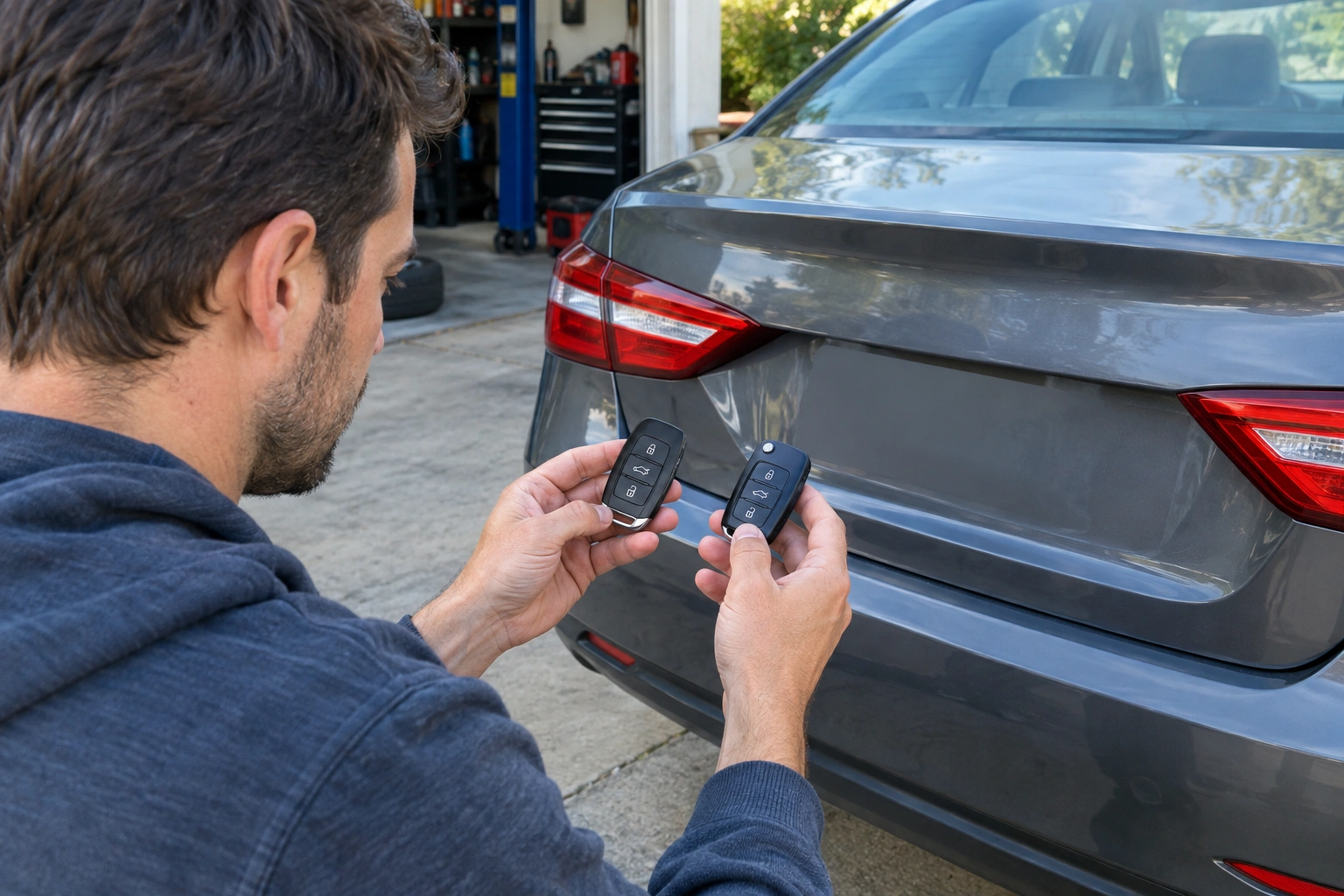
If the fob is weak overall, you may notice shorter range, delayed response, or intermittent operation before the trunk button fails completely. If the trunk button is the only thing that does not work, the battery may still be okay, but the button itself or the vehicle-side trunk release circuit becomes more likely.
Most Likely Causes, Ranked From Easiest to Hardest
Here is the order I’d check:
| Likely cause | What it usually looks like | Best next step |
|---|---|---|
| Weak key fob battery | Remote works inconsistently or only close to the car | Replace the battery first |
| Worn or damaged trunk button | Other buttons work, but trunk never responds | Test the spare fob |
| Valet mode or trunk lockout setting | Doors work, trunk release is disabled | Check the owner’s manual and vehicle settings |
| Failed trunk latch or actuator | Fob seems to work, but trunk does not pop | Listen for actuator movement and test the trunk release another way |
| Blown fuse or wiring fault | More than one trunk-related function fails | Check fuses and look for wiring issues |
| Fob needs reprogramming | Problem started after battery change or sync loss | Try reprogramming only after basic checks |
That order matters because the cheapest fixes are also the most common. Replacing the whole fob before checking the battery, spare key, and settings is one of the easiest ways to spend more than necessary.
Step 1: Test the Spare Key Fob and the Other Buttons
This is the most useful test you can do.
If you have a spare key fob, try it on the same car:
- If the spare trunk button works, the problem is probably in the original fob.
- If the spare also fails, the issue is more likely in the vehicle, a setting, or the trunk hardware.
Also test the other buttons on the same fob:
- Doors unlock and lock normally: the fob is still sending at least some signal.
- Other buttons are also weak or erratic: the battery may be low.
- Only the trunk button fails: the button itself may be worn, broken, or blocked by a vehicle setting.
A simple example: if your driver door unlocks the car every time but the trunk button does nothing, that is not the same as a dead remote. That pattern usually points to a trunk-specific problem.
If you want a related starting point for push-button systems, our guide on what to do when a key fob is not detected can help you separate fob issues from vehicle-side problems.
Step 2: Replace or Check the Key Fob Battery
A weak battery can cause odd behavior long before the fob dies completely. Sometimes the doors still work, but the trunk release does not respond consistently because the signal is weaker than it should be.
Battery replacement is worth trying first if:
- the fob is old,
- range has dropped,
- the buttons feel delayed,
- or the remote works only when you are standing close to the car.
If the battery is already new and the trunk button still fails, the battery is probably not the whole story. At that point, the button, fob circuitry, or vehicle-side system becomes more likely.
One practical rule: if multiple buttons got worse at the same time, think battery. If only the trunk button failed, think button wear, setting, or trunk release hardware.
Step 3: Check for Valet Mode, Trunk Lockout, or Vehicle Settings
Some vehicles can disable trunk release through a valet setting, safe mode, or a trunk lockout feature. In those cases, the fob may still lock and unlock the doors while the trunk remains closed.
Check for:
- a valet switch,
- a trunk disable button,
- a settings menu related to remote access,
- or a lockout feature in the owner’s manual.
If the vehicle has a driver-door trunk release button, try that too. If the driver-door release works but the fob trunk button does not, that comparison helps separate a fob problem from a vehicle-side trunk lockout or trunk-button issue.
For a specific procedure, the owner’s manual is the best source. If you do not have it handy, search the manufacturer’s support site for “trunk release disable” or “valet mode” plus your model.
Step 4: Check for Hidden Manual Access Before Forcing the Trunk
Before you try any prying or forced entry, check whether your vehicle has a hidden physical key blade, hidden key cylinder, or manual trunk release.
Depending on the model and trim, some vehicles may also have:
- a rear-seat pass-through,
- a fold-down rear seat release,
- or a hidden emergency trunk release.
These access methods are not universal, so look up the exact procedure in the owner’s manual. If your car has a physical key blade or concealed key cylinder, that may be the safest way in. If it has a rear-seat pass-through or manual release, those options are usually easier and less risky than trying to force the trunk.
Do not pry the trunk open with tools. That can damage the latch and may bend body panels or trim.
If a child, pet, or essential item is trapped in the trunk, treat the situation as urgent and use the manufacturer’s emergency release instructions immediately.
Step 5: Test Whether the Trunk Latch or Actuator Is Failing
If the fob seems to send the command but the trunk still will not open, the next suspect is the trunk latch or actuator.
A few signs point that way:
- you hear a click, but the trunk does not pop,
- the trunk opens with the interior release but not the fob,
- or the release works only sometimes.
The trunk actuator is the part that physically releases the latch. If it is weak, stuck, or electrically failing, the fob can be fine while the trunk stays shut.
A damaged wire near the trunk hinge can also cause trouble. One repair video described an open short in the ground wire near the trunk latch hinge, and fixing the damaged wire restored operation. That is one example of a wiring fault, especially if the problem changes when the trunk lid is moved or if the issue started after repeated opening and closing. See the example here: trunk latch wiring repair example.
If you suspect the latch or actuator, do not force the trunk. Forcing it can damage the trim, latch, or striker and turn a simple repair into a bigger one.
Step 6: Check Fuses and Related Electrical Faults
If more than one trunk-related function fails, or the issue affects the remote and an interior release switch, a fuse or wiring fault becomes more likely.
Check the fuse box locations listed in your owner’s manual and look for fuses related to:
- trunk release,
- body control module,
- central locking,
- or remote entry.
If a fuse is blown, replace it with the correct rating only. If it blows again, that often suggests a deeper electrical problem that still needs to be found.
This is also where wiring faults can show up. A broken wire near the trunk hinge, corrosion, or a bad ground can interrupt the signal to the latch. If you are not comfortable tracing wiring, this is a good point to stop and get help.
For safety guidance on vehicle access and emergency situations, the NHTSA’s consumer information is a useful reference point: NHTSA vehicle safety resources.
How to Open the Trunk Manually or Use Emergency Access
If the trunk will not open at all, look for a manual release method before you try anything else.
Common possibilities include:
- a hidden key cylinder,
- an interior trunk release,
- a folding rear seat pass-through,
- or an emergency trunk release handle.
Use the owner’s manual to find the exact method for your vehicle. Do not pry the trunk open with tools. That can damage the latch and may bend body panels or trim.
If a child, pet, or essential item is trapped in the trunk, treat the situation as urgent and use the manufacturer’s emergency release instructions immediately.
Reprogramming vs Replacing the Fob: Which Fix Makes Sense?
Reprogramming can help if the fob lost sync after a battery change or after a system glitch. It is worth considering when:
- the fob suddenly stopped working after battery replacement,
- multiple remote functions failed at once,
- or the car no longer recognizes the fob consistently.
But reprogramming will not fix:
- a broken trunk button,
- a dead battery,
- a bad latch,
- a failed actuator,
- or a blown fuse.
That is the main trade-off. Reprogramming is useful for communication problems, while replacement is better when the fob itself is physically worn or damaged.
If the trunk button feels mushy, sticks, or works only if you press it in a certain spot, the fob may need repair or replacement rather than reprogramming. If the fob is cracked, water-damaged, or has been dropped repeatedly, replacement is often the more reliable fix.
For broader remote-start and detection issues that sometimes overlap with fob battery problems, see our guide on emergency start when the key fob is not detected and how to start a car when the key fob is not detected.
When to Consult a Locksmith
Call a locksmith, dealer, or qualified mechanic when:
- the spare fob fails too,
- the trunk release works intermittently and you suspect wiring,
- the latch or actuator does not respond,
- a fuse keeps blowing,
- or you cannot access the trunk safely.
A locksmith is often the best first call if the issue appears to be in the fob itself. A mechanic is usually the better choice if the trunk mechanism, wiring, or fuse circuit is the likely culprit. A dealer may be the right move if your vehicle has a model-specific lockout feature or a more complex smart key system.
The practical goal is simple: prove whether the problem follows the fob or stays with the car. Once you know that, the fix gets much easier.
FAQ: Key Fob Trunk Button Problems
Why does my key fob unlock doors but not open the trunk?
That usually means the remote is still working partly, but the trunk release button, trunk setting, latch, actuator, or wiring may be the issue.
Is it the battery or the trunk button?
If other buttons are also weak, try the battery first. If only the trunk button fails and the rest work normally, the button itself or a trunk-specific setting is more likely.
Can valet mode disable the trunk release?
On some vehicles, yes. Check the owner’s manual for valet mode, trunk lockout, or a related setting.
Will a spare fob tell me anything useful?
Yes. If the spare works, the original fob is the likely problem. If both fail, look at the car’s trunk release system instead.
Can I open the trunk manually if the fob fails?
Often yes, but the method varies by vehicle. Check for a physical key blade, hidden key cylinder, rear-seat pass-through, or built-in emergency release, then use the owner’s manual for the exact steps.
Will reprogramming fix it?
Only if the fob and car lost communication. Reprogramming will not fix a broken trunk button, latch, actuator, or fuse problem.
Should I replace the whole fob right away?
Usually not. Test the battery, spare fob, and vehicle settings first. That sequence avoids replacing a part that may still be usable.
