
One Car Key Works and the Other Doesn’t: How to Pin Down the Real Problem

If one car key works and the other doesn’t, the fix is usually hiding in one of four places: the bad key’s battery, the key itself, the programming, or the vehicle. The trick is not guessing. Use the working key as your reference and narrow the failure down to one system at a time.
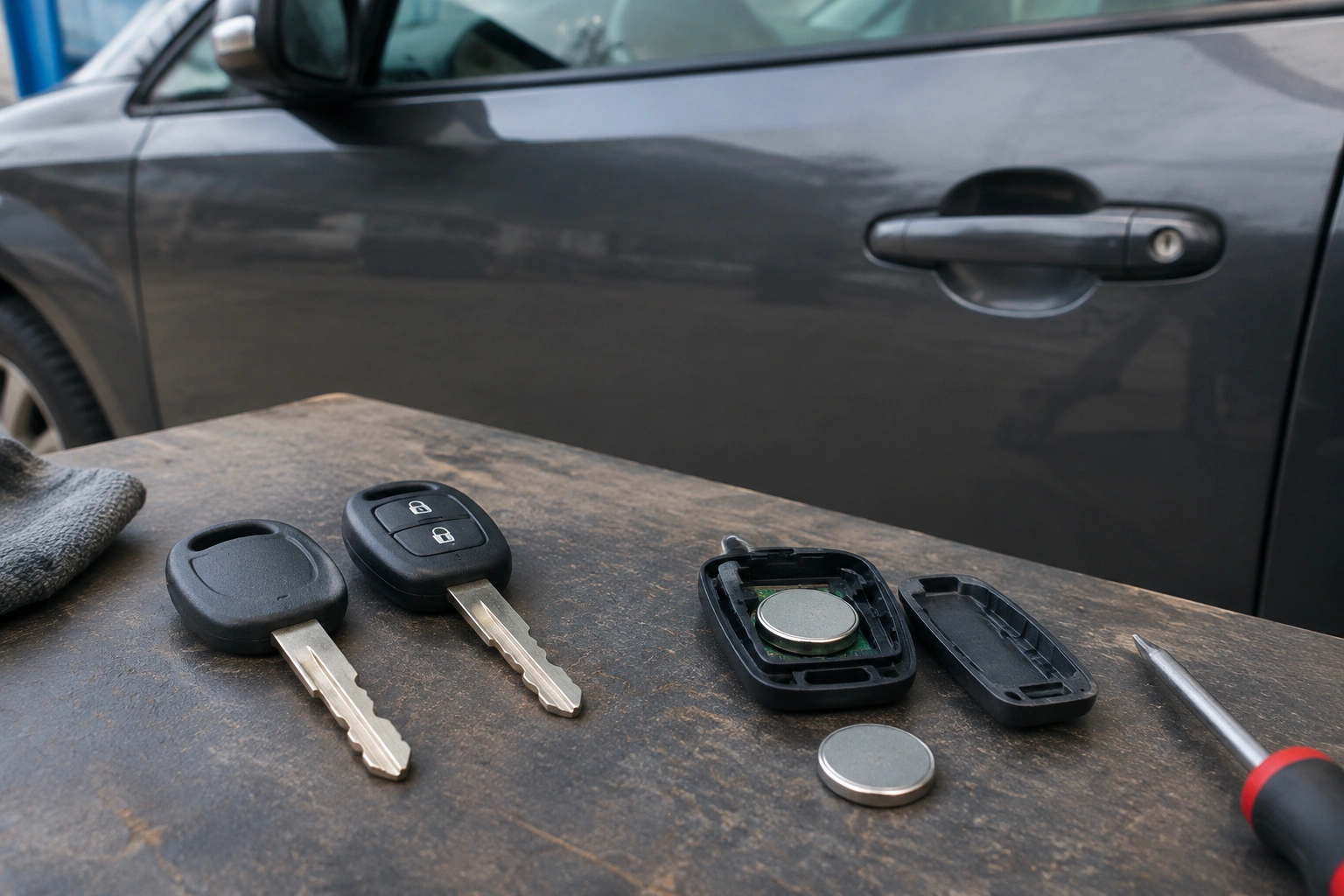
In plain terms, here’s how I’d look at it as a former tech: if the bad key won’t unlock the doors remotely, suspect the fob battery, buttons, or electronics first. If it unlocks the door manually but won’t start the car, think transponder or immobilizer. If both keys suddenly act up the same way, the car may be the real problem.
Quick Answer: What Usually Causes This
When one key works and the other doesn’t, the most common causes are:
- a dead or weak battery in the nonworking fob
- worn buttons or dirty contacts inside the key
- a damaged circuit board or water intrusion
- lost programming or sync
- a broken transponder chip or mechanical key blade
- a vehicle-side receiver, immobilizer, or central locking fault
A good starting point is to compare exactly what each key can still do. That matters because remote locking, manual door unlocking, and engine start all depend on different parts of the system.
First, Separate the Problem: Remote, Door Lock, or Engine Start
Before you replace anything, figure out which function failed.
If the remote buttons don’t work
That points to the fob’s battery, buttons, or electronics. The car may still start if the transponder chip is fine. In other words, the remote and the start function are not always tied together.
If the metal key blade works but the remote doesn’t
That usually means the mechanical key is fine, but the fob electronics are not. A worn battery, cracked solder joint, or damaged button pad is more likely than a problem with the ignition or door lock hardware.
If the key unlocks the door but won’t start the car
That often points to a transponder or immobilizer issue. The key may still physically turn the lock or open the door, but the car may not recognize it as an authorized start key.
If both keys start the car, but only one works remotely
That is a strong clue that the problem is inside the bad fob, not the vehicle.
Most Likely Causes, in Order of What I’d Check First
1. Dead or weak key fob battery
This is the easiest and cheapest thing to rule out. A weak coin-cell battery can make a fob act flaky long before it dies completely. One button may work, range may shrink, or the fob may only work when you stand very close to the car.
If the bad key has never had a battery change, replace the battery first. That’s the lowest-risk test and often the fastest answer.
2. Worn buttons or dirty internal contacts
If the fob has been used for years, the rubber button pad can wear out or the contacts can get dirty. You may press the button and feel nothing, or the button may only work if you push hard in one spot.
3. Water damage or corrosion
A key fob that was dropped in water, left in a wet pocket, or exposed to condensation can corrode internally. Even if the case looks fine, the circuit board or battery contacts may already be damaged.
4. Lost programming or sync
Some vehicles can lose key recognition after a battery replacement, electrical reset, or use of an aftermarket fob. The fob may still have power, but the car no longer accepts it.
A weak vehicle battery can also interfere with recognition. If the car battery is struggling, the receiver may not read the key properly. That’s especially worth checking if the car has been slow to crank, the dash lights have been acting strange, or accessories have been glitching.
5. Transponder failure or mechanical damage
If the key works in the door but not in the ignition or push-button start, the transponder chip may be the issue. If the metal blade is bent, worn, or broken, the mechanical side may fail even while the remote side still works.
6. Vehicle-side receiver, immobilizer, or central locking problem
If both keys fail the same way, the car may be at fault. That could mean the receiver, immobilizer, central locking module, or even the main vehicle battery is causing the issue.
Quick Decision Tree: Remote-Only, Blade, or Start Problem
| What works? | What fails? | Most likely area | Best next step |
|---|---|---|---|
| Manual key blade works, remote does not | Remote unlock/lock only | Battery, buttons, fob electronics | Replace battery first; inspect and clean contacts |
| Remote works, but car will not start | Start/immobilizer only | Transponder, programming, immobilizer | Test with spare key; check for “key not detected” message |
| Both remote and start fail on one key only | Whole key/fob | Dead fob, damaged board, lost programming | Try battery, then locksmith/dealer diagnosis |
| Both keys fail the same way | Vehicle side | Receiver, immobilizer, central locking, car battery | Check vehicle battery and have system diagnosed |
Step-by-Step Troubleshooting Using the Working Key as a Baseline
This is the part that saves the most time.
Step 1: Test both keys in the same exact spot
Use the same door, same distance, same time, and same conditions. If the good key unlocks the car from 15 feet away and the bad one only works when touching the door handle, that’s a clue the bad key is weak, not the car.
Step 2: Check whether the failure is partial or complete
Ask three questions:
- Does the bad key unlock the doors remotely?
- Does it unlock the door manually with the blade?
- Does it start the car?
Write down the answers. A partial failure tells you more than a total failure.
Step 3: Swap your expectations, not just the key
If the bad key is the only one failing, test it in the same car where the good key works. If the good key also fails in the same way, the vehicle is now suspicious.
Step 4: Watch for warning messages
If the dash says “key not detected,” “no key present,” or similar, that leans toward a transponder, battery, or vehicle-recognition issue rather than a simple button problem.
Step 5: Inspect the bad key closely
Look for cracked plastic, loose buttons, rust-colored residue, green corrosion, or a case that no longer snaps together tightly. Those are not cosmetic problems; they can break the circuit path inside the fob.
Fixes You Can Try at Home
Replace the key fob battery
If the battery is weak, replacement is the first move. Use the correct battery type for your exact key, and make sure the contacts are clean and seated properly.
If the new battery does nothing, that’s useful too. It tells you the issue is probably deeper than power alone.
Clean the battery contacts
If you see light corrosion, carefully clean the contacts with a dry cotton swab or a small amount of electrical contact cleaner. Don’t scrape aggressively; battery tabs are easy to bend.
Reseat the battery and case
A battery can look fine but sit loosely in the holder. If the contacts don’t press firmly, the fob may work intermittently. Reassemble the case snugly and make sure the shell isn’t cracked.
Try the mechanical key blade
If the blade works but the remote doesn’t, the problem is likely electronic. If the blade itself is worn or bent, a locksmith can usually tell you whether it can be cut or copied accurately.
Attempt reprogramming only if your vehicle supports it
Some vehicles allow owner programming for certain keys or fobs, but many do not. If you do not have the exact procedure for your model, stop before you accidentally erase a working key from the system.
Do not assume every car follows the same steps. If you’re unsure, check the owner’s manual or use a locksmith or dealer with the right programming access.
How to Tell If the Key Is Bad or the Car Is at Fault
Use this tighter rule set:
- Test the working key first. If the good key works normally, the car is at least capable of reading a valid key.
- Compare the bad key function by function. Remote only, manual blade only, and start/immobilizer are separate clues.
- If only the bad key fails, suspect the key first. Battery, contacts, buttons, transponder, or programming are the likely causes.
- If both keys fail the same function, suspect the vehicle. That points to the receiver, immobilizer, central locking, or car battery.
- If the bad key works manually but not remotely, it is usually a fob problem, not an ignition problem.
- If the bad key unlocks the car but won’t start it, focus on the transponder or immobilizer side.
A practical example: if Key A unlocks the car and starts it, but Key B only unlocks the door with the blade, Key B likely needs battery or programming work. If neither key unlocks remotely but both still start the engine, the car’s receiver or locking system deserves attention before you buy two new fobs.
When the Key Needs Repair or Replacement
Repair makes sense when the problem is limited to the case, buttons, contacts, or a battery holder that can be cleaned or reseated. Replacement makes more sense when the circuit board is cracked, the fob has severe water damage, or the transponder is no longer reliable.
If the housing is broken but the electronics still work, a shell swap may be enough. If the board is corroded, the repair may not be worth the risk of a temporary fix that leaves you stranded later.
When to Suspect a Vehicle-Side Problem
A vehicle-side issue becomes more likely when:
- multiple known-good keys fail the same way
- the car battery is weak or recently disconnected
- the dash shows key recognition errors
- the locks, immobilizer, or start system behave inconsistently
- the problem appears after electrical work or a battery replacement
A weak main battery can absolutely create confusing key symptoms. That’s why I like to check the car battery before spending money on a second fob.
If the symptom is start-related rather than remote-only, a locksmith or mechanic can often help with diagnosis if the issue is still within standard programming or battery territory. If the immobilizer, receiver, or module appears to be the problem, a dealer may be needed for model-specific access or factory-level programming.
Cost Expectations: Battery, Reprogramming, Repair, or Replacement
Exact prices vary by vehicle and key type, but the cost ladder usually looks like this:
- Battery replacement: low cost, usually the cheapest fix to try
- Minor cleaning or case repair: low to medium cost
- Reprogramming: medium cost for many vehicles, but higher if the car needs dealer-level access
- Replacement key or fob: medium to high cost, with smart keys and proximity fobs usually at the high end
A rough way to think about it in USD:
- Battery: usually the lowest-cost option
- Basic repair or shell swap: often lower than replacement
- Programming: can be moderate if a locksmith can do it, but can climb if the dealer is required
- Replacement key/fob: often the most expensive path, especially if the transponder or immobilizer system needs factory programming
A locksmith often offers a lower-cost path than a dealer for battery testing, cutting, and some programming jobs. A dealer may be the better choice when the vehicle needs proprietary programming, immobilizer access, or a factory-compatible replacement that an independent shop cannot complete.
When to Consult a Locksmith
Call a locksmith when the key blade is worn, the fob case is damaged, the battery replacement didn’t help, or you need programming help and the vehicle allows it. A good automotive locksmith can often tell you quickly whether the key is repairable, whether the transponder is dead, and whether the issue is actually on the vehicle side.
A locksmith is usually the best fit when:
– the problem is a dead battery, damaged shell, or worn blade
– the key needs cutting or cloning
– the vehicle supports independent programming
– you need diagnosis before paying dealer prices
Go to the dealer when:
– the model requires proprietary or security-locked programming
– the immobilizer needs factory access
– the locksmith cannot program your specific key type
– you need a genuine replacement that must be registered at the dealer level
FAQ
Can a key fob still open the door manually but fail to start the car?
Yes. That usually means the mechanical blade is fine, but the transponder or programming is not being recognized.
Can a dead car battery make one key stop working?
It can. A weak vehicle battery may prevent the receiver from recognizing the fob, especially if the car has been showing other electrical problems.
Should I replace the battery in the bad key first?
Yes. That’s the cheapest and most logical first test if the remote is weak, intermittent, or never had a recent battery change.
Is it worth trying to reprogram the key myself?
Sometimes. If your vehicle supports owner programming, it can save money. If not, repeated attempts can waste time or create confusion, so check the exact procedure first.
What if both keys suddenly stop working remotely?
That points more toward the car’s receiver, central locking, or vehicle battery than two separate key failures happening at once.
Bottom Line
When one car key works and the other doesn’t, don’t jump straight to replacing both. Compare the two keys function by function, replace the bad key’s battery first, inspect for damage, and only then move on to programming or professional diagnosis. That order usually gets you to the real fault faster and keeps you from spending money on the wrong part.
