
P0106 Symptoms: 6 Signs and What to Check

P0106 symptoms often include a check engine light, rough idle, hesitation, poor acceleration, stalling, black exhaust smoke, and worse fuel economy. The code means the engine computer received a MAP or BARO pressure reading that does not match engine conditions. Check for vacuum leaks, wiring damage, and live-data errors before replacing the MAP sensor.
A P0106 code feels confusing because the scanner points toward the MAP sensor, while the real fault can sit elsewhere. A cracked intake hose, blocked vacuum port, damaged connector, or inaccurate engine-load signal can trigger the same code.
This takes about 8 minutes to read. Start with the symptoms, then use the diagnostic order below to avoid buying parts that do not fix the problem.
P0106 is a sensor-performance code, not a sensor-replacement code. The engine computer sees pressure data that fails a plausibility check. The fastest fix comes from finding why that reading looks wrong.
P0106 Symptoms You Will Notice
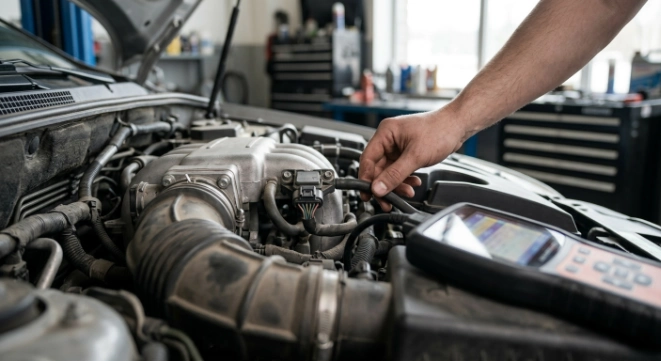
P0106 symptoms show up when the engine computer receives inaccurate intake-pressure information. The MAP sensor helps the PCM calculate engine load and fuel delivery, so a false reading can create a lean or rich fuel command.
The check engine light is the most common sign. Some vehicles still drive normally because the computer uses backup values, but drivability symptoms appear when the incorrect pressure reading affects fuel, ignition, or airflow calculations.
- Rough idle: engine speed surges, shakes, or drops at stops.
- Hesitation: the engine pauses when you press the accelerator.
- Weak acceleration: the vehicle feels slow under load.
- Stalling: the engine dies when idling or slowing down.
- Poor fuel economy: fuel use rises without a driving change.
- Black exhaust smoke: excess fuel can create a rich condition.
- Hard starts: incorrect air-pressure data affects startup fueling.
Symptoms do not prove that the MAP sensor failed. A wiring fault or vacuum leak can create the same result because both conditions send misleading pressure information to the PCM.
Image suggestion: Close-up engine-bay image showing a MAP sensor, intake manifold, vacuum hoses, and electrical connector.
ALT TEXT: P0106 symptoms MAP sensor location beside intake manifold vacuum hoses
Why the P0106 Code Appears
P0106 means the MAP or BARO sensor signal falls outside the range expected for current engine conditions. The PCM compares pressure data with engine speed, throttle position, airflow, intake-air temperature, and calculated load.
A MAP sensor uses a reference voltage, ground circuit, and signal circuit. The signal changes with intake manifold pressure. An official Mitsubishi diagnostic procedure shows that the ECM checks whether MAP voltage matches expected engine-load conditions, then tests the sensor, wiring, connector, power supply, and ground circuit in order.
Mitsubishi’s published P0106 diagnostic procedure also shows why a simple code reader cannot identify the failed part. The same P0106 code can result from a failed sensor, harness damage, connector damage, or an ECM-related fault.
Check freeze-frame data before clearing P0106. Note engine RPM, coolant temperature, throttle position, MAP reading, and fuel trims. These readings show when the computer detected the mismatch.
Diagnose P0106 in the Right Order
Start with easy checks that identify air leaks and damaged connections. Replacing the MAP sensor first skips the failures that trigger P0106 most often.
- Scan for related codes. Record codes for misfires, MAF performance, throttle position, intake-air temperature, fuel trim, or EGR flow before clearing anything.
- Inspect intake plumbing. Check vacuum hoses, PCV hoses, intake boots, clamps, manifold gaskets, and sensor ports for cracks, loose fittings, oil buildup, or blockage.
- Inspect the MAP connector. Look for bent pins, corrosion, water entry, loose terminal fit, and wires rubbed through near the harness bend.
- Compare live data. With key on and engine off, MAP pressure should sit close to local barometric pressure. At idle, manifold vacuum lowers the MAP pressure reading.
- Test the circuit. Use the vehicle’s wiring diagram to verify the 5-volt reference, sensor ground, and changing signal voltage. Do not probe terminals with oversized test leads.
What most people do not think to ask is whether the MAP value changes smoothly. A sensor that produces a believable idle reading but freezes, spikes, or lags during throttle movement can still set P0106.
The correct values vary by altitude, engine design, and sensor type. Use a factory repair procedure for your exact vehicle, engine, and VIN rather than copying voltage numbers from another model.
Common P0106 Causes Beyond the MAP Sensor
The MAP sensor is only one possible cause. P0106 often starts with an air or electrical problem that changes the pressure signal or makes normal pressure look abnormal to the PCM.
| Possible Cause | What You May Notice | First Check |
|---|---|---|
| Vacuum or intake leak | Rough idle, high idle, lean fuel trims | Hoses, clamps, intake boot, manifold gasket |
| Faulty MAP sensor | Frozen, erratic, or implausible live reading | MAP value at key-on, idle, and throttle snap |
| Connector or wiring damage | Intermittent light, bumps trigger fault | Pins, terminal tension, insulation, ground |
| Dirty throttle body or airflow fault | Unstable idle and hesitation | Throttle bore, MAF data, intake restrictions |
| Software or model-specific issue | Code returns despite normal component checks | Technical service bulletins by VIN |
The table shows why P0106 needs diagnosis before parts replacement. A good MAP sensor cannot correct a leaking intake manifold or damaged signal wire.
What Most People Get Wrong About P0106
Wrong belief: “P0106 always means the MAP sensor is bad.” The code reports a range or performance problem, not a confirmed component failure. Intake leaks, electrical resistance, MAF faults, and engine mechanical issues can all make the MAP signal fail the PCM’s plausibility test.
Wrong belief: “Cleaning the sensor always fixes it.” Cleaning helps only when contamination blocks the pressure port and the manufacturer allows that cleaning method. Some sensor designs are damaged by chemicals, water, or compressed air.
An NHTSA-hosted GM bulletin for certain cold-weather vehicles warns technicians not to use chemicals, water, or compressed air on a specific TMAP sensor during an icing-related P0106 condition. The bulletin states that a clean, dry sensor does not need replacement in that case.
Read the NHTSA-hosted GM P0106 technical bulletin for the model-specific example. The lesson applies broadly: follow the repair method written for your engine, not a universal cleaning shortcut.
Wrong belief: “Clearing the code fixes the issue.” Clearing P0106 only resets the warning light and readiness monitors. The code returns after the PCM sees the same abnormal pressure pattern during a new drive cycle.
Do not replace a MAP sensor after reading only P0106. First inspect the intake system, record live data, and check the sensor’s power, ground, and signal circuits.
Can You Drive With P0106?
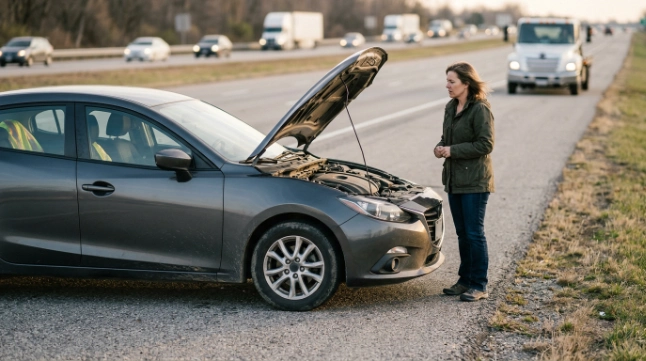
You can drive a vehicle with a mild P0106 issue only long enough to reach a safe repair location. Continued driving wastes fuel, increases emissions, and can create stalling or poor acceleration when the engine needs accurate load data.
Stop driving and arrange transport when the engine stalls, loses major power, misfires, produces heavy black smoke, or flashes the check engine light. Those signs point to a condition that can damage the catalytic converter or create a traffic safety risk.
- If the light is steady and the engine runs smoothly: schedule diagnosis soon and avoid long trips.
- If idle is rough or acceleration hesitates: inspect intake hoses and scan live data before regular driving.
- If the engine stalls, misfires, or loses power: stop driving and have the vehicle diagnosed before restarting.
The smartest next move is not guessing at a part. Capture live data first, because the key-on, idle, and throttle readings reveal whether the PCM sees a true pressure problem or a bad electrical signal.
P0106 symptoms point to incorrect MAP or BARO pressure data, but they do not prove that the MAP sensor failed.
Factory diagnostic logic checks intake leaks, live data, wiring, connectors, and related sensor signals before it condemns the sensor.
Before buying parts, photograph your scan tool’s MAP, BARO, RPM, and fuel-trim readings with key on and engine idling.
Frequently Asked Questions
Can a vacuum leak cause P0106?
Yes. A vacuum leak can cause P0106 because unmetered air changes intake manifold pressure and fuel-trim behavior. The PCM compares MAP data with throttle position, airflow, and calculated engine load. A cracked PCV hose, loose intake boot, or leaking manifold gasket can create a pressure pattern that fails that comparison.
Will a bad MAP sensor cause rough idle?
Yes. A bad MAP sensor can cause rough idle because the PCM uses manifold pressure to estimate engine load and fuel delivery. A false MAP reading can command too much or too little fuel at idle. A vacuum leak, dirty throttle body, or wiring fault can create the same rough-idle symptom.
Does P0106 mean I need a new MAP sensor?
No. P0106 does not confirm that you need a new MAP sensor. The code confirms that the PCM detected an implausible MAP or BARO signal for current operating conditions. Test the sensor’s live reading, 5-volt reference, ground, connector, wiring, and intake system before replacing the sensor.
Can a dirty air filter trigger P0106?
A severely restricted air filter can contribute to airflow and engine-load problems, especially on vehicles that compare MAP, MAF, throttle, and calculated load data. Check the air filter and intake ducting during diagnosis. A dirty filter alone does not confirm the root cause of P0106.
How do I clear P0106 after repair?
Clear P0106 with an OBD-II scan tool after fixing the confirmed cause. Then start the engine, confirm normal idle, and complete a normal drive cycle so the PCM can rerun its monitor. If P0106 returns, review freeze-frame data and test the intake, wiring, and sensor signal again.
