
What Does P0135 Mean? O2 Heater Code Explained

P0135 means the engine computer found a fault in the oxygen sensor heater circuit for Bank 1 Sensor 1. This is the upstream oxygen sensor before the catalytic converter. The problem can come from a bad sensor heater, blown fuse, damaged wiring, corroded connector, poor ground, or incorrect replacement sensor.
Your check engine light is on, your scanner shows P0135, and now you want one clear answer before buying parts.
Here is the key point: P0135 does not always mean the oxygen sensor is bad. It means the heater circuit for the Bank 1 Sensor 1 oxygen sensor failed its electrical test.
This takes about 7 minutes to read. By the end, you’ll know what the code means, how serious it is, and what to check first.
Quick check: If the engine runs normally and the check engine light stays solid, you can usually drive short distances. If the light flashes, stop driving and address it fast because flashing lights often point to catalyst-damaging misfires.
P0135 Code Meaning in Simple Terms
P0135 means the powertrain control module detected a fault in the heated oxygen sensor circuit on Bank 1 Sensor 1.
The “P” shows this is a powertrain diagnostic trouble code. The “0135” points to the heater circuit for the upstream oxygen sensor, not the oxygen sensor signal itself.
- Bank 1: The engine side with cylinder number 1.
- Sensor 1: The upstream sensor before the catalytic converter.
- Heater circuit: The built-in heating element inside the sensor.
- PCM or ECM: The engine computer that monitors the circuit.
Most modern oxygen sensors need heat before they read exhaust oxygen accurately. The heater circuit warms the sensor faster after a cold start.
The California Air Resources Board explains that OBD II systems monitor emission-related components and store fault information when a malfunction appears. You can review the official CARB OBD II systems fact sheet for the broader system background.
The real meaning is simple: your vehicle cannot confirm that the upstream oxygen sensor heater is working as expected.
Why the Oxygen Sensor Heater Matters
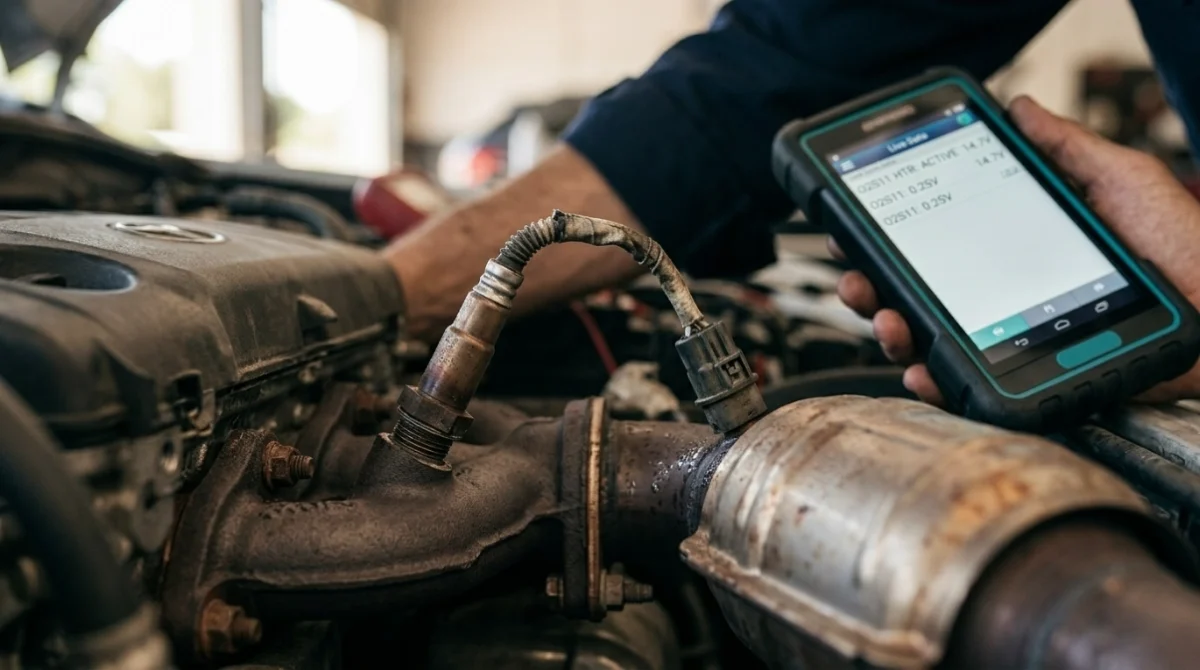
The oxygen sensor heater matters because the engine needs fast feedback during cold starts.
Before the sensor warms up, the engine computer relies on preset fuel values. After warm-up, the engine computer uses oxygen sensor feedback to adjust the air-fuel mixture.
A working heater helps the system move into closed-loop fuel control faster. That improves fuel control, cold-start drivability, and emissions performance.
| Part | What It Does | Why P0135 Appears |
|---|---|---|
| Heater element | Warms the sensor fast | Open circuit or high resistance |
| Fuse or relay | Feeds power to the heater | No voltage reaches the sensor |
| Connector | Links sensor to harness | Corrosion or loose pins |
| PCM ground control | Completes the heater circuit | Poor ground or driver fault |
The table shows why replacing the oxygen sensor without testing can waste money. P0135 can live outside the sensor.
Common P0135 Symptoms Drivers Notice
The most common P0135 symptom is a solid check engine light.
Some vehicles drive normally because the oxygen sensor still works after exhaust heat warms it. The heater failure mainly affects how fast the sensor becomes useful after startup.
- Check engine light on
- Rough idle during cold starts
- Poor fuel economy
- Failed emissions inspection
- Strong exhaust smell
- Slow warm-up fuel correction
You may expect the car to shake badly, but many P0135 cases feel mild. That makes the code easy to ignore.
Warning: A mild symptom does not mean a harmless fault. A delayed oxygen sensor signal can keep the engine rich longer, which wastes fuel and increases emissions.
Most Likely Causes of P0135
The most likely cause of P0135 is a failed heater element inside the Bank 1 Sensor 1 oxygen sensor.
Still, the correct repair depends on testing the whole heater circuit. The engine computer sets this code when it sees an electrical problem, not when it dislikes the sensor brand.
- Failed upstream oxygen sensor heater
- Blown oxygen sensor heater fuse
- Damaged wiring near the exhaust
- Corroded or loose sensor connector
- Short to voltage or ground
- Wrong oxygen sensor installed
- Poor battery voltage or ground
Heat is the hidden enemy here. Sensor wiring runs close to the exhaust manifold, where insulation can harden, melt, or rub through.
What most people don’t think to ask is whether the replacement sensor matches the vehicle exactly. Some vehicles use different upstream sensors based on engine, emissions package, build date, or state emissions rules.
Can You Drive With a P0135 Code?
Yes, you can usually drive with P0135 for a short time when the check engine light stays solid and the engine runs normally.
That does not make the code safe to ignore. The heater circuit helps the oxygen sensor work fast, and delayed feedback can hurt fuel economy during repeated cold starts.
Use this decision block:
- Solid light and normal driving: Schedule diagnosis soon.
- Rough cold starts: Test the circuit before long trips.
- Failed emissions test: Repair before retesting.
- Flashing check engine light: Stop driving and inspect fast.
OBD II systems store diagnostic trouble codes so technicians can find the malfunction faster. The U.S. Environmental Protection Agency provides more background in its OBD regulations and requirements resource.
The best next move is not panic. The best move is confirming whether the sensor heater, fuse, wiring, or connector failed.
How Mechanics Diagnose P0135 Correctly
A correct P0135 diagnosis starts with the scan tool, then moves to electrical testing.
The scanner confirms the code, but a multimeter confirms the fault. That difference matters because the scan tool reports what the computer saw, not which part caused it.
- Confirm P0135 and record freeze-frame data.
- Check for related oxygen sensor or fuel codes.
- Locate Bank 1 Sensor 1 correctly.
- Inspect wiring near the exhaust manifold.
- Check the heater fuse and relay.
- Test voltage, ground, and heater resistance.
- Clear the code and run a drive cycle.
Bank 1 Sensor 1 is upstream from the catalytic converter. On inline engines, Bank 1 is the only bank. On V engines, Bank 1 is the side with cylinder number 1.
Pro tip: Identify the sensor before buying parts. Replacing Sensor 2 instead of Sensor 1 will leave P0135 unchanged.
What Most People Get Wrong About P0135
The biggest mistake is assuming P0135 always means “replace the O2 sensor.”
A bad sensor heater is common, but the heater circuit includes power, ground, fuse, connector, wiring, and PCM control. Any break in that chain can trigger the same code.
Wrong belief: P0135 means the catalytic converter failed
P0135 points to the upstream oxygen sensor heater circuit, not the catalytic converter.
A damaged catalytic converter can appear in other codes, but P0135 alone does not diagnose converter failure. Replacing a converter for this code first is the wrong repair path.
Wrong belief: Clearing the code fixes the issue
Clearing P0135 only erases the stored code from memory.
If the heater circuit still fails the next monitor test, the check engine light will return. That is why testing matters before and after repair.
Wrong belief: Any oxygen sensor will work
An oxygen sensor must match the vehicle’s engine and emissions setup.
Universal sensors can create wiring mistakes when spliced poorly. Direct-fit sensors reduce connector errors and make diagnosis cleaner.
P0135 Fix Options That Make Sense

The correct fix for P0135 depends on which part of the heater circuit failed.
When testing shows an open heater inside the oxygen sensor, replacing Bank 1 Sensor 1 is the right fix. When testing shows no voltage, the fuse, relay, wiring, or power feed needs attention first.
| Test Result | Likely Repair | Why It Works |
|---|---|---|
| Open heater element | Replace Bank 1 Sensor 1 | Restores sensor warm-up |
| No heater voltage | Repair fuse, relay, or power wire | Restores power feed |
| Corroded connector | Clean or replace connector | Restores stable contact |
| Melted harness | Repair wiring and secure routing | Prevents repeat shorts |
The key conclusion is direct: replace the sensor only after the circuit proves the sensor failed.
IMAGE SUGGESTION: A labeled engine bay diagram showing Bank 1 Sensor 1 before the catalytic converter, with fuse, connector, and heater circuit callouts.
ALT TEXT: what does P0135 mean Bank 1 Sensor 1 oxygen sensor heater circuit diagram
P0135 means the Bank 1 Sensor 1 oxygen sensor heater circuit failed, not that every oxygen sensor or catalytic converter needs replacement.
Newer vehicles rely on faster sensor warm-up to control emissions, fuel use, and cold-start behavior with less delay.
Open your scan result now and write down whether it says Bank 1 Sensor 1, then inspect that connector first.
Frequently Asked Questions
Is P0135 a serious code?
P0135 is moderate, not usually an emergency when the check engine light stays solid. It affects oxygen sensor warm-up, cold-start fuel control, and emissions readiness. Fix it soon because repeated cold starts with delayed feedback can increase fuel use and inspection failure risk.
Does P0135 mean the O2 sensor is bad?
P0135 can mean the oxygen sensor heater has failed, but it does not prove that alone. The same code can come from a blown fuse, damaged wiring, corroded connector, poor ground, or wrong sensor. Circuit testing confirms the real cause.
Where is Bank 1 Sensor 1 located?
Bank 1 Sensor 1 is the upstream oxygen sensor before the catalytic converter on the engine side with cylinder number 1. Inline engines usually have one bank, so Bank 1 is simple. V6 and V8 engines need cylinder layout confirmation.
Can a bad fuse cause P0135?
Yes, a blown oxygen sensor heater fuse can trigger P0135 because the heater circuit loses power. Some vehicles feed more than one sensor heater through related fuses or relays. A fuse check is fast and should happen before sensor replacement.
Will P0135 clear itself after repair?
P0135 can clear after several successful drive cycles, but clearing it with a scan tool is faster after repair. The code will return if the heater circuit still fails. Always confirm readiness monitors before an emissions inspection.
