
What Does P0325 Mean? Causes, Symptoms, Diagnosis, and Fixes

Quick Answer
P0325 means the engine computer has detected a problem with the Knock Sensor 1 circuit, usually on Bank 1 or on an engine that uses one knock sensor. The code does not automatically mean the sensor itself has failed because damaged wiring, loose connectors, corrosion, or another circuit problem can also trigger it. Ford’s official OBD-II code information identifies P0325 as a Knock/Combustion Vibration Sensor 1 circuit fault.
What to check first
- Scan stored codes: Check whether P0325 appears alone or with other engine-related trouble codes.
- Inspect the wiring: Look for damaged, melted, pinched, or chafed wiring near the knock sensor.
- Check the connector: Loose terminals, moisture, and corrosion can interrupt the sensor signal.
- Test the circuit: Verify wiring integrity before replacing the knock sensor.
- Check service information: Sensor locations and testing specifications vary by engine and model year.
Best next step
- Don’t buy a knock sensor based on P0325 alone. Diagnose the circuit first.
If your OBD2 scanner shows P0325, the name of the code can make the repair sound simpler than it is. I’ve seen plenty of drivers assume that a sensor-related code automatically means they should replace that sensor.
P0325 is different. It tells you which circuit the engine computer is unhappy with, but you still need to find out why that circuit isn’t behaving as expected.
In This Guide
What Does P0325 Mean?
P0325 is a generic OBD-II diagnostic trouble code for a fault involving the Knock Sensor 1 circuit. Depending on the vehicle, this can refer to Bank 1 or the engine’s only knock sensor.
A knock sensor listens for abnormal combustion vibration inside the engine. The powertrain control module, commonly called the PCM or ECM, uses its signal to help manage ignition timing.
Definition: A knock sensor is an engine-mounted vibration sensor that helps the computer recognize combustion patterns associated with spark knock or detonation.
What does “circuit malfunction” mean?
This wording matters. P0325 indicates that the computer sees a problem with the sensor circuit, not necessarily that it has proven the sensor itself is defective.
The complete circuit may include several components:
- The knock sensor
- Sensor wiring
- Electrical connectors and terminals
- Ground or reference circuits, depending on design
- PCM or ECM input circuitry
A break anywhere in that signal path can cause the computer to store P0325.
What does Bank 1 mean?
On an engine with two cylinder banks, Bank 1 is the side containing cylinder number one. It doesn’t automatically mean the driver’s side or passenger’s side.
On many inline engines, there is only one cylinder bank. In that case, the Bank 1 wording is less useful when locating the sensor.
The exact sensor location can vary dramatically. Some sensors are easy to reach, while others sit beneath the intake manifold or deep within the engine valley.
Pro tip: verify the engine configuration and manufacturer service information before ordering a sensor or dismantling parts to reach it.
What Are the Symptoms of a P0325 Code?

The most consistent symptom of P0325 is an illuminated check engine light. Some drivers notice no obvious change in how the vehicle runs.
Others may experience changes if the computer alters ignition timing because it no longer trusts the knock sensor signal.
Common P0325 symptoms
- Check engine light: The malfunction indicator lamp may stay illuminated after the code is stored.
- Reduced performance: The engine may feel less responsive under acceleration.
- Slower acceleration: Conservative ignition timing can make the vehicle feel weaker.
- Reduced fuel economy: Engine efficiency may suffer under some operating conditions.
- Engine pinging: Abnormal combustion noise may occur if another engine problem is present.
- No noticeable symptoms: Some vehicles continue to drive normally apart from the warning light.
Does P0325 mean the engine is knocking?
No. P0325 does not prove that damaging engine knock is happening.
The code concerns the knock sensor circuit. The computer may store it because the expected sensor signal is missing, abnormal, or outside the system’s expected behavior.
That distinction prevents an expensive mistake. You shouldn’t start replacing fuel, ignition, or internal engine components just because the word “knock” appears in the code description.
If the engine is making loud metallic knocking sounds, however, treat that as a separate mechanical warning. A scan code should never override an obvious abnormal engine noise.
What Causes the P0325 Trouble Code?
P0325 can be caused by the knock sensor itself, but wiring and connector faults deserve equal attention. Real manufacturer service information shows why checking the circuit first matters.
For example, an NHTSA-hosted manufacturer service communication documents a P0325 condition where technicians were instructed to inspect engine harness routing and look for chafing damage.
1. Failed or damaged knock sensor
The sensor can fail internally or become damaged by age, heat, moisture, or physical deterioration. This is one possible cause, but it shouldn’t be assumed without testing.
2. Damaged wiring
Knock sensor wiring often runs through hot, crowded areas of the engine bay. Insulation can become brittle, rubbed through, pinched, or damaged during previous repairs.
Common wiring problems include:
- Open circuits
- Shorts to ground
- Shorts to power
- Chafed insulation
- Heat-damaged wiring
- Poor previous wiring repairs
3. Loose, wet, or corroded connector
A sensor can work correctly and still produce a trouble code when its connector doesn’t carry the signal reliably. Moisture intrusion and terminal corrosion are especially worth checking.
Don’t overlook a connector that looks attached. A terminal can be pushed backward or lose tension while the outer housing still appears secure.
4. PCM or ECM problem
Computer failure is possible, but it is generally not the first place to start. Wiring, terminals, sensor condition, and manufacturer diagnostic procedures should be checked first.
Replacing a control module without confirming the circuit can turn a straightforward diagnosis into a costly mistake.
| Possible Cause | What You May Find | Typical Next Step |
|---|---|---|
| Knock sensor failure | Circuit wiring checks pass but sensor testing does not | Confirm manufacturer test procedure before replacement |
| Damaged wiring | Chafing, open circuit, short, heat damage | Repair wiring and retest |
| Connector problem | Corrosion, moisture, loose or backed-out terminal | Repair or clean connector as appropriate |
| Control-module issue | Sensor and wiring test correctly | Follow manufacturer PCM/ECM diagnosis |
Section Takeaway: P0325 names the affected circuit, not the failed part. Inspect wiring and connectors before automatically replacing the knock sensor.
How Do You Diagnose P0325 Correctly?
A good P0325 diagnosis starts with the scan data and ends with testing the complete circuit. Randomly replacing the sensor skips the most important steps.
I treat trouble codes as directions, not parts orders. That approach matters even more when a sensor is difficult to access.
Step 1: Scan for all stored trouble codes
Record P0325 and any accompanying codes before clearing anything. Related voltage, wiring, misfire, or sensor codes can change the direction of the diagnosis.
Also save freeze-frame information when your scanner supports it. Freeze-frame data records operating conditions from around the time the fault was detected.
Step 2: Inspect the sensor harness
Follow the accessible wiring toward the sensor and PCM. Look closely around brackets, engine covers, connectors, hot exhaust areas, and places where the harness can rub.
- Look for exposed copper.
- Check for melted insulation.
- Inspect connector locking tabs.
- Look for oil or moisture contamination.
- Check for stretched or repaired wiring.
Step 3: Verify the manufacturer test procedure
Knock sensor designs aren’t identical across every vehicle. Resistance values, signal-testing procedures, connector pinouts, and sensor access can vary by make, engine, and model year.
Use your vehicle’s service information or official manufacturer support resources when available. Never assume another engine’s specifications apply to yours.
Pro tip: don’t back-probe or apply voltage to a sensor circuit unless the correct service procedure specifically calls for it.
Step 4: Test wiring before installing parts
A technician may use a digital multimeter and manufacturer wiring diagrams to check circuit continuity and unwanted shorts. The exact pin locations and specifications depend on the vehicle.
This is where many DIY diagnoses go wrong. A new sensor cannot repair a broken wire between the sensor and computer.
Step 5: Repair the confirmed fault and retest
After the repair, clear the code and operate the vehicle under appropriate conditions. Then scan again to confirm whether P0325 returns.
A code that stays away after one key cycle isn’t always proof of a permanent repair. Some diagnostic monitors need specific operating conditions before they run again.
Section Takeaway: scan first, inspect second, test third, and replace parts only after the fault has been confirmed.
Can You Drive With a P0325 Code?
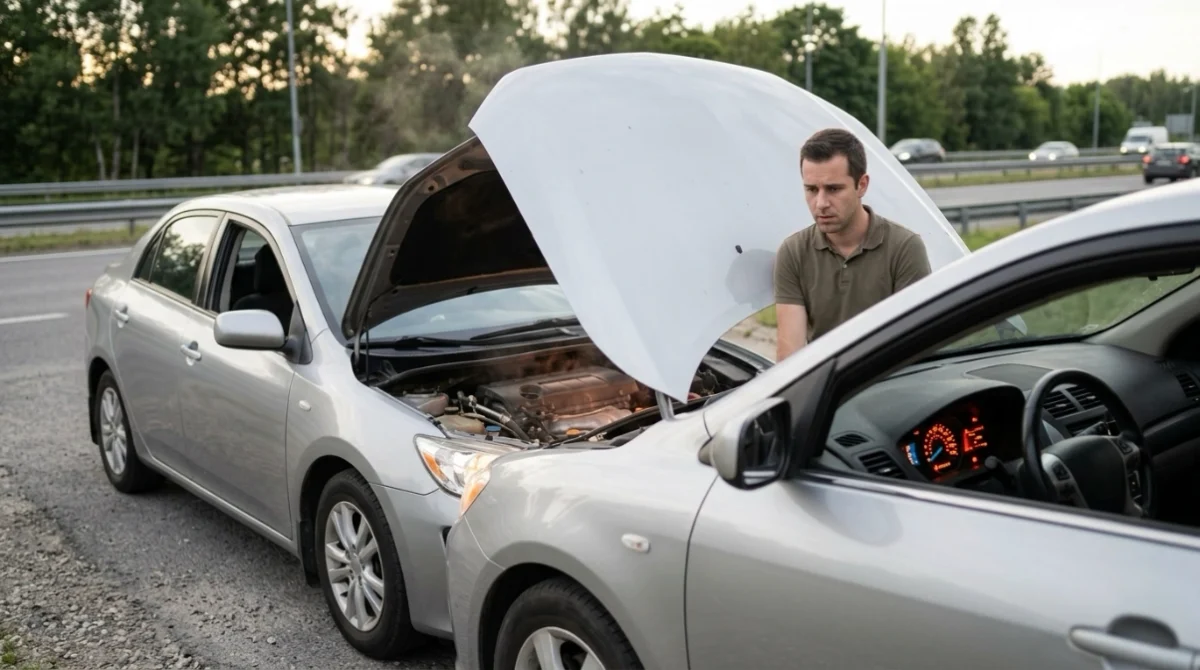
A vehicle with P0325 may continue to run, especially when the only symptom is a steady check engine light. That doesn’t mean the problem should be ignored.
The engine computer relies on knock sensor information when managing combustion and ignition strategy. A missing or unreliable signal can reduce the computer’s ability to respond normally.
When should you stop driving?
Stop driving and investigate promptly if the vehicle develops severe symptoms. Don’t keep driving simply because P0325 is sometimes caused by an electrical fault.
- Loud metallic knocking from the engine
- Severe loss of power
- Overheating
- Flashing check engine light
- Heavy shaking or misfiring
- Oil-pressure warning
A flashing check engine light often indicates a more urgent engine problem than a steady light. Other stored codes may be more important than P0325 itself.
If the vehicle feels unsafe or begins running badly, professional diagnosis or roadside assistance is the safer choice.
How much does P0325 cost to repair?
The repair cost depends on the confirmed cause and sensor location. A connector or accessible wiring repair can require far less labor than replacing a sensor buried beneath an intake manifold.
Parts and labor rates also vary by make, model, engine, region, and shop. Get a diagnosis before approving a sensor replacement based only on the trouble code.
Locksmith’s note: electronic fault codes are often misread as replacement instructions. Paying for proper testing first can prevent spending money on a part that wasn’t defective.
You can also use NHTSA vehicle resources to check whether your vehicle has applicable recalls or manufacturer communications.
P0325 Frequently Asked Questions
Does P0325 always mean the knock sensor is bad?
No. P0325 identifies a problem with the Knock Sensor 1 circuit, so the sensor is only one possible cause. Damaged wiring, corroded terminals, loose connections, or a control-module circuit problem can also trigger the code.
Can a bad connection cause P0325?
Yes. A loose, contaminated, corroded, or damaged connector can interrupt the knock sensor signal and cause the computer to store P0325. Inspecting the connector is an important early diagnostic step.
Can I clear P0325 with an OBD2 scanner?
Most OBD2 scanners can clear stored diagnostic trouble codes. Clearing P0325 doesn’t repair the cause, however, and the code can return after the computer detects the circuit problem again.
Where is Knock Sensor 1 located?
The location depends on the engine. It may be mounted on the engine block, beneath the intake manifold, or in another manufacturer-specific location, so confirm the correct service information before removing parts.
Can P0325 cause poor acceleration?
It can. If the engine computer changes ignition strategy because it can’t rely on the knock sensor signal, the vehicle may feel less responsive or produce reduced power under some driving conditions.
Is P0325 serious?
P0325 usually isn’t a reason to panic, but it shouldn’t be ignored. The sensor circuit plays a role in engine-management strategy, and any abnormal engine noise, flashing warning light, overheating, or severe performance problem requires faster attention.
Should I replace the knock sensor myself?
Only after diagnosis confirms the sensor is faulty and you understand the required access procedure. Some sensors are easy to reach, while others require significant intake-system disassembly and vehicle-specific torque procedures.
Final Takeaway: P0325 means the engine computer has detected a fault in the Knock Sensor 1 circuit. The smartest repair starts by scanning all codes, inspecting the harness and connector, and testing the circuit before replacing the sensor.
If you’re diagnosing P0325 in 2026, use your OBD2 scanner as the starting point rather than the final answer. Confirm the actual fault, repair it correctly, clear the code, and verify that the diagnostic monitor completes without the code returning.
