
How to Fix an Immobilizer Problem: Common Causes and Fixes

To fix an immobilizer issue, first try your spare key. If the spare works, the problem is the key: replace its battery or have it reprogrammed. If no key works, charge the 12V battery, use the smart key backup position, and check for a failed antenna or module. Key programming or module repair needs a tool or locksmith.
An immobilizer issue usually shows up the same way: the security light flashes, the engine cranks but will not fire, starts and dies after a second, or the start button does nothing and the dash says the key is not detected. The trick is figuring out whether the key or the car is at fault, because the fixes are completely different.
This guide gives you a quick diagnostic order, the fixes for each cause, and what professional repairs typically cost. If you want to understand the system first, read what an engine immobilizer is and how it works.
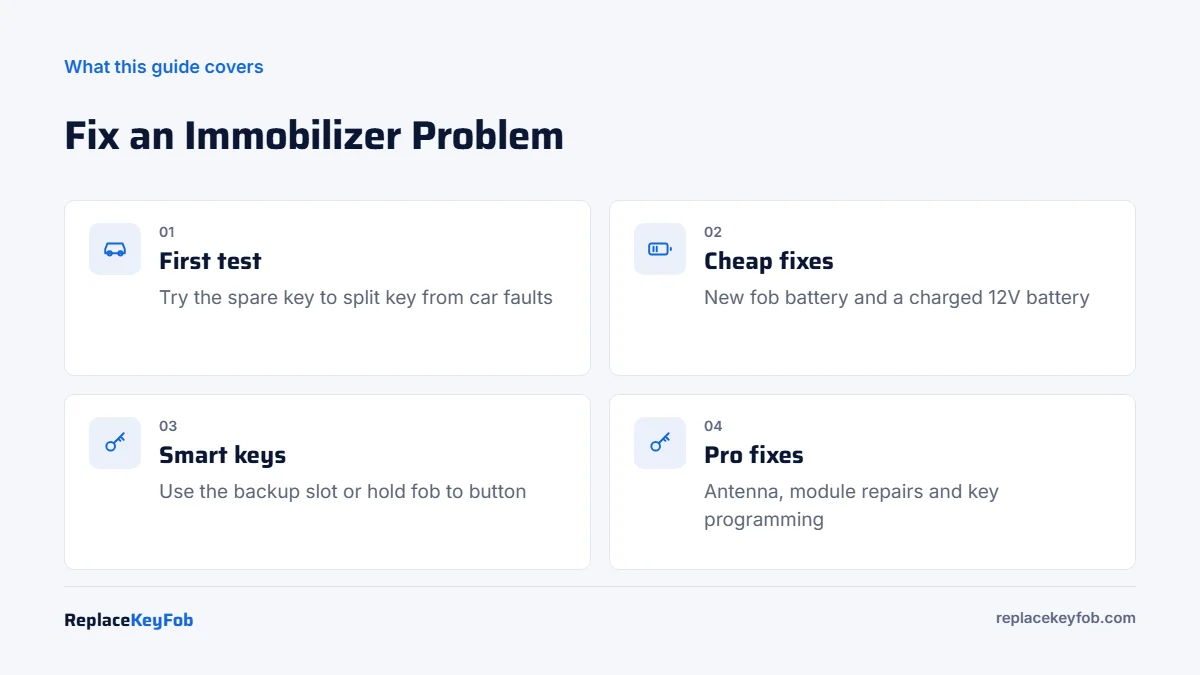
Immobilizer problem fixes at a glance
| Symptom | Likely cause | Fix |
|---|---|---|
| Spare key works, main key does not | Weak fob battery or damaged chip in the main key | Replace battery; reprogram or replace the key |
| “Key not detected” on a push-button car | Dead fob battery or interference | Use the backup position; replace the coin cell |
| Starts then dies within seconds | Key not authorized by the immobilizer | Try spare; relearn or program the key |
| Security light flashes, clicks or no crank | Low 12V battery or key not recognized | Charge battery; then check key |
| No key works, problem came on gradually | Failing antenna ring or ignition sensor | Replace antenna or sensor; on GM Passlock try a relearn |
| Problem started after a repair or module swap | Module not matched to the immobilizer | Dealer or locksmith module programming |
| Problem started after a remote start install | Bypass module fault | Installer to check or reprogram the bypass |
What you need
- All keys and fobs for the car.
- Replacement coin cells. Check the size in our key fob battery size chart.
- A multimeter, charger or jump pack for the 12V battery.
- An OBD2 scanner that can read body and immobilizer codes, or a key programmer that covers your car.
- The owner’s manual for the smart key backup location.
OBD2 Key Programmer With Immobilizer Functions
A tool that reads immobilizer codes and supports key learning for your exact vehicle can confirm the fault and add a key. Check the coverage list first.
As an Amazon Associate, ReplaceKeyFob earns from qualifying purchases.
How to fix an immobilizer issue: step by step
- Try the spare key. This one step splits the problem in half. If the spare starts the car, focus on the main key. If neither works, focus on the car.
- Replace the fob battery. On smart key cars, a weak cell stops the car finding the key. Fit a fresh cell with the correct side up and test again.
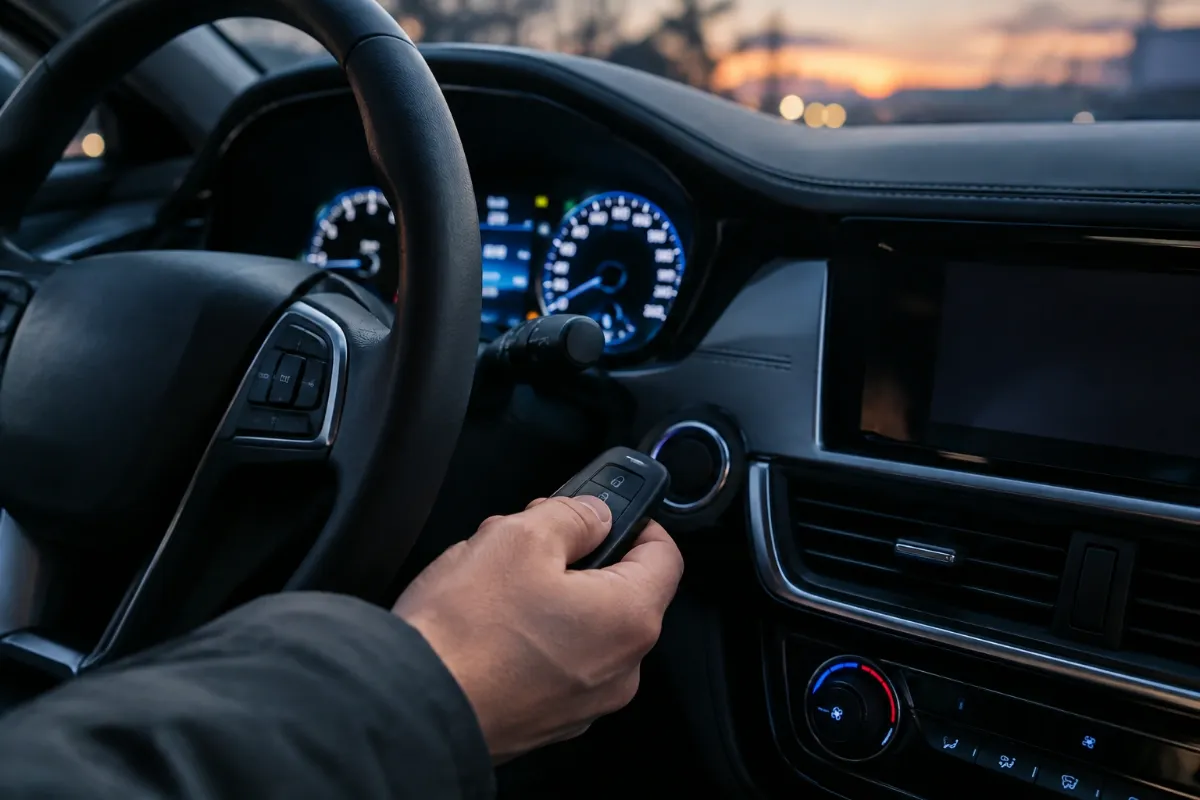
- Use the backup position. Hold the fob against the start button or place it in the marked slot or pocket, then press start with your foot on the brake. If this works, the fob battery or the fob’s transmitter is the problem.
- Check the 12V battery. Below about 12.2 volts at rest, modules can misbehave and the security light may flash. Charge or jump the battery and retry.
- Remove interference. Take other chip keys, RFID cards, phone cases with metal plates and aftermarket key rings away from the ignition.
- Inspect the key. A cracked key head, a loose chip or water damage can stop the transponder working. Some chips sit loose in the head and can fall out when the shell breaks.
- Read the codes. A scanner that reaches the body or immobilizer module can show codes for an unrecognized key, an antenna fault or a communication problem between modules.
- Try a relearn if your car supports one. Older GM Passlock vehicles accept a 10-minute ignition-on relearn. Our guide on how to reset the immobilizer system covers the steps and the brands where no reset exists.
- Reprogram the key. If the car no longer recognizes a key, add it again with a key programmer or have a locksmith do it. See how to program a key fob with an OBD2 scanner.
Causes from easy to hard
Weak or dead fob battery
The most common cause on push-button cars. Symptoms: “key not detected” message, range dropping over a few weeks. Fix: new coin cell, then confirm with the backup position.
Damaged or unprogrammed key
Symptoms: only one key fails, or a new key unlocks the doors but will not start the car. Fix: reprogram the key, or replace it if the chip is damaged. A new key needs both the remote and the transponder programmed.
Low 12V battery or poor connections
Symptoms: flashing security light with dim dash lights, clicking, or problems after a jump start. Fix: charge or replace the battery and clean the terminals. See key fob not detected after a jump start.
Failed antenna ring or sensor
Symptoms: no key works, often intermittent at first and worse in heat or cold. Fix: replace the antenna coil around the ignition cylinder, or the Passlock sensor on older GM vehicles. This is a moderate repair that usually needs the steering column covers removed.
Module fault or mismatch
Symptoms: no key works after a module, ECU or instrument cluster replacement, or after a used part was fitted. Fix: the replacement module has to be programmed to the immobilizer, which is dealer or specialist locksmith work.
Aftermarket remote start or alarm
Symptoms: problems began after an install, or the remote start works but the key does not, or the other way around. Fix: have the installer check the bypass module and wiring.
If it still will not start
Stop repeated start attempts on a car that is clearly not recognizing any key. Repeated tries do not help and drain the battery. A car that cranks normally but will not fire with no security light may have a fuel or ignition problem instead; our guide to diagnosing a no-start with an OBD2 scanner helps separate the two.
When to call a pro, and what it costs
Call an automotive locksmith or dealer if no key works, if codes point to the antenna or a module, or if the car was recently repaired. Typical 2026 costs: about $100 to $250 to reprogram or relearn keys, $150 to $400 for an antenna ring or ignition sensor replacement, and $300 to $1,000 or more for module replacement and programming, depending on the vehicle. A mobile locksmith can often do the key work in place, which saves a tow. Our hub on programming a key fob covers the key side in detail.
Frequently Asked Questions
Try your spare key and a new fob battery first. If the car still does not recognize any key, check the 12V battery, then have the key relearned or the antenna and modules checked with a scan tool.
Yes. Low voltage can stop modules communicating, which can trigger the security light and prevent starting. Charge the battery before anything else.
Key relearning typically costs about $100 to $250. Antenna or sensor repairs run about $150 to $400, and module replacement with programming can exceed $1,000 on some vehicles.
If the engine starts and runs normally, the immobilizer has approved the key. Intermittent faults can leave you stranded, so get the cause fixed and carry the spare key.
Automotive locksmiths handle key-related immobilizer issues, such as programming and all-keys-lost. Module or wiring faults may need a dealer or auto electrician.