
How to Start a Car That Has Been Sitting for Months (or Years)

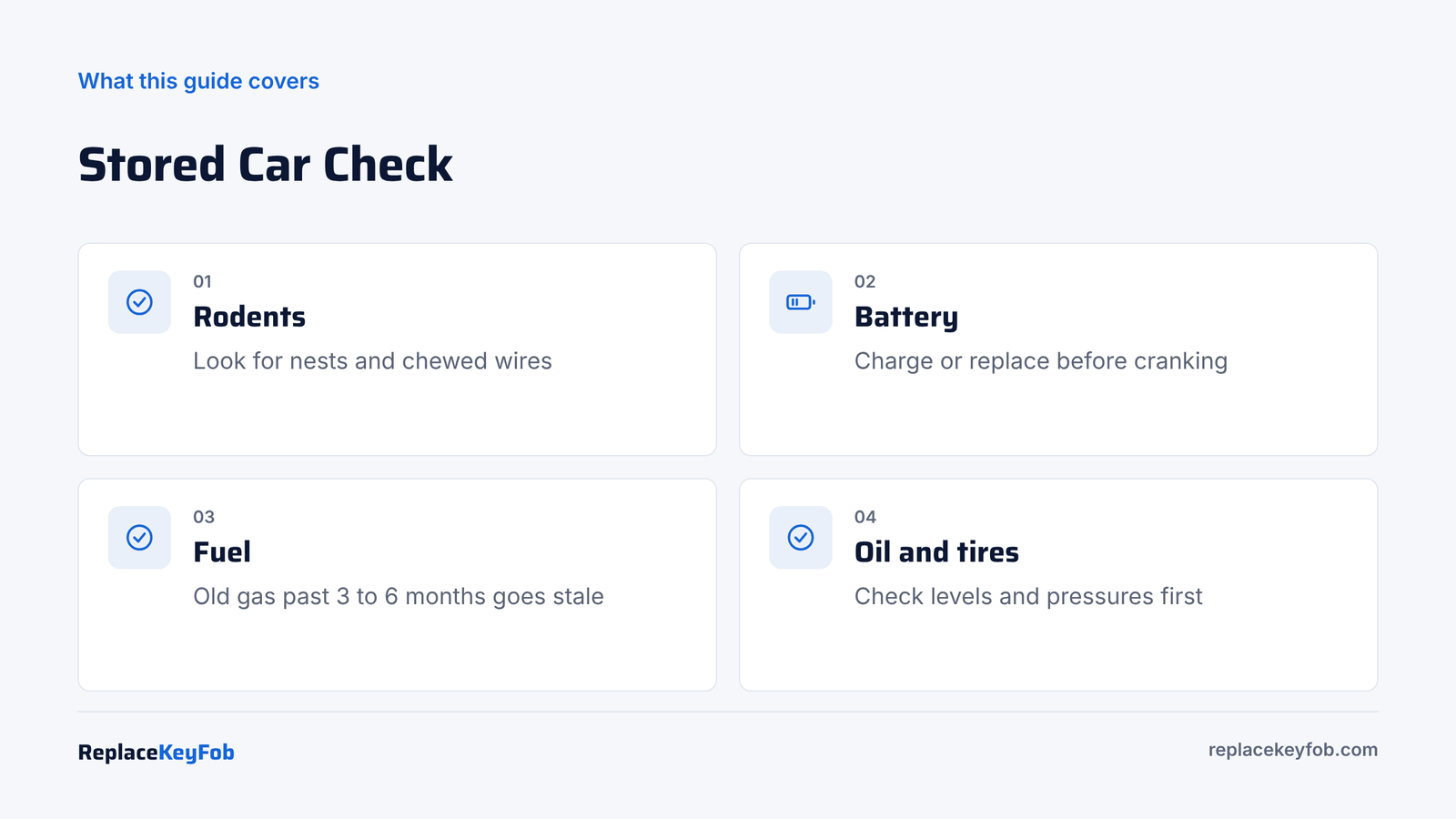
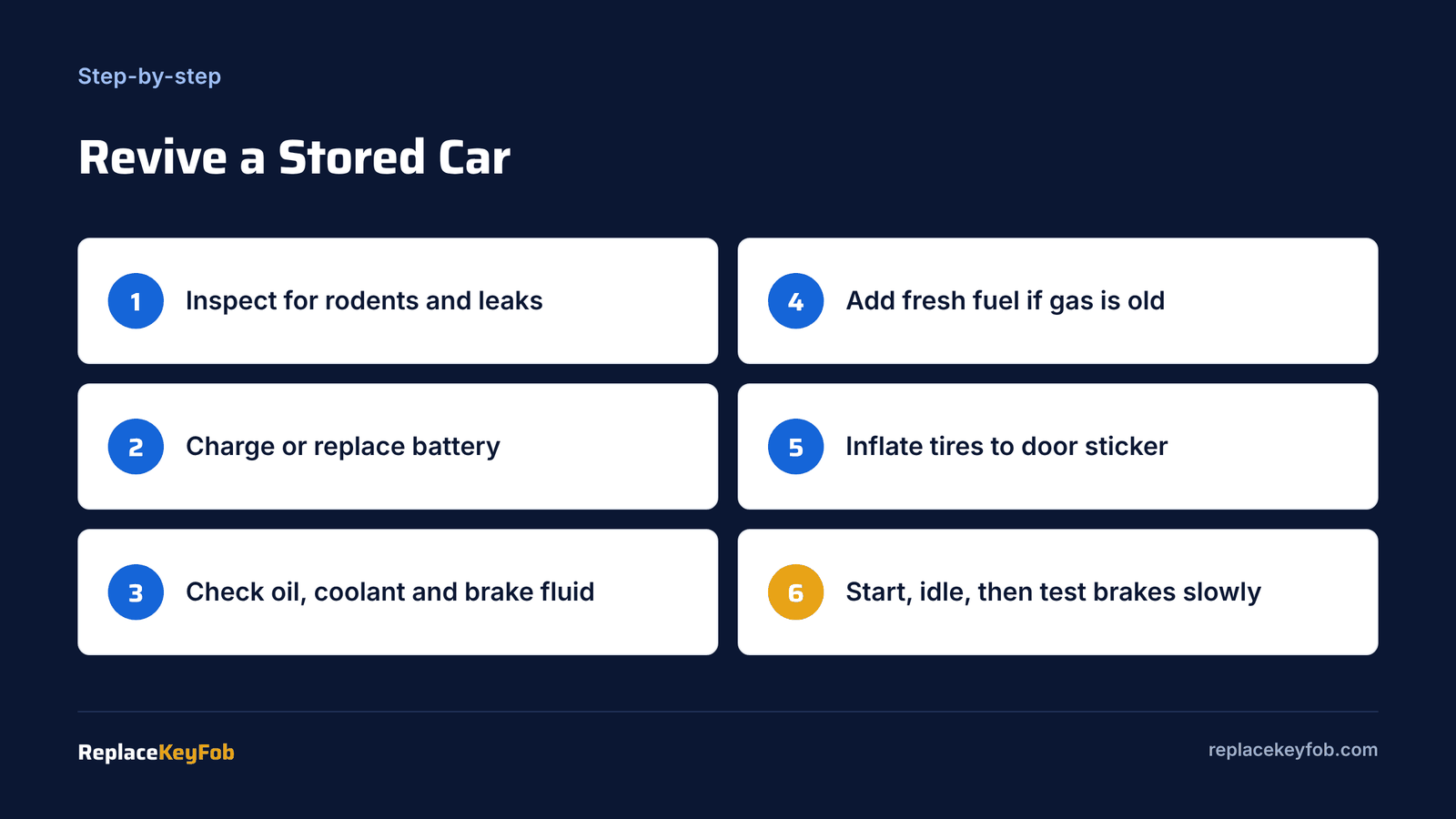
To start a car that has been sitting, first check for rodent nests and chewed wires, then charge or replace the battery instead of just jumping it. Check oil, coolant and brake fluid, add fresh fuel if the gas is more than a few months old, and inflate the tires. Start it, let it idle a few minutes, and test the brakes slowly before driving.
A car that has sat for a few weeks usually needs only a charged battery. A car that has sat for months or years is different. Fuel ages, rubber dries out, brakes rust, mice move in and the battery often drops below the point where it can recover. Turning the key without checking any of that can turn a cheap revival into an expensive repair.
This guide gives a safe order of checks for a car that has been parked for about 1 to 12 months, plus extra steps for one that has been sitting for years. It goes further than a simple jump; for the basic jumping steps, see how to jump start a car.
What Happens to a Car That Sits
| Time parked | Common issues |
|---|---|
| 2 to 4 weeks | Battery low, especially on newer cars with many modules |
| 1 to 3 months | Battery flat, flat spots on tires, light brake rust |
| 3 to 12 months | Stale fuel (especially ethanol blends), dead battery, rodent damage, sticky brakes |
| 1 to 3 years | Varnished fuel, failed battery, dried seals, possible seized brakes or clutch |
| 3+ years | All of the above, plus old fluids, cracked belts and hoses, fuel system clogging |
What You Need
- A battery charger or maintainer, or a new battery.
- A tire inflator and gauge.
- A flashlight.
- Fresh fuel (and a fuel stabilizer for the future).
- Engine oil that matches the owner’s manual, if it needs topping up or changing.
- Gloves and safety glasses.
Smart battery charger with repair mode
A smart charger can safely bring a deeply drained battery up slowly, and tells you if it will not hold a charge before you rely on it.
As an Amazon Associate, ReplaceKeyFob earns from qualifying purchases.
Step 1: Walk Around and Look Under the Hood
- Look under the car for puddles. Note the color: brown or black is oil, green, orange or pink is coolant, red can be transmission fluid, clear and slick near a wheel can be brake fluid.
- Open the hood with a flashlight. Look for nests, droppings, food stash and chewed wires or hoses. Rodents love engine bays and air filter boxes.
- Check the air filter box. Open it and look for nesting material. A nest in the intake can choke the engine.
- Check the cabin air filter if you can reach it; rodent nests there cause a strong smell when the fan runs.
- Check belts and hoses for cracks or chew marks.
If you find chewed wiring, do not start the car until it is repaired. A shorted wire can damage modules or start a fire.
Step 2: Deal With the Battery
A battery that has sat flat for months is often damaged. A jump might start the car, but the battery may not recover and could leave you stranded again.
- Measure it. A resting reading of about 12.4V or more means it is worth charging. Below about 12.0V it is deeply discharged; below about 10.5V it may have a damaged cell. See how to test a car battery with a multimeter.
- Clean the terminals. Remove white or green crust with a terminal brush. Our guide on battery terminal corrosion shows how.
- Charge it slowly with a smart charger until full. This can take many hours.
- Let it rest for a few hours and test again. If it drops below about 12.4V, replace it.
- If the battery is more than about 4 to 5 years old and has sat flat, replacement is usually the better choice.
If you only want to get the car moving now, a jump will do, but plan to charge it fully afterward.
Step 3: Check the Fluids
- Engine oil: pull the dipstick. The level should be between the marks. If it looks milky, coolant may be getting in; do not start the engine. If the car sat for a year or more, consider an oil change before or soon after the first start, since oil ages with time as well as miles.
- Coolant: check the overflow tank level with the engine cold.
- Brake fluid: check the reservoir level. Very dark fluid is old and absorbs moisture over time.
- Power steering and transmission fluid where they have dipsticks or reservoirs.
- Windshield washer fluid, so you can clear dust off the glass.
Step 4: Refresh Old Fuel
Gasoline starts to degrade after about 3 to 6 months, faster with ethanol blends and heat. Old fuel can cause hard starting, rough running and, after a long time, varnish in the fuel system.
- Less than about 3 months: usually fine, top up with fresh fuel.
- About 3 to 12 months: add fresh fuel to dilute it. If the tank is nearly full of old fuel, it may run rough. Adding fresh fuel and driving gently often helps.
- More than a year: consider draining the tank, or have a shop do it. Very old fuel can smell like varnish and clog injectors and filters.
Diesel lasts longer but can grow microbes and collect water. If a diesel sat for a long time, consider replacing the fuel filter.
Step 5: Check Tires and Brakes
- Inflate the tires to the pressure on the driver door jamb sticker. Tires lose about 1 to 2 PSI per month.
- Look for flat spots, cracking or bulges. Tires older than about 6 years can crack even with plenty of tread.
- Check the parking brake. On cars stored with the parking brake on, the brake can stick. Release it and check the car can roll in Neutral.
- Expect surface rust on the rotors. A light orange coating is normal and wears off in the first few stops.
Step 6: Start It
- Make sure the area is ventilated. Never run a car in a closed garage.
- Turn the key to On and wait a few seconds so the fuel pump can prime. On older cars, cycle the key to On and off two or three times.
- Start the engine. Crank for no more than about 10 seconds at a time, with a minute between tries.
- Let it idle for a few minutes and watch the gauges. Look for warning lights, smoke or unusual noises.
- Check again for leaks under the car after a few minutes of running.
If it cranks but will not start, old fuel or a weak fuel pump is likely. If it does not crank at all, check the battery connections and see car clicks but won’t start. For a manual car with a weak battery and no jump, a push start can work in a pinch.
Step 7: Test the Brakes Before Driving
Press the brake pedal several times. It should feel firm. Then drive slowly in a safe area and test the brakes at low speed. Rusty rotors can make noise and grab at first. If the car pulls hard to one side or the pedal feels soft, do not drive it on the road.
Extra Steps for a Car That Sat for Years
Cars stored for several years without preparation need more care:
- Change the oil and filter before or right after the first start.
- Check the spark plugs. On older engines, some mechanics remove the plugs and add a teaspoon of engine oil to each cylinder, then turn the engine by hand with a wrench on the crank bolt to make sure it is free. This is optional and only for those comfortable with it.
- Replace the fuel and often the fuel filter.
- Replace brake fluid and coolant if they are old.
- Inspect or replace belts and hoses.
- Replace tires older than about 6 to 10 years, even if they look fine.
- Expect the battery to need replacing.
If the car has been sitting for many years, a shop inspection is often worth the cost before you drive far.
Troubleshooting
| Symptom | Likely cause | Fix |
|---|---|---|
| Nothing happens, no lights | Battery dead or terminals corroded | Charge or replace battery; clean terminals |
| Clicks only | Weak battery or poor connection | Charge battery; check cables |
| Cranks, will not start | Stale fuel, weak fuel pump, rodent damage | Fresh fuel; check for chewed wires |
| Starts, runs rough | Old fuel, dirty injectors | Fresh fuel, drive gently, fuel system cleaner |
| Squeal on startup | Dry or worn belt | Inspect belt and tensioner |
| Key not recognized | Fob battery dead after storage | Replace the fob battery |
Preventing the Problem Next Time
- Use a battery maintainer while the car is parked. See winter storage maintainers and how to store a car battery for winter.
- Fill the tank and add a fuel stabilizer before storage.
- Inflate tires a few PSI above normal for long storage, and set them back before driving.
- Use rodent deterrents and keep food out of the car and garage.
- Start and drive the car for 20 to 30 minutes every couple of weeks if you can.
Cost to Revive a Stored Car
In 2026, reviving a car that sat for months typically costs about $150 to $500 (battery, oil change, fresh fuel). A car that sat for years can need $500 to $2,000 or more if tires, brakes, fuel system work and rodent wiring repairs are needed. Rodent wiring repairs alone can range from about $150 to over $1,000 depending on damage.
Frequently Asked Questions
It may start, but check for rodent damage and fluid leaks first, and charge the battery fully afterward. A battery that sat flat for months may need replacing.
Inspect for rodents, replace the battery, change the oil, replace old fuel, check brakes and tires, and turn the engine by hand if you are able before cranking. A shop inspection is a good idea.
Yes. Gasoline starts to degrade after about 3 to 6 months, especially ethanol blends. Very old fuel can cause hard starting and clog the fuel system.
Often about 2 to 4 weeks for newer cars with many electronics, and up to a couple of months for older, simpler cars. A maintainer prevents it.
If it sat for a year or more, yes. Oil ages over time even without miles, and fresh oil is cheap insurance on the first drives.