
What Does P0118 Mean? Clear Answer and Fix Guide

P0118 means the engine computer sees high voltage from the engine coolant temperature sensor circuit. In plain terms, the computer thinks the engine is colder than it is. The cause is often a bad coolant temperature sensor, unplugged connector, corroded wiring, low coolant, or an open circuit.
- Code name: Engine Coolant Temperature Sensor Circuit High Input
- Main system: Cooling and engine management
- Common sign: Check engine light
- Risk level: Repair soon
You searched “what does P0118 mean” because a scanner showed the code, and now you need a clear answer before replacing parts.
The P0118 code sounds like overheating, but the wording points to an electrical reading problem. This takes about 7 minutes to read.
Quick check: If your scan tool shows an engine coolant temperature near -40°F or far below outside temperature, the sensor circuit has a strong fault signal.
P0118 Code Meaning in Plain English
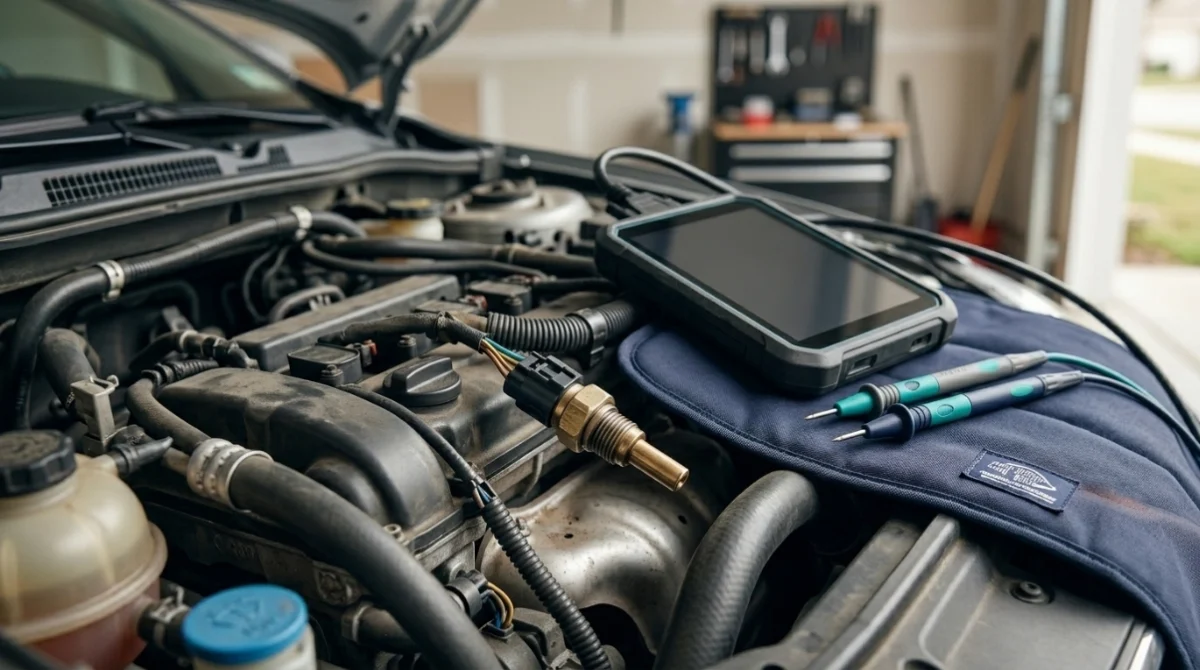
P0118 means the engine coolant temperature sensor circuit is sending a high input signal to the ECM or PCM.
The engine coolant temperature sensor, also called the ECT sensor, tells the computer how warm the coolant is. The computer uses that reading to adjust fuel delivery, ignition timing, idle speed, radiator fan behavior, and emissions controls.
The “high input” part means high voltage, not high engine temperature. A high voltage signal often makes the computer believe the coolant is extremely cold.
For a background on how OBD systems monitor emission-related components, see the EPA overview of on-board diagnostic requirements.
Key point: P0118 is a sensor circuit code before it is a coolant temperature problem.
Why P0118 Happens
P0118 happens when the coolant temperature signal goes outside the range the engine computer expects.
Most ECT sensors are negative temperature coefficient thermistors. As coolant temperature rises, sensor resistance drops. As resistance drops, the return voltage to the engine computer changes.
When the circuit stays open, damaged, unplugged, or corroded, the computer can see a high voltage signal. That high signal triggers P0118.
| Cause | Why It Triggers P0118 | What You Notice |
|---|---|---|
| Faulty ECT sensor | Sensor resistance no longer matches coolant temperature | Cold reading, hard start, rich fuel mixture |
| Unplugged connector | Signal circuit opens | Code returns right after clearing |
| Corroded wiring | Resistance increases in the sensor circuit | Intermittent check engine light |
| Low coolant | Sensor reads air instead of coolant | Temperature gauge acts strange |
| Bad thermostat | Coolant temperature stays outside normal behavior | Engine warms slowly or runs cool |
The sensor is the common suspect, but the connector deserves the first look.
P0118 Symptoms You Can Notice
P0118 often starts with a check engine light, but the car can show several drivability clues.
- Check engine light stays on
- Hard starting when cold
- Rough idle after startup
- Poor fuel economy
- Cooling fan runs at the wrong time
- Temperature gauge reads wrong
- Failed emissions test
The engine computer can add extra fuel when it believes the engine is cold. That rich fuel mixture can create rough running, fuel smell, carbon buildup, and poor mileage.
Some cars enter a backup mode when the coolant temperature signal fails. Kelley Blue Book notes that some systems substitute a default coolant value around 176°F when failsafe mode starts.
Can You Drive With a P0118 Code?
You can drive a short distance with P0118 only when the engine temperature is stable and coolant level is safe.
You should not ignore the code. A false cold reading can change fuel control and fan control, while a real cooling issue can damage the engine.
Warning: Stop driving if the temperature gauge climbs, steam appears, coolant leaks, or the heater suddenly blows cold air while the engine is hot.
What most people do not think to ask is whether the engine is hot or the computer only thinks the engine is cold. That difference changes the repair path.
How to Diagnose P0118 Before Replacing Parts
Diagnose P0118 by checking live coolant temperature data before buying a new sensor.
Start with the scan tool reading. A cold engine should show coolant temperature close to outside air temperature. A warm engine should rise in a steady pattern.
- Check coolant level when the engine is cold.
- Inspect the ECT sensor connector for looseness.
- Look for green corrosion or broken wires.
- Read live coolant temperature on a scan tool.
- Compare the reading with outside temperature.
- Test sensor resistance against service data.
- Clear the code and confirm it does not return.
OEM service data explains this circuit well. Mitsubishi technical information states that the ECT sensor converts coolant temperature into voltage, and the ECM checks whether that voltage stays within range through continuous monitoring.
For a technical example, review the Mitsubishi P0118 circuit description.
IMAGE SUGGESTION: Close-up of an engine coolant temperature sensor connector beside a scan tool showing live coolant temperature.
ALT TEXT: what does P0118 mean engine coolant temperature sensor connector and scan tool reading
What Most People Get Wrong About P0118
The first mistake is thinking P0118 always means the engine is overheating.
P0118 means the computer sees high voltage from the coolant temperature sensor circuit. The engine can be cold, warm, or overheating while the code is stored.
The second mistake is replacing the sensor without checking the connector. A loose plug or corroded terminal can create the same signal fault as a bad sensor.
The third mistake is clearing the code and calling the repair done. Clearing P0118 only deletes the warning until the computer sees the same fault again.
Best repair logic: Confirm the live temperature reading first. Then inspect the sensor, connector, coolant level, and wiring in that order.
P0118 vs Related Coolant Sensor Codes
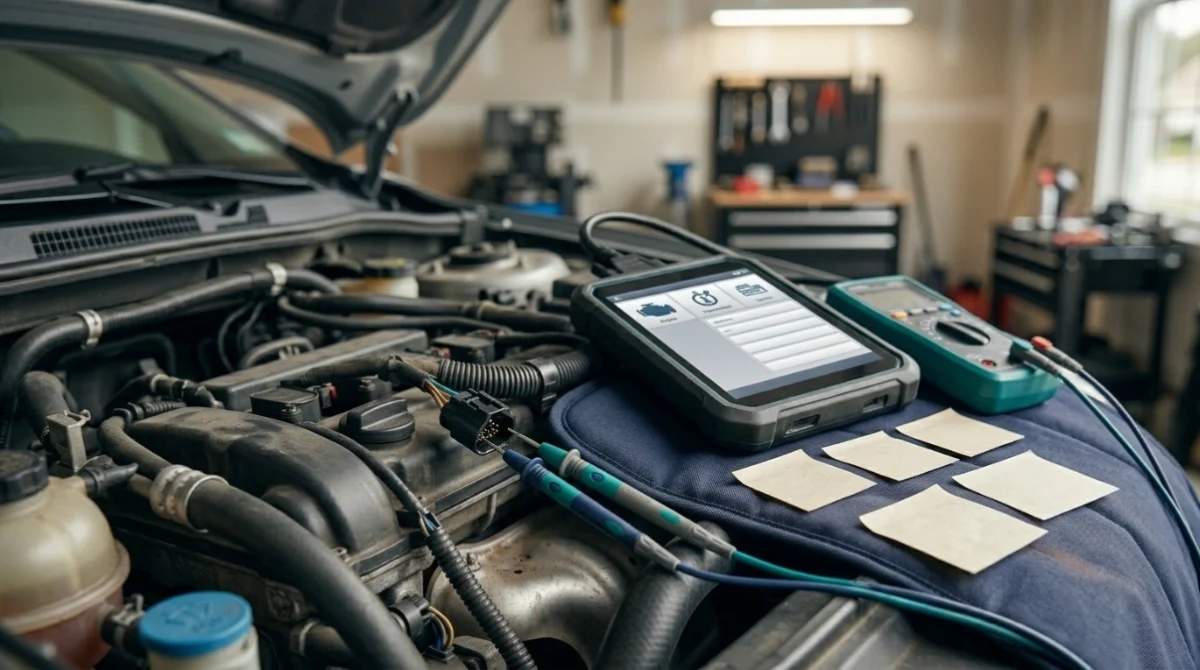
P0118 is one of several coolant temperature sensor codes, and each code points to a different signal problem.
This comparison helps you avoid chasing the wrong issue.
| Code | Plain Meaning | Main Difference |
|---|---|---|
| P0115 | ECT circuit malfunction | General circuit fault |
| P0116 | ECT range or performance issue | Signal changes wrong over time |
| P0117 | ECT circuit low input | Voltage too low |
| P0118 | ECT circuit high input | Voltage too high |
P0118 points more toward an open circuit, bad connection, or sensor signal fault than a normal overheating event.
What to Do Next When You See P0118
If the engine temperature gauge is normal, start with a basic inspection and scan tool comparison.
If the engine runs hot, address the cooling system first. Check coolant level, visible leaks, radiator fan operation, and thermostat behavior before driving again.
- If coolant is low → fill and inspect for leaks.
- If the connector is loose → reconnect and clear the code.
- If live data shows -40°F → inspect wiring and sensor.
- If wiring looks damaged → repair the circuit first.
- If sensor resistance is wrong → replace the ECT sensor.
For a simple guide to OBD code structure, Clemson University explains that powertrain diagnostic trouble codes use the Pxxxx format and that generic codes apply across manufacturers.
Read the Clemson overview of OBD diagnostic trouble codes for background.
P0118 means the engine computer sees high voltage from the coolant temperature sensor circuit, not that the engine temperature is high.
A clean diagnosis starts with live coolant temperature data, because that reading separates a bad sensor circuit from a real cooling problem.
Open your scan tool now and compare coolant temperature with outside air temperature before replacing the sensor.
Frequently Asked Questions
Is P0118 a serious code?
Yes, P0118 is serious because the engine computer uses coolant temperature data for fuel control, ignition timing, fan control, and emissions. The car can still run, but bad temperature data can create rich fuel mixture, rough running, and overheating risk.
Does P0118 mean my car is overheating?
No, P0118 does not directly mean the engine is overheating. It means the coolant temperature sensor circuit has a high input signal. Check the temperature gauge, coolant level, and live scan tool data to separate an electrical fault from a real cooling issue.
Can low coolant cause P0118?
Yes, low coolant can contribute to P0118 when the sensor no longer sits in coolant flow. The sensor can read incorrectly when surrounded by air pockets. Check coolant only when the engine is cold, then inspect for leaks.
Will replacing the coolant temperature sensor fix P0118?
Replacing the ECT sensor fixes P0118 when the sensor has failed. It will not fix the code when the real fault is an unplugged connector, corroded terminal, broken wire, low coolant, or ECM input issue.
How do I clear a P0118 code?
Clear P0118 with an OBD-II scanner after repairing the cause. Do not clear the code first and assume the repair is complete. If the circuit fault remains, the check engine light will return after the computer repeats its test.
