
Push Button Start Says Key Not Detected: What to Check First and How to Fix It

When a push-button start says key not detected, the car is telling you the smart-key system isn’t getting a strong enough signal from the fob to authorize starting. In plain terms, the doors may still unlock and lock, but the engine won’t crank or the car may shut down after a brief attempt.
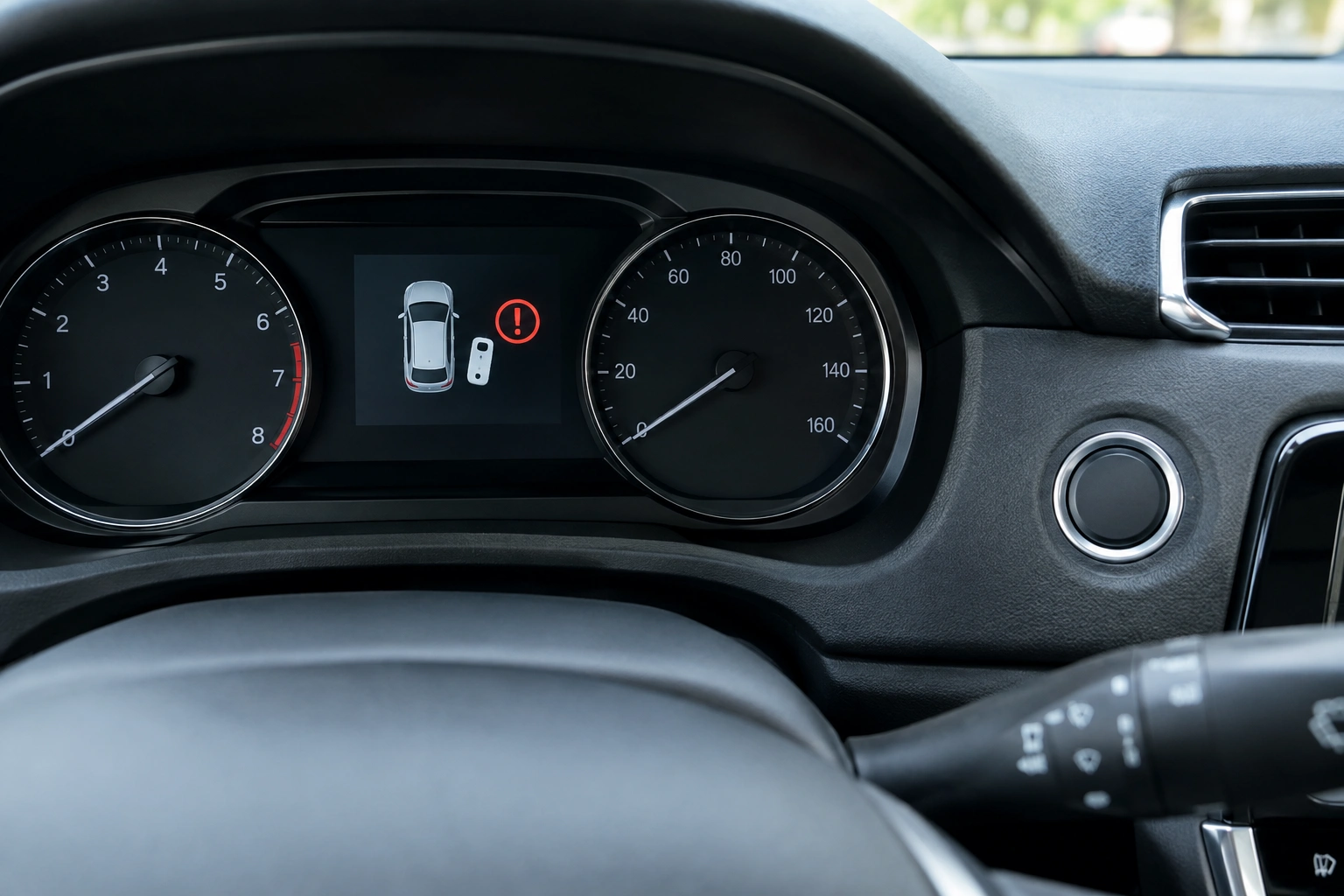
That warning usually points to one of five things: a weak key fob battery, a weak car battery, signal interference, a damaged fob, or a vehicle-side receiver/immobilizer issue. The fastest way to solve it is to test the easiest causes first, in the right order.
What the warning usually means
Most push-button start systems need the car to recognize a coded signal from the key fob before they’ll allow the engine to start. If that signal is too weak, blocked, or not being received, you’ll see messages like No Key Detected, Key Not Found, or Place Key Near Start Button.
A useful clue is what the rest of the car is doing:
- If the doors respond normally but the car won’t start, the fob signal path is the first thing to inspect.
- If the dash is dim, electronics act sluggish, or you recently had a dead battery, the vehicle battery may be part of the problem.
- If the warning appears only sometimes, interference or a weak fob battery is more likely than a hard failure.
For a broader step-by-step version of this issue, you can also read this guide on key fob not detected troubleshooting.
Try these immediate fixes first
Before you take anything apart, try the quick checks that often get the car started right away.
Move the fob away from possible interference
Keep the key fob away from your phone, laptop, wireless charger, metal key ring clutter, and other electronics. RF interference can sometimes block detection. A simple test is to place the fob in a different pocket or hold it away from the rest of your belongings, then try again.
A real-world example: if the warning started after you tossed your phone and fob into the same cupholder, separating them may solve it immediately.
Try the backup start method
Many vehicles have a designated backup start spot, often near the start button, steering column, center console, or a marked area in the owner’s manual. The exact placement varies by vehicle, so if it isn’t obvious, check the owner’s manual right away or look for a symbol near the start button or console. If the manual is unavailable, that symbol or nearby label is the next thing to check.
The idea is simple: if the fob battery is weak, the car may still read the chip when the fob is held very close to the receiver.
If your vehicle says place key near start button, follow that instruction exactly. This is one of the best quick checks because it tells you whether the fob is still alive, just weak.
For a model-agnostic walkthrough of the emergency start process, see how to start a car when the key fob is not detected.
Try locking, unlocking, then starting again
If the fob responds to the door locks but not the start request, that does not prove the fob is healthy. It only means part of the fob is still transmitting. Still, if the buttons work normally and the car starts only when the fob is held close to the backup spot, the battery is the next thing to check.
Also make sure the brake is pressed firmly and the shifter is fully in Park before you assume you have a key-detection problem. A start-condition issue can look a lot like a fob problem.
Check the key fob battery
A weak key fob battery is one of the most common reasons a push-button start says key not detected. The fob may still work from a short distance for locking and unlocking, but the start signal can be too weak when the battery is fading.
Signs the fob battery is the likely problem
Look for these patterns:
- The warning is intermittent.
- The car starts only when the fob is held very close to the start button area.
- The range for lock and unlock has dropped.
- The problem gets worse in cold weather or after the fob has been sitting unused.
If the fob battery is old, replacing it is usually the first repair worth doing because it is cheap, quick, and easy to reverse if it doesn’t help.
How to replace it without guessing
Most fobs open with a small seam or release tab, then take a coin-cell battery. Use the exact battery type listed in the owner’s manual or on the old battery itself. Match the orientation carefully when you install the new one.
A practical tip from the shop side: don’t pry hard enough to crack the case. A broken shell can turn a simple battery swap into a bigger fob problem.
Battery replacement vs. fob replacement
If a fresh battery restores normal operation, you’re done. If the warning continues with a new battery and the spare fob behaves differently, the main fob may have an internal fault rather than a simple battery issue.
Test the spare key fob
The spare fob is one of the best diagnostic tools you have. It separates a bad fob from a vehicle-side issue.
What the spare tells you
- If the spare works normally: the main fob is the likely problem.
- If both fobs fail: suspect the car battery, interference, receiver/antenna, or immobilizer system.
- If both work only intermittently: the issue may be low vehicle voltage or a weak detection system.
This comparison matters because it keeps you from replacing the wrong part. If the spare works, don’t chase vehicle electronics first. If both fail, don’t keep buying batteries for the fob and hoping for the best.
Rule out a weak car battery
A weak vehicle battery can create smart-key problems because the detection system itself needs stable voltage to wake up and communicate properly. This is especially likely if the car sat unused, the battery went dead recently, or you had electrical work done.
The article How to Diagnose Key Recognition Problems Fast notes that the problem can be worse after the vehicle battery went dead or after recent electrical work. That fits a common pattern I used to see in the shop: low voltage causes strange electronics behavior long before the starter completely quits.
A jump start or a battery charge may temporarily restore key detection, which can help separate a low-voltage problem from a bad fob or deeper vehicle fault.
Signs the car battery is the issue
Watch for these clues:
- Dim dash lights or slow interior electronics
- Multiple warning lights, not just the key message
- Clicking, weak cranking, or no cranking at all
- Both fobs failing at the same time
- The car starts after a jump or after the battery is charged
If the dash is weak and the key message appears with other electrical symptoms, check the car battery before blaming the fob.
Fob battery problem vs. car battery problem
Here’s the simplest rule:
- Weak fob battery: one fob acts up, backup start spot may work, other car electronics seem normal.
- Weak car battery: the whole vehicle acts low on power, both fobs may fail, and the dash may look dim.
That distinction saves a lot of time.
Look for interference or simple signal blockage
Sometimes the fob is fine, the car battery is fine, and the problem is just the environment around the car.
Common interference sources
- Phones placed right next to the fob
- Wireless chargers
- Other key fobs or RFID devices
- Metal containers or crowded key rings
- Parking near strong electronic equipment
How to test for interference
Move the fob to a different pocket, step away from the car, remove nearby electronics, and try again. If the warning disappears after that, you likely found a temporary signal issue rather than a failed part.
If the problem only happens in one location, such as a specific garage or parking spot, interference is more likely than a bad fob.
Inspect the key fob for damage or failure
If the battery is new and the spare fob test doesn’t point to the car, inspect the main fob carefully.
What to look for
- Cracked or loose casing
- Water exposure
- Worn or stuck buttons
- Corrosion inside the battery compartment
- Signs the fob was dropped hard
A fob can still light up or lock doors while its internal antenna or circuit is failing, although symptom patterns vary by vehicle and fob design. Water damage is especially tricky because the fob may work for a while and then fail more often.
If the fob was soaked, crushed, or exposed to corrosion, replacement is often more realistic than repeated battery swaps.
Consider vehicle-side faults if both fobs fail
When both fobs fail and the car battery checks out, the issue may be on the vehicle side. That can include the receiver, antenna, immobilizer-related components, or wiring.
Why both fobs failing matters
Two different fobs failing in the same car at the same time usually suggests a shared cause outside the fobs, although it is still worth confirming the battery and start conditions first. That’s why the spare-key test is so useful. It narrows the diagnosis fast.
Signs to suspect the car, not the key
- Both fobs are dead in the same car
- The backup start method does not help
- The car battery is good
- The warning is persistent, not just occasional
- The problem started after electrical work, a dead battery event, or a repair
At that point, the car likely needs deeper diagnosis with the correct service information for the make and model. Receiver or antenna faults are usually less common than fob battery or voltage issues, and they often need scan-tool diagnosis instead of guesswork.
When to Consult a Locksmith
Call a professional if the car still won’t detect any key after the quick checks, especially if you’ve already tried a spare fob, replaced the fob battery, and confirmed the car battery is healthy.
You should also stop DIY troubleshooting and get help sooner if you notice:
- Water damage in the fob
- Burning smell, melted plastic, or electrical odor
- Repeated no-detection warnings after a jump start
- A vehicle that only starts inconsistently
- Signs of a failing battery or electrical system that could leave you stranded
An automotive locksmith is often the best choice if the issue seems limited to the fob itself, the transponder, or reprogramming a replacement key. A dealer is usually the better route if the vehicle may need smart-key registration, receiver/antenna diagnosis, or immobilizer-related programming. A mechanic is often the right call when the symptom seems tied to the car battery, charging system, starter interlock, or broader electrical faults.
For a quick reference on getting moving again, you may also want this emergency start guide for no key detected situations.
How to prevent future key not detected problems
A little prevention goes a long way here.
- Replace the fob battery before it gets weak enough to cause intermittent starts.
- Keep a working spare fob available and test it once in a while.
- Don’t store the fob with a phone or other electronics if you notice occasional detection issues.
- Address a weak car battery early, especially before winter.
- If the warning starts happening more often, treat it as an early warning instead of waiting for a no-start situation.
The goal is to catch the problem while it is still manageable. A fob that only fails once in a while often gives you a short window to fix it before it leaves you stranded.
Quick troubleshooting order to follow
If you want the shortest path, use this sequence:
- Move the fob away from electronics and try again.
- Use the backup start spot or emergency start method.
- Replace the key fob battery.
- Test the spare fob.
- Check for weak car battery symptoms.
- If both fobs still fail, get professional diagnosis.
That order works because it separates the most common, easiest fixes from the deeper vehicle-side faults.
FAQ
Why does my car say key not detected?
Usually because the vehicle is not receiving a strong enough signal from the smart key fob. The cause may be a weak fob battery, interference, a weak car battery, or a fault in the car’s receiver system.
Can I still start the car if the fob battery is dead?
Often, yes. Many vehicles have a backup start method that works when the fob is held against a specific spot near the start button or steering column. Check your owner’s manual for the exact location.
Will replacing the fob battery fix the issue?
It often does if the battery is weak or old. If the warning continues after a fresh battery, the problem may be the fob itself or the vehicle.
What if the spare key fob works?
That points strongly to the main fob, not the car. Replace the main fob battery first, then inspect the fob for damage if the problem continues.
Could my car battery cause key not detected warnings?
Yes. Low vehicle voltage can interfere with smart-key detection and create other electrical symptoms at the same time.
When should I stop trying and call for help?
If both fobs fail, the backup start method doesn’t work, the car battery seems fine, or the fob has water or physical damage, it’s time for a locksmith, dealer, or mechanic to diagnose it.
