
10 Best Bluetooth OBD2 Scanner for Oxygen Sensor Testing — Top Picks and Buying Guide

Bluetooth OBD2 scanners let drivers and DIY mechanics read engine data, clear codes, and watch live sensor readings from a phone or tablet. They pair with apps to show real-time oxygen sensor voltages, fuel trims, and diagnostics that help pinpoint issues like a failing O2 sensor or an exhaust leak. We focus on scanners that make it easy to test oxygen sensors without expensive shop time.
For oxygen-sensor work, the most important things are compatibility with your car’s OBD2 protocols, the ability to display and log live O2 sensor data, and a reliable app interface that shows voltages, heater circuit status, and short- and long-term fuel trims. A good Bluetooth OBD2 scanner must show accurate, real-time oxygen sensor readings and support the OBD2 modes your vehicle uses. We tested several models to find ones that give clear O2 data, simple setup, and helpful apps so you can diagnose sensors faster and with more confidence.
Best Bluetooth OBD2 Scanners for Oxygen Sensor Testing
We tested and compared Bluetooth OBD2 scanners that give accurate oxygen sensor data and live-stream readings. Below is our list of the best models for diagnosing O2 sensor issues, checking fuel trims, and viewing real-time voltage and switching behavior.
OBDLink MX+

We recommend this if you want reliable, fast live data and solid app compatibility for oxygen sensor checks.
Pros
- Fast, stable Bluetooth connection with minimal dropouts.
- Works with many third-party apps for deep sensor readouts.
- Built-in protections and firmware updates keep it safe and current.
Cons
- Manufacturer app is basic compared to some third-party tools.
- Pricier than generic Bluetooth dongles.
- Some advanced features need paid apps or PC software.
We plugged the MX+ into several cars and watched O2 readings update in real time. The connection was immediate and stayed steady while we drove, which made checking sensor response and heater circuits simple.
Using Torque and FORScan gave us detailed oxygen sensor data that the stock scanner apps often miss. We could see rich PID streams and compare upstream and downstream O2 behavior while revving and idling.
The hardware felt solid and small enough to leave plugged in. We did need to open a third-party app for deeper tests sometimes, but that flexibility lets us pick the tools we prefer rather than being locked into one ecosystem.
BlueDriver Pro
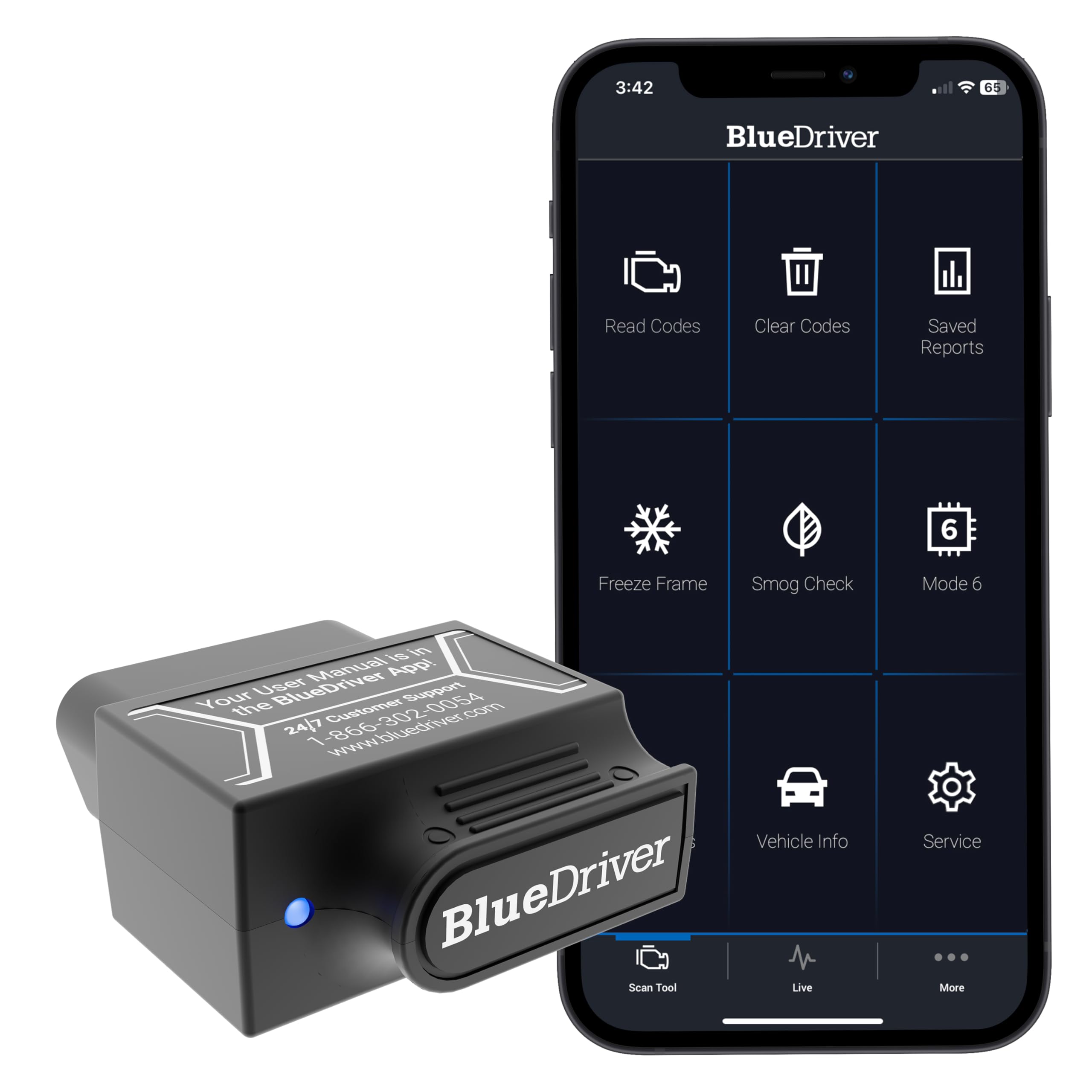
We recommend this if you want a simple Bluetooth OBD2 tool that reads advanced codes and shows live oxygen sensor data without subscription fees.
Pros
- Easy Bluetooth setup and reliable live data.
- Reads advanced systems like ABS and SRS as well as O2 sensors.
- No subscription fees and lots of in-app repair info.
Cons
- App-only interface may feel limited compared to a full handheld tool.
- Works best on gas vehicles 1996+; check compatibility for some imports.
- Left plugged in, it can block a nearby accessory port in tight cabs.
We plugged the BlueDriver into a mid-2000s sedan and watched live oxygen sensor voltages update in real time on our phone. The app labeled the sensor data clearly and showed trends while we revved the engine, which made it easy to spot a slow or stuck O2 sensor.
Clearing codes and rerunning tests felt fast. We used the repair reports and videos in the app to trace a possible cause and confirm the sensor wiring looked sound before buying a replacement. No surprise fees made the process frictionless.
On a later test with a newer SUV, the scanner pulled both engine and ABS codes that cheaper dongles missed. We did notice the dongle can stick out a bit in shallow ports, so it may get bumped in small cabins. Overall, it gave mechanic-level readings without the learning curve of pro scan tools.
